Artwork
Herodias: Page 45, But now beginning at the farthest end of the banquet hall a murmur of surprise and admiration. A young girl began to enter
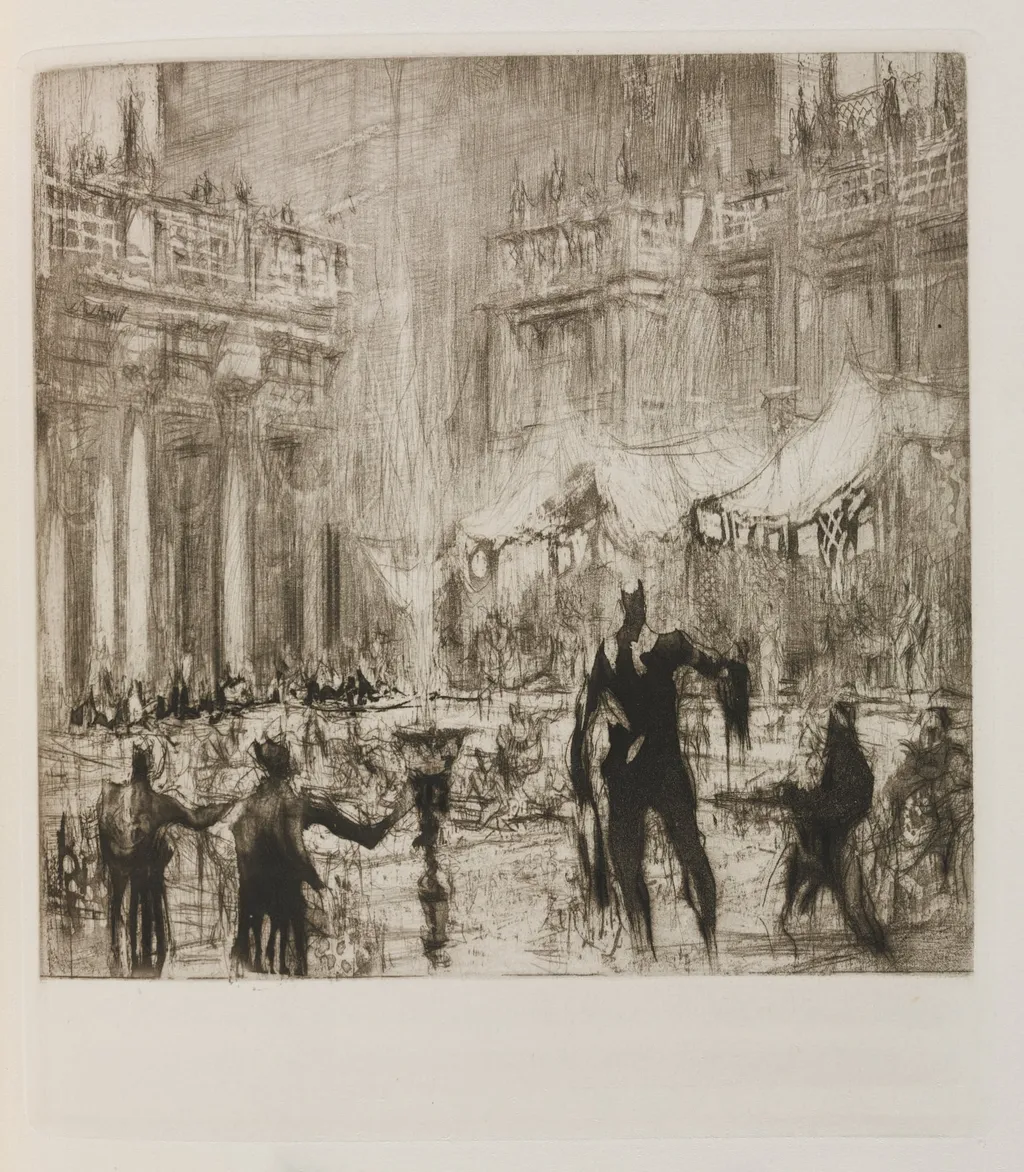
Herodias: Page 45, But now beginning at the farthest end of the banquet hall a murmur of surprise and admiration. A young girl began to enter is a print by William Walcot. It dates from 1928 and is held in the collection of the Cleveland Museum of Art.
About this work
Overview
The work is part of a series illustrating biblical narratives, and it resides in the collection of The Cleveland Museum of Art.
Created in 1928 by William Walcot, this print captures a moment from the biblical story of Salome’s dance before Herod. The scene is rendered in tonal grayscale, emphasizing atmosphere over color. The composition directs attention to a solitary figure entering a vast, shadowed hall, surrounded by indistinct onlookers. The work is part of a series illustrating biblical narratives, and it resides in the collection of The Cleveland Museum of Art.
Subject & Meaning
The image depicts Salome, the daughter of Herodias, as she enters the banquet hall to perform her fateful dance. Her solitary approach contrasts with the hushed, expectant crowd, suggesting the weight of the moment. The narrative draws from the Gospel account where her dance leads to John the Baptist’s execution. Walcot isolates the instant before action, heightening the psychological tension inherent in the story.
Technique & Style
Walcot employs etching and drypoint to achieve fine linear detail and rich tonal gradations. The background figures are softly blurred, while the central figure is rendered with sharper contours, guiding the viewer’s focus. Strong contrasts between light and shadow—chiaroscuro—enhance the spatial depth and emotional gravity. The muted palette of grays and browns reinforces the somber, theatrical mood of the scene.
History & Provenance
This print was produced as part of Walcot’s illustrated edition of a biblical narrative, published in the late 1920s. It was acquired by The Cleveland Museum of Art in the 20th century as part of their growing collection of modern graphic works. The print’s provenance traces back to the artist’s personal archive and early commercial publications, reflecting its role in interwar illustrated literature.
Context
Walcot worked during a period when artists revisited biblical themes through modernist visual languages. His approach combined traditional narrative subject matter with contemporary print techniques, aligning with broader European trends in book illustration. The emphasis on psychological tension and spatial drama reflects influences from Symbolism and early 20th-century stage design, rather than overt religious devotion.
Legacy
Though not widely exhibited today, the print remains a notable example of Walcot’s contribution to illustrated biblical texts. It exemplifies how early 20th-century printmakers reinterpreted classical stories with atmospheric precision and restrained drama. The work continues to be studied for its technical mastery and its nuanced portrayal of narrative suspense in graphic form.
Artist & collection

Artist
William Walcot RE was a Russian-Scottish architect, graphic artist and etcher, notable as a architect of refined Art Nouveau in Moscow, Russia.

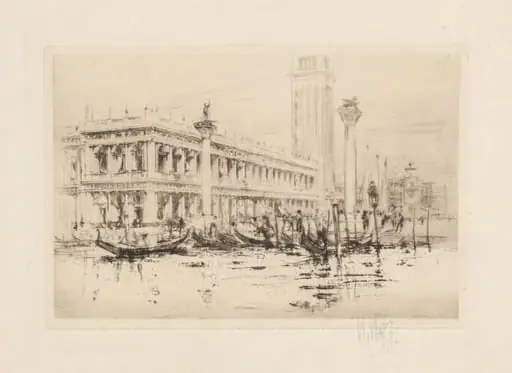 The Venice Set: The Library of St. Mark’s
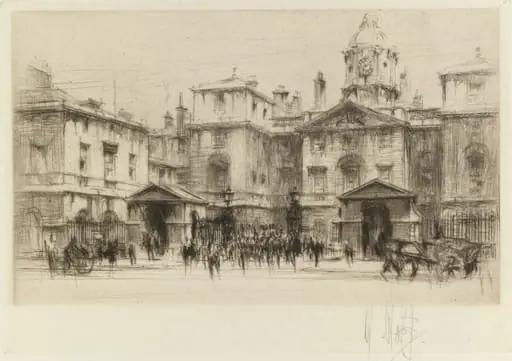 London Set: Horseguards
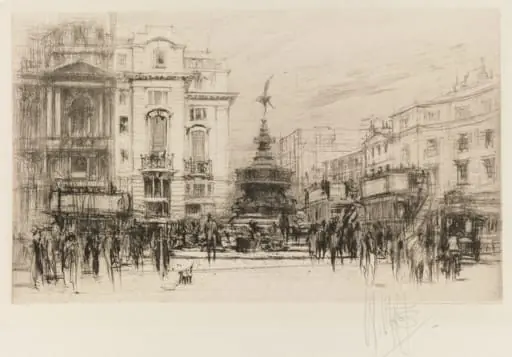 London Set: Piccadilly Circus (with Criterion Theatre)
 The Clyde from the series The Arteries of Great Britain
 Downtown Manhattan from the East River, with the Woolworth Building
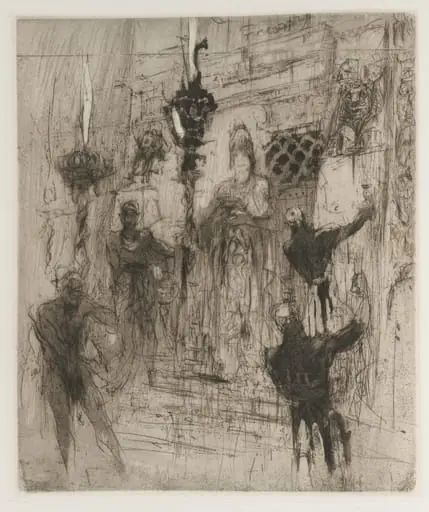 Herodias
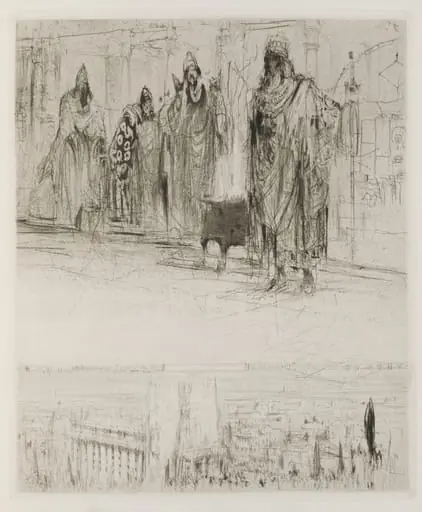 Herodias: Page 13, The tetrarch was awaited by several Galileans, the master of scribes, the chief of the land steward, the manager of the salt mines, and a Jew from Babylon commanding his troops on horse
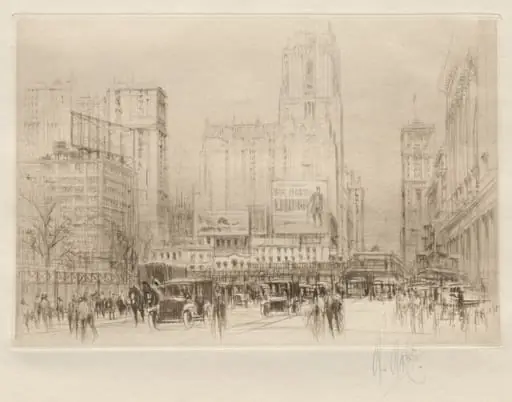 Forty-second Street NY
 Untitled
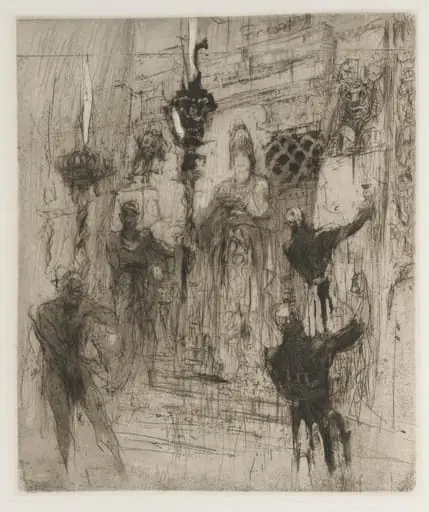 Herodias: Frontispiece, Herodias appeared, coiffed in an Assyrian mitre to which a chin strap was attached to the front
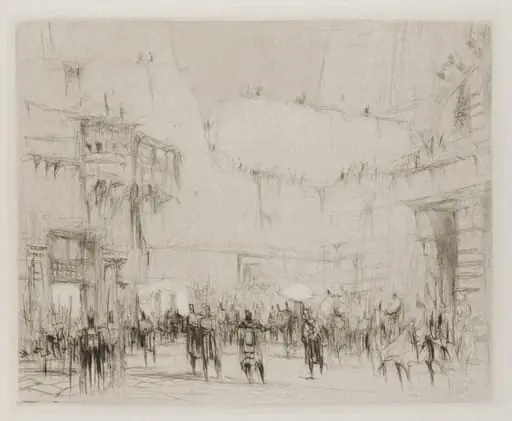 Herodias: Page 19, The ramparts were thronged with people when Vitellius entered the castle gates
 Mlle Bécat at the Café des Ambassadeurs
 The Villa Quintillii
 Untitled
 Untitled
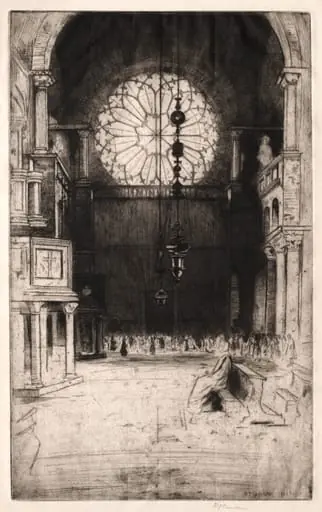 St. Mark's No. 2 (Venice) -- Interior
![Intérieur d'église à Milan [Interior of a Church in Milan], by Mosè Bianchi](https://artifactworldgallery.com/img/mose-bianchi--interieur-d-eglise-a-milan-interior-of-a-church-in-milan--6e5465a8fb58e0ea-w320.webp) Intérieur d'église à Milan [Interior of a Church in Milan]
Intérieur d'église à Milan [Interior of a Church in Milan]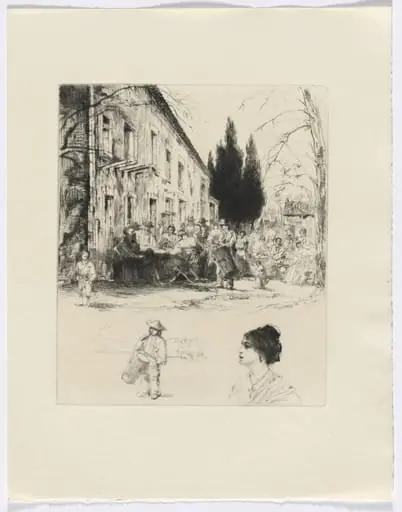 Frédéric Mistral: Mémoires et Recits by Frédéric Mistral: figures at outdoor table/ man playing drum and bust of a woman (insert after p. 136)
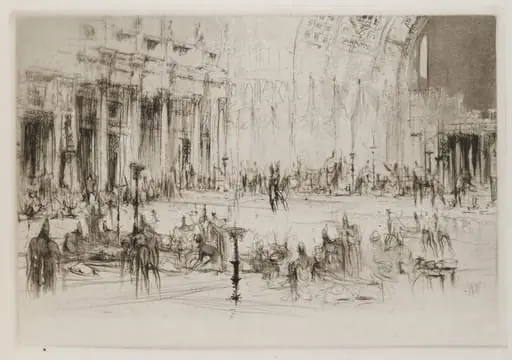 Herodias: Page 39, The guests filled the banquet hall