Artwork
Untitled
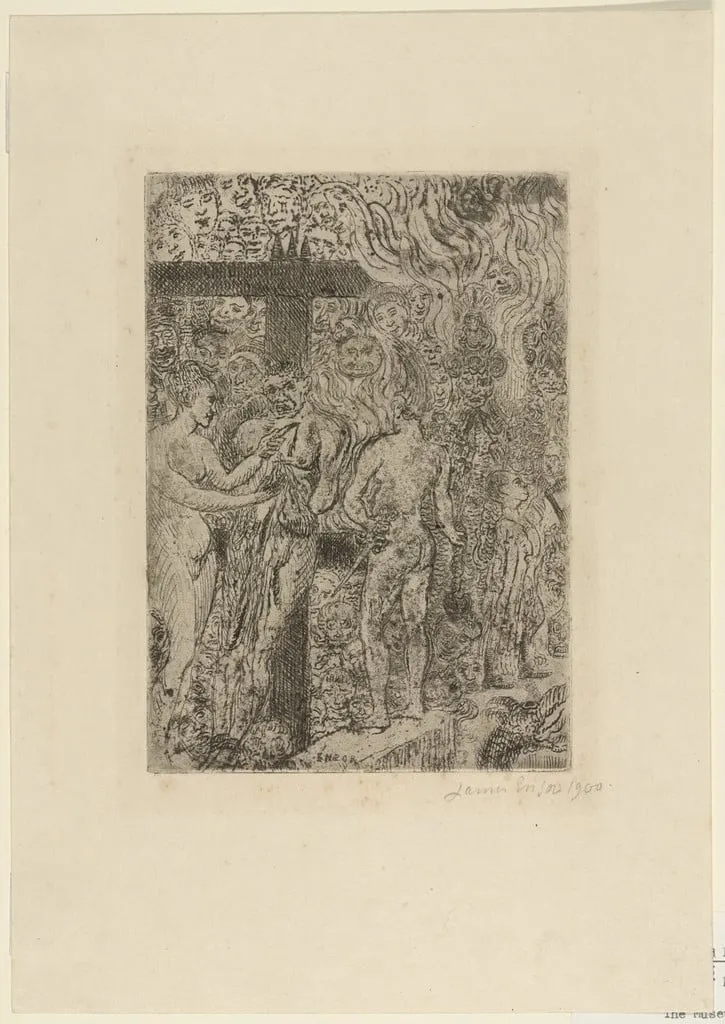
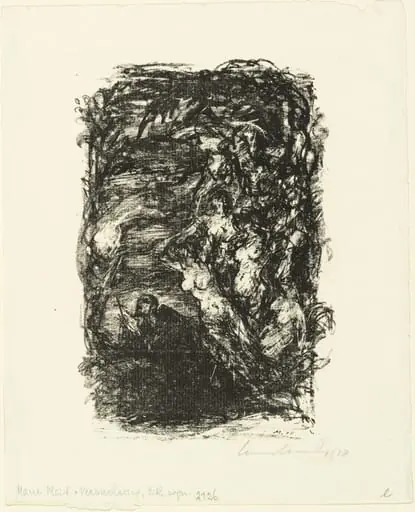
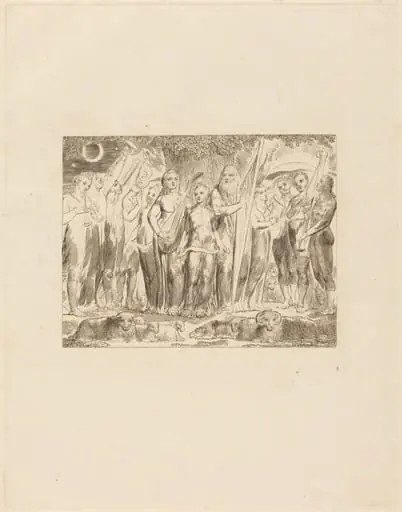
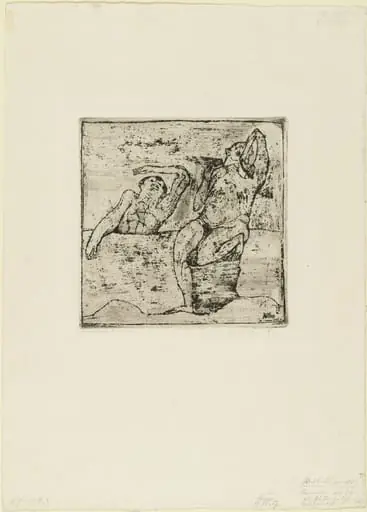
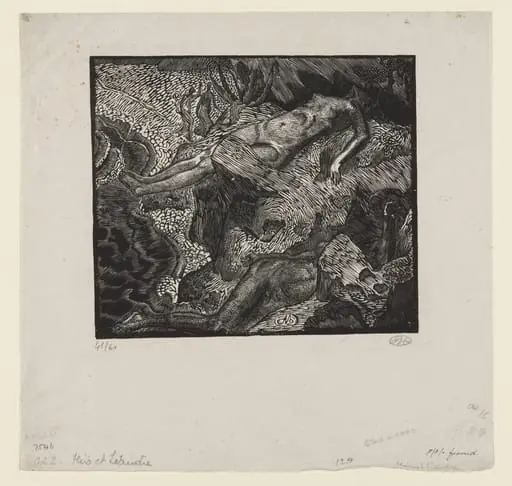
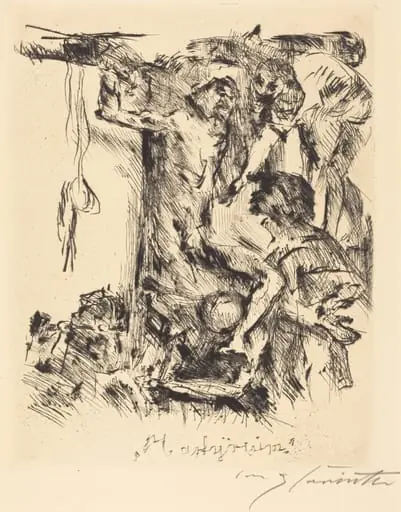
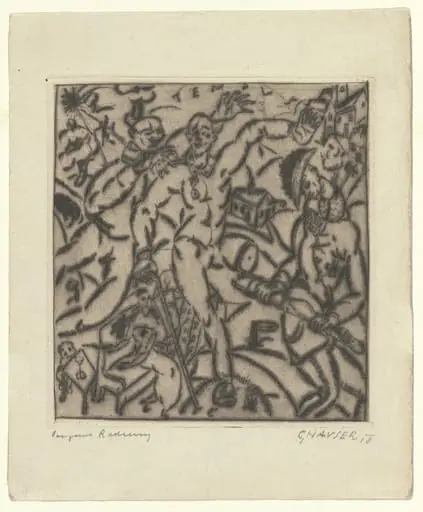
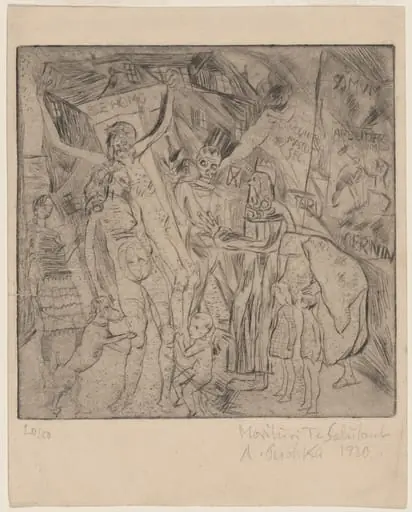
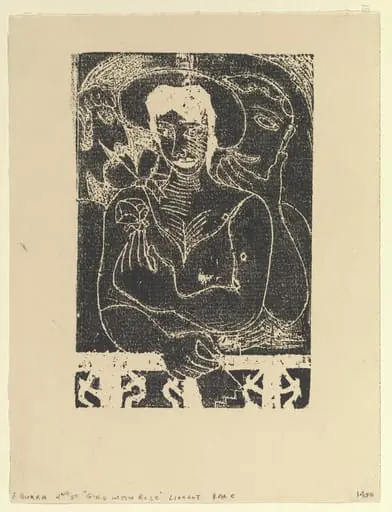
Untitled is an ink print by James Ensor. It dates from 1900 and is held in the collection of the Museum of Modern Art.
About this work
Overview
A Belgian artist based in Ostend, he was deeply involved with the avant-garde collective Les XX, which championed experimental art in late 19th-century Belgium.
James Ensor produced this etching in 1900 as part of his extensive printmaking practice. A Belgian artist based in Ostend, he was deeply involved with the avant-garde collective Les XX, which championed experimental art in late 19th-century Belgium. This work exemplifies his sustained interest in print media, where he explored complex compositions and psychological tension through fine-line technique.
Subject & Meaning
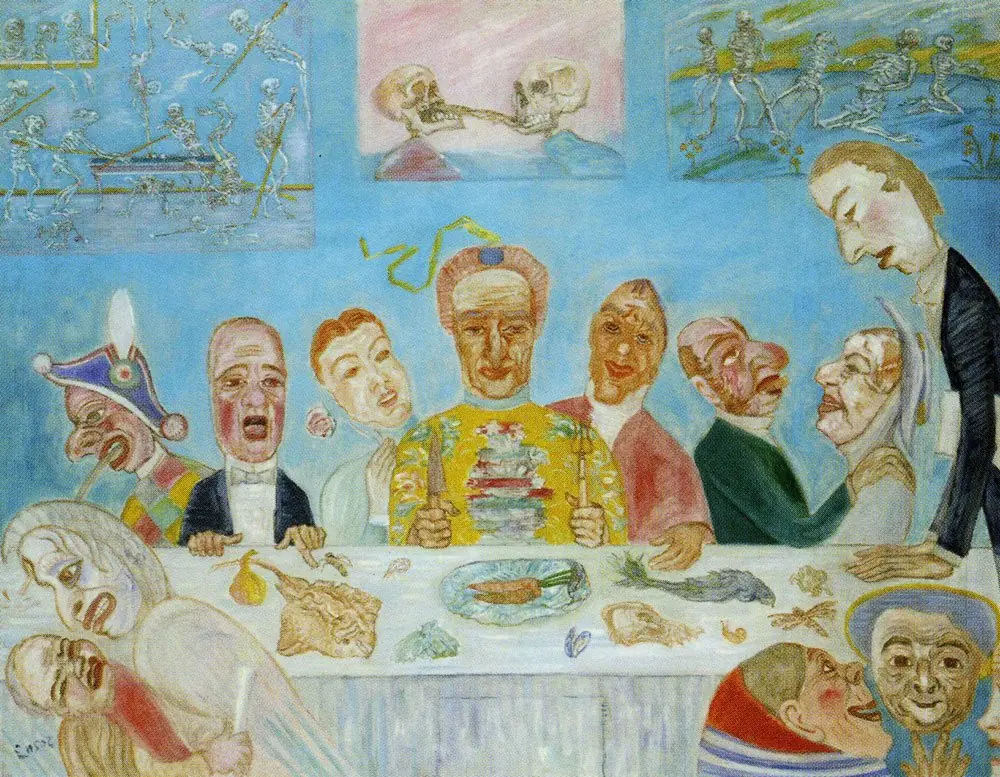
The scene presents a dense assembly of figures, some nude, engaged in ambiguous activities. Their postures and orientations suggest a chaotic gathering, neither clearly ritualistic nor narrative. The clustering of bodies, with partial overlaps and varied gazes, evokes social disarray rather than unity. Isolated figures in the foreground—such as the woman with long hair and the bearded man—draw attention without clarifying the scene’s purpose, leaving interpretation open.
Technique & Style
Ensor employed fine, intricate etching lines to build texture and depth across the entire surface. The density of marks creates a sense of spatial compression, with background figures emerging through layered shading rather than clear perspective. The precision of the lines enhances the tactile quality of skin, fabric, and hair, while the absence of broad tonal areas maintains a nervous, energetic rhythm throughout the composition.
History & Provenance
This print belongs to Ensor’s prolific output during the turn of the century, a period when he increasingly turned to etching as a means of personal expression beyond painting. Though not part of a named series, it aligns with other works from this time that reject conventional narrative in favor of psychological and visual intensity. Its provenance traces through private collections in Belgium and France before entering institutional holdings.
Context
Ensor’s work in 1900 emerged amid broader European shifts toward psychological and formal experimentation. While his earlier works had provoked scandal through grotesque imagery, this etching reflects a quieter, more introspective phase. His engagement with printmaking allowed him to reach audiences beyond the gallery, aligning with international trends in graphic art that valued intimacy and technical rigor over spectacle.
Legacy
Though less celebrated than his paintings, this etching contributes to Ensor’s reputation as a pioneer in expressive printmaking. His use of line and compression influenced later Expressionist and Surrealist artists who sought to convey inner states through fragmented, crowded imagery. The work remains a quiet but significant example of how printmaking could serve as a vehicle for psychological exploration in early 20th-century art.
Artist & collection
Artist
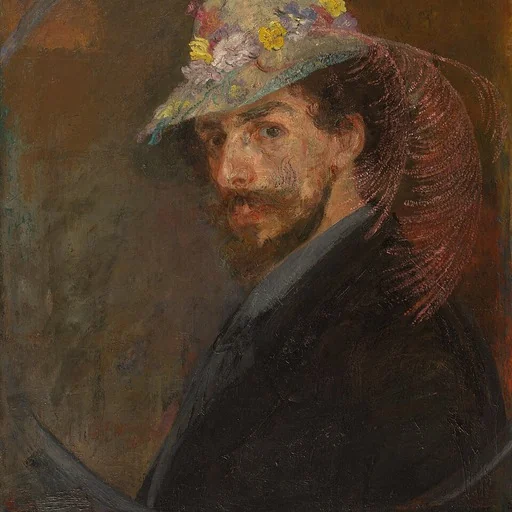
James Sidney Edouard, Baron Ensor (13 April 1860 – 19 November 1949) was a Belgian painter and printmaker, an important influence on expressionism and surrealism who lived in Ostend for most of his life.