Artwork
Ecce Homo
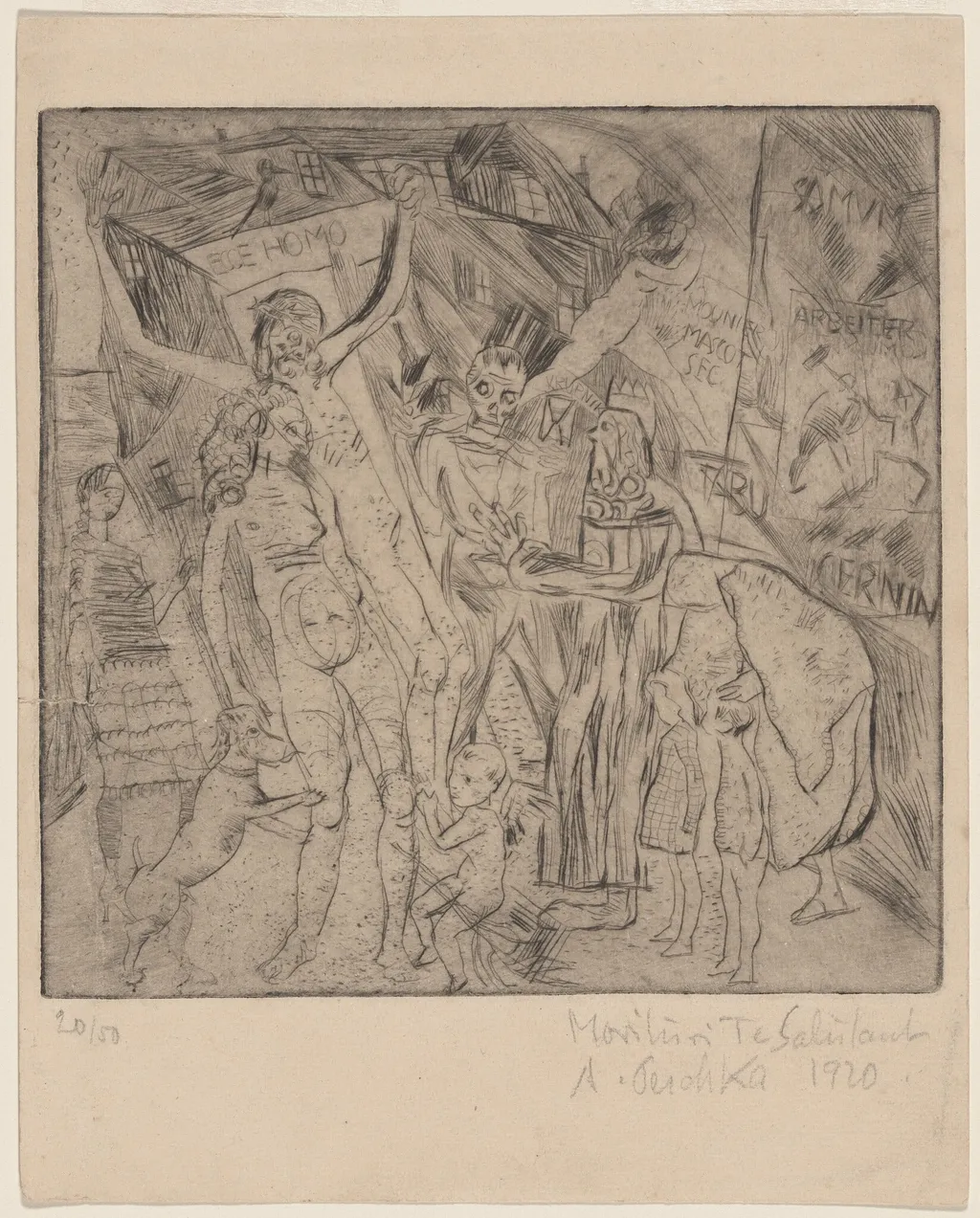
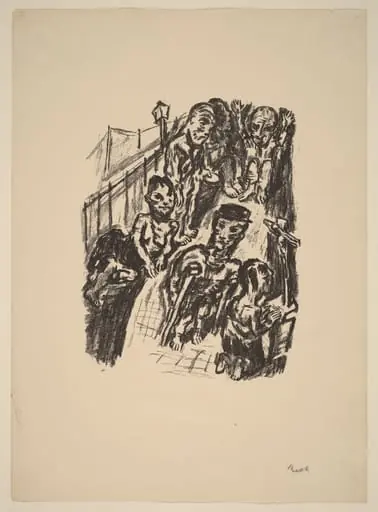
Ecce Homo is an ink print by Anton Peschka. It dates from 1920 and is held in the collection of the National Gallery of Art.
About this work
Overview
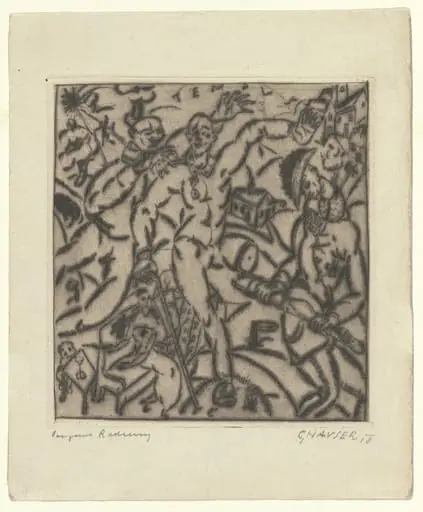
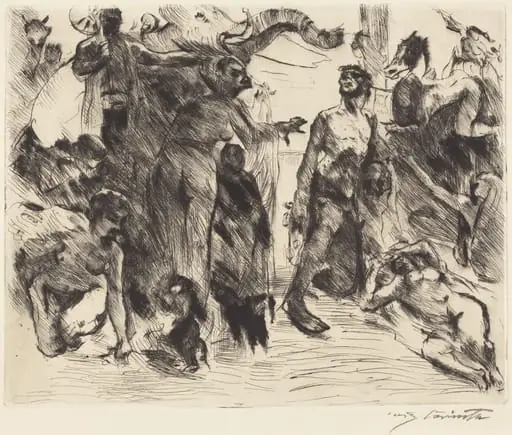
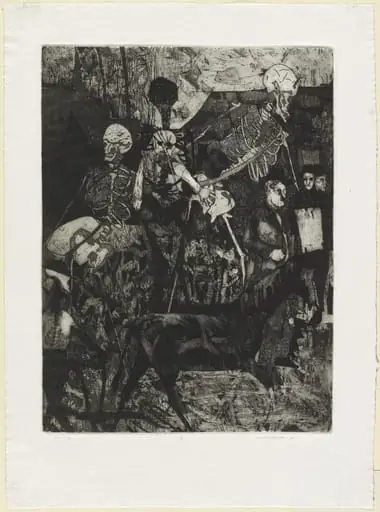
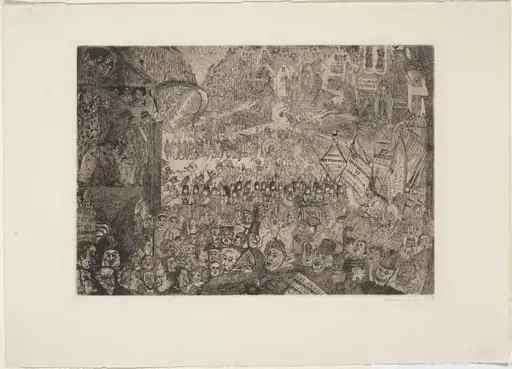
Anton Peschka’s 1920 etching titled Ecce Homo is executed on wove paper. The composition is densely populated, featuring a central figure elevated by surrounding bodies amid a tangle of additional characters. Abstract shapes and linear motifs fill the background, contributing to a sense of visual turbulence and layered space.
Subject & Meaning
The work portrays a chaotic gathering in which a focal individual is lifted aloft by a group, evoking themes of collective responsibility and public spectacle. The surrounding crowd, rendered with minimal facial detail, suggests anonymity within the mass, while the central figure’s exposure hints at vulnerability under communal scrutiny.
Technique & Style
Peschka employs traditional intaglio etching, exploiting the incised lines to generate texture and depth on the paper’s smooth surface. Bold, expressive strokes dominate the image, with a loose handling that emphasizes movement over precise modeling. The interplay of dense cross‑hatching and open space creates a dynamic tension between foreground and abstract background.
History & Provenance
Created in the immediate post‑World War I period, Ecce Homo reflects the artist’s engagement with the social upheavals of the era. While specific ownership records are sparse, the print has been documented in several early‑20th‑century Austrian print collections, indicating its circulation among contemporary collectors of modern graphic art.
Artist & collection