Artwork
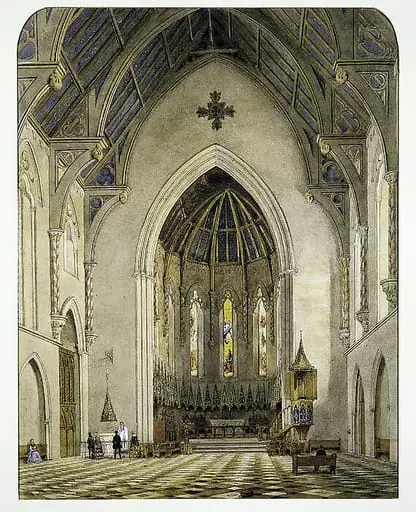
St. Nicholas Church, Denston
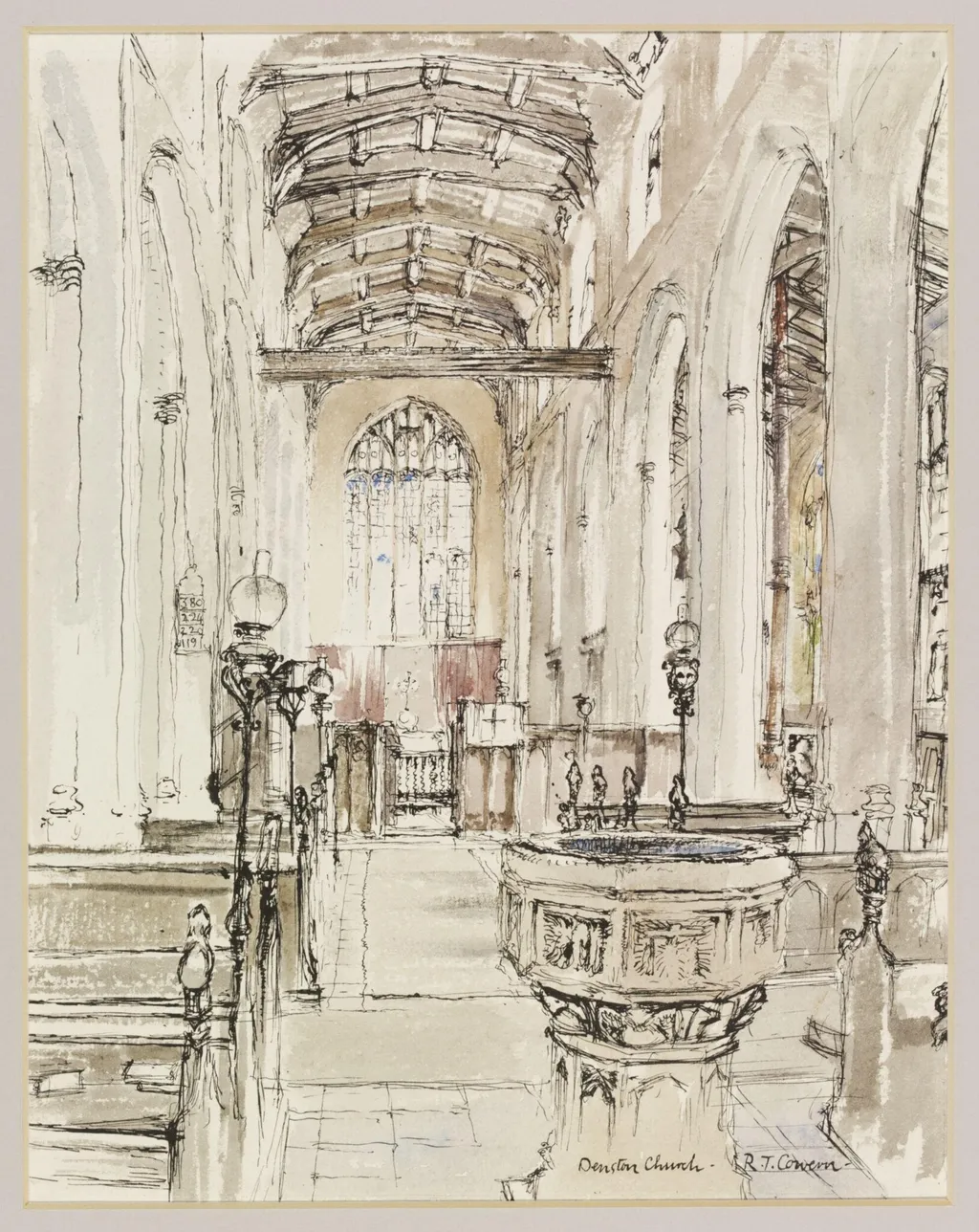
St. Nicholas Church, Denston is a watercolor work on paper by Cowern. It dates from 1940 and is held in the collection of the Victoria and Albert Museum.
About this work
Overview
This 1940 watercolour by Cowern captures the interior of St. Nicholas Church in Denston, Suffolk. Executed as part of the Recording Britain initiative, the work belongs to a broader effort to visually archive rural and ecclesiastical architecture during wartime. The piece is signed and dated by the artist, indicating its status as a direct observational record rather than a studio reconstruction.
Subject & Meaning
The faint glow of stained glass suggests spiritual light without overt symbolism, emphasizing the building’s quiet presence amid societal upheaval.
The composition centers on the church’s nave, with the font positioned prominently in the foreground, guiding the viewer’s eye toward the altar. The quiet, unadorned interior—marked by worn stone walls, wooden pews, and dim hanging lamps—conveys a sense of enduring simplicity. The faint glow of stained glass suggests spiritual light without overt symbolism, emphasizing the building’s quiet presence amid societal upheaval.
Technique & Style
Cowern employed a loose, spontaneous watercolour technique, using varied brushwork to suggest texture and light. Dark, deliberate strokes define structural elements like pews and stonework, while lighter washes imply atmospheric depth and the diffused glow of the stained glass. The sketchlike quality reflects on-site observation, prioritizing immediacy over finish, consistent with the Recording Britain project’s documentary aims.
History & Provenance
Created in 1940 under the Recording Britain scheme, this watercolour was commissioned by the Pilgrim Trust and overseen by Sir Kenneth Clark. The project mobilized artists to document at-risk architectural sites across Britain during the Second World War. Cowern’s depiction of Denston Church became one of over 1,500 works produced between 1940 and 1943, now held in institutional collections as historical records.
Context
The Recording Britain initiative emerged as a cultural response to the dual threats of wartime destruction and postwar modernization. Rural churches like St. Nicholas, often overlooked, were seen as vital expressions of local heritage. Cowern’s focus on unembellished interiors reflects a broader effort to preserve the character of everyday sacred spaces before they vanished or were altered beyond recognition.
Legacy
Cowern’s watercolour remains part of a significant archive that shaped postwar attitudes toward heritage conservation. Its unidealized portrayal of a modest church interior contributes to a collective visual memory of pre-war Britain. Today, such works serve as primary sources for historians and architects studying the material culture of English ecclesiastical spaces in the early 20th century.
Artist & collection
Artist
Cowern is a surname. Notable people with the surname include:Dianna Cowern, American YouTuber Jenny Cowern (1943–2005), English artist Raymond Teague Cowern (1913–1986), British painter and illustrator

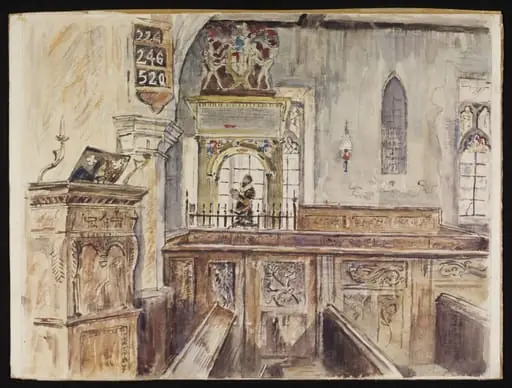 Monument and the Bolingbroke pews, St.Mary’s Church, Lydiard Tregoze
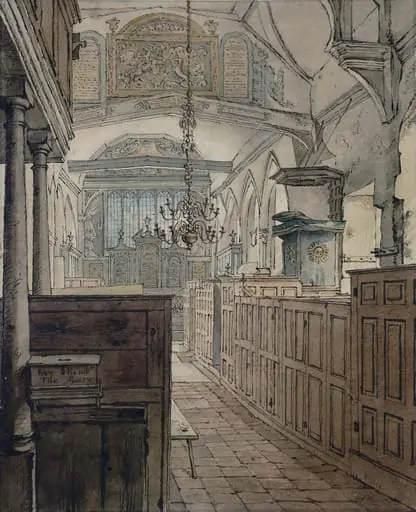 Interior of an old church
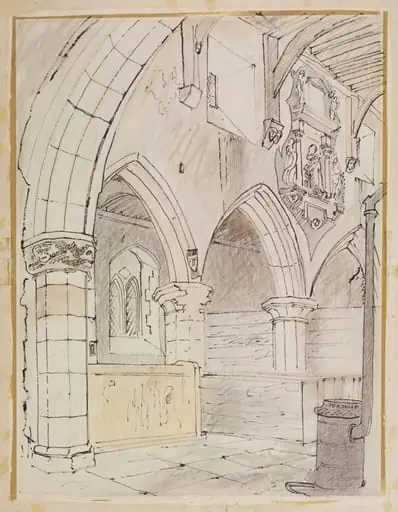 Interior of the Church of St. Denis, Faxton
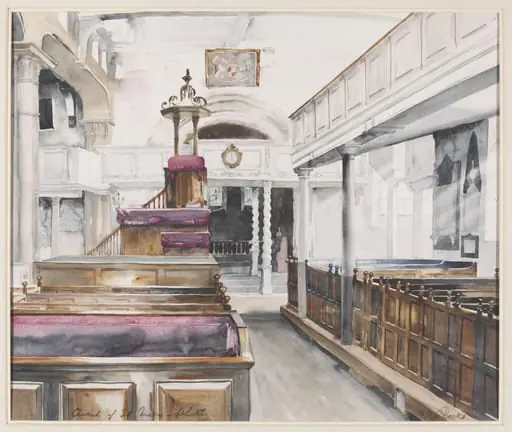 Interior of the Church of St. Mary, Whitby
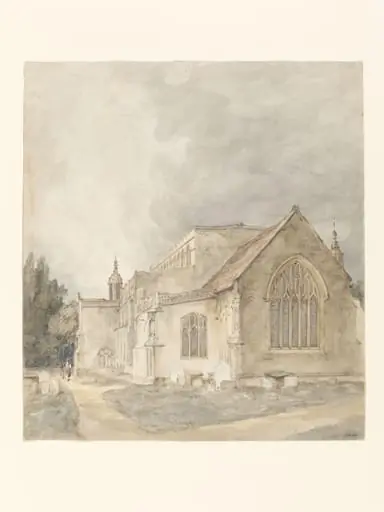 East Bergholt Church: exterior view from the east
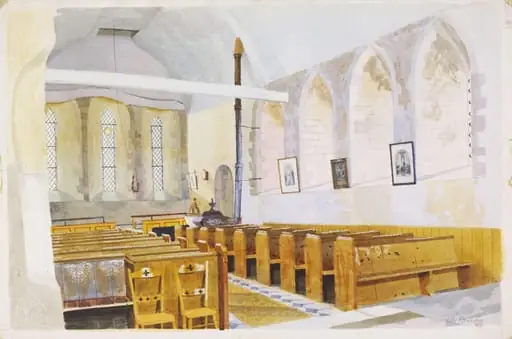 Interior of St. Mary's Church, Tilty
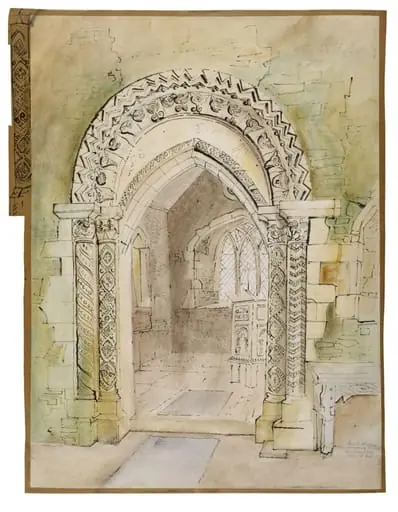 Chancel Arch, St. Peter's, Stanton Low, Buckinghamshire
 Chancel of Trinity Chapel, New York