Artwork
Study for "Militia Training": Composition (in reverse)
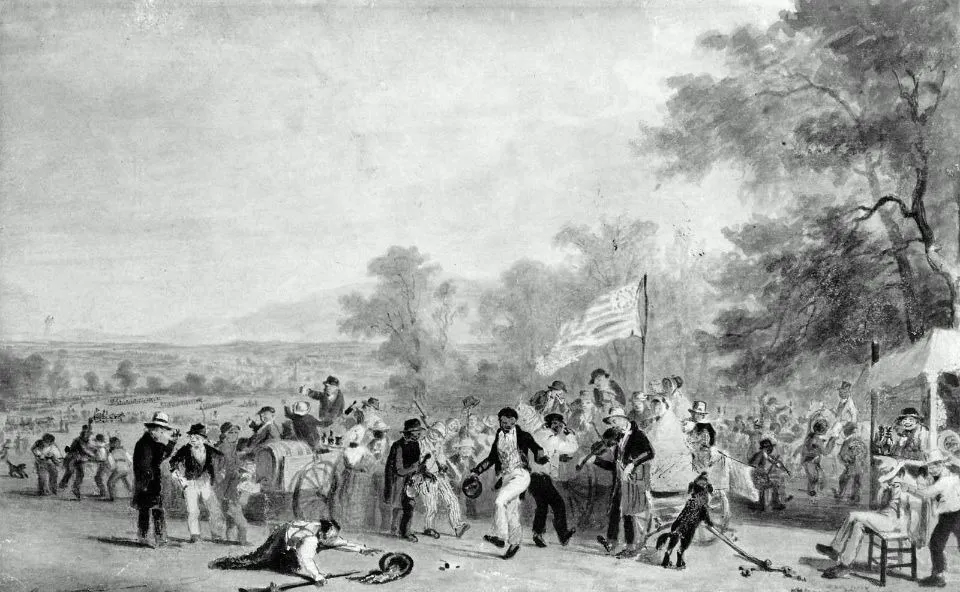
Study for "Militia Training": Composition (in reverse) is an unspecified painting by James Goodwyn Clonney. It dates from 1838 and is held in the collection of the Museum of Fine Arts Boston.
About this work
Overview
Clonney specialized in intimate genre scenes, often capturing everyday rural life with attention to social nuance and spatial dynamics.
James Goodwyn Clonney, an English-born artist active in the United States, produced this 1838 oil study as a preparatory work for a larger composition titled 'Militia Training.' Executed in reverse, the painting reflects his practice of working through compositional ideas on a smaller scale. Clonney specialized in intimate genre scenes, often capturing everyday rural life with attention to social nuance and spatial dynamics.
Subject & Meaning
The scene portrays a militia drill in progress, with figures engaged in varied movements—running, leaping, crawling—suggesting disorderly but earnest activity. Among the participants, Black and white individuals are depicted side by side, engaged in shared physical labor. This visual equality, unusual for the period, implies a quiet challenge to prevailing racial hierarchies, framing communal civic duty as a unifying experience.
Technique & Style
Clonney rendered the scene with loose, energetic brushwork and a muted palette, emphasizing movement over detail. The reversed composition suggests he was working from a mirror or transferring a sketch, a common practice for refining spatial arrangements. Figures are loosely modeled, with attention to posture and gesture rather than individualized features, reinforcing the group’s collective energy.
History & Provenance
Created in 1838, the study remained in private hands until entering the Museum of Fine Arts, Boston’s collection. Its survival as a preparatory piece is uncommon, as many such studies were discarded. The work’s preservation suggests early recognition of its artistic merit, though it was never exhibited publicly during Clonney’s lifetime as a finished painting.
Context
In the late 1830s, militia units were central to local defense and civic identity in the U.S., yet participation was often racially restricted. Clonney’s depiction of integrated drill activity contrasts with legal and social norms, possibly reflecting abolitionist sympathies or regional variations in racial interaction. His focus on rural, non-elite subjects aligned with broader genre painting trends of the era.
Legacy
Though Clonney is not widely known today, this study stands as a rare visual record of interracial civic participation in antebellum America. Its preservation in a major institution underscores its value as a document of social observation. The work contributes to ongoing scholarship on how genre painting subtly negotiated issues of race, class, and community in early 19th-century America.
Artist & collection
Artist
James Goodwyn Clonney (28 December 1812, Liverpool (?) – 7 October 1867, Binghamton, NY) was an English-born American genre painter and lithographer.

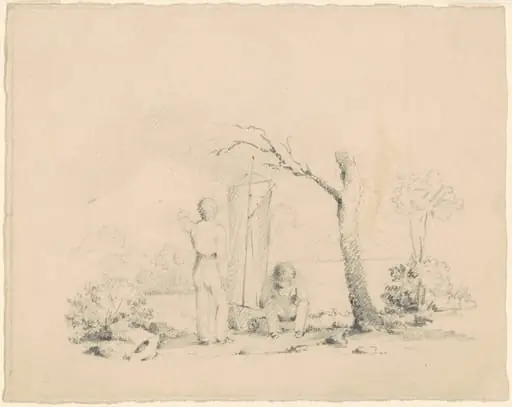
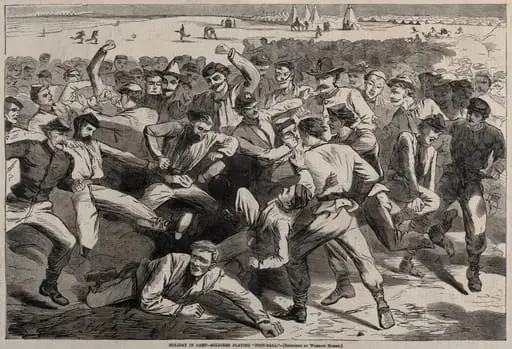 Holiday in Camp - Soldiers Playing "Foot-Ball"
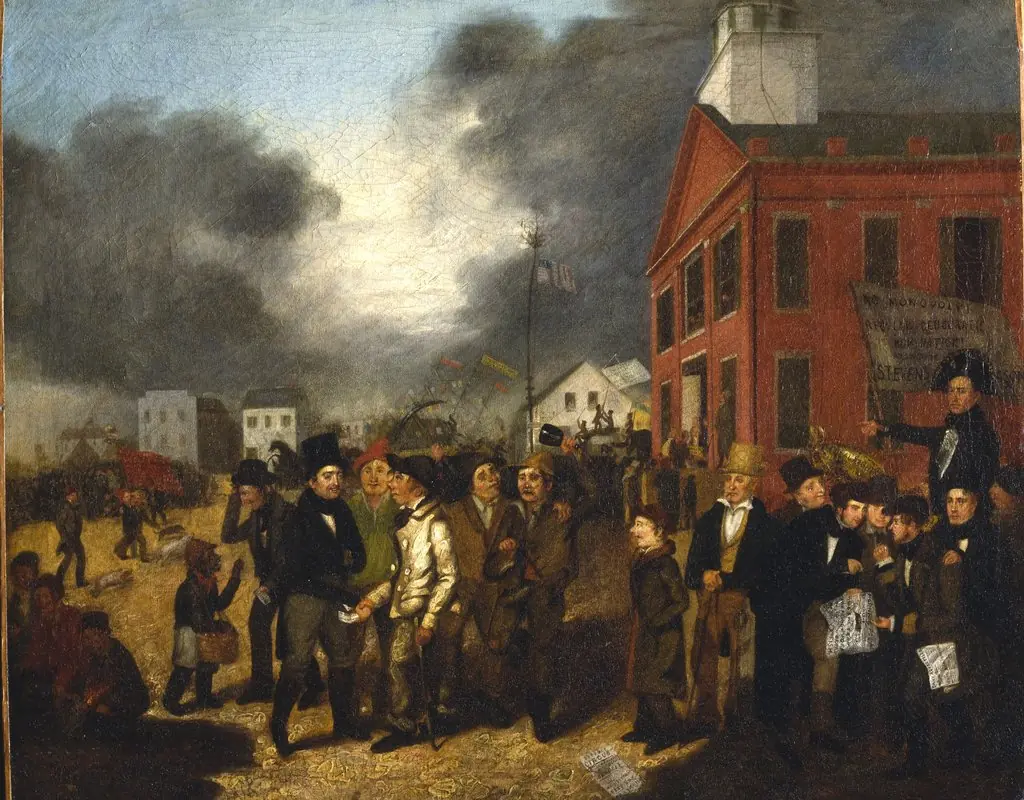 First State Election in Detroit, Michigan, 1837
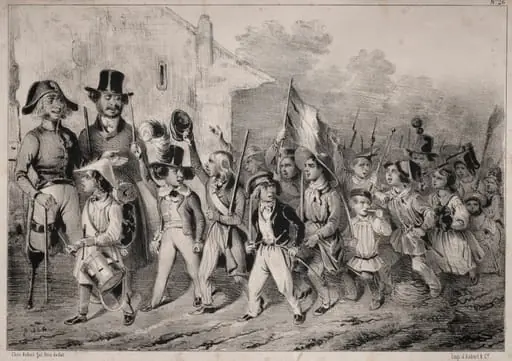 Actualités: Bon! Les moutards en veulent sussi! quand on parle de guerre! comme toute ca prend feu! ... On voit que c'est de la plante indigène!... ca promet!!
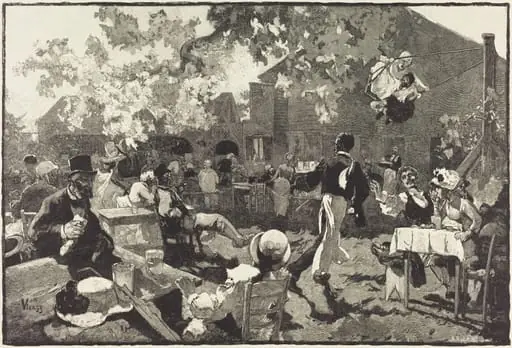 Le Cabaret du Coq de Bruyère au Bois de Meudon
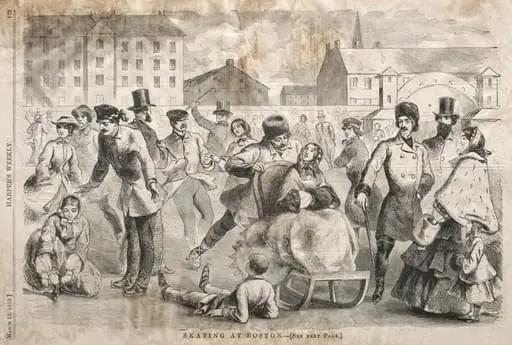 Skating at Boston
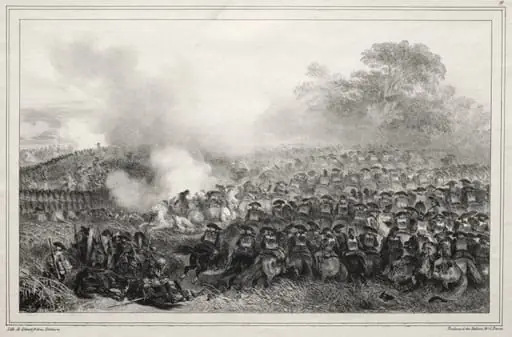 Album for 1835: Carré enfoncé...
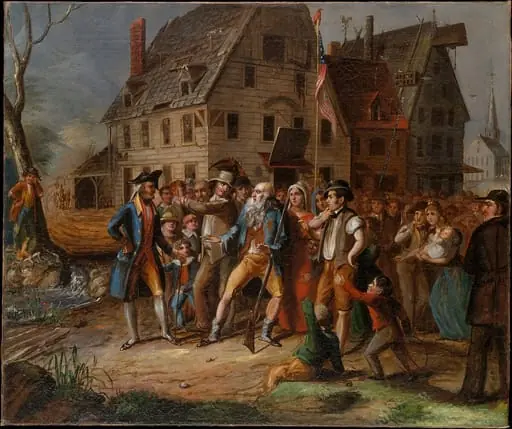 Rip Van Winkle
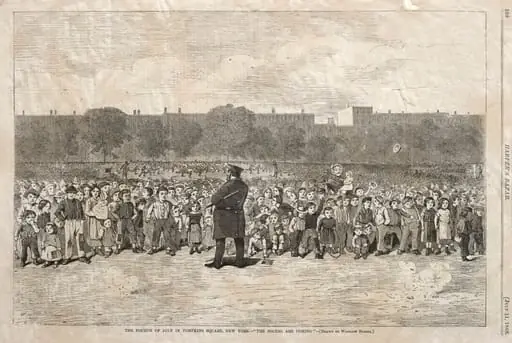 The Fourth of July in Tompkins Square, New York - "The Sogers Are Coming"
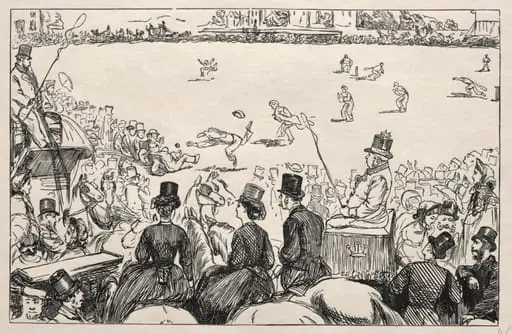 University Cricket Match at Lords
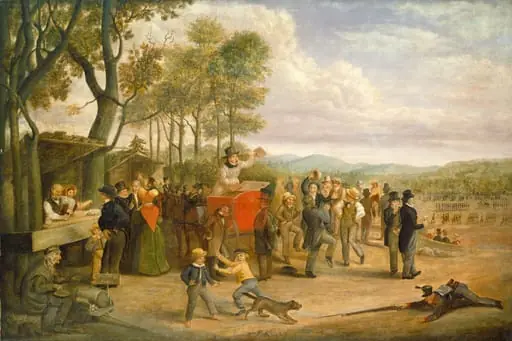 Muster Day
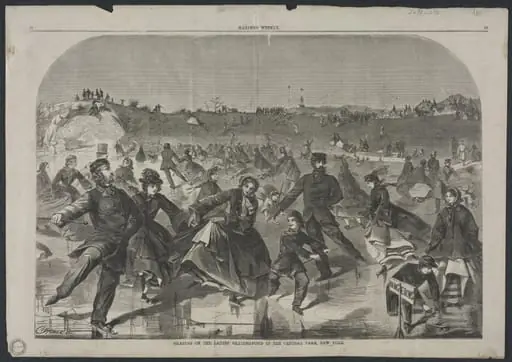 Skating on the Ladies' Skating Pond in Central Park, New York
![Study for "Militia Training" [recto], by James Goodwyn Clonney](https://artifactworldgallery.com/img/james-goodwyn-clonney--study-for-militia-training-recto--a77cf113ce2ae25d-w320.webp) Study for "Militia Training" [recto]
Study for "Militia Training" [recto]