Artwork
Alcobaça
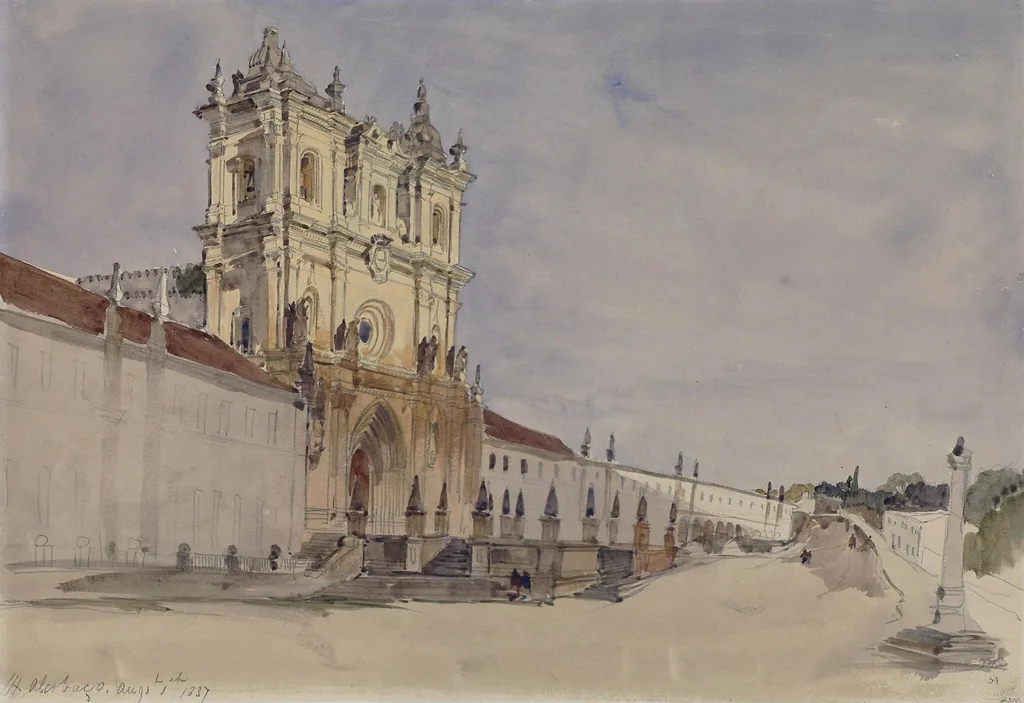
Alcobaça is a watercolor work on paper by the British Romanticist artist James Holland. It dates from 1837 and is held in the collection of the Victoria and Albert Museum.
About this work
Overview
The work reflects Holland’s practice of recording architectural subjects during his travels, prioritizing observation over formal completion.
This watercolour sketch, completed in 1837 by James Holland, depicts the Alcobaça Monastery in Portugal. It remains unfinished, capturing the structure in a moment of tentative detail rather than polished resolution. The work reflects Holland’s practice of recording architectural subjects during his travels, prioritizing observation over formal completion. The light, airy medium suits the delicate rendering of the monastery’s stone surfaces and surrounding landscape.
Subject & Meaning
The Alcobaça Monastery, a Cistercian foundation established in the 12th century, is rendered as a quiet monument to religious and architectural heritage. Holland focuses on its harmonious proportions and ornate stonework, emphasizing its presence within a natural setting. The inclusion of distant trees and a walled enclosure suggests a contemplative relationship between sacred architecture and the surrounding environment, without overt narrative or symbolism.
Technique & Style
Holland employed transparent watercolour to suggest texture and light, using loose washes for the sky and more defined strokes for architectural details. The tower’s arches, statues, and window tracery are carefully outlined but left partially unmodeled, indicating the sketch’s unfinished state. The pale blue sky and soft cloud forms create a gentle atmosphere, reinforcing the calm, measured tone of the composition.
History & Provenance
Created during Holland’s travels in Portugal, the sketch likely served as a personal record rather than a commissioned piece. It entered the collection of the Victoria and Albert Museum in the 19th century, where it remains today. Its preservation as an uncompleted work offers insight into Holland’s working method and his interest in documenting European monastic architecture during a period of renewed scholarly attention.
Context
In the 1830s, British artists increasingly traveled to continental Europe to study historic architecture, influenced by Romantic ideals of ruins, antiquity, and the sublime. Holland’s sketch aligns with this trend, reflecting a broader cultural interest in preserving visual records of medieval sites before industrialization transformed the landscape. His focus on Alcobaça underscores its status as one of Portugal’s most significant religious complexes.
Legacy
Though not widely exhibited, the sketch contributes to the understanding of 19th-century British watercolour practice and its engagement with continental heritage. It stands as a quiet example of how artists documented architecture not as grand monuments, but as evolving elements within lived landscapes. Its preservation highlights the value placed on preparatory works as historical documents in their own right.
Artist & collection

Artist
James Holland (18 October 1799 – 12 February 1870) was an English painter of flowers, landscapes, architecture, marine subjects, and a book illustrator.

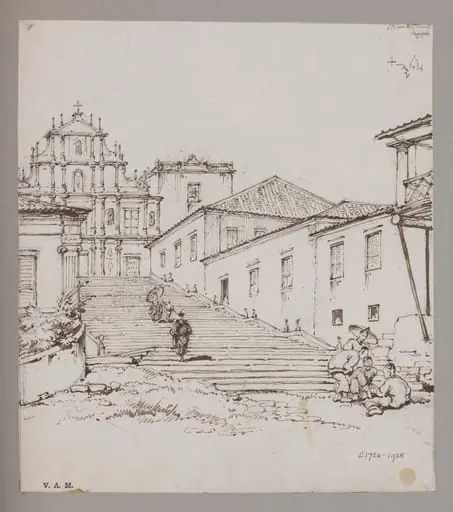 St. Paul's Church, Macao, before it was burnt down, and part of Mr. Turner's house
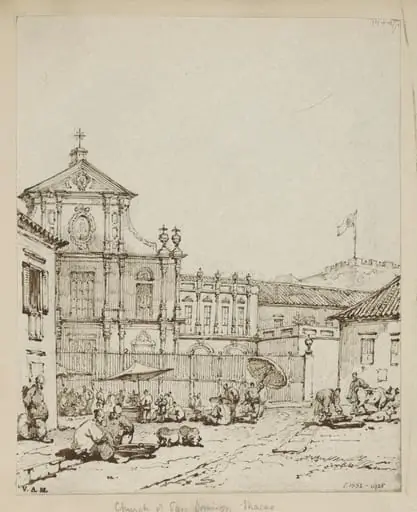 The church of S. Domingos, Macau
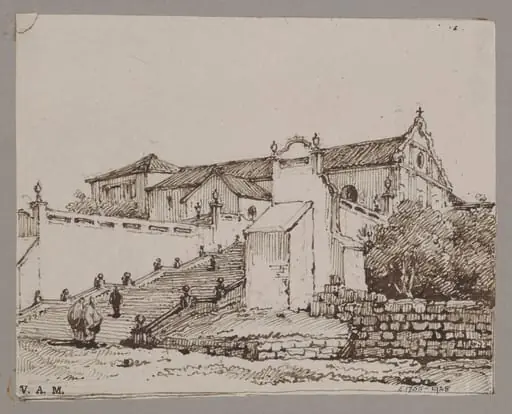 Franciscan Church, Macao
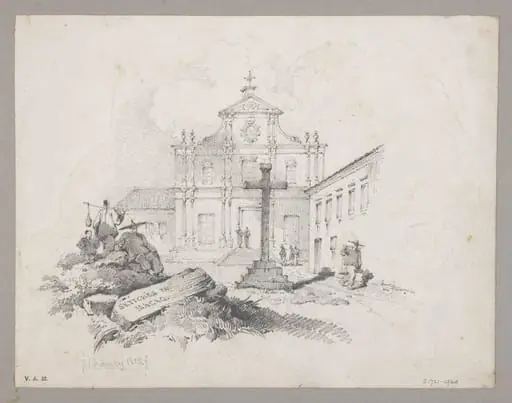 Composition: Church of S. Domingos and Cross opposite the Cathedral
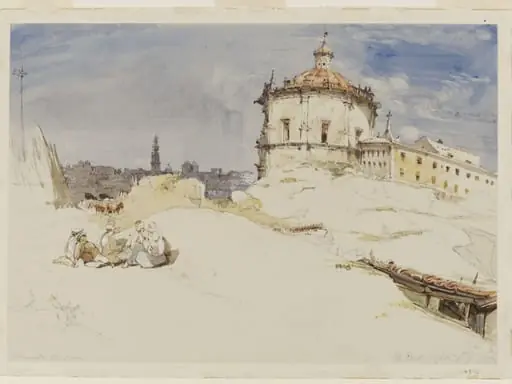 Convento da Serra
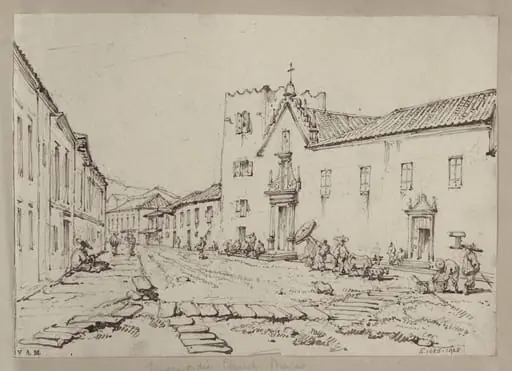 The Misericordia church and tower, Macau
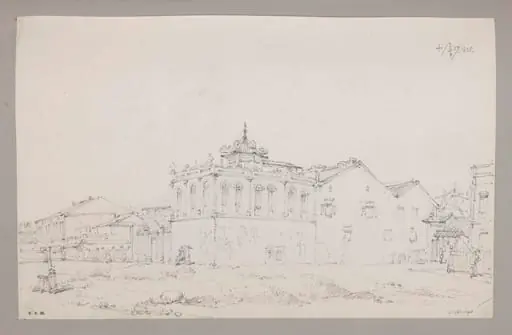 Chinqua's house, with entrance to China Street, Canton
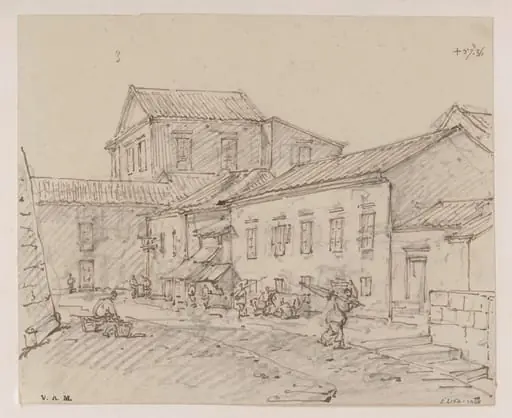 A street in Macau
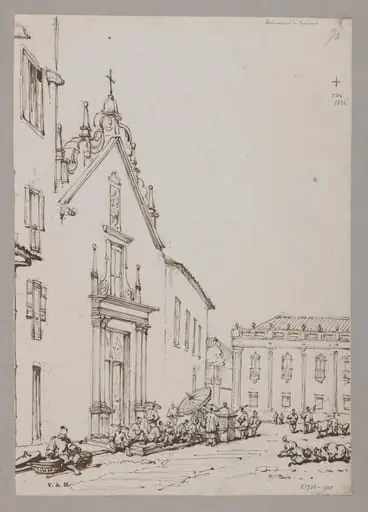 The Misericordia Church and part of the Senate House, Macao
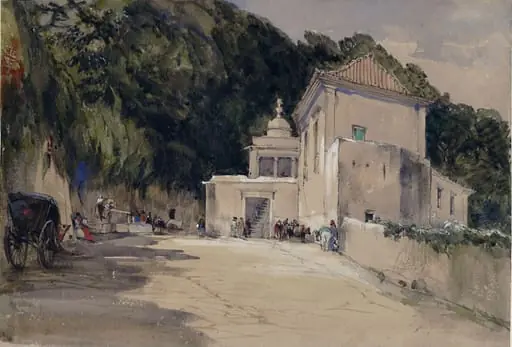 Os Pisões
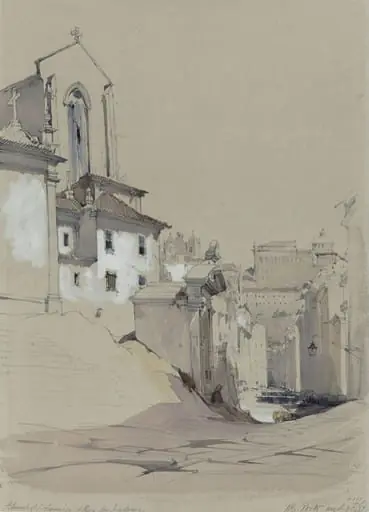 Church of San Francisco and Rua dos Ingleses, Oporto
 Foriegn Office looking down Whitehall