Artwork
Venice: A South-West Wind after Rain
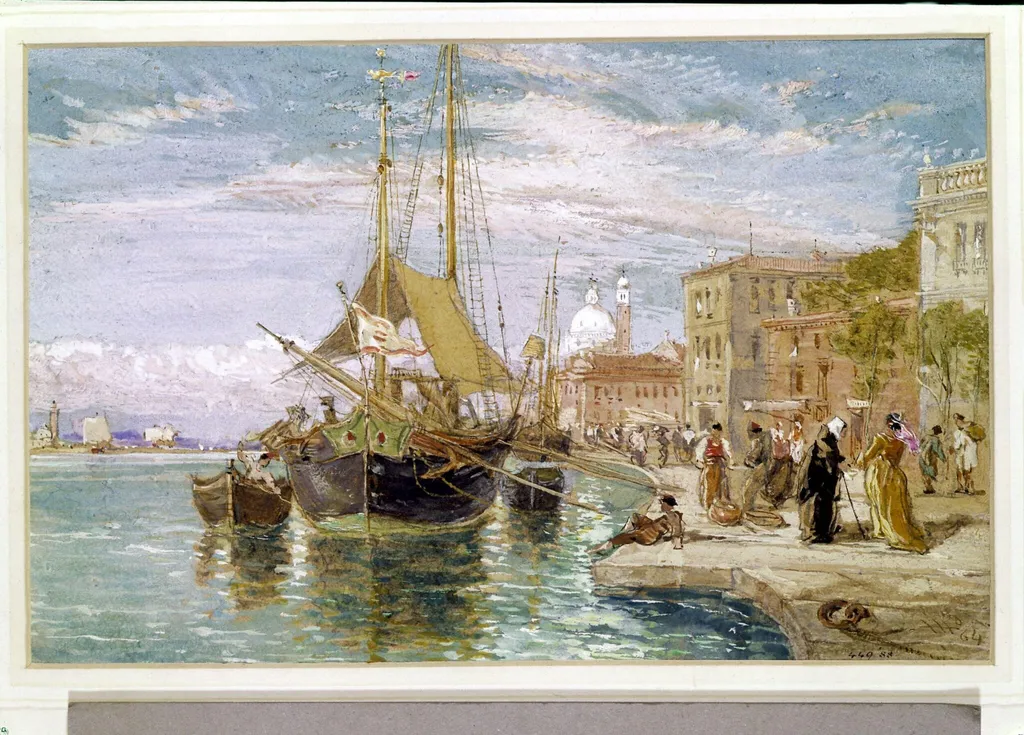
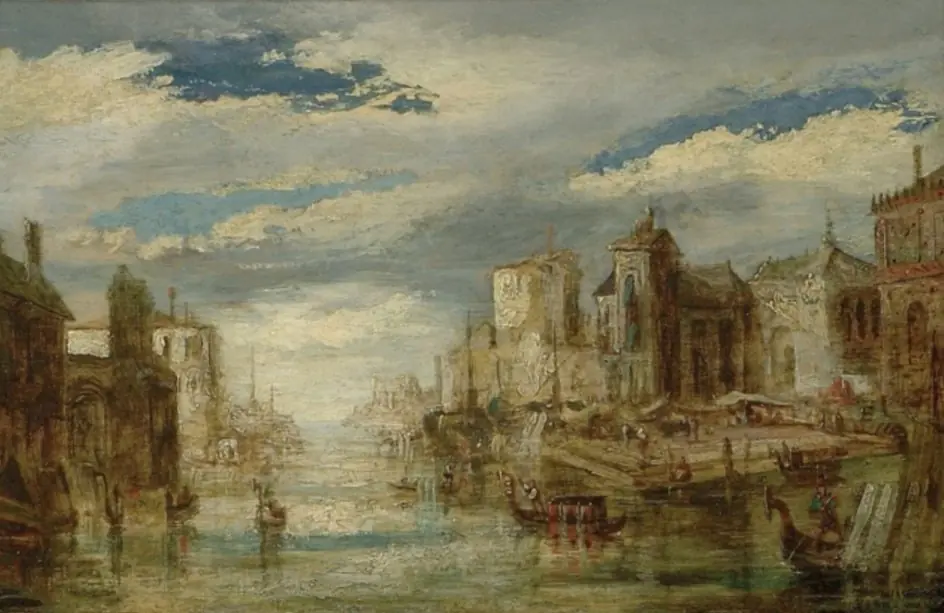
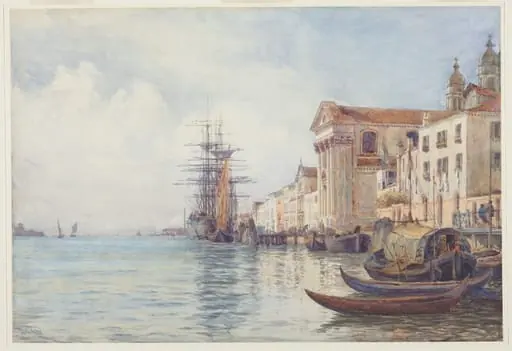
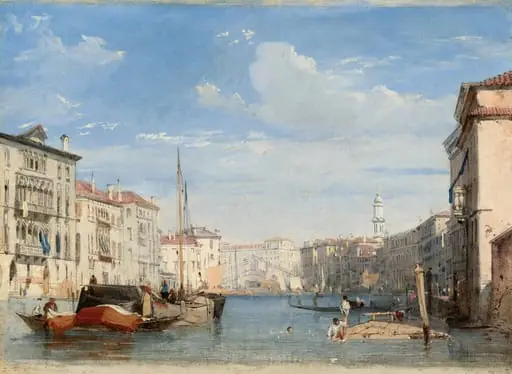
Venice: A South-West Wind after Rain is a watercolor work on paper by the British Romanticist artist James Holland. It dates from 1864 and is held in the collection of the Victoria and Albert Museum.
About this work
Overview
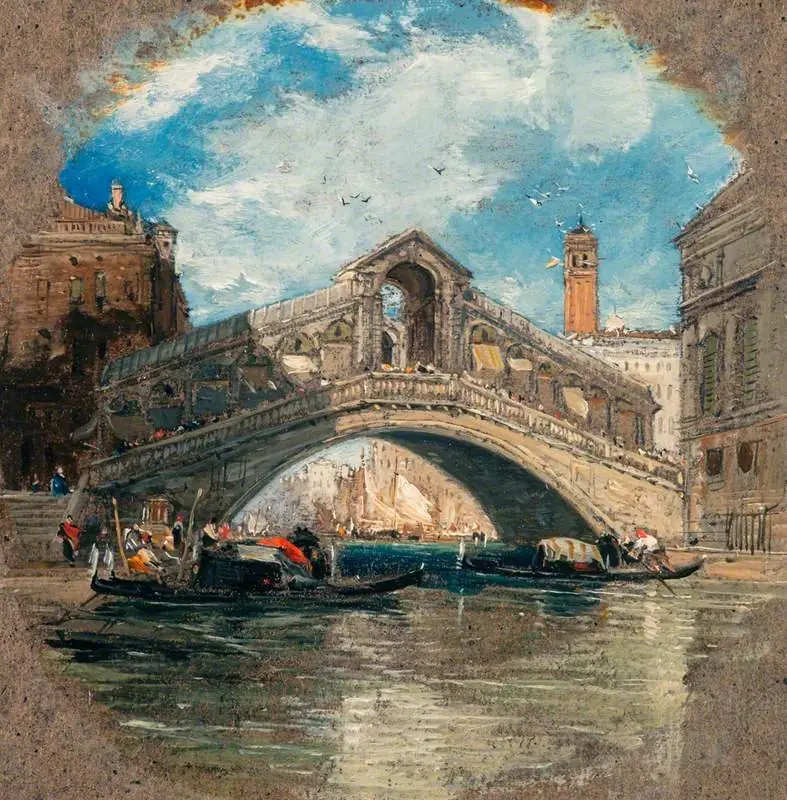
The scene is composed with restrained detail, focusing on a moored vessel in the foreground and a line of buildings receding along the canal.
James Holland’s 1864 watercolour captures Venice in the quiet aftermath of rain, under a south-west wind. The scene is composed with restrained detail, focusing on a moored vessel in the foreground and a line of buildings receding along the canal. The medium’s transparency enhances the atmosphere, suggesting damp air and softened reflections without heavy brushwork. The work is signed and dated, affirming its place in Holland’s later output.
Subject & Meaning
The painting presents Venice not as a bustling tourist destination but as a lived-in space, where daily rhythms pause after weather shifts. The furled sails and still water imply a temporary lull in activity, while the church dome anchors the composition as a symbol of enduring presence. The absence of figures emphasizes solitude and the quiet dignity of the urban landscape, reflecting a contemplative view of the city.
Technique & Style
Holland employs watercolour with a light touch, layering washes to suggest moisture in the air and the sheen on wet surfaces. The sky is rendered in pale blues with faint cloud streaks, allowing the architecture to emerge softly from the background. Edges are blurred where light meets shadow, avoiding sharp contours. This approach prioritizes atmospheric effect over architectural precision, aligning with Romantic-era sensibilities in landscape watercolour.
History & Provenance
Created in 1864, the work belongs to Holland’s mature period, following his travels through Italy in the 1840s and 1850s. It was likely painted during one of his return visits to Venice, a city he revisited for its light and architectural character. The signed date suggests it was intended as a finished piece, not a sketch. Its early provenance is unrecorded, but it entered institutional collections by the late 19th century.
Context
In mid-19th century Britain, watercolour was elevated as a serious medium for topographical and travel art. Holland, a member of the Royal Watercolour Society, contributed to this trend by documenting European cities with observational accuracy and poetic restraint. Venice, popular among British travelers, was often portrayed as a romantic ruin—Holland’s version, however, avoids melodrama, favoring quiet realism.
Legacy
Holland’s watercolours, including this one, are valued for their understated documentation of 19th-century Venetian life. While not widely exhibited today, they remain part of academic studies on British watercolour practices and the evolution of travel art. His restrained technique influenced later artists seeking to capture transient weather and light without theatricality.
Artist & collection

Artist
James Holland (18 October 1799 – 12 February 1870) was an English painter of flowers, landscapes, architecture, marine subjects, and a book illustrator.