Artwork
Walter Sickert
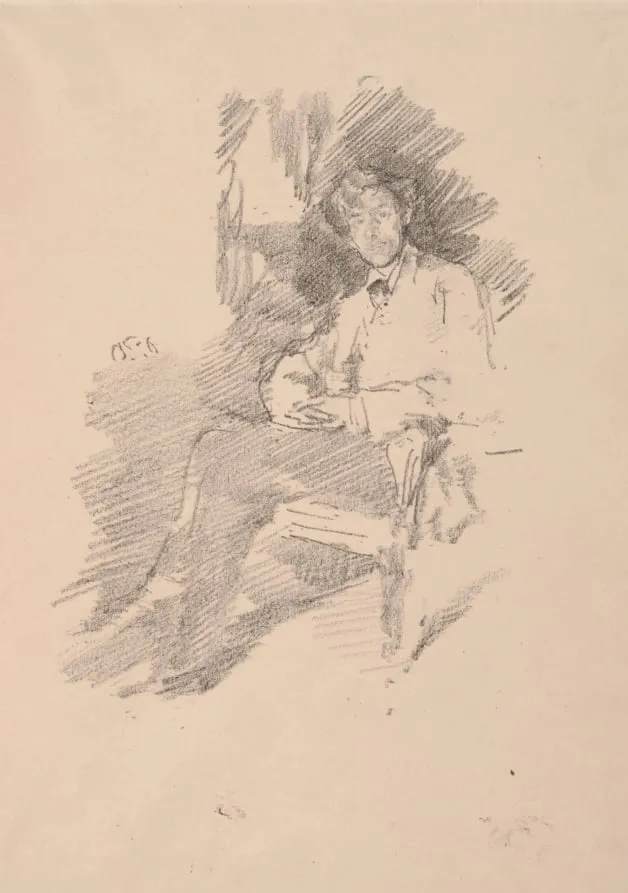
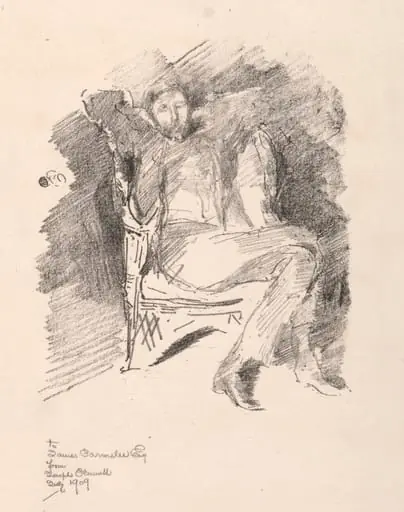
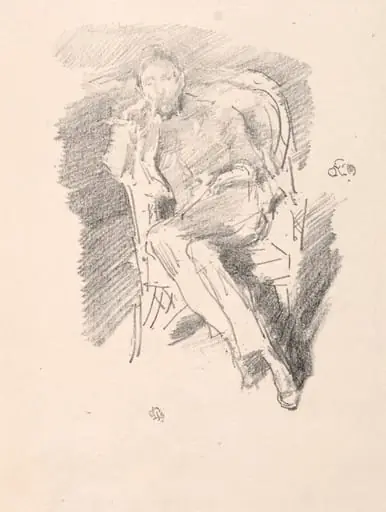
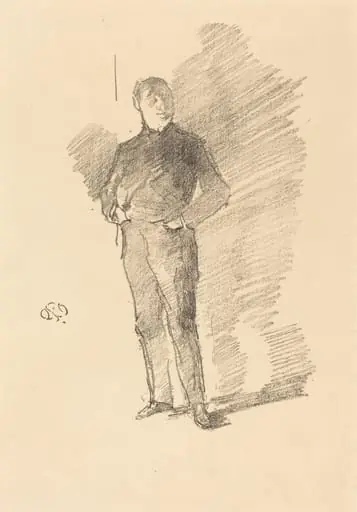
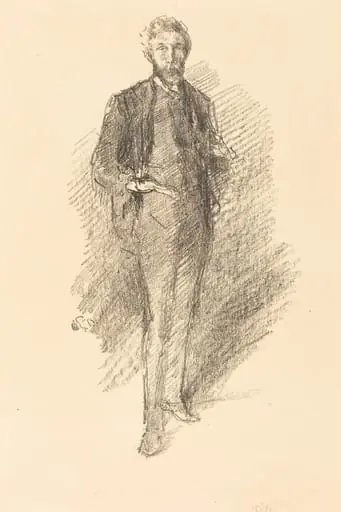
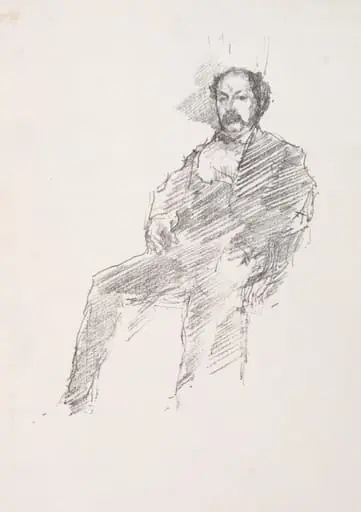
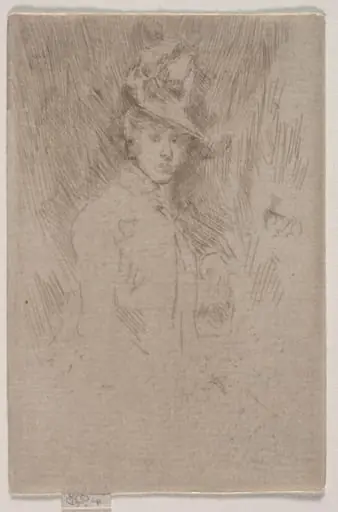
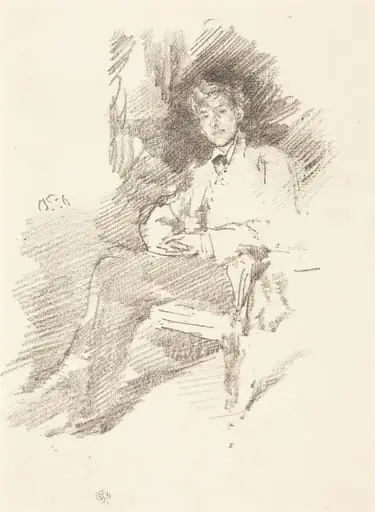
Walter Sickert is a print by the Impressionist artist James McNeill Whistler. It dates from 1895 and is held in the collection of the Cleveland Museum of Art.
About this work
Overview
The composition isolates the figure against a uniform background, emphasizing his presence through subtle shifts in light and shadow.
This print, created in 1895, portrays the British artist Walter Sickert, rendered by James McNeill Whistler. Executed in a tonal, low-contrast medium, it captures Sickert in a contemplative pose, seated and dressed formally. The composition isolates the figure against a uniform background, emphasizing his presence through subtle shifts in light and shadow. The work reflects Whistler’s interest in portraiture as an exercise in mood and form rather than narrative.
Subject & Meaning
Walter Sickert, a fellow artist and associate of Whistler, is depicted in quiet introspection, arms crossed and gaze lowered. The pose suggests reserve or concentration, aligning with Whistler’s preference for psychological nuance over theatricality. The absence of contextual details reinforces the focus on character, inviting viewers to interpret the sitter’s demeanor through posture and expression alone, consistent with Whistler’s aesthetic of emotional restraint.
Technique & Style
Whistler employed a restrained tonal palette and careful gradations of light to model the figure, drawing on principles of chiaroscuro without overt dramatic contrast. The rendering of fabric folds and hair is precise yet subdued, avoiding excessive detail in favor of atmospheric harmony. The print’s surface is delicately worked, with fine lines and hatching contributing to a sense of quiet texture, characteristic of Whistler’s etching practice during this period.
History & Provenance
Created in 1895, the print was made during a period of close artistic exchange between Whistler and Sickert, both active in London’s avant-garde circles. It entered the collection of The Cleveland Museum of Art through established acquisition channels in the 20th century. The work’s survival in good condition reflects its careful handling and the enduring interest in Whistler’s graphic output among institutional collectors.
Context
Whistler produced this portrait amid broader shifts in late 19th-century art, where portraiture increasingly emphasized psychological depth over social documentation. Though associated with Aestheticism, his approach diverged from Impressionism’s focus on light and movement. Instead, he favored controlled composition and tonal harmony, aligning more closely with the traditions of drypoint and etching practiced by earlier European masters.
Legacy
This portrait remains a significant example of Whistler’s graphic work, illustrating his ability to convey presence through minimal means. It contributes to the understanding of artistic networks in fin-de-siècle Europe, particularly the relationships between British and American artists. The print continues to be studied for its technical refinement and its role in redefining portraiture beyond literal representation.
Artist & collection
Artist
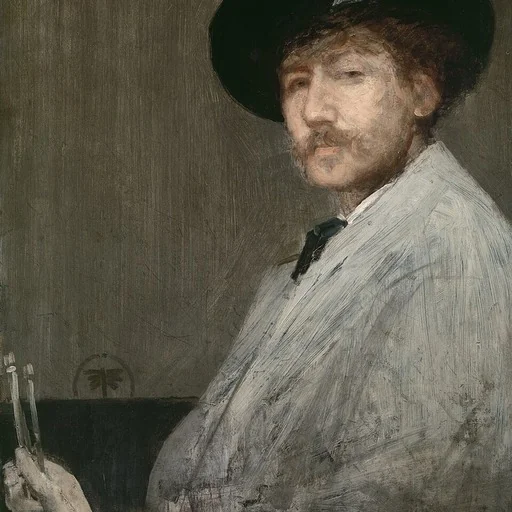
James Abbott McNeill Whistler was an American painter in oils and watercolor, and printmaker, active during the American Gilded Age and based primarily in the United Kingdom.

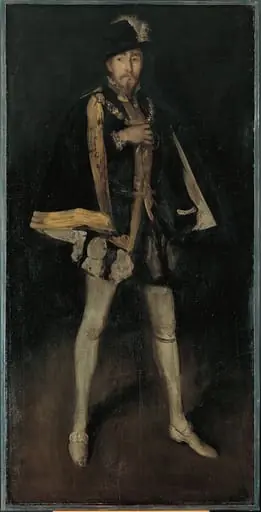 Arrangement in Black, No. 3: Sir Henry Irving as Philip II of Spain
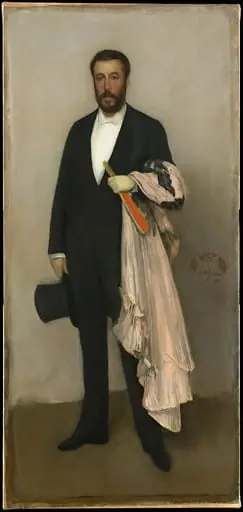 Arrangement in Flesh Colour and Black: Portrait of Theodore Duret
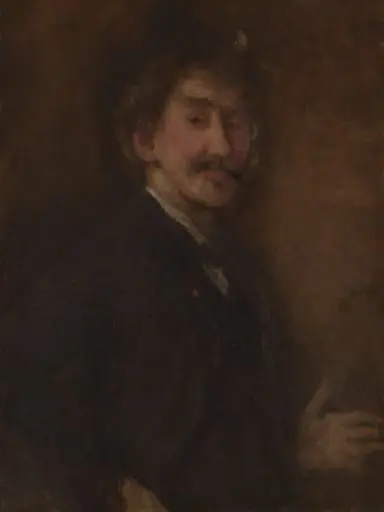 Gold and Brown: Self-Portrait
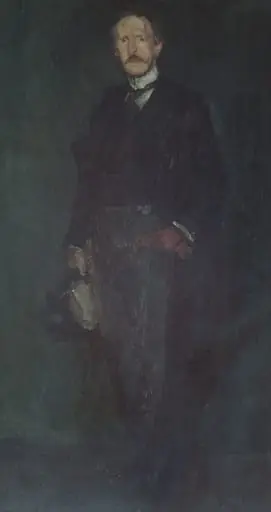 Edward Guthrie Kennedy
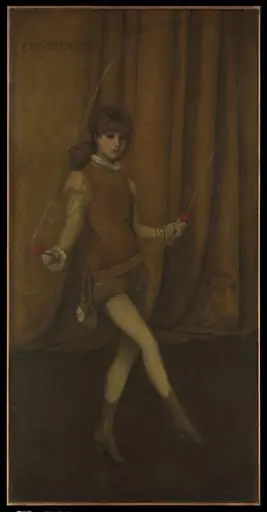 Harmony in Yellow and Gold: The Gold Girl—Connie Gilchrist
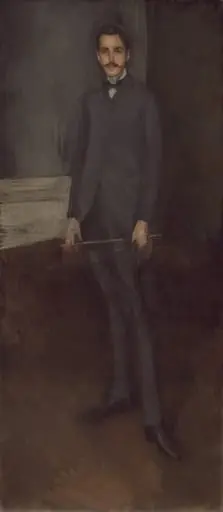 George W. Vanderbilt
 Symphony in White, No. 1: The White Girl
 Henry Irving as Philip II of Spain