Artwork
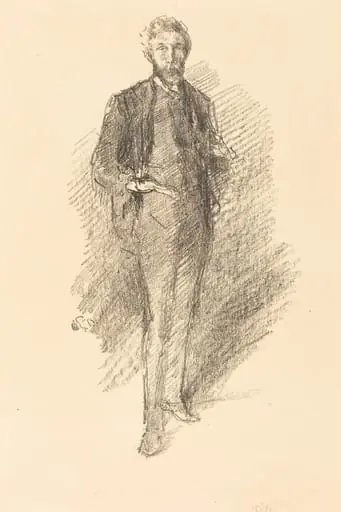
Study No. 2: Mr. Thomas Way
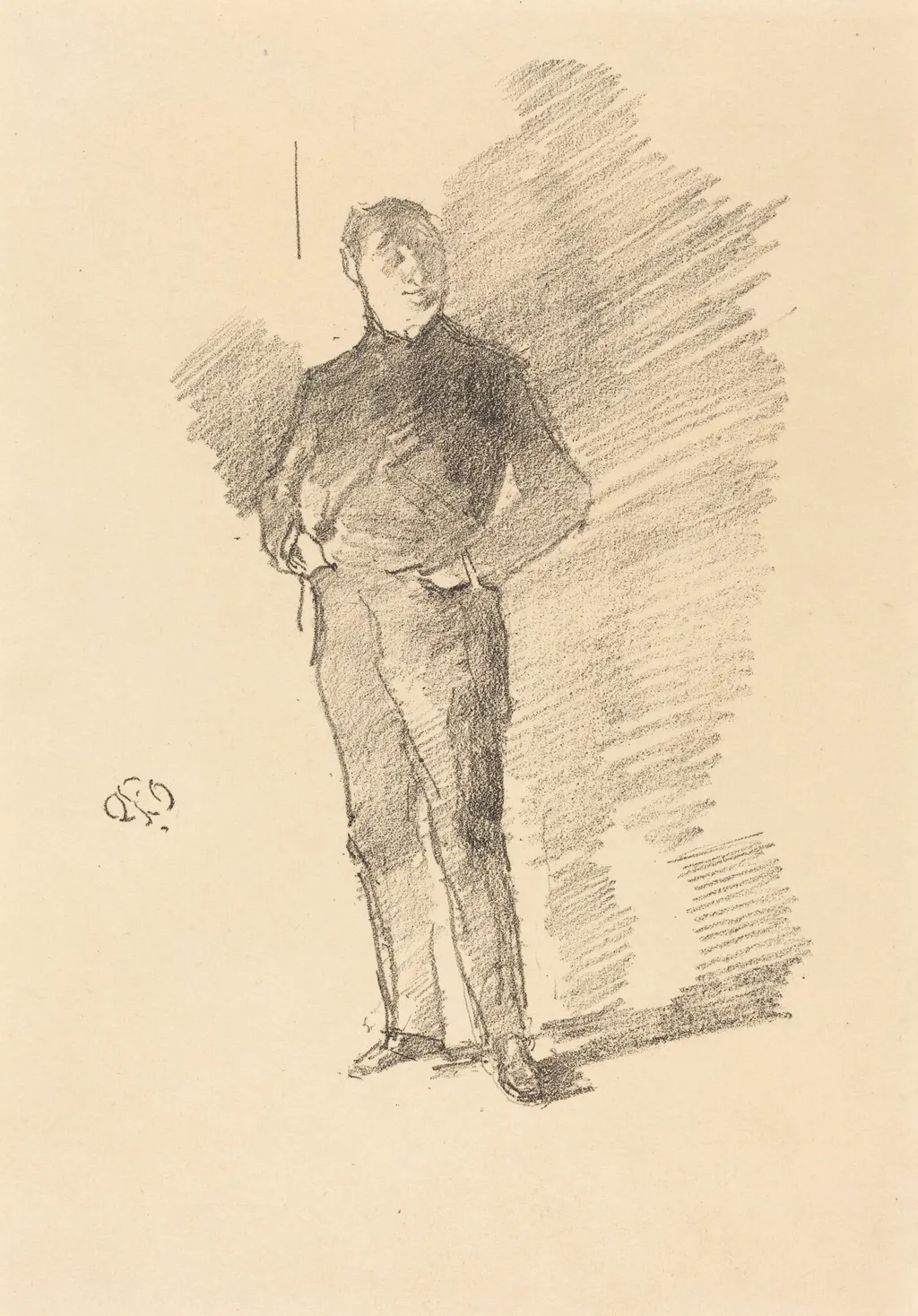
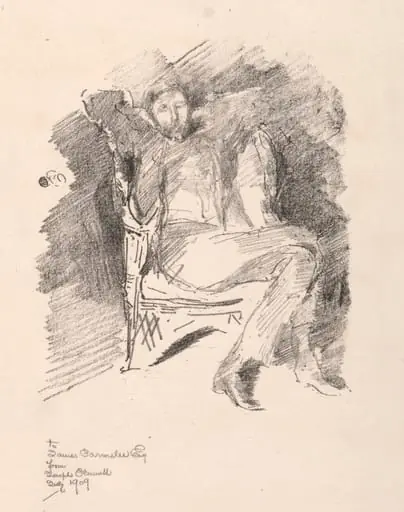
Study No. 2: Mr. Thomas Way is an ink print by the Impressionist artist James McNeill Whistler. It dates from 1896 and is held in the collection of the National Gallery of Art.
About this work
Overview
Created in 1896, this lithograph presents Thomas Way, the printer who worked with James McNeill Whistler, rendered in stark black on laid paper. The image functions as a study rather than a formal portrait, capturing a fleeting pose with minimal detail. Whistler’s approach here aligns with his broader commitment to “art for art’s sake,” emphasizing visual harmony over narrative content.
Subject & Meaning
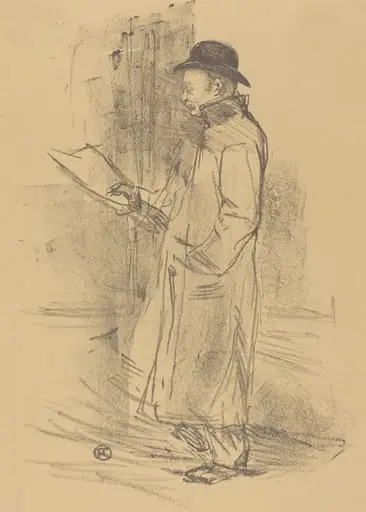
The figure shown is Way standing with his hands tucked into his pockets, dressed in a long coat and trousers. The composition offers no overt symbolism or moralizing; instead, it records a moment of quiet presence, reflecting Whistler’s preference for restrained, non‑sentimental subjects that foreground form and atmosphere.
Technique & Style
Executed through lithography, the work exploits the medium’s capacity for soft, sketch‑like edges. Whistler’s line work is loose and rapid, suggesting a spontaneous note rather than a finished study. The background is reduced to a few gestural strokes that hint at a wall or chair, reinforcing the emphasis on line and tonal contrast.
History & Provenance
During the late nineteenth century Whistler expanded his practice beyond oils and watercolors into printmaking, producing works such as this study. As an American expatriate based in Britain, he signed his prints with a distinctive butterfly motif, a mark that combined subtlety with a deliberately assertive public persona.
Artist & collection
Artist
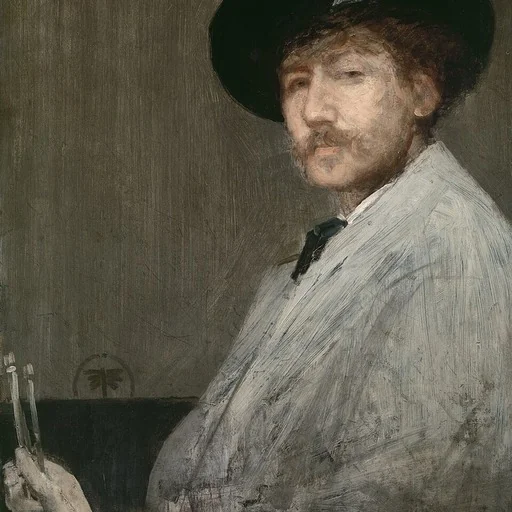
James Abbott McNeill Whistler was an American painter in oils and watercolor, and printmaker, active during the American Gilded Age and based primarily in the United Kingdom.

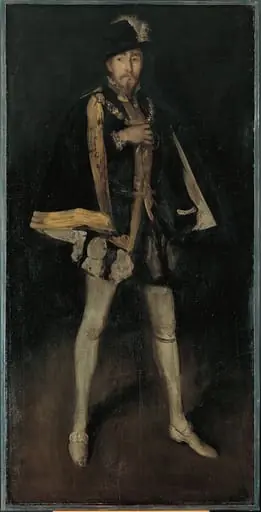 Arrangement in Black, No. 3: Sir Henry Irving as Philip II of Spain
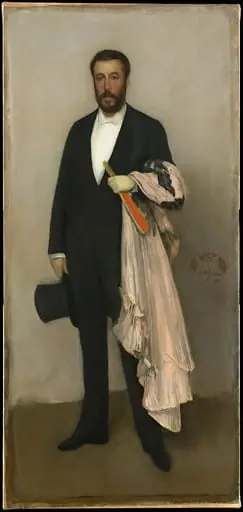 Arrangement in Flesh Colour and Black: Portrait of Theodore Duret
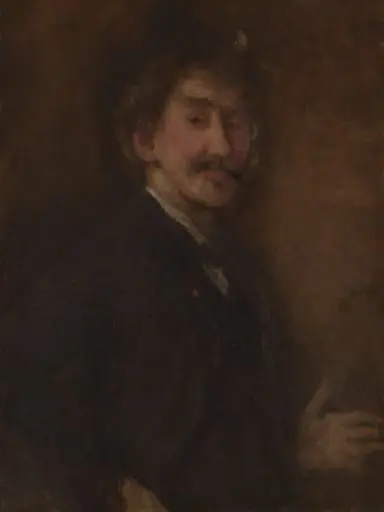 Gold and Brown: Self-Portrait
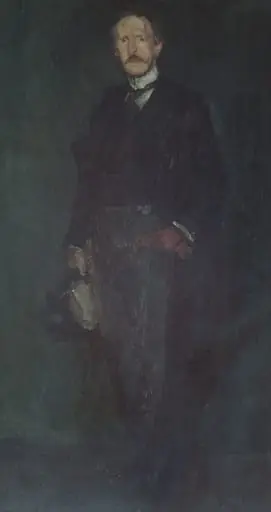 Edward Guthrie Kennedy
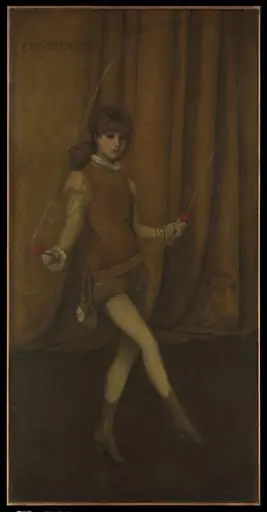 Harmony in Yellow and Gold: The Gold Girl—Connie Gilchrist
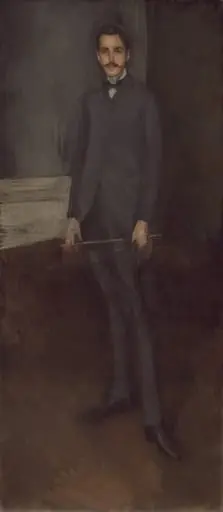 George W. Vanderbilt
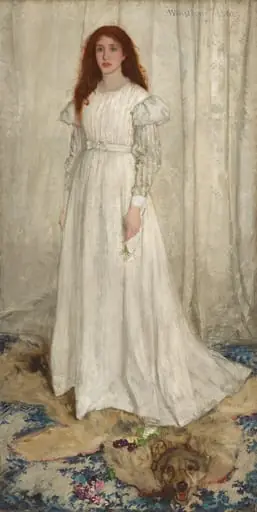 Symphony in White, No. 1: The White Girl
 Henry Irving as Philip II of Spain