Artwork
American Homestead
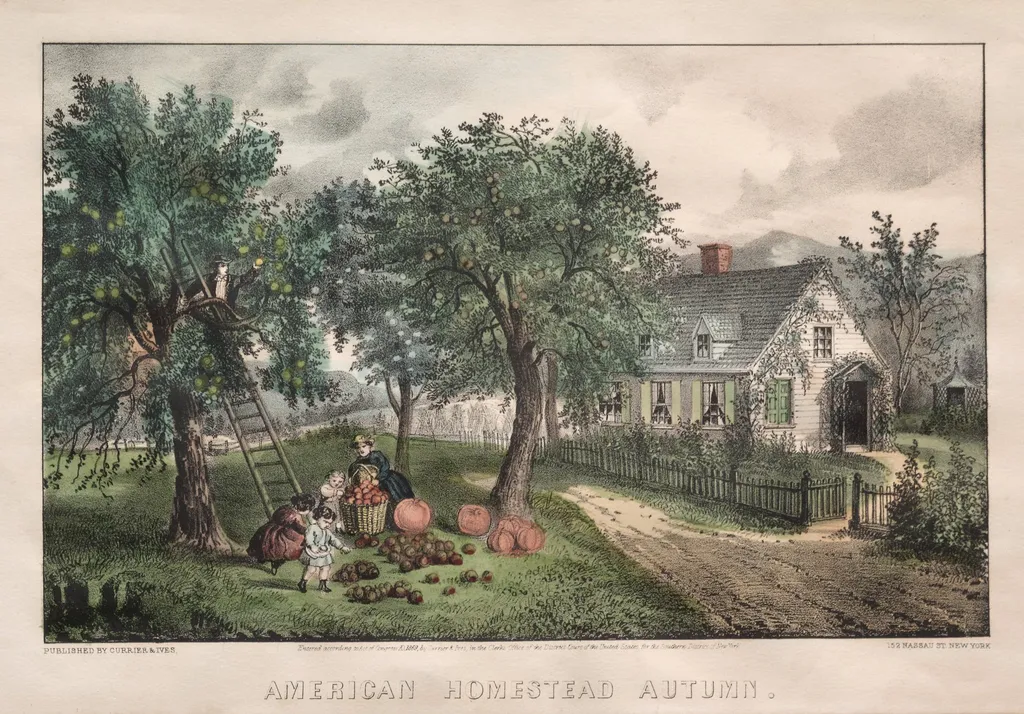
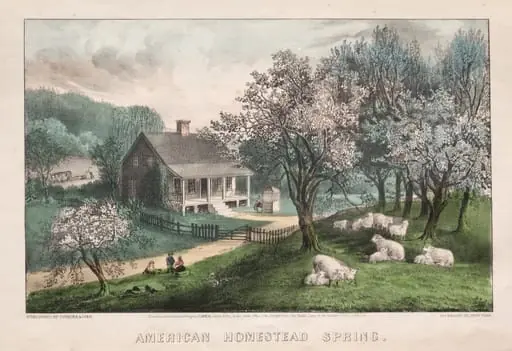
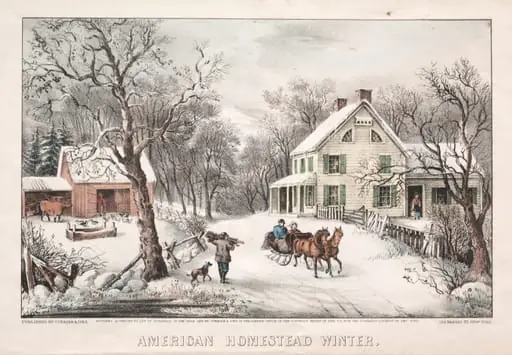
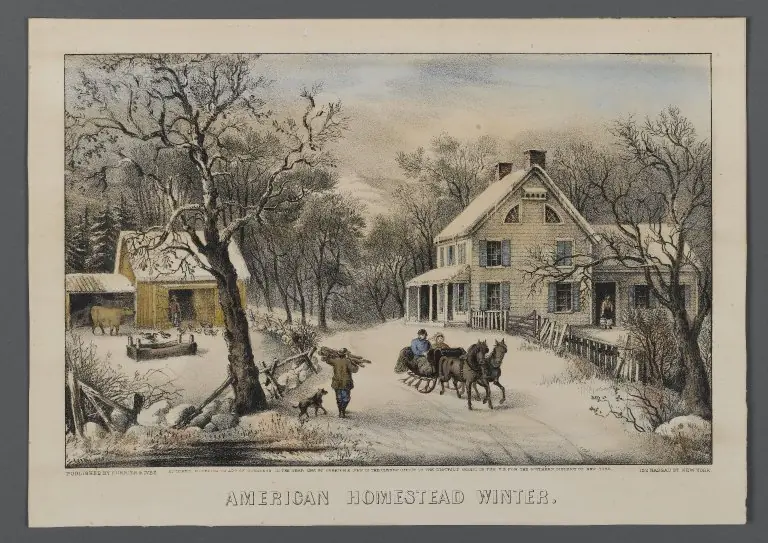
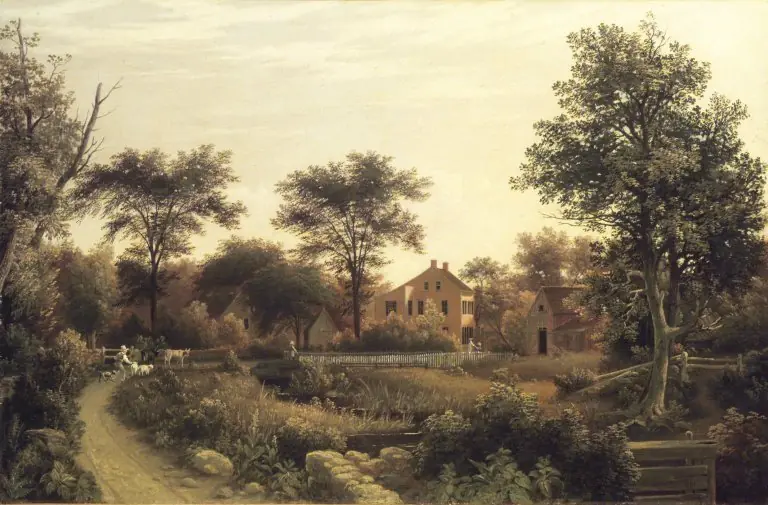
American Homestead is a print by the Impressionist artist James Merritt Ives. It dates from 1869 and is held in the collection of the Cleveland Museum of Art.
About this work
Overview
The work is part of the collection at The Cleveland Museum of Art, where it reflects 19th-century American ideals of self-sufficiency and family-centered life.
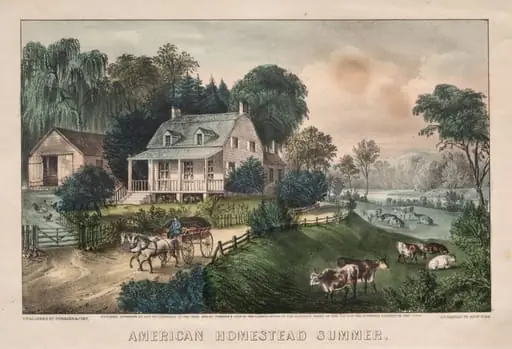
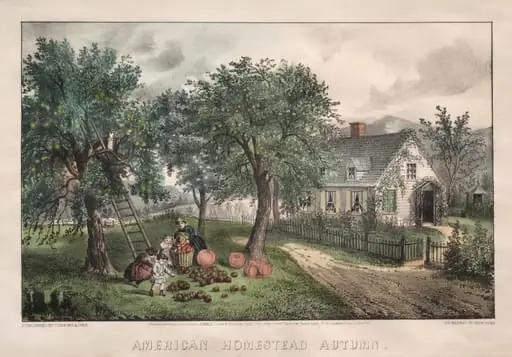
American Homestead is an 1869 print by James Merritt Ives, produced during a period when illustrated scenes of rural life were widely circulated. It depicts a quiet domestic moment on a modest farmstead, rendered in a detailed, accessible style suited for middle-class households. The work is part of the collection at The Cleveland Museum of Art, where it reflects 19th-century American ideals of self-sufficiency and family-centered life.
Subject & Meaning
The scene centers on a family gathered beneath an apple tree, with a woman seated calmly as children play nearby. Baskets of harvested apples and pumpkins lie on the ground, suggesting seasonal abundance and the rewards of labor. The white house, picket fence, and dirt path evoke simplicity and order. The composition conveys quiet contentment, reinforcing cultural narratives of domestic harmony and rural virtue in post-Civil War America.
Technique & Style
Ives employed a finely detailed, illustrative technique typical of chromolithography, allowing for rich color layers and subtle tonal shifts. Earthy hues dominate the palette—ochres, moss greens, and soft browns—while the cloudy sky diffuses a gentle, even light. Lines are clean and controlled, avoiding the loose brushwork of Impressionism; instead, the style prioritizes clarity and sentimental appeal for mass reproduction.
History & Provenance
Created in 1869, the print was produced by Ives’s firm, Currier & Ives, known for popularizing affordable, idealized American scenes. It was widely distributed as a decorative print for homes, reflecting the era’s demand for uplifting imagery. The Cleveland Museum of Art acquired it as part of its broader collection of 19th-century American graphic arts, preserving its role in everyday visual culture.
Context
In the decades following the Civil War, images like American Homestead offered nostalgic visions of stability amid rapid industrialization. Rural life was idealized as morally pure and self-reliant, contrasting with urban growth and social change. Such prints served both decorative and ideological functions, reinforcing values of family, labor, and connection to the land for a broad, non-elite audience.
Legacy
Though not aligned with fine art movements like Impressionism, American Homestead remains a significant example of popular visual culture. It illustrates how commercial printmaking shaped public perceptions of American identity. Today, it is studied for its role in constructing national myths and as a historical artifact of how ordinary Americans engaged with art in their daily lives.
Artist & collection