Artwork
A Mountain Ramble
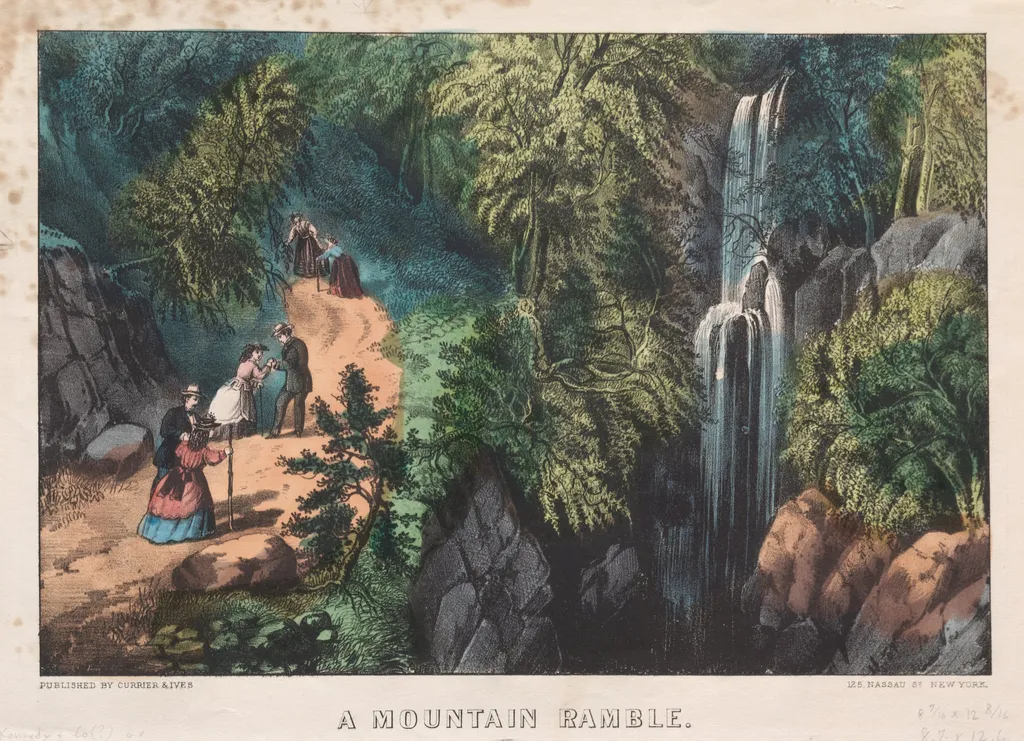
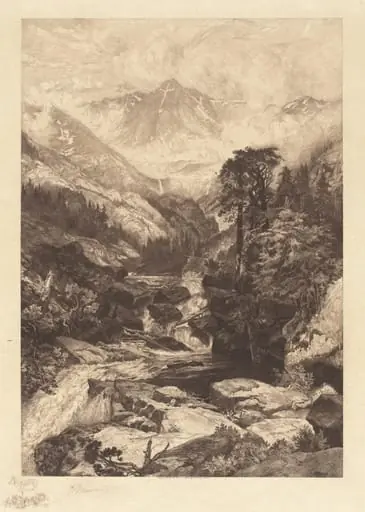
A Mountain Ramble is a print by the Impressionist artist James Merritt Ives. It dates from 1873 and is held in the collection of the Cleveland Museum of Art.
About this work
Overview
A Mountain Ramble is a lithographic print produced around 1873 by James Merritt Ives, known for his collaborations with Currier & Ives.
A Mountain Ramble is a lithographic print produced around 1873 by James Merritt Ives, known for his collaborations with Currier & Ives. The work captures a solitary figure ascending a winding rural path, framed by dense vegetation and a luminous sky. It reflects the popular 19th-century American interest in pastoral scenes and everyday life, rendered in a detailed, accessible style suited for mass reproduction.
Subject & Meaning
The figure, a woman carrying a basket, moves deliberately along a steep, twisting trail toward a distant farmhouse. Her journey suggests quiet perseverance, evoking themes of domestic labor and rural self-reliance. The composition avoids drama, instead emphasizing the quiet dignity of solitary movement through nature, a common motif in mid-Victorian American visual culture.
Technique & Style
Executed as a hand-colored lithograph, the print employs fine lines and soft tonal gradations to suggest depth and texture. The sky is rendered with loose, cloud-filled washes, contrasting with the tightly detailed foliage and path. Ives’s style prioritizes clarity and charm over artistic experimentation, aligning with the commercial aesthetic of Currier & Ives, which favored legibility and emotional resonance for middle-class audiences.
History & Provenance
Created during Ives’s tenure at Currier & Ives, the print was part of a broader series of American landscape scenes produced for domestic decoration. It entered the collection of The Cleveland Museum of Art through documented acquisition, reflecting the institution’s commitment to preserving 19th-century American graphic art. Its survival in good condition underscores its popularity and enduring cultural presence.
Context
In the post-Civil War era, prints like A Mountain Ramble offered urban audiences idealized visions of rural life, providing comfort amid rapid industrialization. Such images reinforced values of simplicity, hard work, and harmony with nature. Ives’s work, though not avant-garde, played a key role in shaping public visual habits, bridging fine art and popular media of the time.
Legacy
While overshadowed by the more radical realism of artists like Winslow Homer, Ives’s prints remain significant as cultural artifacts of their time. A Mountain Ramble exemplifies how mass-produced imagery helped define American identity through nostalgic, morally grounded scenes. Today, it is studied for its role in the democratization of art and the visual language of everyday life in the 19th century.
Artist & collection

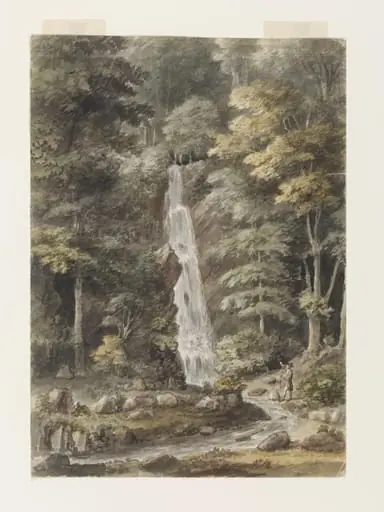 The Cascade at Hestercombe
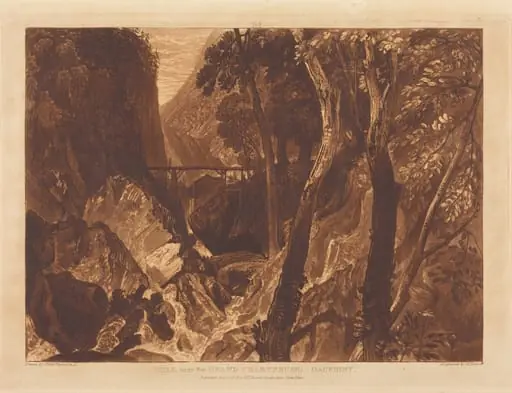 Mill near the Grand Chartreuse
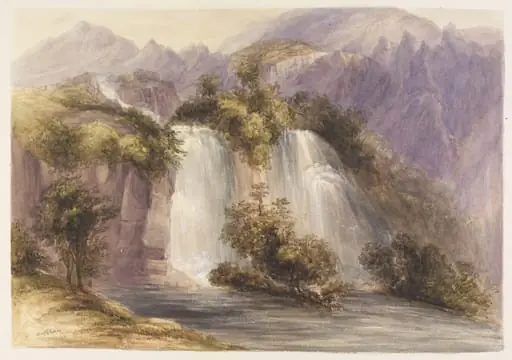 The Beit el-ma Falls, near Antioch
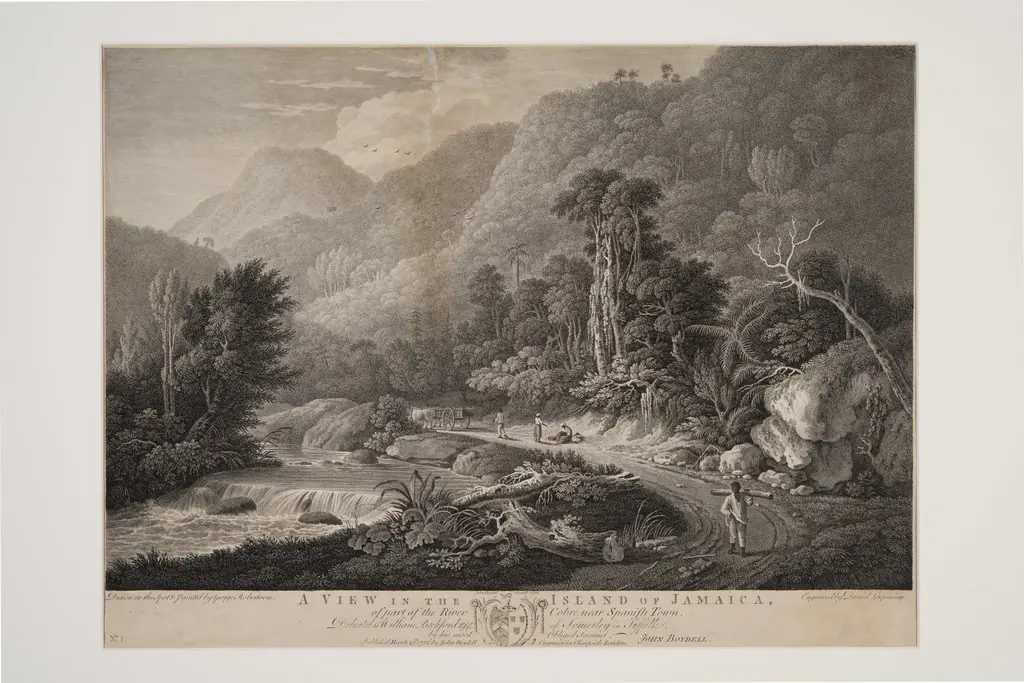 A View in the Island of Jamaica, of Part of the River Cobre near Spanish Town
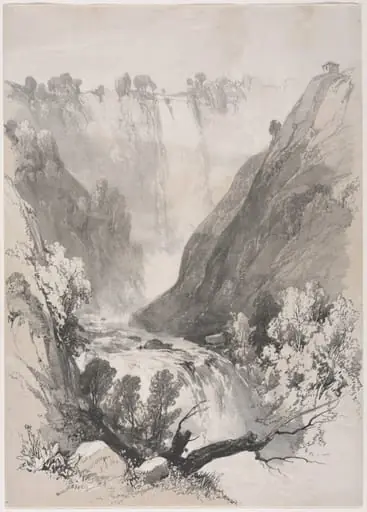 Sketches at Home and Abroad: Falls of Terni
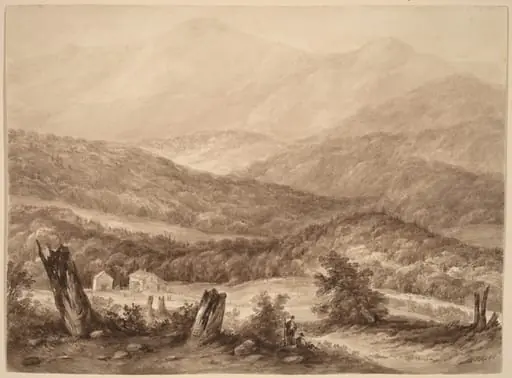 White Mountains (?)
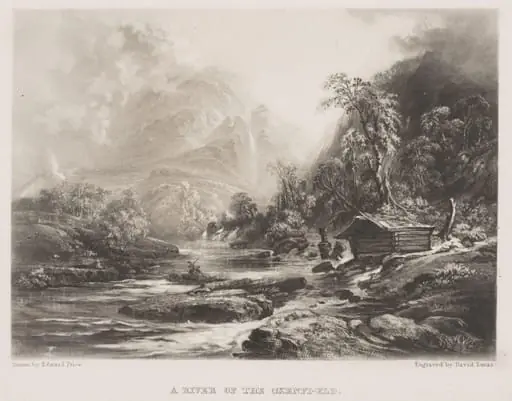 A River of the Oxenfi-eld
 The Heart of the Andes
 Cascade near Gayle, Wensleydale
 View Near the Falls of Schuylkill
 Mawddach Falls near Dolgelly
 Mountain of the Holy Cross, Colorado