Artwork
Reconstruction of Jerusalem and the Temple of Herod
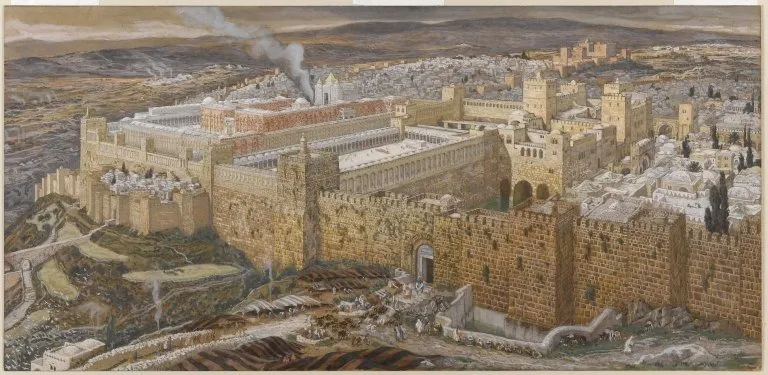
Reconstruction of Jerusalem and the Temple of Herod is an unspecified painting by the Post-Impressionist artist James Tissot. It dates from 1896 and is held in the collection of the Brooklyn Museum.
About this work
Overview
It marks a departure from his earlier depictions of 19th-century Parisian life, reflecting his deepening interest in religious history.
Painted in 1896 by French artist James Tissot, this work is part of a series exploring biblical landscapes. It marks a departure from his earlier depictions of 19th-century Parisian life, reflecting his deepening interest in religious history. The painting presents a meticulously researched vision of ancient Jerusalem during the time of Herod’s Temple, rendered with architectural precision and atmospheric depth.
Subject & Meaning
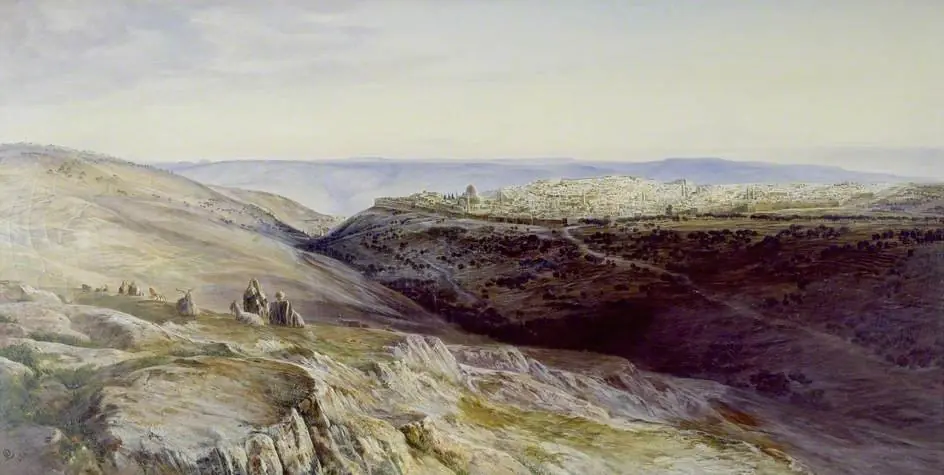
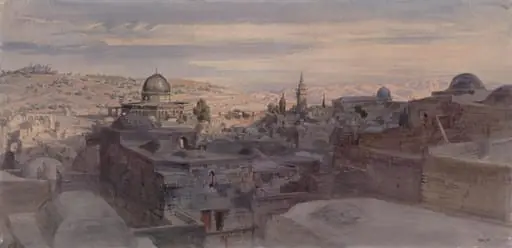
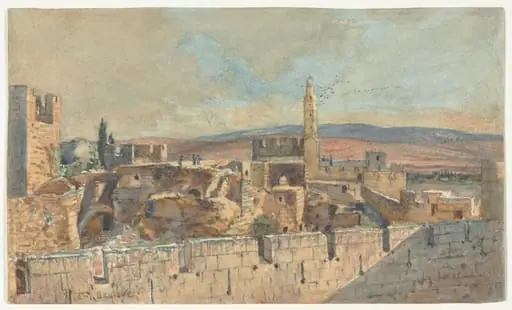
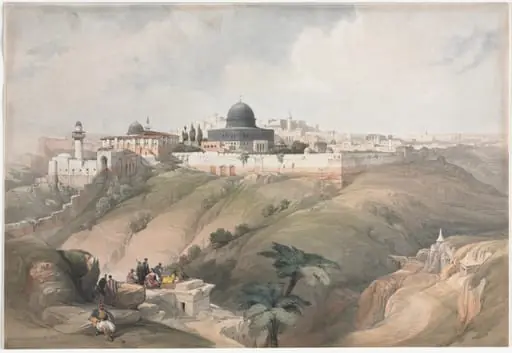
The painting illustrates Jerusalem as it might have appeared in the first century BCE, centered on Herod’s Temple complex. The monumental structure dominates the composition, surrounded by dense urban development, fortified walls, and bustling activity at the city gate. The scene conveys a sense of sacred order and civic life, emphasizing the Temple’s role as both spiritual and political heart of the city.
Technique & Style
Tissot employed a refined, detailed approach aligned with post-Impressionist tendencies, favoring clarity over brushwork spontaneity. He used subtle gradations of light and shadow to model stone surfaces and define spatial depth, enhancing the realism of the architecture. The sky, softly clouded, provides a muted backdrop that directs focus to the city’s intricate forms and human activity below.
History & Provenance
Created during Tissot’s later years, the painting emerged from his extensive travels to the Levant and study of archaeological sources. It was acquired by the Brooklyn Museum in the early 20th century as part of a larger collection of his biblical illustrations. The work remains a key example of his scholarly engagement with sacred history, preserved in its original condition.
Context
Tissot’s shift toward biblical subjects coincided with broader 19th-century European interests in archaeology and religious revivalism. His reconstructions were informed by contemporary scholarship, travel accounts, and ethnographic studies, aiming for historical plausibility rather than theological interpretation. This painting reflects a period when visual culture sought to materialize ancient texts through empirical detail.
Legacy
Tissot’s series of biblical paintings, including this one, influenced later illustrators of religious narratives through their commitment to architectural accuracy and atmospheric realism. Though not widely exhibited today, the work endures as a significant artifact of Victorian-era attempts to visualize sacred history, bridging art, archaeology, and textual study.
Artist & collection
Artist
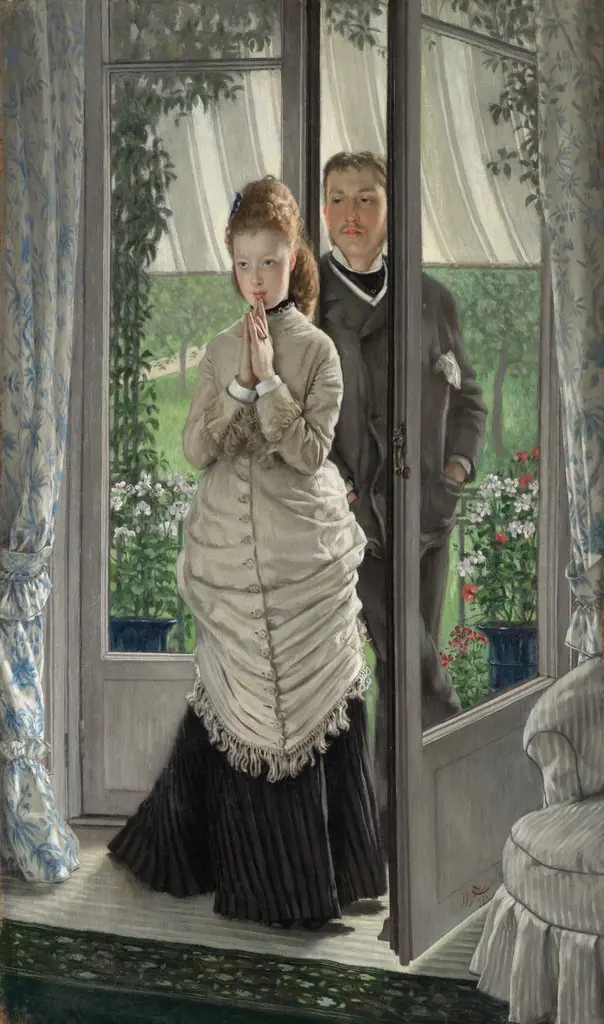
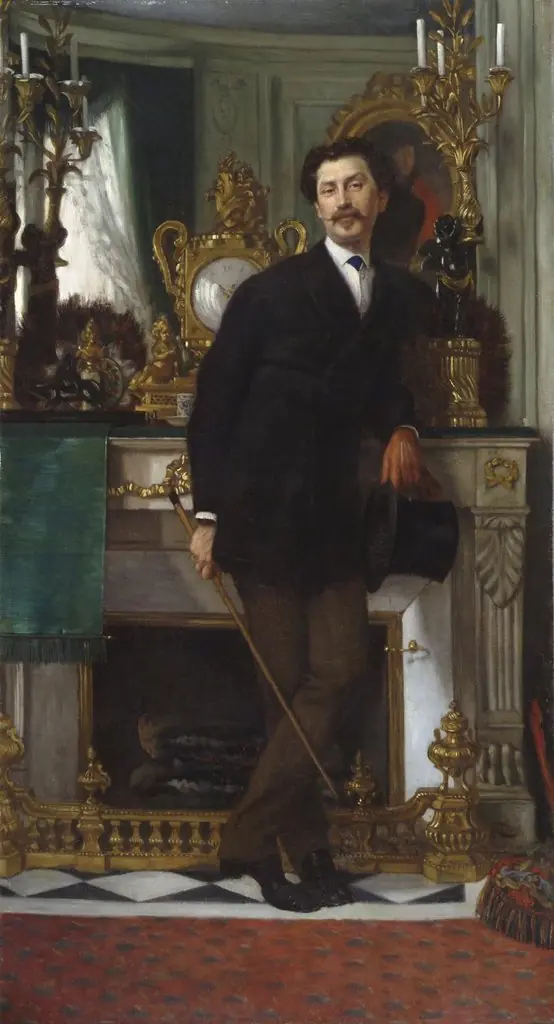
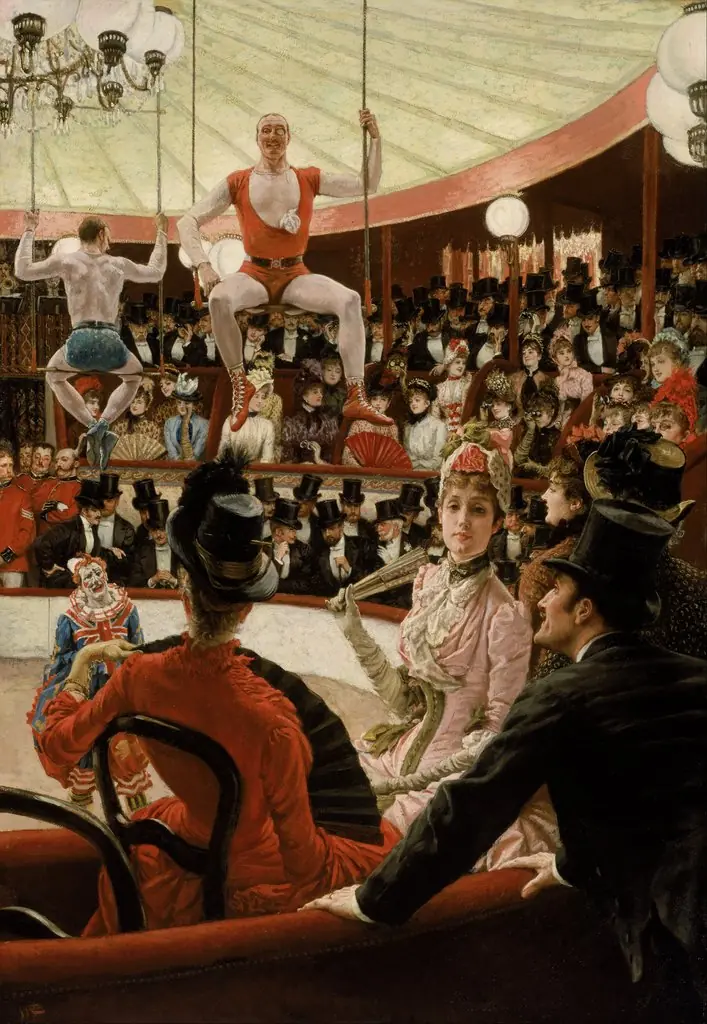
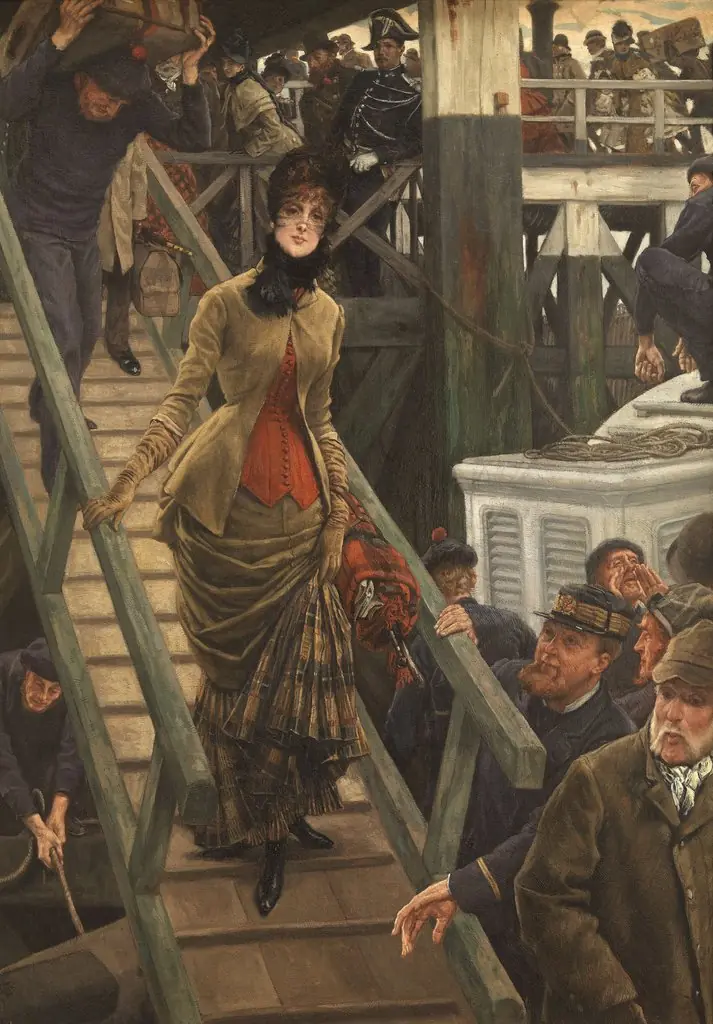
Jacques Joseph Tissot (French: ; 15 October 1836 – 8 August 1902), better known as James Tissot (UK: TISS-oh, US: tee-SOH), was a French painter, illustrator, and caricaturist.