Artwork
Jerusalem
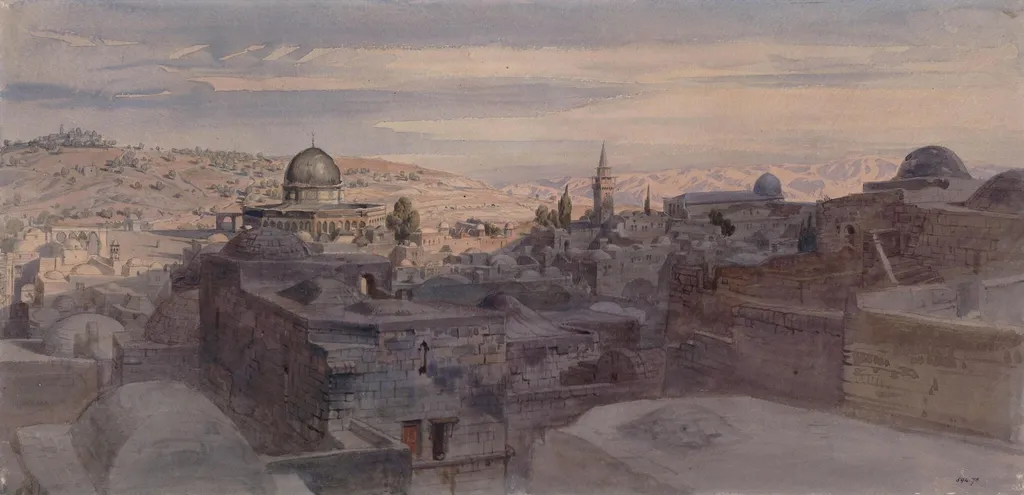
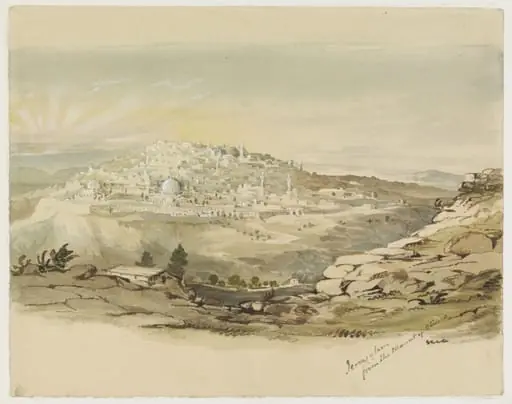
Jerusalem is a watercolor work on paper by the Romanticist artist Werner. It dates from 1830 and is held in the collection of the Victoria and Albert Museum.
About this work
Overview
Jerusalem is a watercolor painting created by Werner in 1830, currently part of the Victoria and Albert Museum's collection.
Subject & Meaning
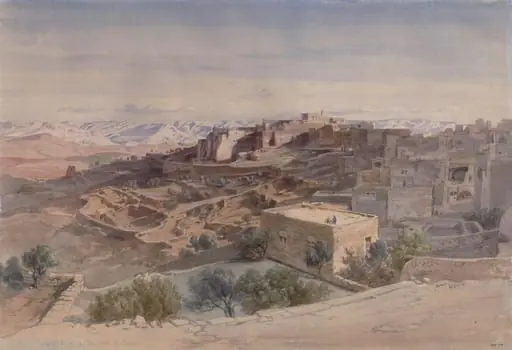
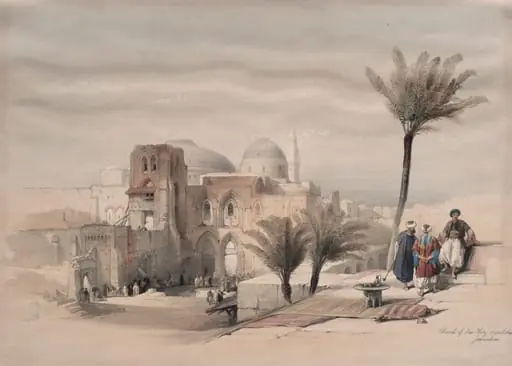
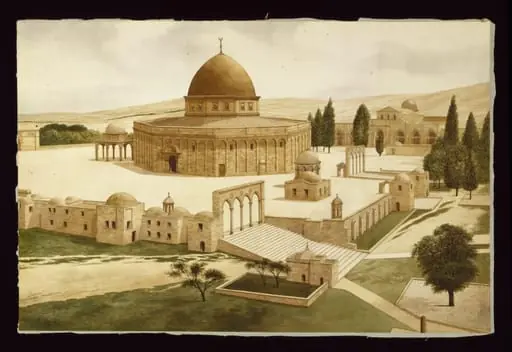
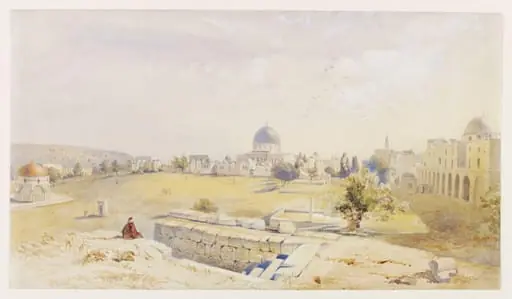
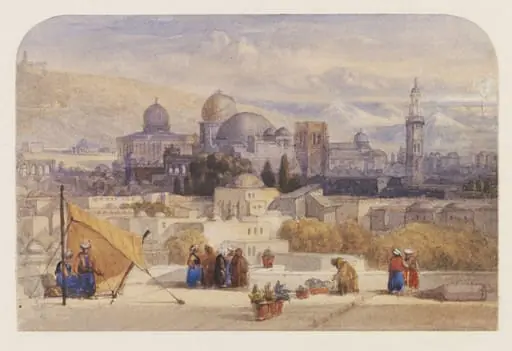
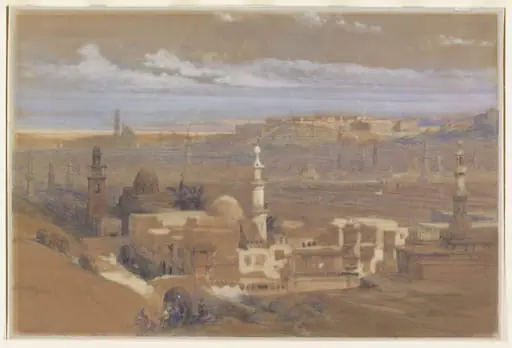
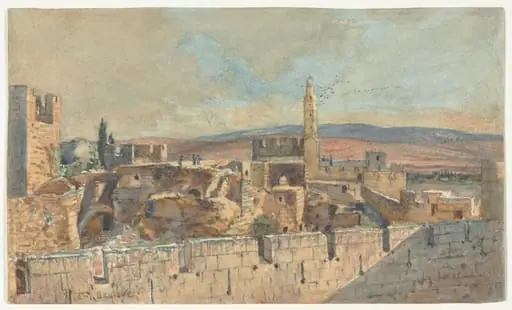
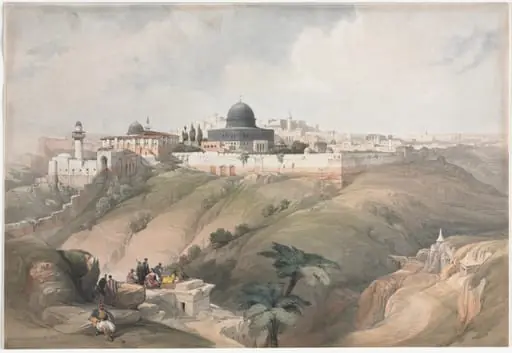
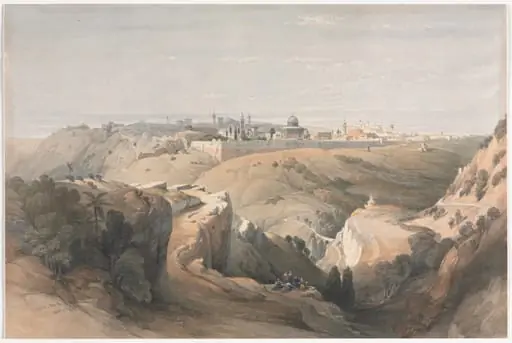
The painting depicts Jerusalem as a city seamlessly integrated into rugged terrain, characterized by prominent domes, minarets, and ancient stone walls in the foreground, set against a serene backdrop of soft blue hills and a distant sea.
Technique & Style
Executed in watercolor, the work emphasizes the expressive play of light, utilizing light washes to create contrasting areas of glow and shadow, evoking a sense of depth and luminosity reminiscent of a detailed sketch.
Context
The painting's harmony of natural and architectural elements, coupled with its emotive use of light, aligns with the principles of Romanticism, which often explored the interplay between human constructs, nature, and emotional resonance.
History & Provenance
Created in 1830 by Werner, the painting is now housed at the Victoria and Albert Museum, though specific details of its acquisition and earlier ownership are not provided here.
Artist & collection
Artist
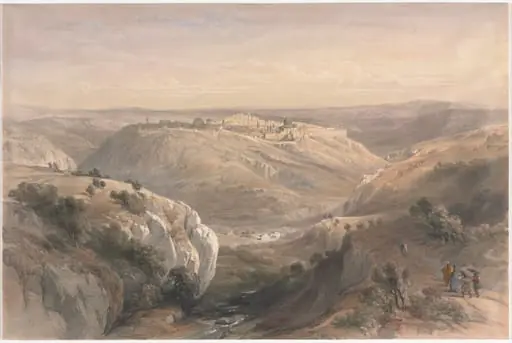
This artist’s watercolours document distant holy cities in quiet detail. Bethlehem (1862) shows low-slung rooftops and olive groves under a cloudy sky, while Jerusalem’s domes rise behind a city wall in a sheet dated…