Artwork
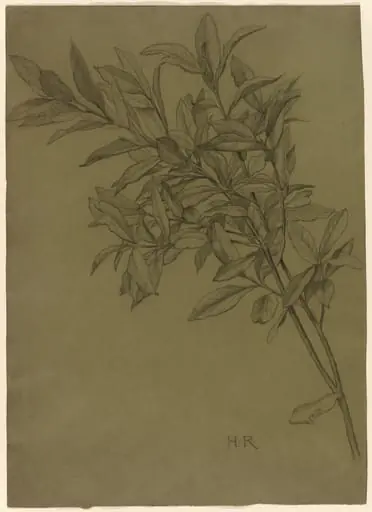
A Branch of Bay
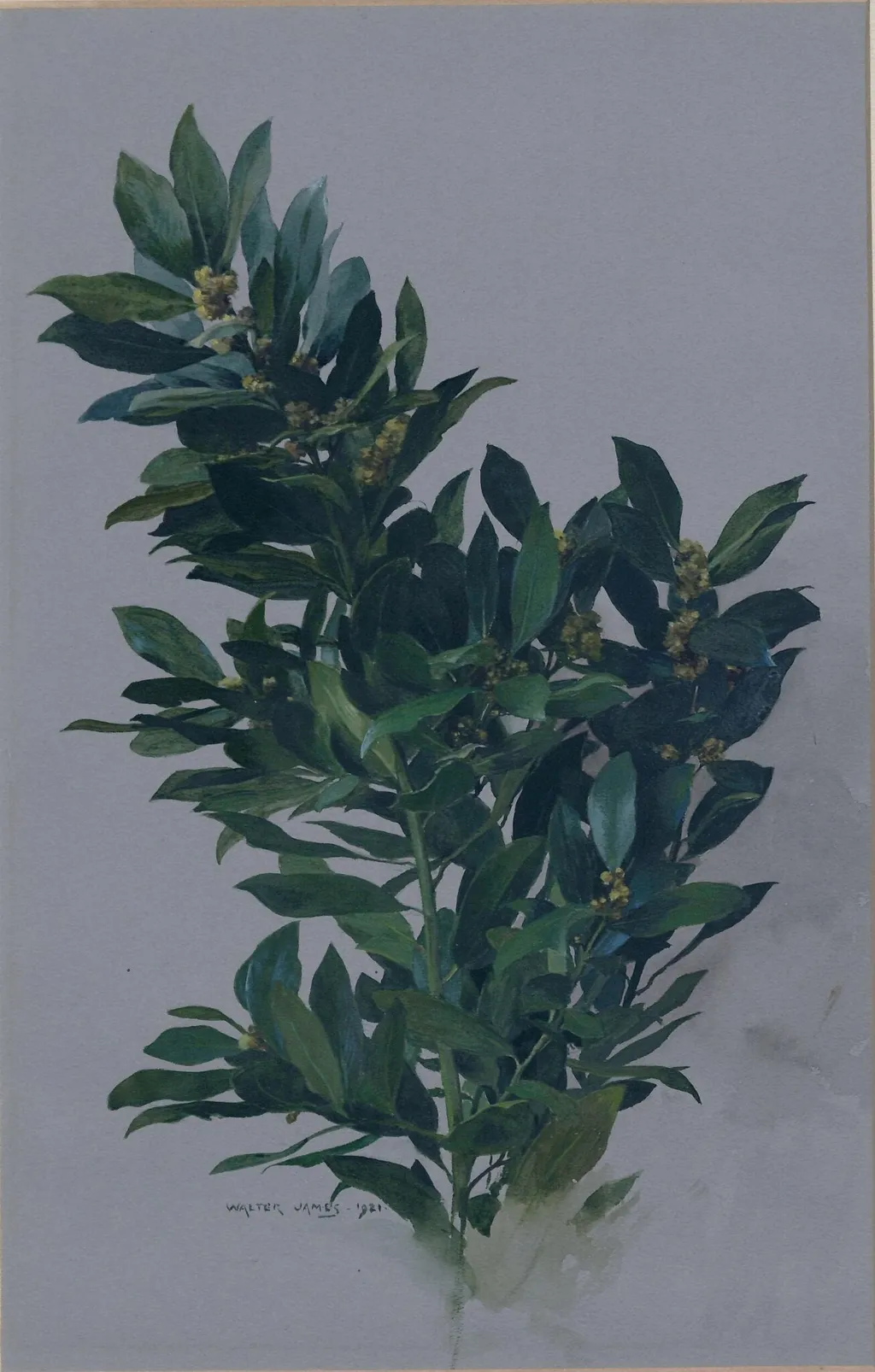
A Branch of Bay is a watercolor work on paper by the Impressionist artist Walter John James. It dates from 1921 and is held in the collection of the Victoria and Albert Museum.
About this work
Overview
A Branch of Bay is a 1921 watercolour by Walter John James, executed on grey paper. The work presents a single bay branch with leaves and faint yellow blossoms, rendered with quiet precision. James signed and dated the piece, affirming its completion in that year. The subdued tone of the paper serves as a neutral ground, enhancing the naturalism of the botanical subject without distraction.
Subject & Meaning
The subject is a solitary bay branch, neither idealized nor symbolic, but observed with close attention to its natural form. The inclusion of small flowers suggests seasonal transition, while the absence of context or human presence emphasizes quiet solitude. The work invites contemplation through its restraint, reflecting an appreciation for botanical detail as an end in itself.
Technique & Style
James employed watercolour with a light, controlled touch, allowing the paper’s grey tone to contribute to the tonal range. Layered washes suggest the texture and translucency of leaves, while delicate brushwork defines veins and petal edges. The medium’s fluidity lends a sense of fragility, reinforcing the stillness of the scene without overt dramatization.
History & Provenance
The work is dated and signed by the artist, indicating it was completed in 1921, likely during a period when James focused on intimate botanical studies. No public record of early ownership or exhibition is widely documented, suggesting it remained in private hands or was part of the artist’s personal archive.
Context
In early 20th-century Britain, watercolour was often used for scientific illustration and domestic art. James’s approach aligns with a tradition of quiet naturalism, distinct from the more expressive movements of the time. His focus on single plant specimens reflects a broader interest in observed detail over narrative or symbolism.
Legacy
Walter John James is not widely known in major art historical narratives, and this work remains a modest example of his practice. A Branch of Bay endures as a quiet testament to his observational skill and sensitivity to natural form, preserved as part of his limited but deliberate body of work.
Artist & collection
Artist
A quiet hand behind the watercolor craze, Walter John James painted delicate English gardens and domestic still lifes in the late 1800s and early 1900s.

 Mock lime (aglaia odorata), zhen zhu lan or mi zi lan
 Amandier de la Georgie
 Amandier de la Georgie
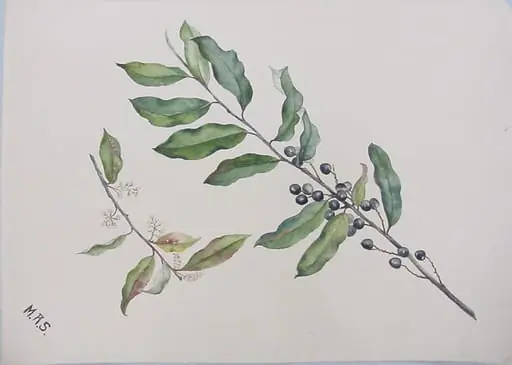 Cherry Laurel (Mock Orange) Bough
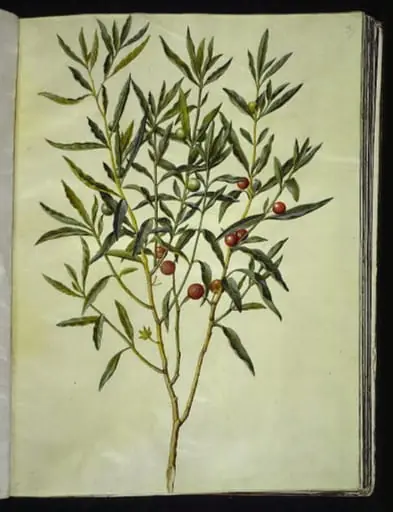 Solanum pseudocapsicum (jerusalem-koralbær)
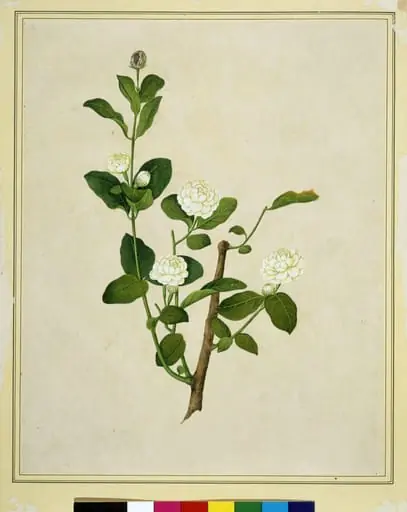 Arabian jasmine
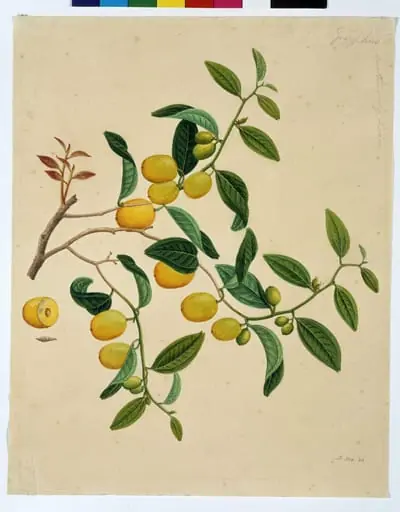 Chinese dates
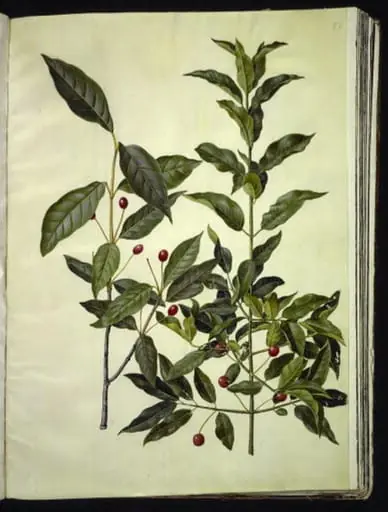 Euonymus latifolius (bredbladet benved); Euonymus europaeus (almindelig benved)
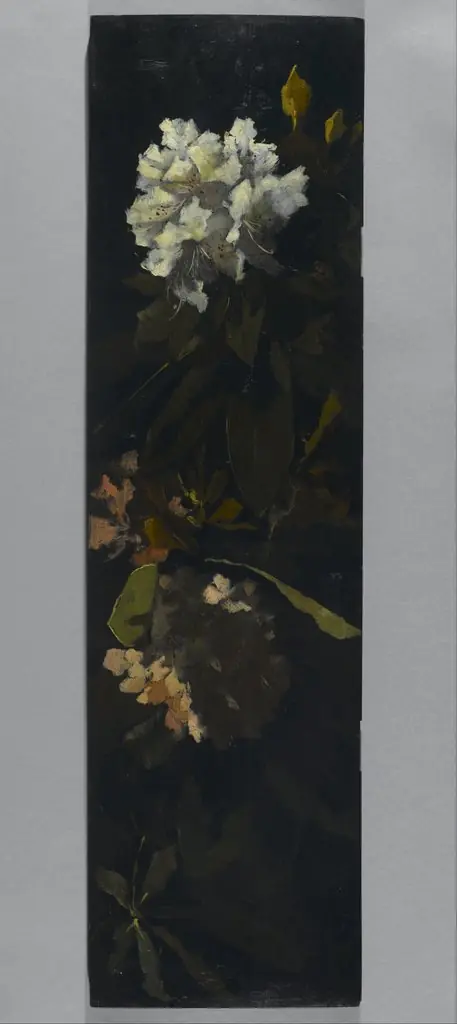 Rhododendrons
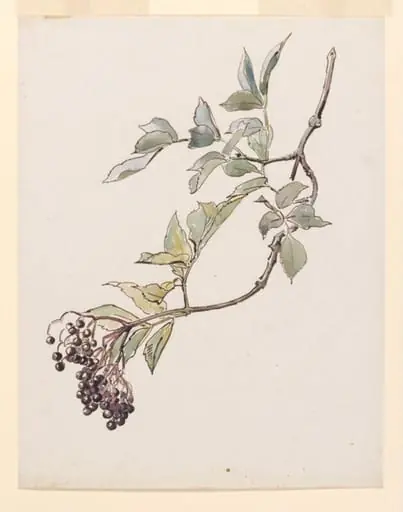 Study of a spray of elderberries
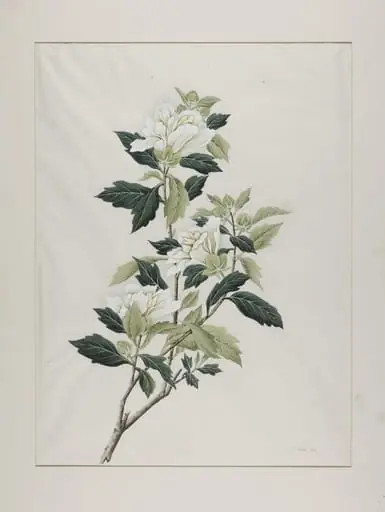 White hibiscus (hibiscus syriacus), mu jin
 Study of Bay Leaves