Artwork
Donkey and Pigs
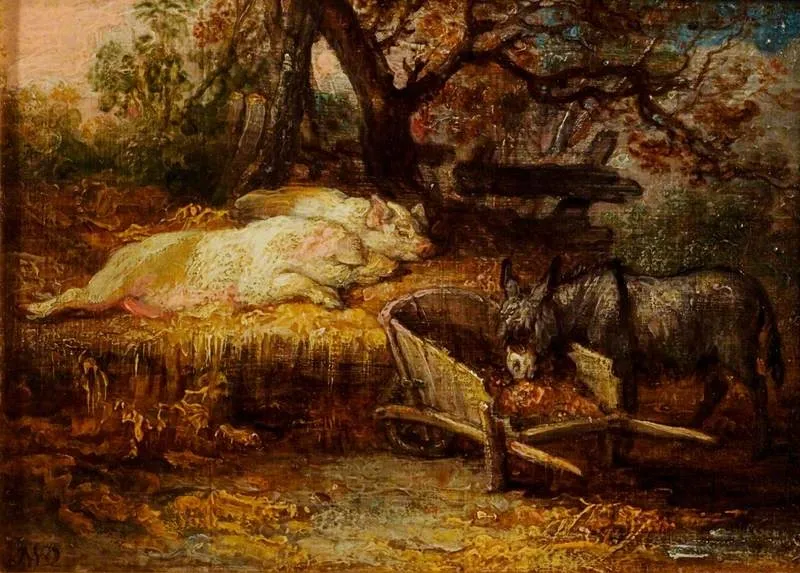
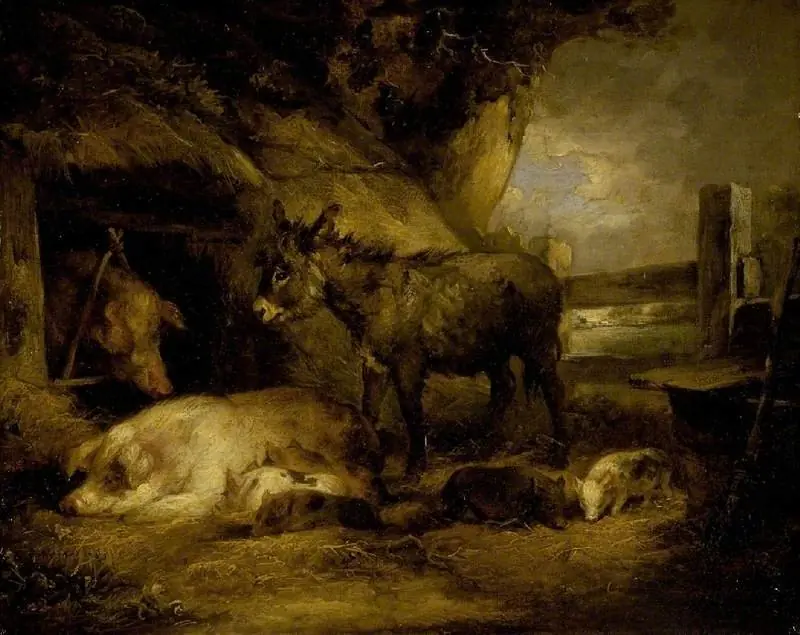
Donkey and Pigs is an oil painting by James Ward. It dates from 1819 and is held in the collection of the Victoria and Albert Museum.
About this work
Overview
Painted around 1819 by James Ward, Donkey and Pigs is an oil-on-canvas work depicting domestic animals in a quiet rural setting. The painting is part of the Victoria and Albert Museum’s collection, where it is noted for its unidealized portrayal of farm life. Unlike grand historical or mythological subjects common at the time, this piece focuses on ordinary creatures with quiet dignity.
Subject & Meaning
The painting presents a donkey standing near a wooden fence while two pigs rest on the ground nearby. There is no human presence, and no overt narrative is suggested. The animals are rendered with attention to their physical presence rather than symbolic meaning, reflecting a growing 19th-century interest in the natural world and the quiet lives of working animals.
Technique & Style
Ward employed visible, textured brushwork to convey the roughness of animal hides and the earth beneath them. Warm tones of ochre, umber, and gold dominate the palette, enhancing the sense of sunlight on a quiet afternoon. Subtle contrasts of light and shadow model the forms without idealization, emphasizing tactile realism over dramatic effect.
History & Provenance
Created in the early 1820s, the painting entered the Victoria and Albert Museum’s collection through the South Kensington Museum’s early acquisitions of British art. Its provenance before museum ownership is not well documented, but its survival suggests it was valued for its technical skill and subject matter during Ward’s lifetime.
Context
In early 19th-century Britain, animal painting was gaining recognition as a legitimate genre, especially among artists who studied nature closely. Ward, known for his detailed depictions of animals, contributed to this trend by portraying livestock with observational precision rather than as mere decorative elements in pastoral scenes.
Legacy
Donkey and Pigs remains a quiet example of Ward’s commitment to naturalistic observation. It reflects a shift in artistic priorities toward everyday subjects and the dignity of non-human life. While not widely exhibited, it continues to be studied for its honest rendering and contribution to British animal painting traditions.
Artist & collection