Artwork
Horse and Donkey
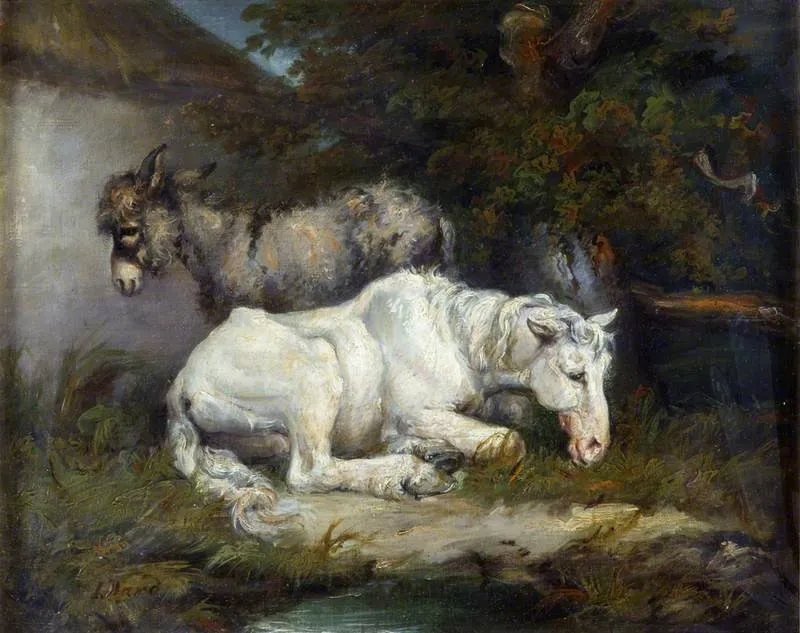
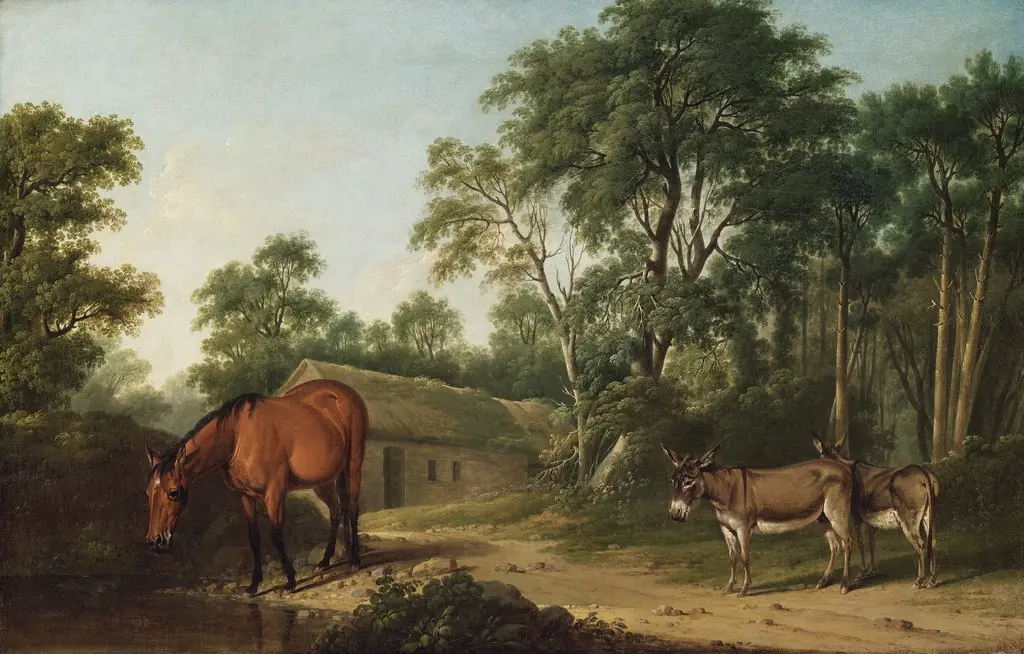
Horse and Donkey is an oil painting by James Ward. It dates from 1819 and is held in the collection of the Victoria and Albert Museum.
About this work
Overview
Ward’s focus on ordinary livestock reflects a broader 19th-century interest in naturalistic observation beyond traditional heroic or mythological subjects.
James Ward painted Horse and Donkey around 1819 using oil on canvas. The work is part of the Victoria and Albert Museum’s collection. It presents two domesticated animals in a quiet rural setting, emphasizing their physical presence and calm coexistence. Ward’s focus on ordinary livestock reflects a broader 19th-century interest in naturalistic observation beyond traditional heroic or mythological subjects.
Subject & Meaning
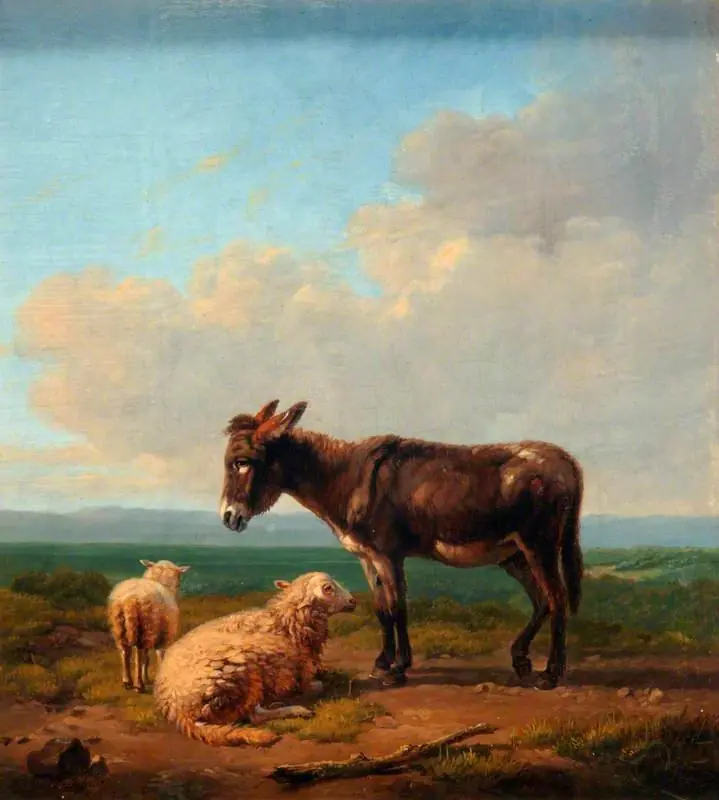
The painting features a white horse reclining on the ground and a brown donkey standing nearby, both within a softly lit, verdant landscape. Their relaxed postures suggest mutual tranquility rather than hierarchy or tension. Ward avoids anthropomorphism, instead inviting contemplation of animal life as inherently serene. The pairing may reflect contemporary fascination with the dignity of working animals in agricultural society.
Technique & Style
Ward employed oil paint to achieve fine textural detail in the animals’ coats, capturing the sheen of the horse’s white fur and the coarse, wiry texture of the donkey’s hide. The brushwork is precise yet unobtrusive, allowing the forms to emerge naturally from the muted greens and earth tones of the background. Light falls gently across the scene, enhancing the sense of stillness without dramatic contrast.
History & Provenance
Created circa 1819, the painting entered the Victoria and Albert Museum’s collection in the 19th century, likely through the museum’s early acquisitions of British art. It was not widely exhibited during Ward’s lifetime but gained recognition later as part of a growing interest in animal portraiture. Its preservation reflects institutional efforts to document the evolution of British painting beyond grand historical themes.
Context
In early 19th-century Britain, artists increasingly turned to everyday subjects as industrialization reshaped rural life. Ward’s depiction of livestock aligns with this trend, paralleling the work of contemporaries like George Stubbs. The painting resonates with Romantic-era ideals of nature’s quiet harmony, even as it avoids overt sentimentality, offering instead a restrained, observational approach to animal life.
Legacy
Horse and Donkey remains a quiet example of British animal painting from the early 1800s, valued for its technical precision and emotional restraint. While not widely known outside specialist circles, it contributes to the understanding of how artists of the period redefined the dignity of common creatures. The work continues to be studied for its role in the transition from formal portraiture to naturalistic observation in British art.
Artist & collection