Artwork
Donkey and pigs
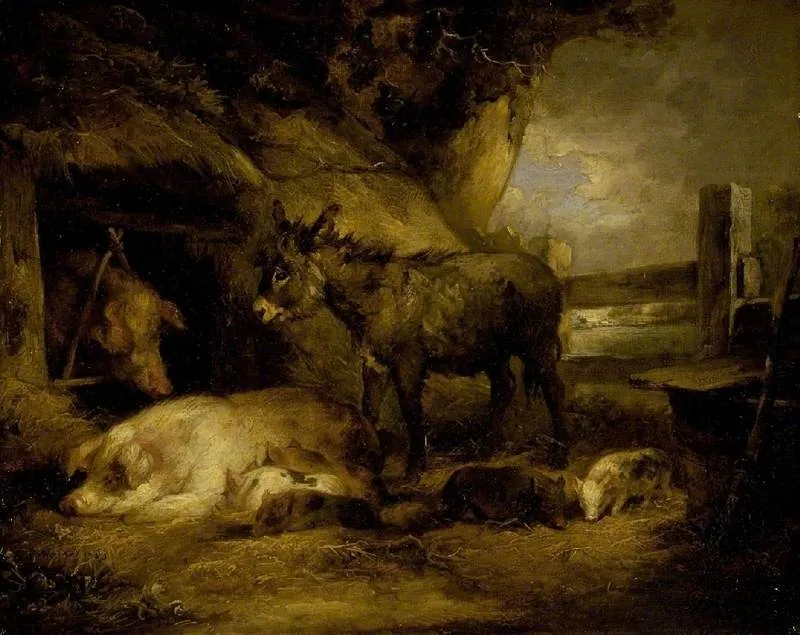
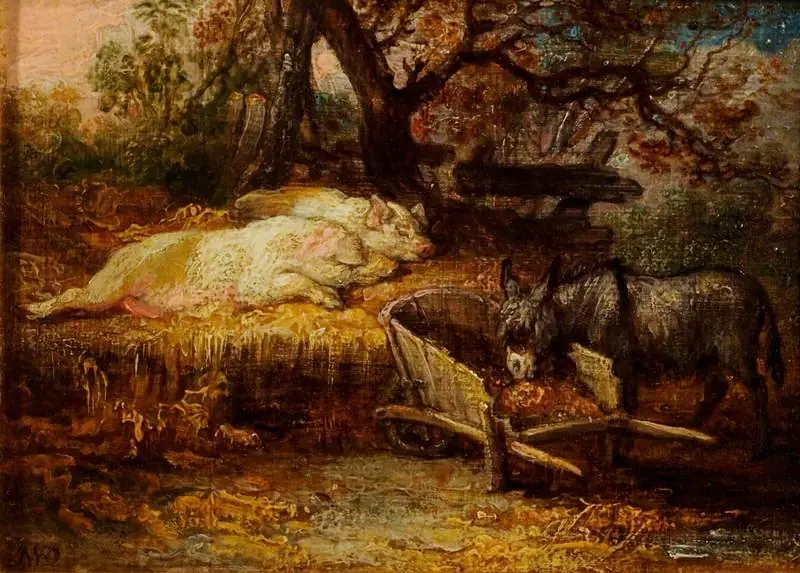
Donkey and pigs is an oil painting by the Rococo painting artist George Morland. It dates from 1795 and is held in the collection of the Fitzwilliam Museum.
About this work
Overview
Painted in 1795, this oil on canvas by George Morland presents a quiet rural scene featuring a donkey and several pigs in a naturalistic setting.
Painted in 1795, this oil on canvas by George Morland presents a quiet rural scene featuring a donkey and several pigs in a naturalistic setting. Executed during the height of Morland’s career, the work exemplifies his focus on everyday agricultural life. Its modest scale and unidealized subject reflect a shift away from grand historical themes toward intimate observations of the countryside, characteristic of late 18th-century British genre painting.
Subject & Meaning
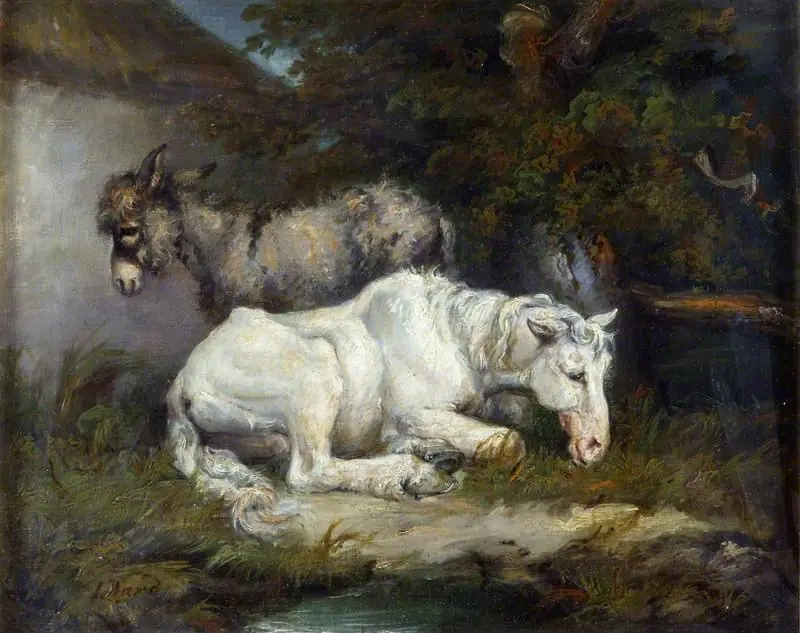
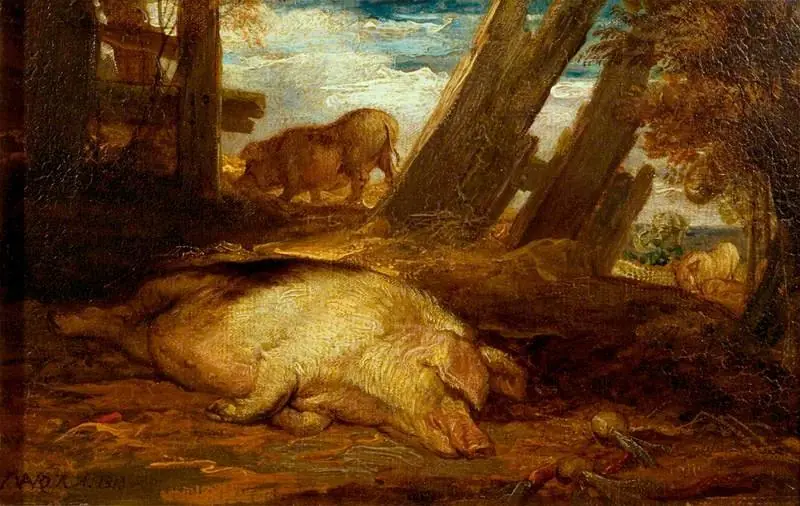
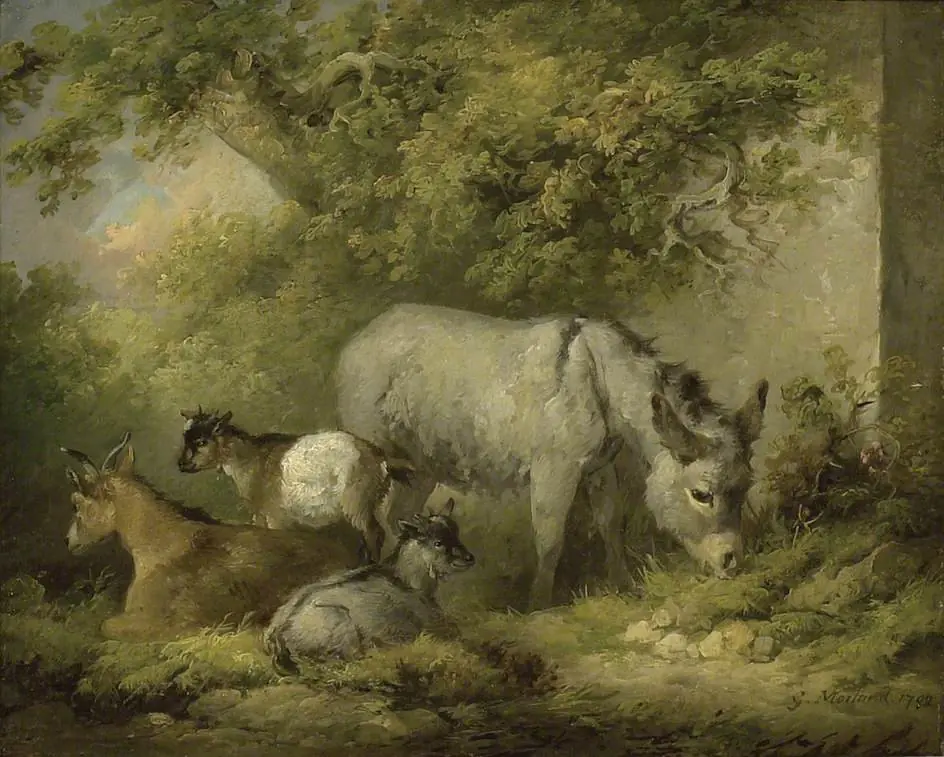
The composition centers on a standing donkey, flanked by lounging pigs, suggesting a moment of stillness in farm life. No human figures are present, emphasizing the autonomy of the animals within their environment. The scene carries no overt narrative or moral allegory; instead, it values the dignity of ordinary creatures and their surroundings, aligning with a broader cultural interest in the authenticity of rural existence during the period.
Technique & Style
Morland employed varied brushwork to render the coarse textures of animal hides and the uneven earth beneath them. Warm, muted tones—ochres, browns, and soft greens—dominate the palette, creating a grounded, tactile atmosphere. Subtle chiaroscuro defines form without dramatic contrast, enhancing the naturalism of the scene. The handling of light and surface recalls Dutch genre painting, adapted to Morland’s own observational approach.
History & Provenance
Created during a period of personal hardship for Morland, the painting was made despite financial instability and declining health. It entered the collection of the Fitzwilliam Museum in Cambridge, where it remains today. Its preservation reflects institutional recognition of Morland’s contribution to British genre painting, even as his reputation waned in the decades following his death in 1804.
Context
In the 1790s, British art increasingly turned toward scenes of rural labor and animal life, influenced by Enlightenment ideals of observation and the Romantic fascination with nature. Morland’s work stood apart from aristocratic portraiture and historical subjects, offering instead unembellished views of the working countryside—a trend that resonated with urban audiences seeking connection to a perceived simpler past.
Legacy
Though Morland’s popularity declined after his death, his focus on ordinary subjects and textured realism influenced later British painters of rural life. 'Donkey and pigs' exemplifies his ability to elevate humble subjects through careful observation and sensitive handling of material. The painting endures as a quiet testament to the aesthetic value found in unremarkable, everyday moments.
Artist & collection
Artist
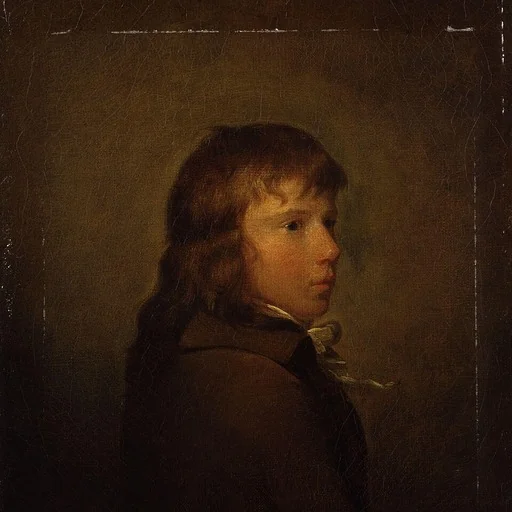
George Morland (26 June 1763 – 29 October 1804) was an English painter. His early work was influenced by Francis Wheatley, but after the 1790s he came into his own style. His best compositions focus on rustic scenes:…