Artwork
Italian landscape with mule driver
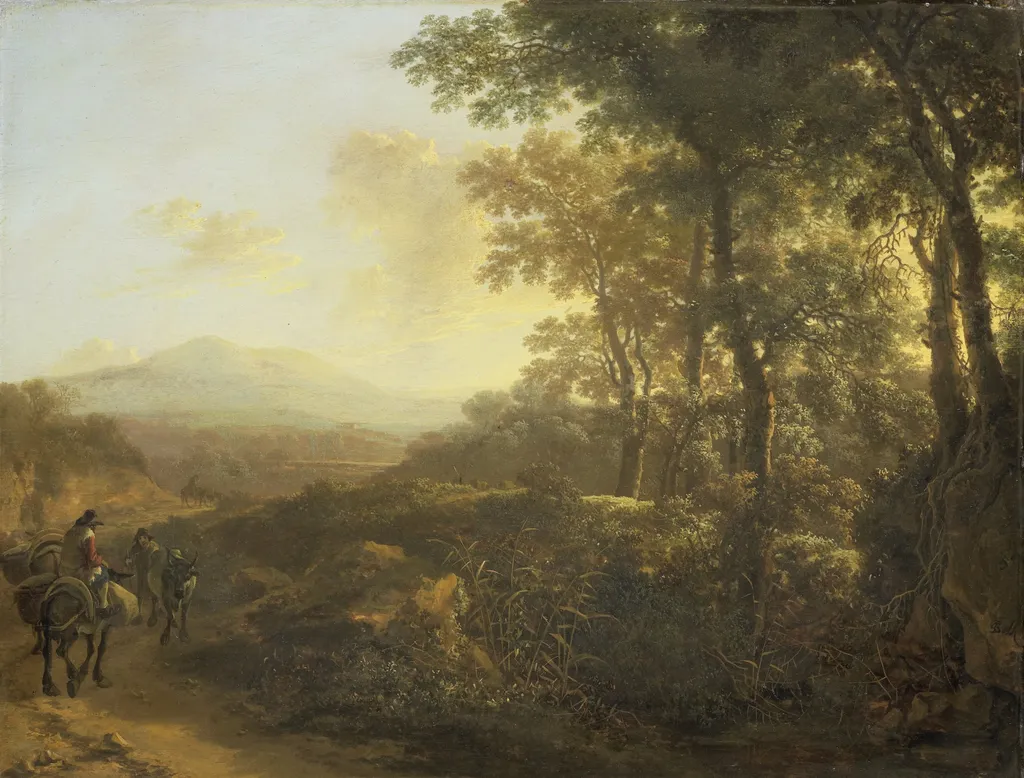
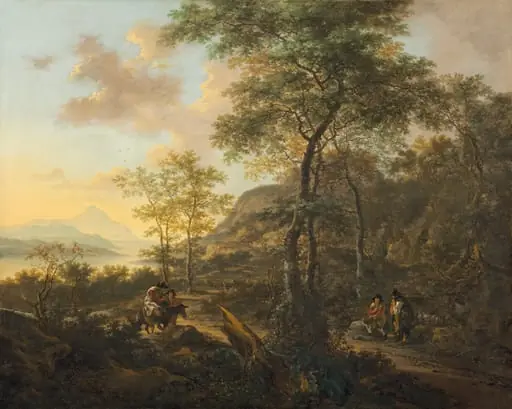
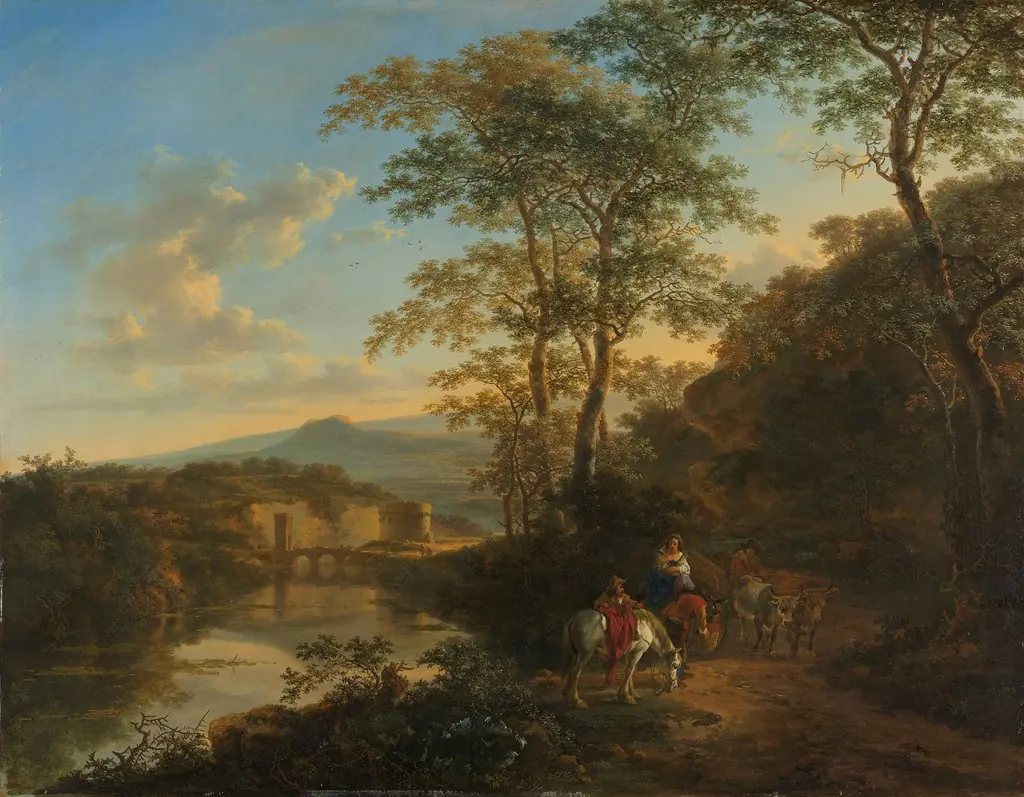
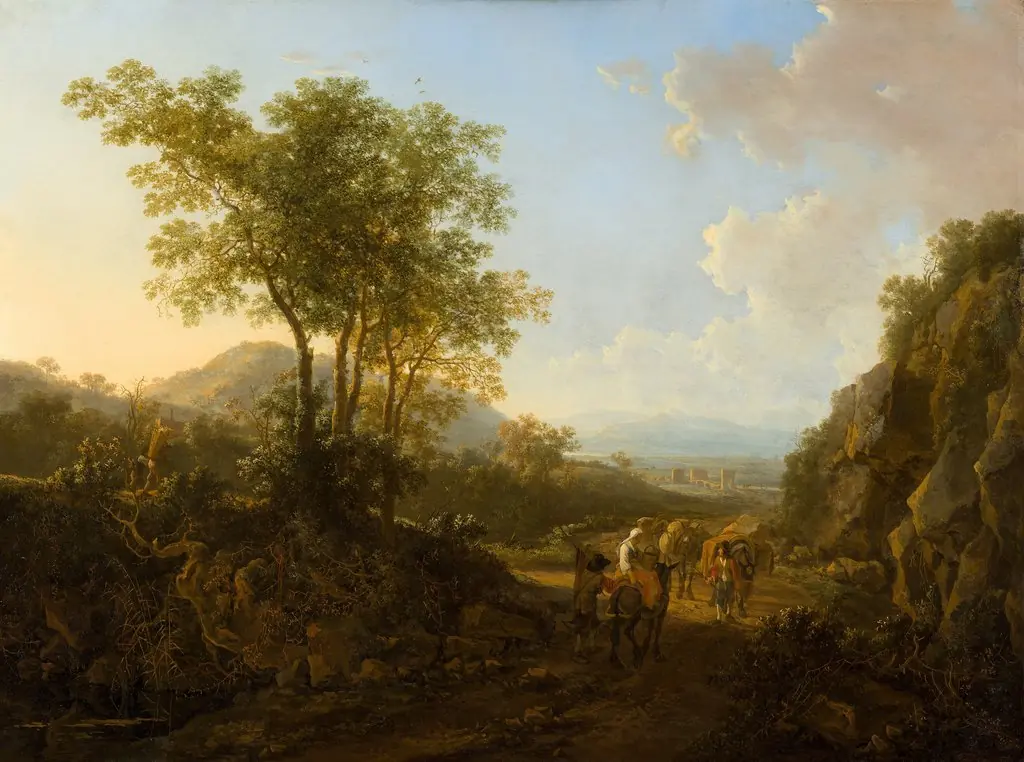
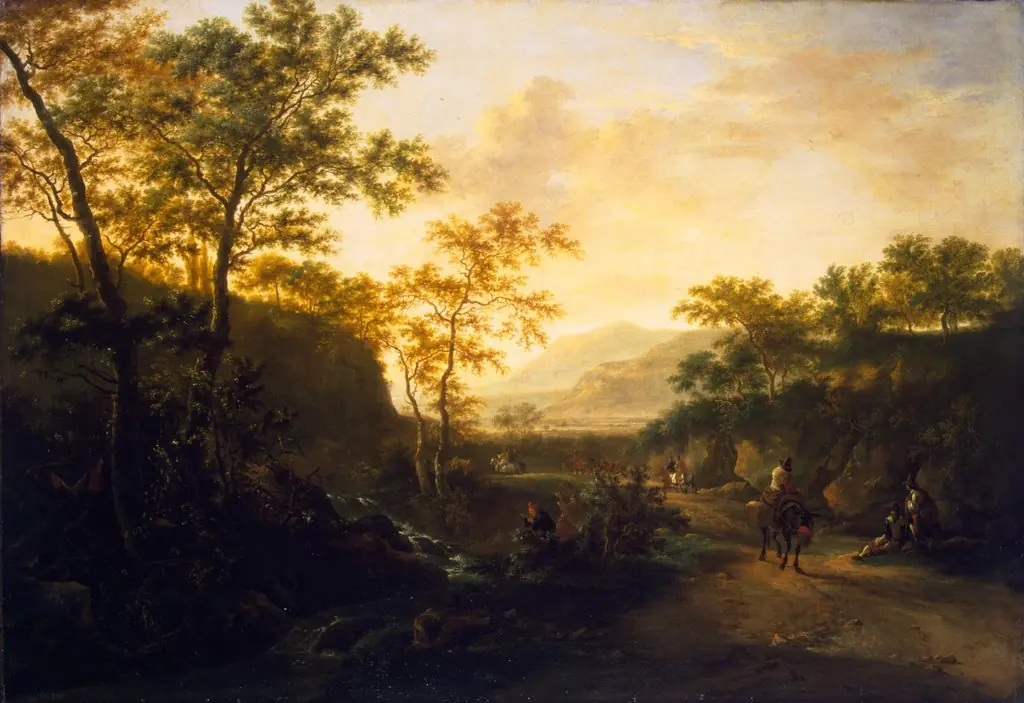
Italian landscape with mule driver is an oil painting by the Dutch Golden Age artist Jan Both. It dates from 1650 and is held in the collection of the Rijksmuseum.
About this work
Overview
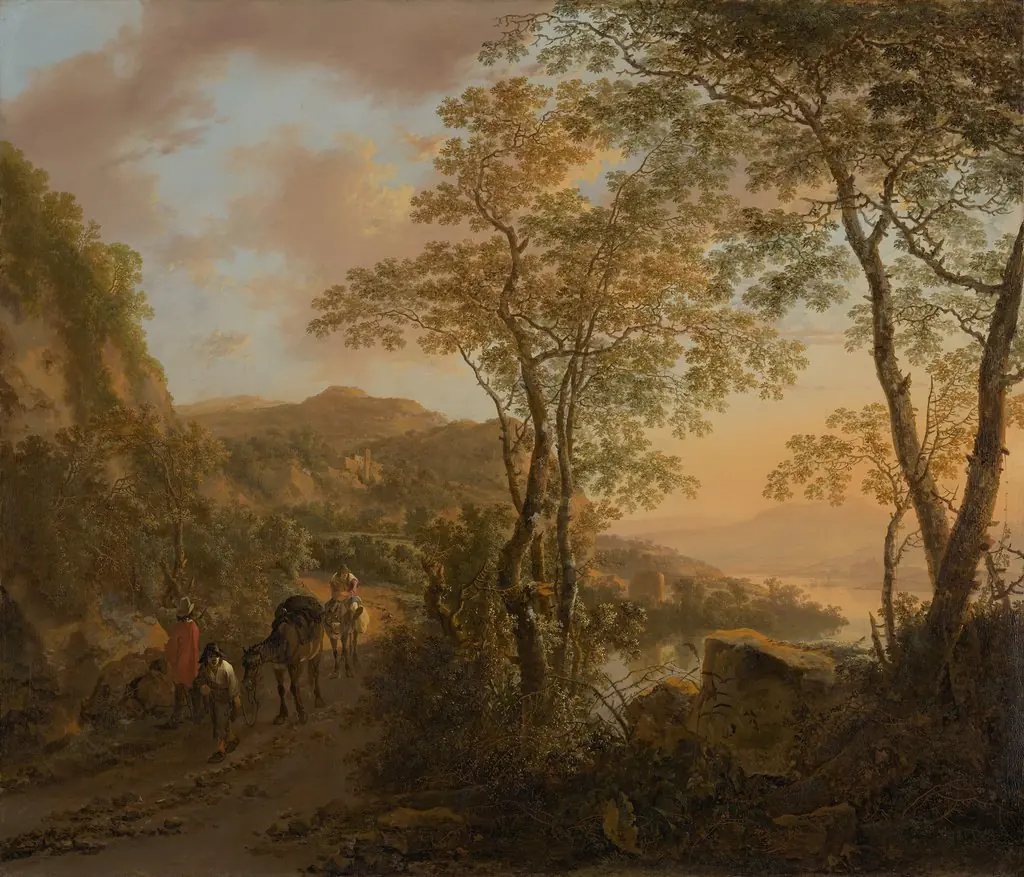
In the foreground, a mule driver guides his animal along the track, accompanied by a second figure, grounding the idealized scenery in a moment of daily labor.
Painted in 1650, 'Italian Landscape with Mule Driver' is a mature work by the Dutch artist Jan Both, a key figure in the Utrecht school who spent much of his career in Rome. The composition exemplifies the 'Italianate' style, characterized by a warm, golden atmospheric light that unifies the scene. The painting depicts a rustic path winding through a lush, verdant landscape, receding into a hazy distance where the light softens the horizon. In the foreground, a mule driver guides his animal along the track, accompanied by a second figure, grounding the idealized scenery in a moment of daily labor. Both employs a structured arrangement of trees and foliage to frame the central path, creating a sense of depth and inviting the viewer into the pastoral setting. This work reflects Both's synthesis of Dutch attention to detail with the classical ideals of Italian landscape painting, prioritizing the effects of light and air over strict topographical accuracy. Created during the height of his influence in Rome, the piece demonstrates his ability to evoke the serene, sun-drenched atmosphere of the Italian countryside, a subject that defined his artistic legacy and influenced a generation of subsequent landscape painters.
Subject & Meaning
The foreground features a modestly dressed man leading a mule, accompanied by a second figure walking beside them. Their presence suggests everyday travel or labor within a peaceful landscape, emphasizing the harmony between human activity and nature. The distant hills and scattered structures hint at a broader, inhabited terrain, reinforcing a sense of calm continuity across the scene.
Technique & Style
Both employs a nuanced chiaroscuro, using light and shadow to model forms and convey depth. The warm, diffused sunlight bathes the foliage and figures, while the gradual tonal shift from foreground to background creates atmospheric perspective. Brushwork remains refined, allowing delicate foliage and distant architecture to emerge without disrupting the overall serenity of the composition.
History & Provenance
Created circa 1650, the painting reflects Both’s period of travel in Italy, during which he absorbed the region’s light and topography. After its creation, the work entered various private collections before being acquired by the Rijksmuseum, where it has been displayed as part of the museum’s representation of Dutch landscape painting influenced by Italian scenery.
Context
Jan Both was among the Dutch artists who incorporated Italianate elements into their work after journeys to the Mediterranean. This painting illustrates the cross-cultural exchange of the 17th century, merging Dutch compositional rigor with the luminous, pastoral qualities typical of Italian landscape tradition, a synthesis that appealed to contemporary patrons seeking exotic yet familiar scenes.
Own this work as a print
Artist & collection

Artist
Jan Dirksz Both was a Dutch painter, draughtsman, and etcher, who made an important contribution to the development of Dutch Italianate landscape painting.