Artwork
Ruins on the Edge of a Lake
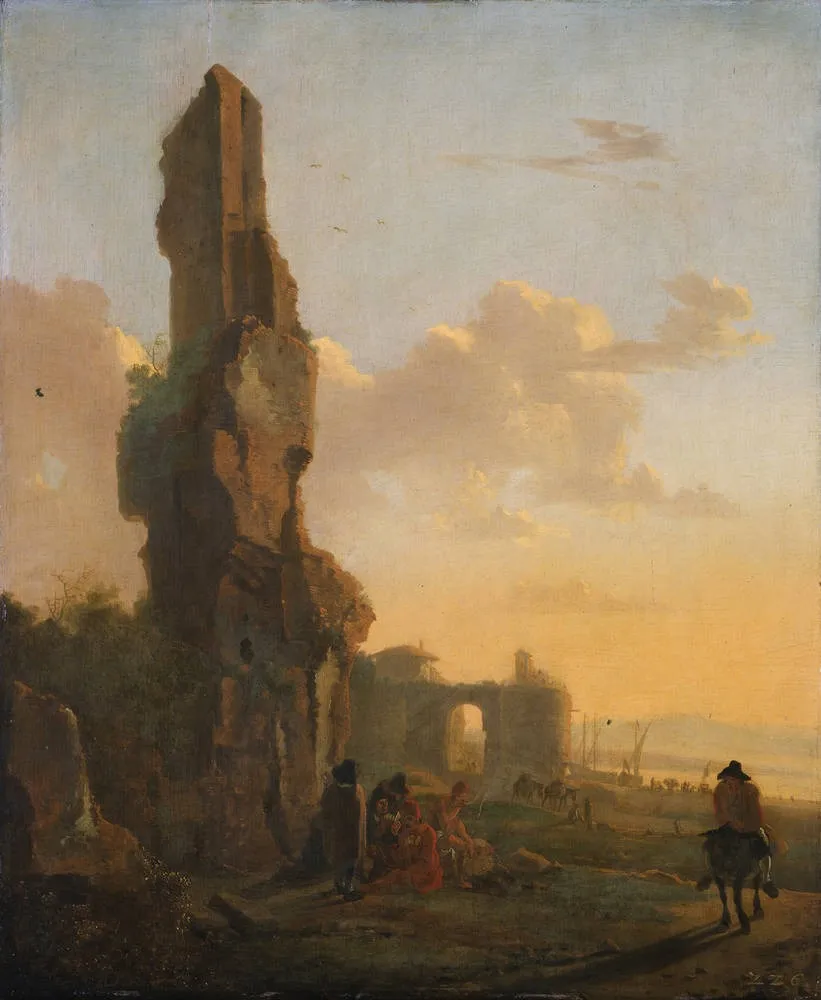
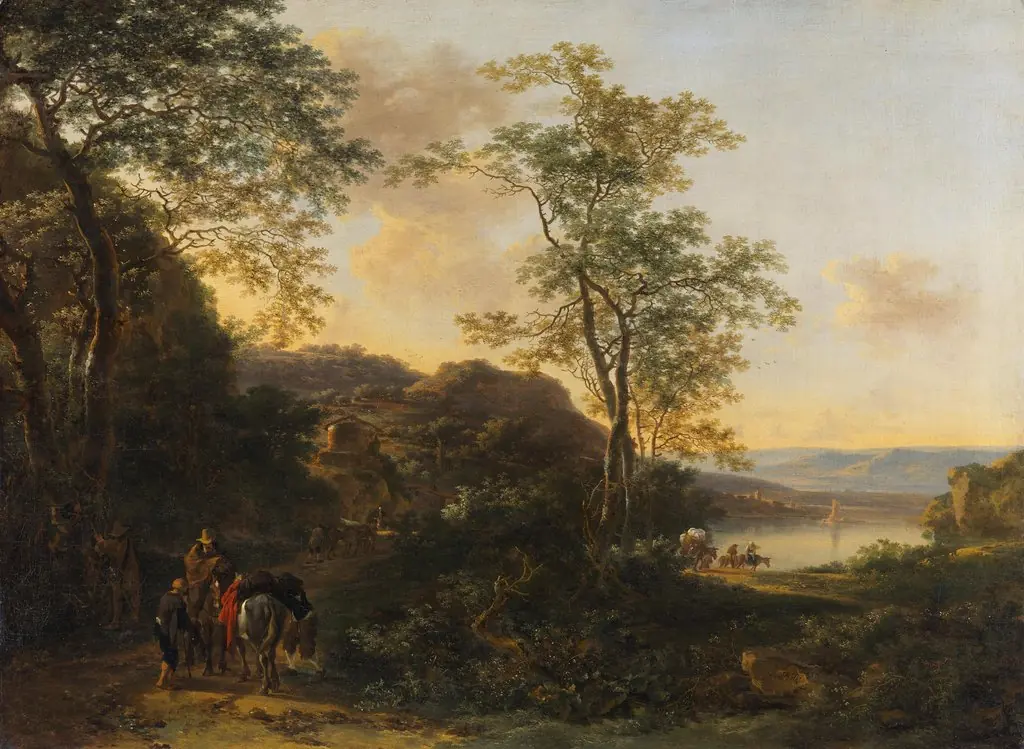
Ruins on the Edge of a Lake is an oil painting by the Dutch Golden Age artist Jan Both. It dates from 1640 and is held in the collection of the Staatliche Kunstsammlungen Dresden.
About this work
Overview
Ruins on the Edge of a Lake is a 17th-century oil painting by Dutch artist Jan Both, executed in 1640. The work combines elements of landscape and figural composition, set against the backdrop of ancient ruins.
Subject & Meaning
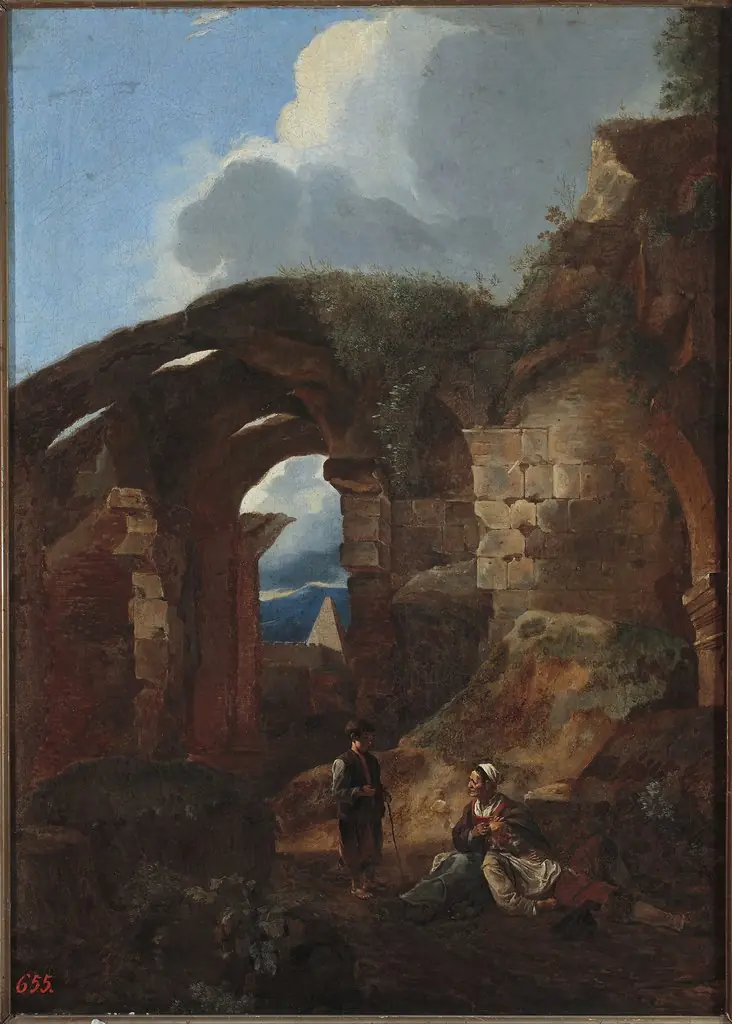
The painting depicts a serene lake, a prominent broken stone pillar, and a distant archway, juxtaposed with human figures in the foreground and a departing horseman. The contrast between the grandeur of the ruins and the small scale of the figures emphasizes the imposing nature of the ancient structure.
Technique & Style
Both employed a chiaroscuro effect, leveraging light and shadow to dramatize the weathered ruins. Soft, clouded skies provide a serene counterpoint to the dramatic play of illumination on the ancient stones.
History & Provenance
Ruins on the Edge of a Lake is part of the collection at the Gemäldegalerie Alte Meister, though the painting's history prior to its acquisition is not detailed here.
Context
Created in 1640, the painting reflects the Dutch Golden Age's fascination with classical antiquity and the expressive potential of landscape. The work's emphasis on light and shadow aligns with broader artistic trends of the period.
Legacy
While specific influence or notable exhibitions of 'Ruins on the Edge of a Lake' are not highlighted, the piece contributes to the broader appreciation of Jan Both's contributions to Dutch landscape painting and the enduring appeal of chiaroscuro in art.
Artist & collection

Artist
Jan Dirksz Both was a Dutch painter, draughtsman, and etcher, who made an important contribution to the development of Dutch Italianate landscape painting.

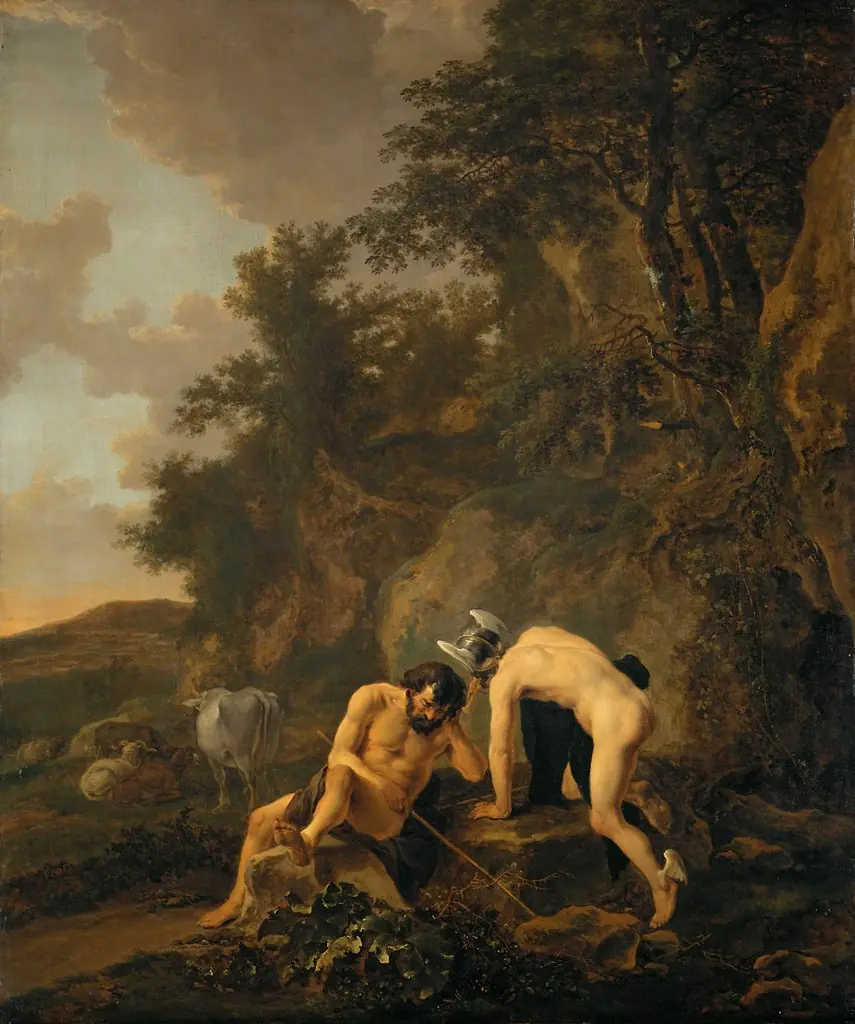
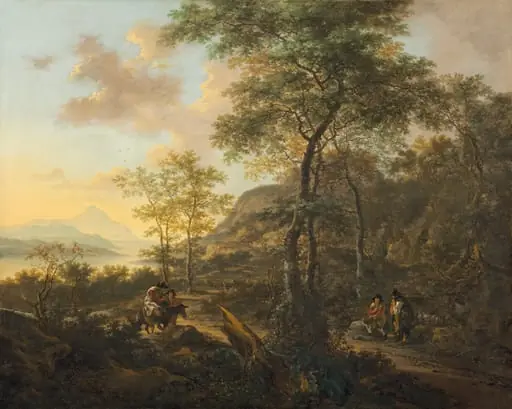
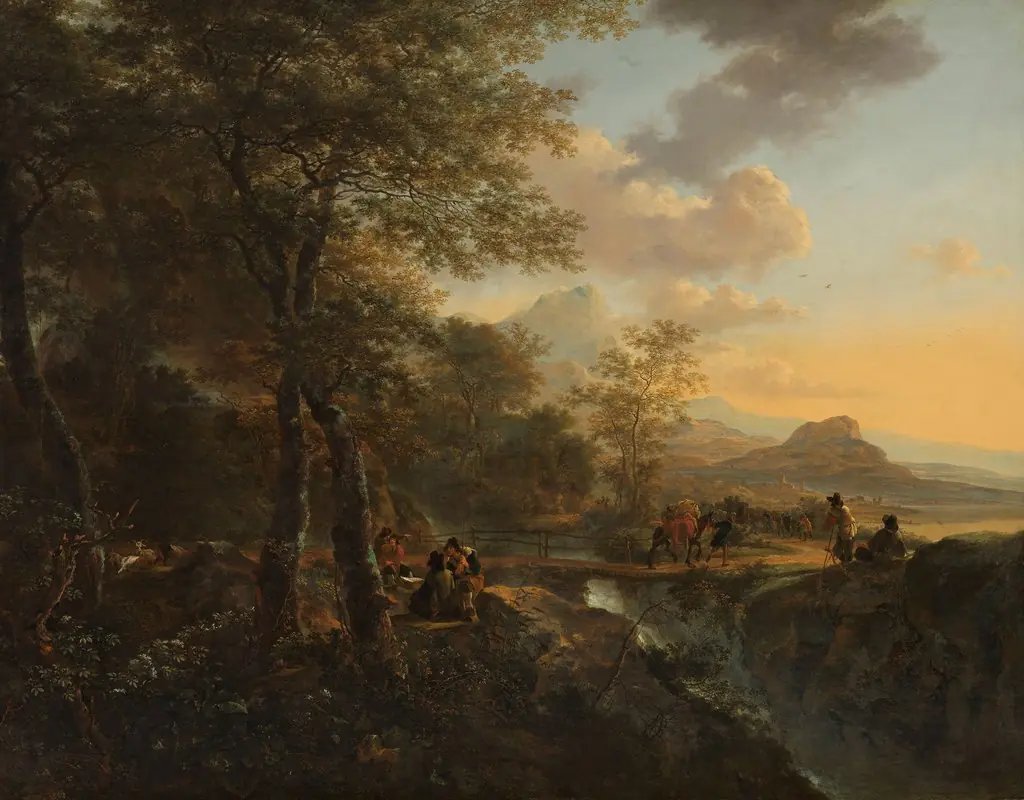
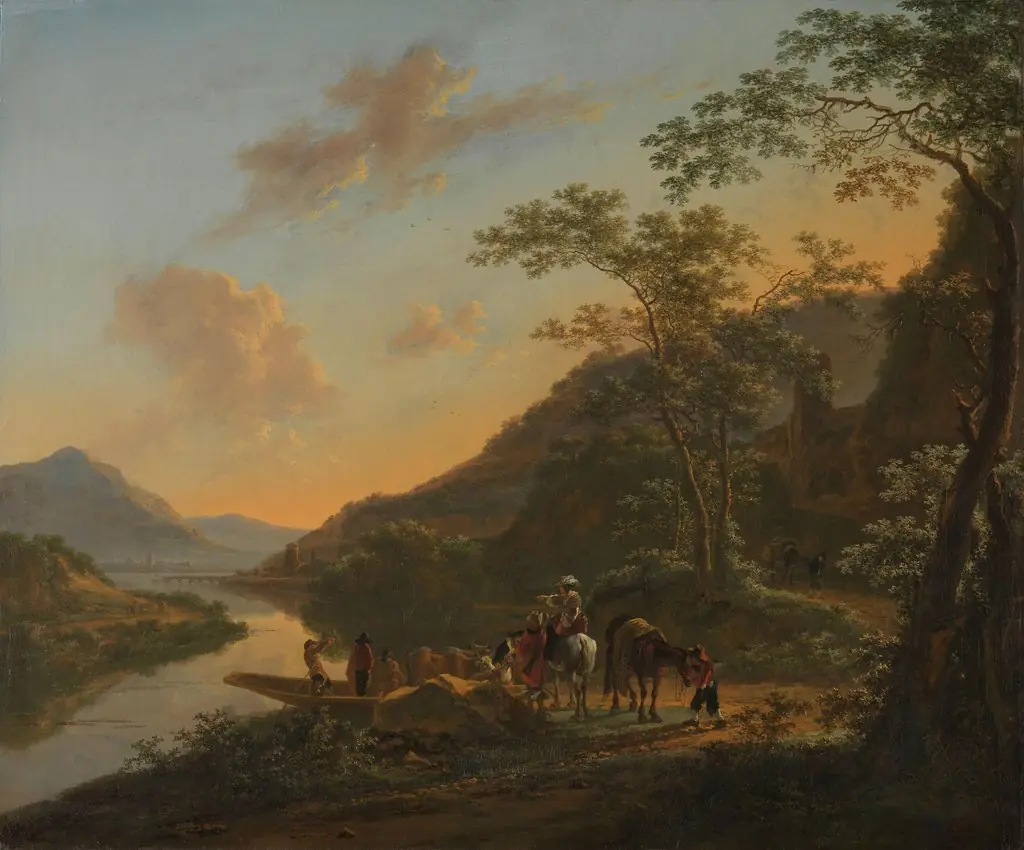
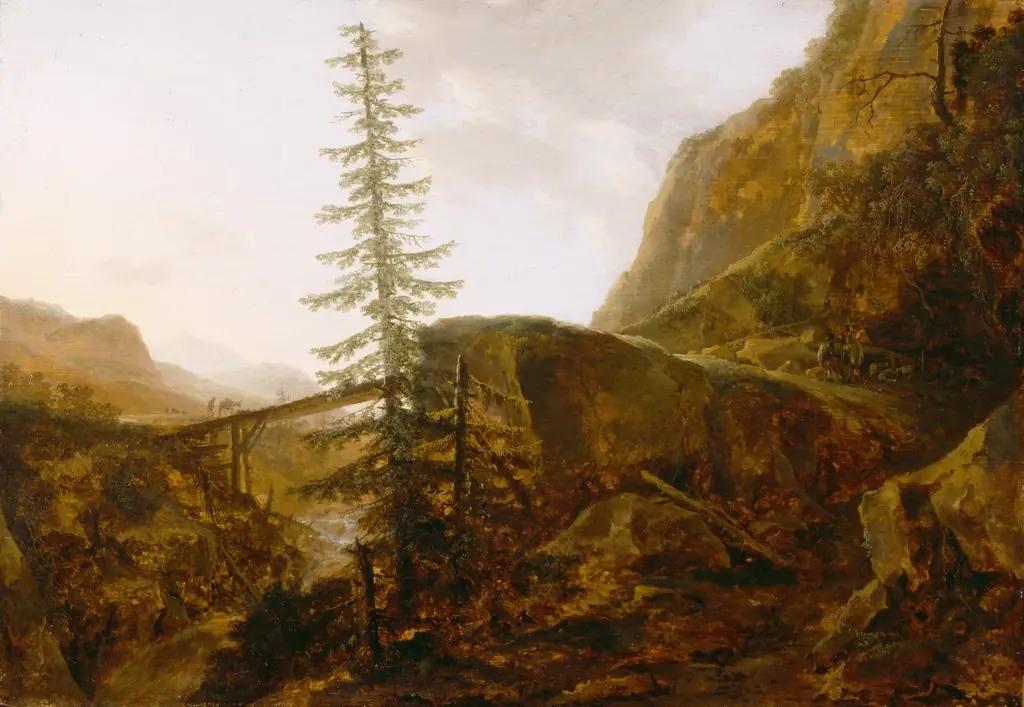
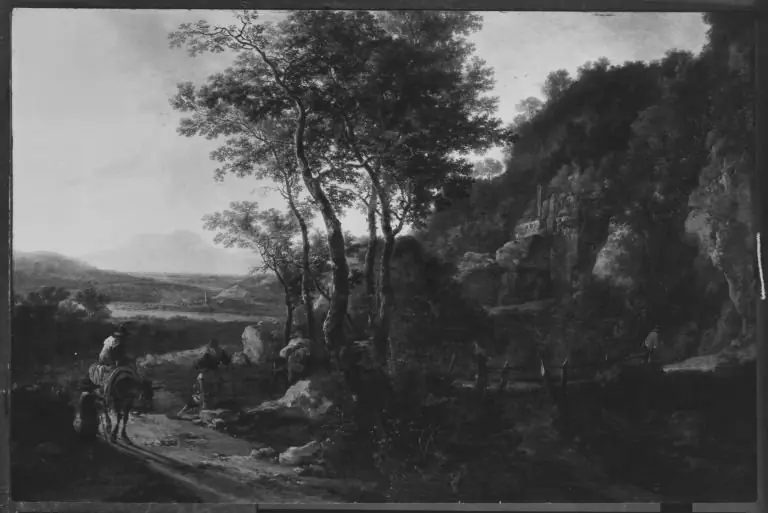
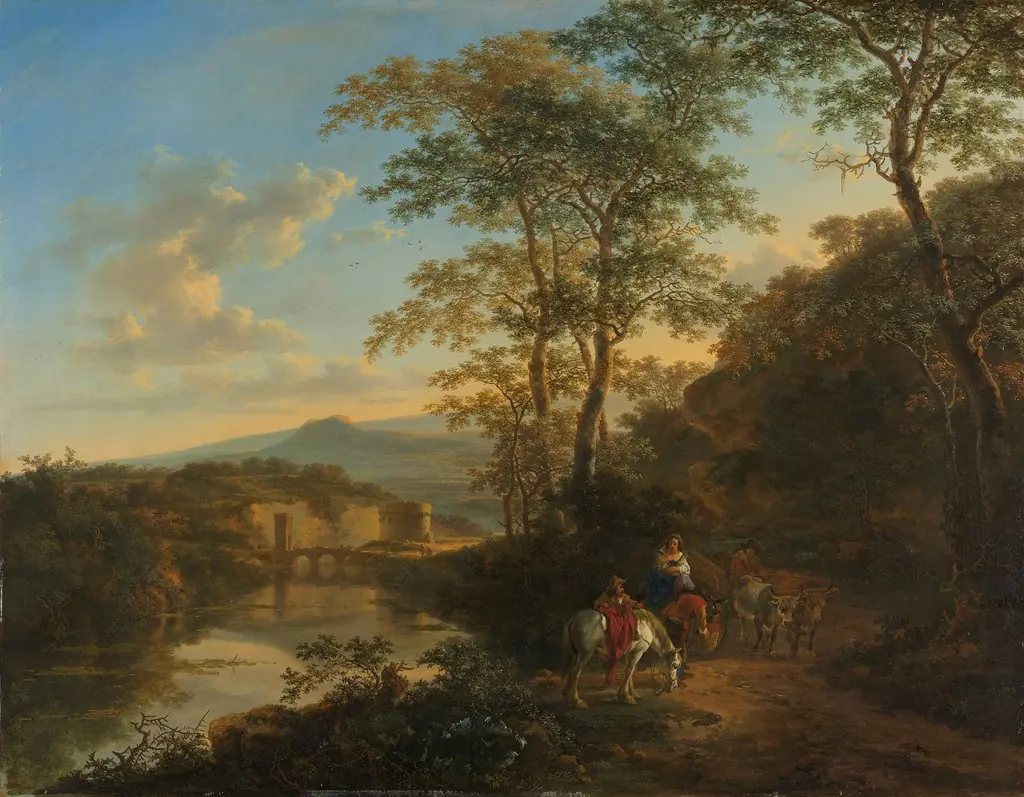
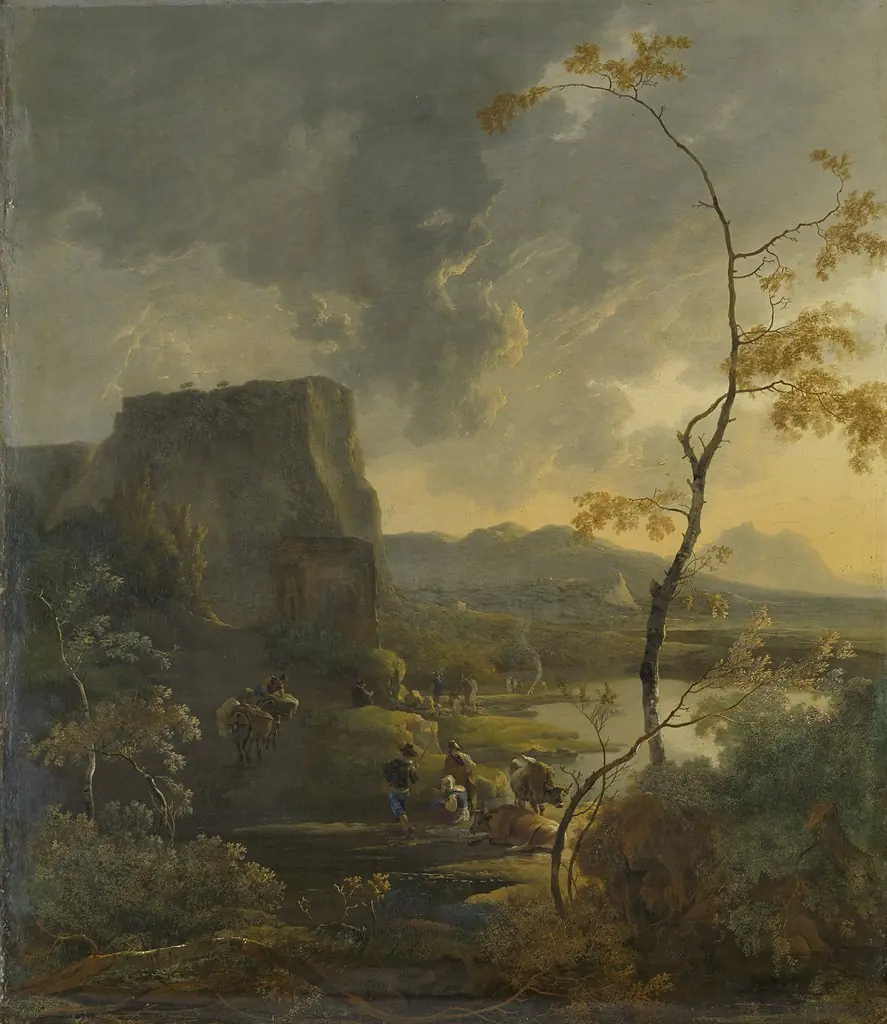 Italian landscape with ancient tempietto
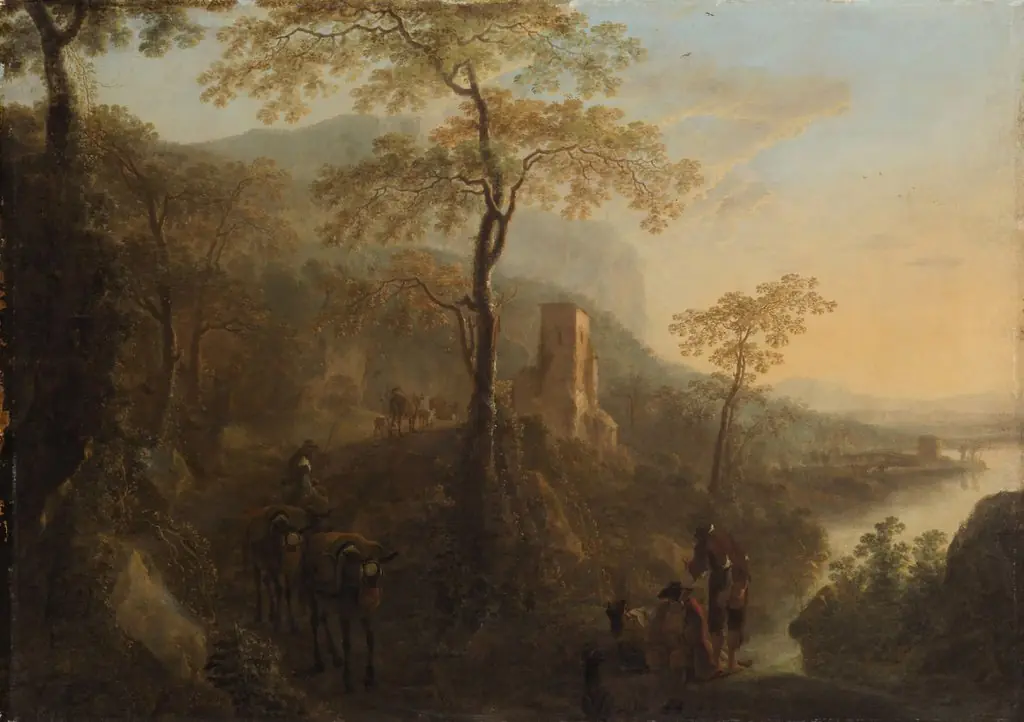 Italienische Landschaft
 Italina landscape with round tower
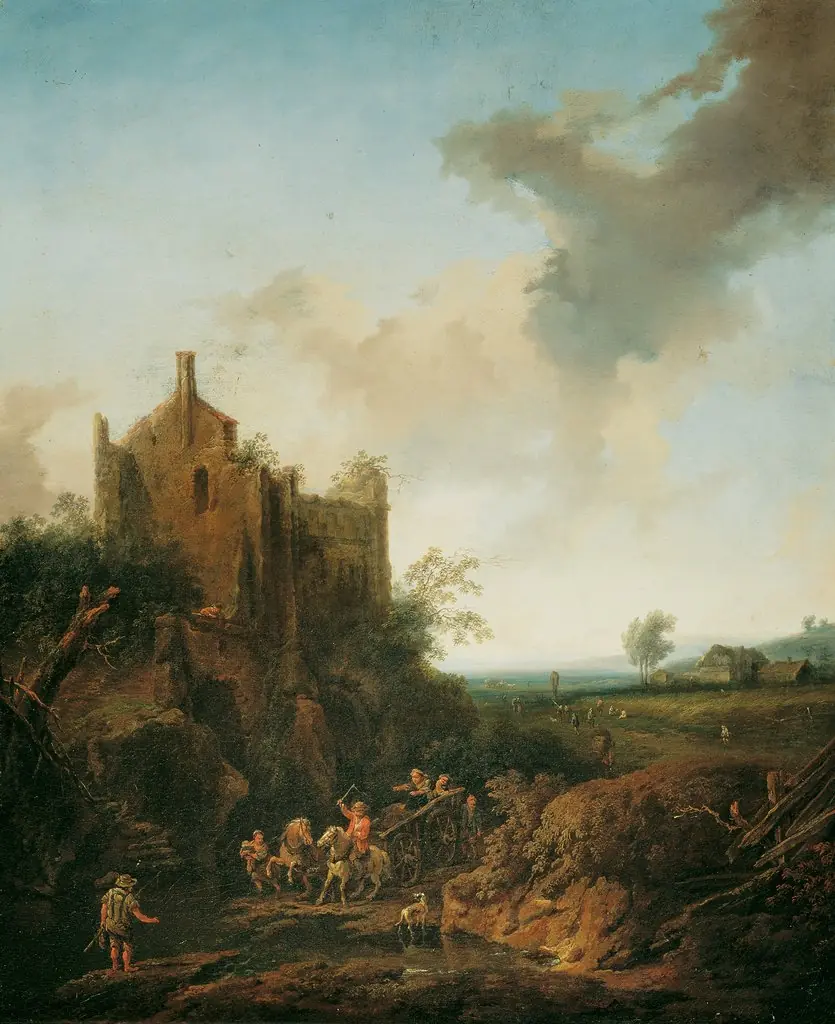 Landscape with a ruined castle near a fordable place in the river
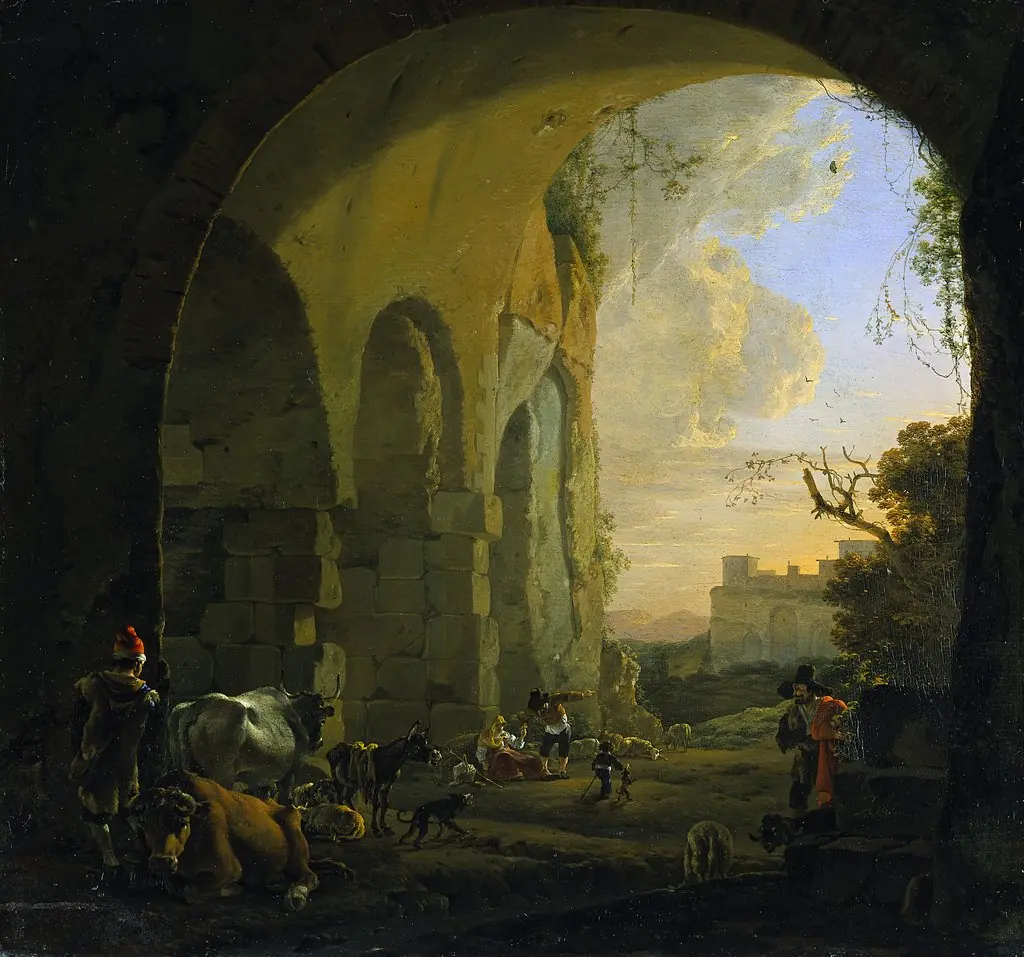 Drovers with cattle under an arch of the Colosseum in Rome
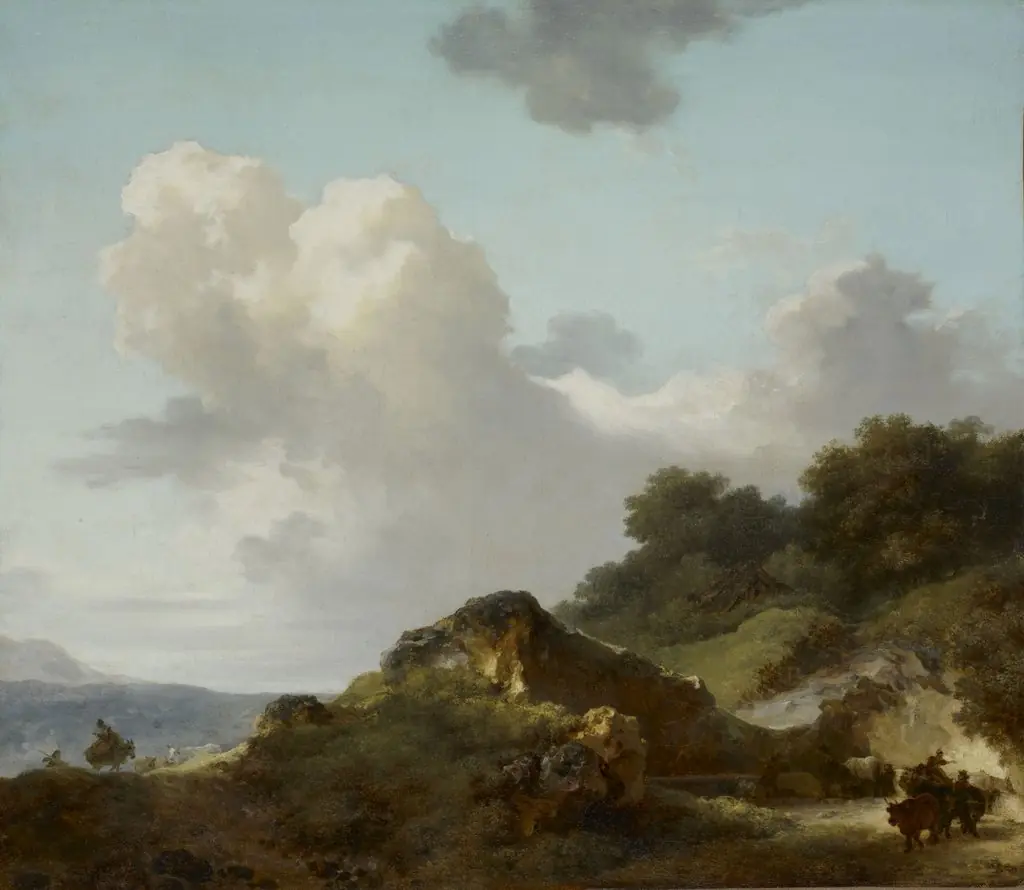 Le Rocher
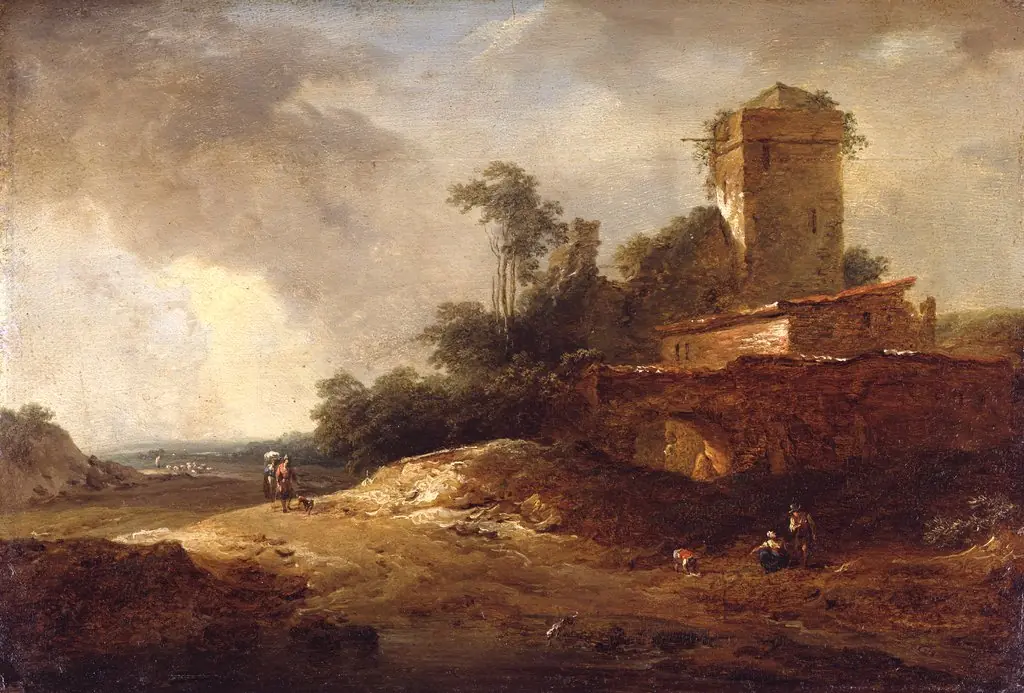 Landscape with a tower
 An Italian Landscape
 Vagabonds resting in the ruins of the Colosseum