Artwork
Female model – back
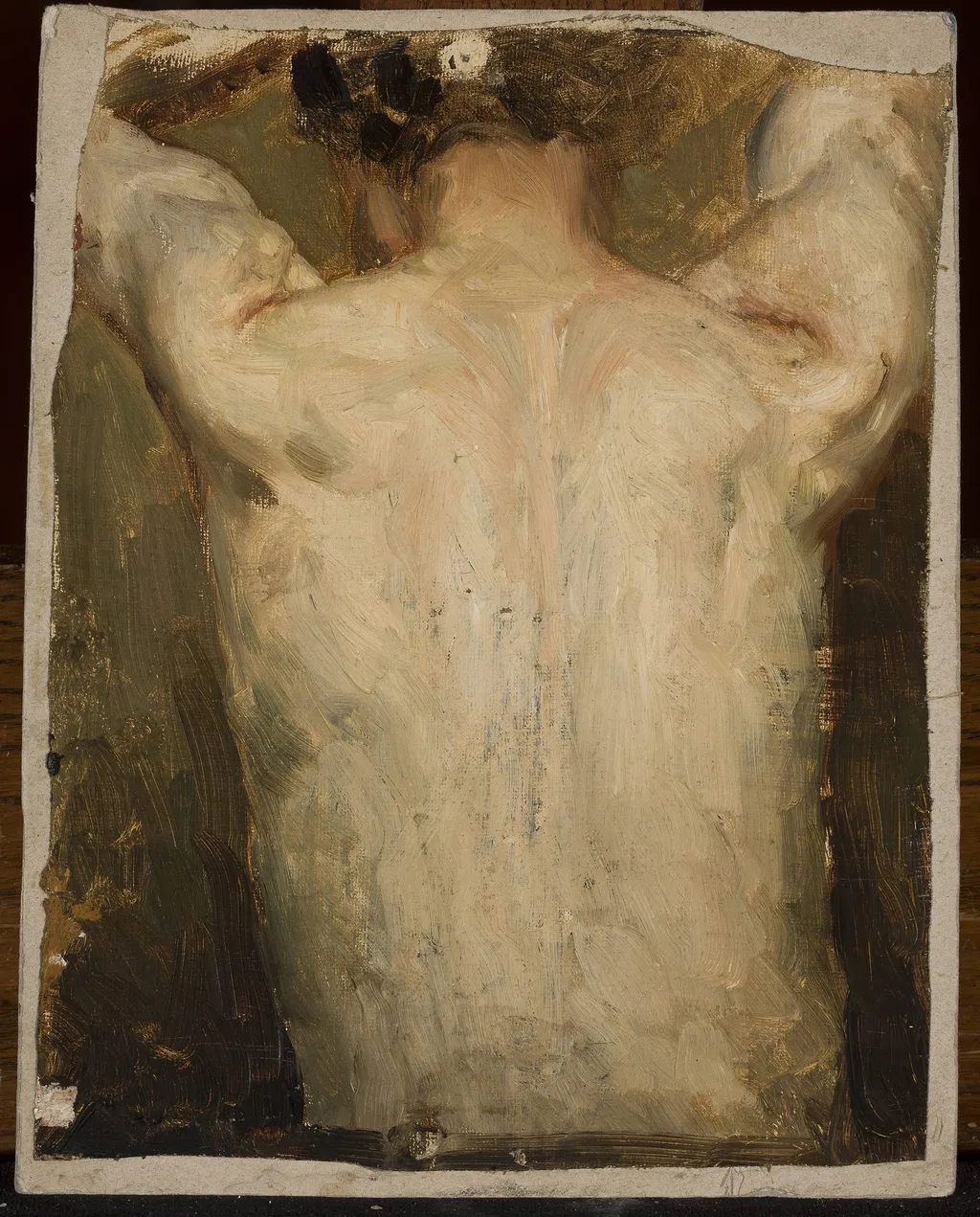
Female model – back is an unspecified painting by the Impressionist artist Jan Ciągliński. It dates from 1890 and is held in the collection of the National Museum in Warsaw.
About this work
Overview
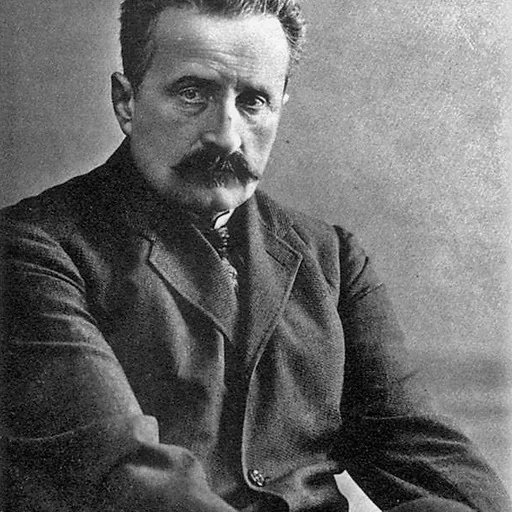
Petersburg, it reflects his alignment with Impressionist principles, which he helped bring into Russian artistic circles.
Painted in 1890 by Polish artist Jan Ciągliński, this work is a quiet study of a nude female figure seen from behind. Created during his time in St. Petersburg, it reflects his alignment with Impressionist principles, which he helped bring into Russian artistic circles. The painting is now held in the National Museum in Warsaw, where it stands as a modest yet significant example of late 19th-century figurative work influenced by French Impressionism.
Subject & Meaning
The subject is a woman in a private, unposed moment, her back turned to the viewer with arms raised and elbows bent. Her nudity is not theatrical but intimate, suggesting a moment of rest or preparation. The absence of facial features and the dark, undefined background shift focus to form and posture, emphasizing the body as a vessel of quiet dignity rather than narrative or symbolism.
Technique & Style
Ciągliński employs loose, fluid brushwork to capture the subtle transitions of light across the skin, using pale ochres and soft whites to suggest volume without sharp contours. The dark, earth-toned background enhances the luminosity of the figure, creating a gentle contrast. The technique avoids idealization, favoring sensory observation over polished finish—hallmarks of Impressionist practice adapted to a restrained, personal scale.
History & Provenance
The painting was completed during Ciągliński’s years in St. Petersburg, where he was part of a small group of artists introducing Impressionist methods to Russian audiences. It remained in private hands until entering the collection of the National Museum in Warsaw, likely after Poland’s regained independence. Its journey reflects the transnational movement of artists and ideas across Eastern Europe in the late imperial era.
Context
In the 1890s, Russian art institutions favored academic realism, making Ciągliński’s Impressionist approach unconventional. His focus on everyday moments and natural light contrasted with the grand historical or mythological themes dominant in state-sponsored art. This work, though small, represents a quiet resistance to academic norms and an embrace of modern visual perception.
Legacy
Though not widely exhibited, the painting endures as a testament to Ciągliński’s role in broadening the scope of Russian and Polish art beyond academic conventions. It illustrates how Impressionism was absorbed locally, not as a copy of French models but as a personal language for observing the human form. Its quiet presence continues to inform discussions on cross-cultural artistic exchange in Eastern Europe.
Artist & collection
Artist
Jan Ciągliński (Polish: ; Russian: Ян/Иван Францевич Ционглинский, romanized: Yan/Ivan Frantsevich Tsionglinskiy; 20 February 1858 – 6 January 1913) was a Polish painter, active in St.

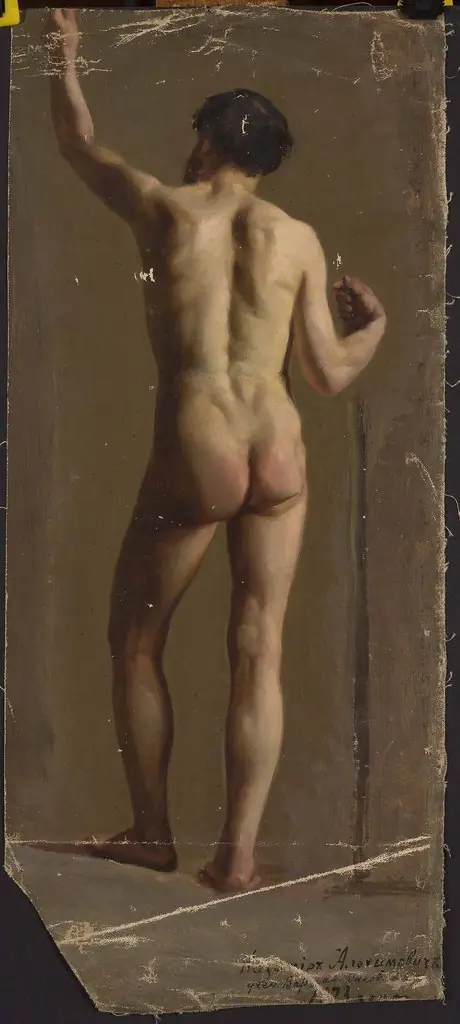 Nude of a standing man, back view
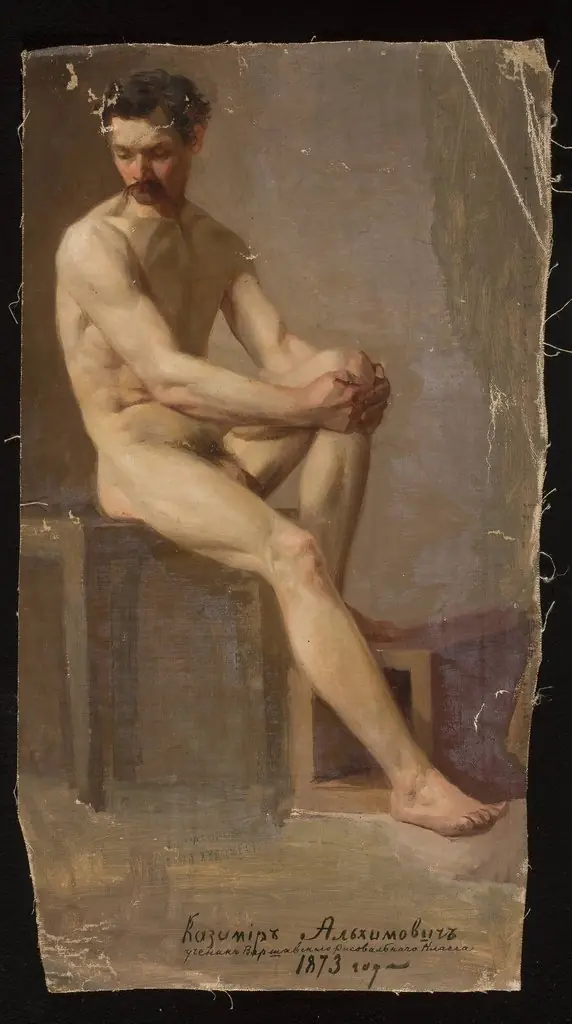 Nude of a seated man
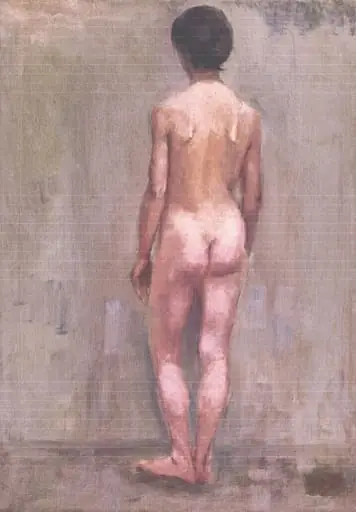 Studiu de nud cu spatele (Nud în atelier)
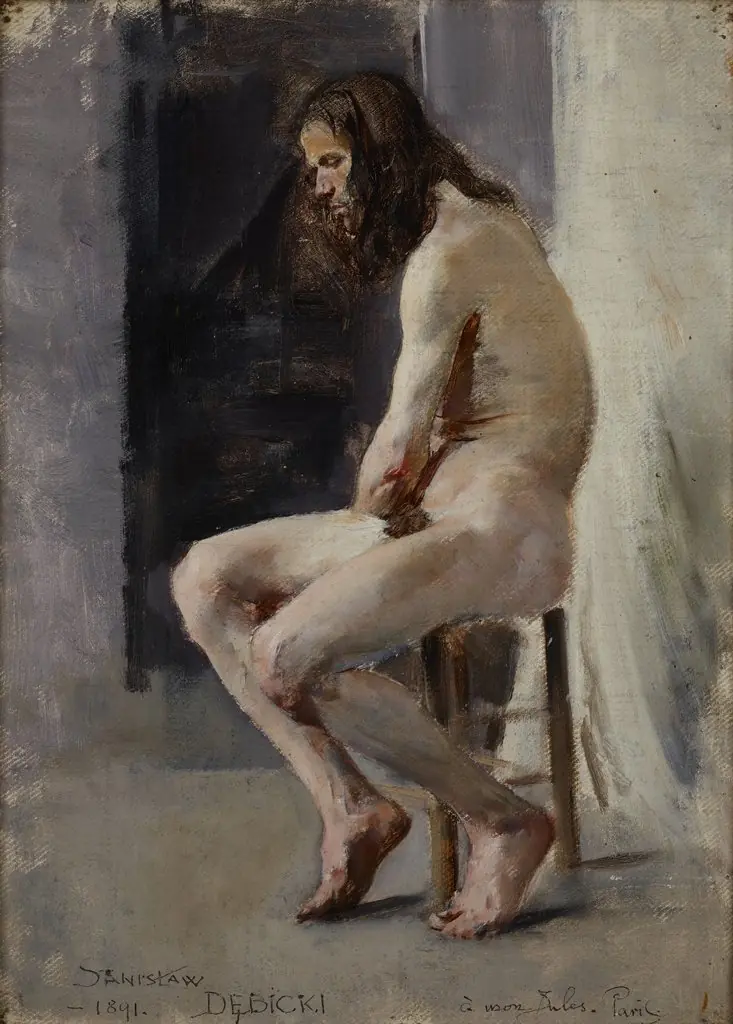 Male Nude
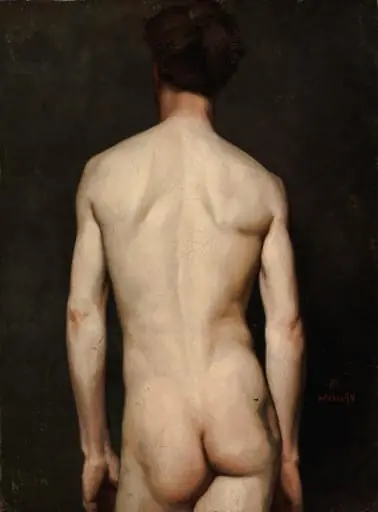 Miesmalli, akatemiaharjoitelma
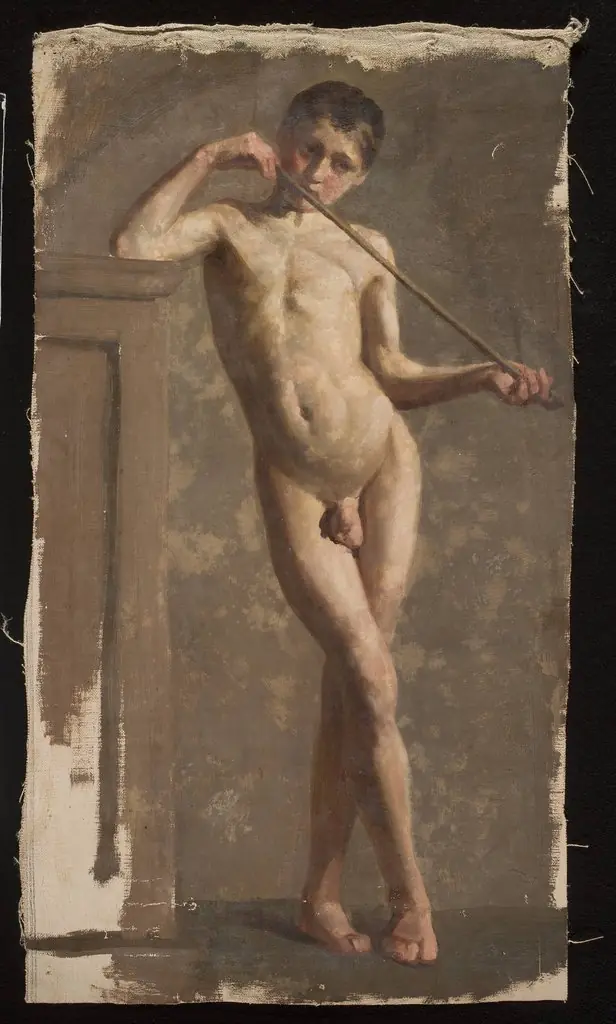 Nude of a standing boy
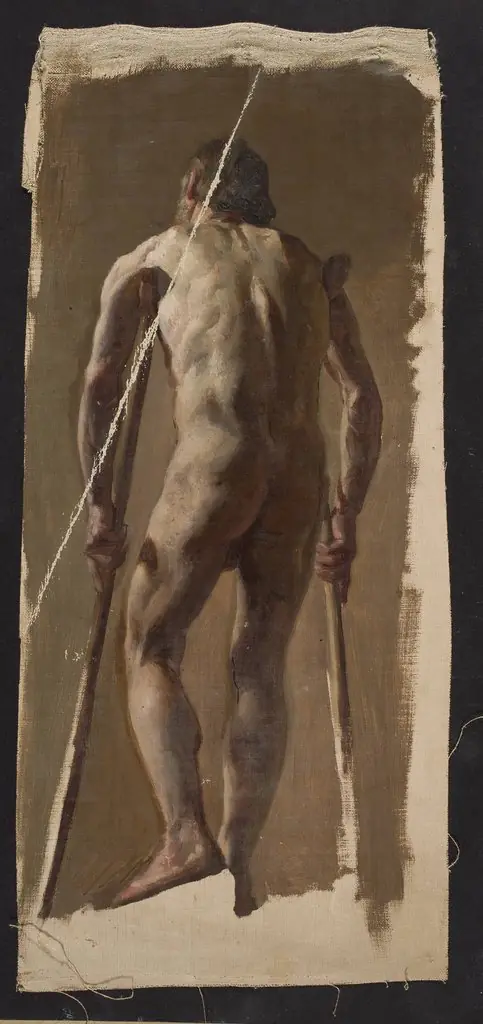 Nude of an old man leaning on crutches, back view
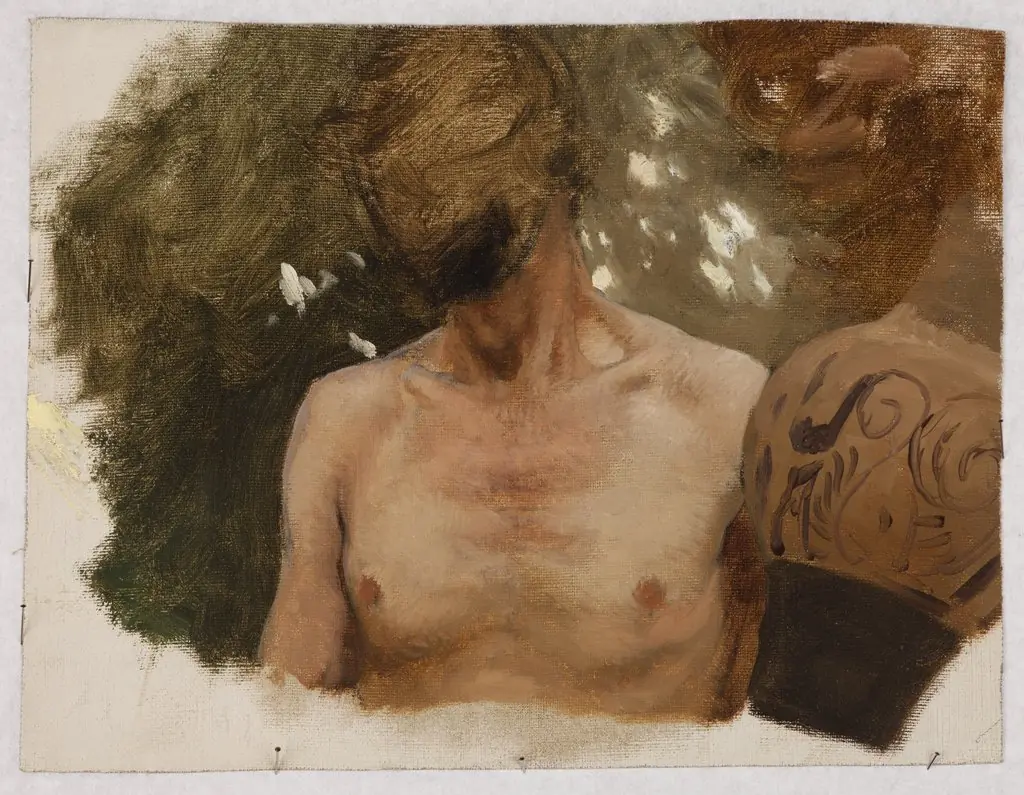 Study of the Bust of a Naked Youth with a Vase – Sketch to the Painting "Vase-Seller"
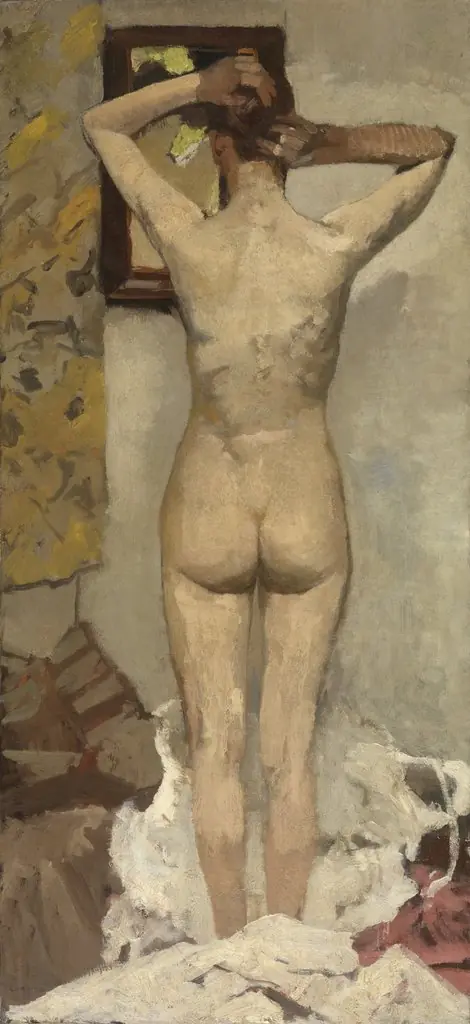 Standing Nude
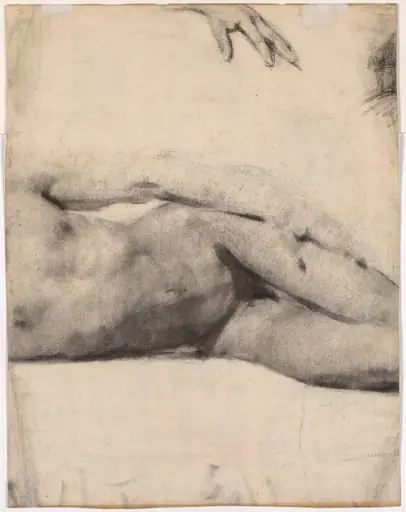 Reclining Male Nude (verso)
 Vanhus, akatemiamalli
 The Model