Artwork
Allegorical Family Portrait
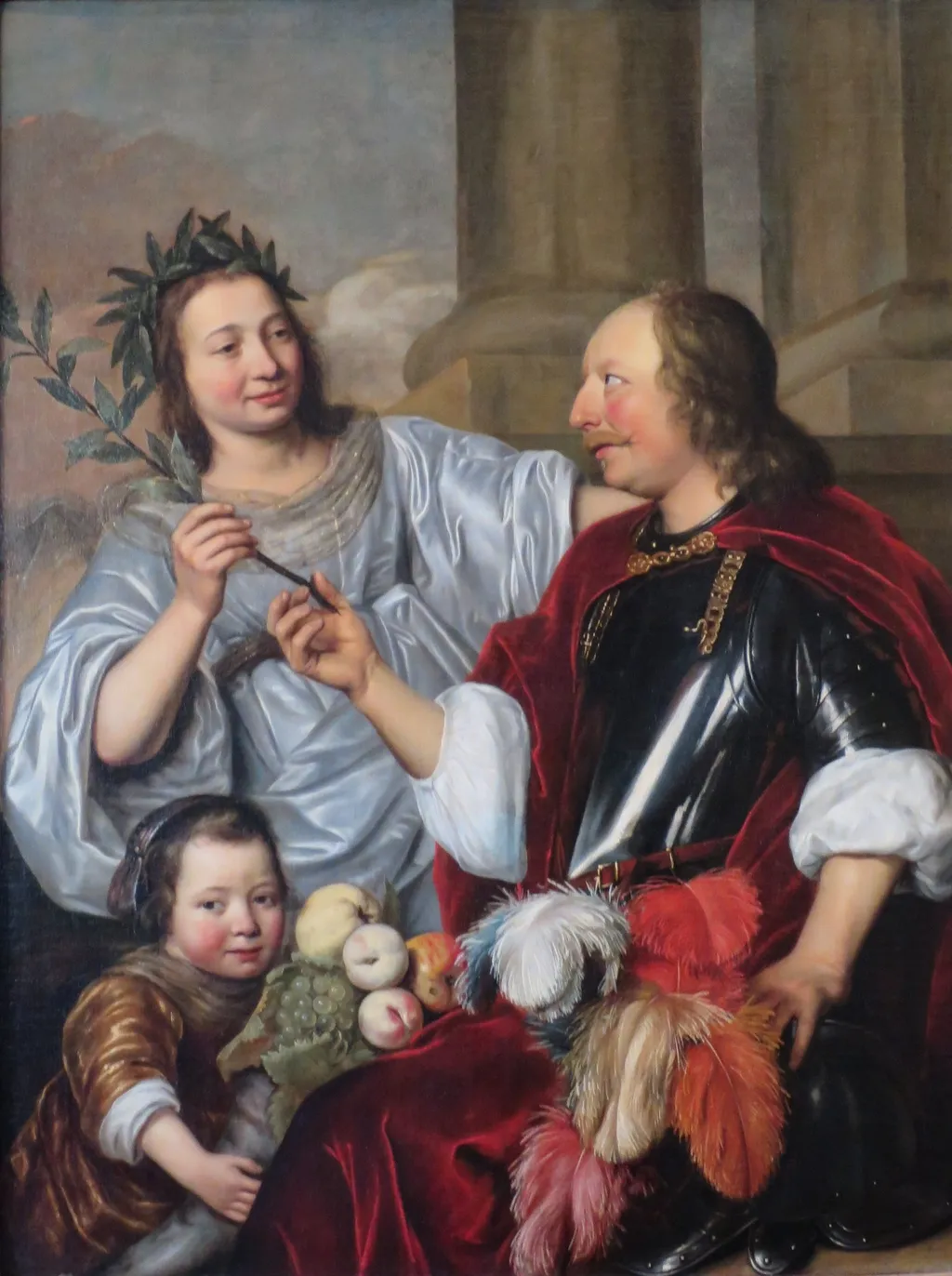
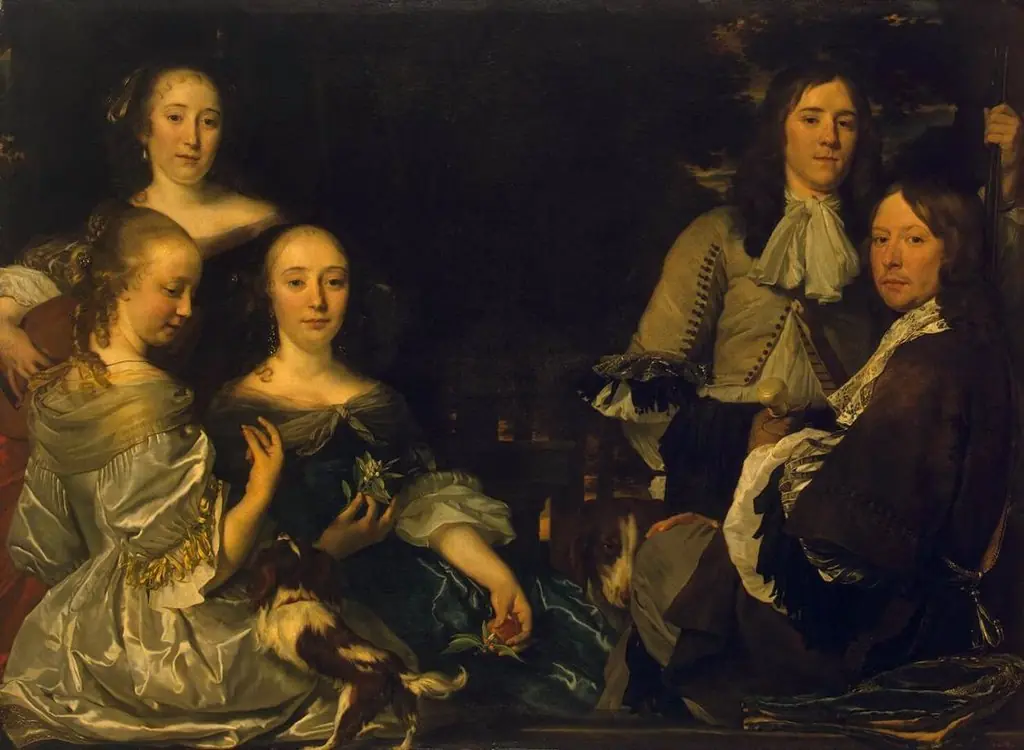
Allegorical Family Portrait is an oil painting by the Dutch Golden Age artist Jan de Bray. It dates from 1670 and is held in the collection of the Hermitage Museum.
About this work
Overview
Jan de Bray, a Haarlem‑based painter of the Dutch Golden Age, completed the oil painting *Allegorical Family Portrait* in 1670. The canvas presents a domestic grouping that combines portraiture with symbolic elements, a hallmark of de Bray’s historié approach. Today the work belongs to the collection of the State Hermitage Museum in St. Petersburg.
Subject & Meaning
The scene features a woman in a light‑blue gown crowned with laurel, a man in dark red and black armor with a red feathered hat set aside, and a child clutching a bunch of grapes while holding a quill. The laurel suggests triumph or peace, the armor evokes martial authority, and the grapes allude to abundance or the harvest, creating a layered allegory of familial virtue and prosperity.
Technique & Style
Executed in oil on canvas, the painting displays de Bray’s smooth brushwork and careful modeling of textures, from the sheen of metal to the softness of fabric.
Executed in oil on canvas, the painting displays de Bray’s smooth brushwork and careful modeling of textures, from the sheen of metal to the softness of fabric. Light falls gently across a stone‑like backdrop and a muted sky, producing subtle chiaroscuro that enhances the three‑dimensionality of the figures while maintaining a restrained, naturalistic tone typical of mid‑17th‑century Dutch portraiture.
Context
De Bray worked in a period when Dutch artists often merged portraiture with historical or allegorical references, a practice encouraged by his father Salomon de Bray and contemporaries such as Bartholomeus van der Helst and Frans Hals. The inclusion of martial and civic symbols reflects the post‑Thirty Years’ War emphasis on civic pride and the rising status of the merchant class in Haarlem.
History & Provenance
After remaining in private hands for over two centuries, the painting entered the State Hermitage Museum’s collection in the early 20th century, where it has been displayed as part of the museum’s representation of Dutch Golden Age art, illustrating the cross‑genre experimentation of its period.
Artist & collection
Artist
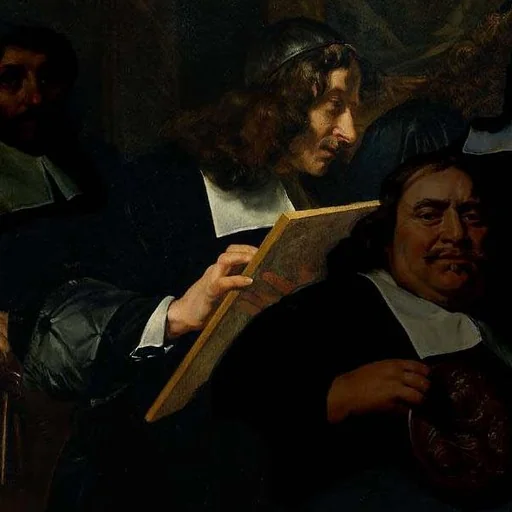
Jan de Bray (c. 1627 – April 4, 1697) was a Dutch Golden Age painter. He lived and worked in Haarlem until the age of 60, when he went bankrupt and moved to Amsterdam. Jan de Bray was influenced by his father Salomon…