Artwork
Judith en Holofernes
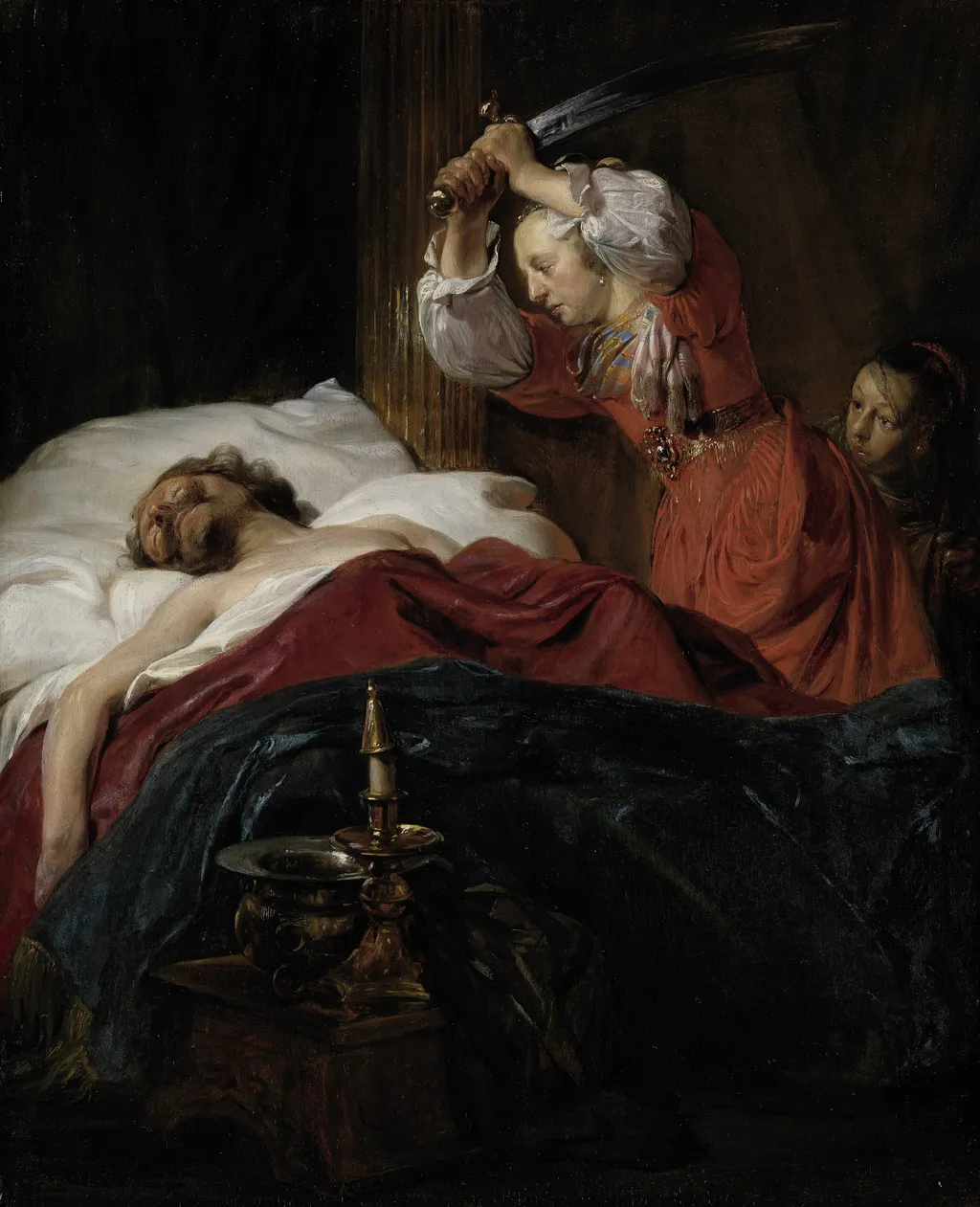
Judith en Holofernes is an oil painting by the Dutch Golden Age artist Jan de Bray. It dates from 1659 and is held in the collection of the Rijksmuseum.
About this work
Overview
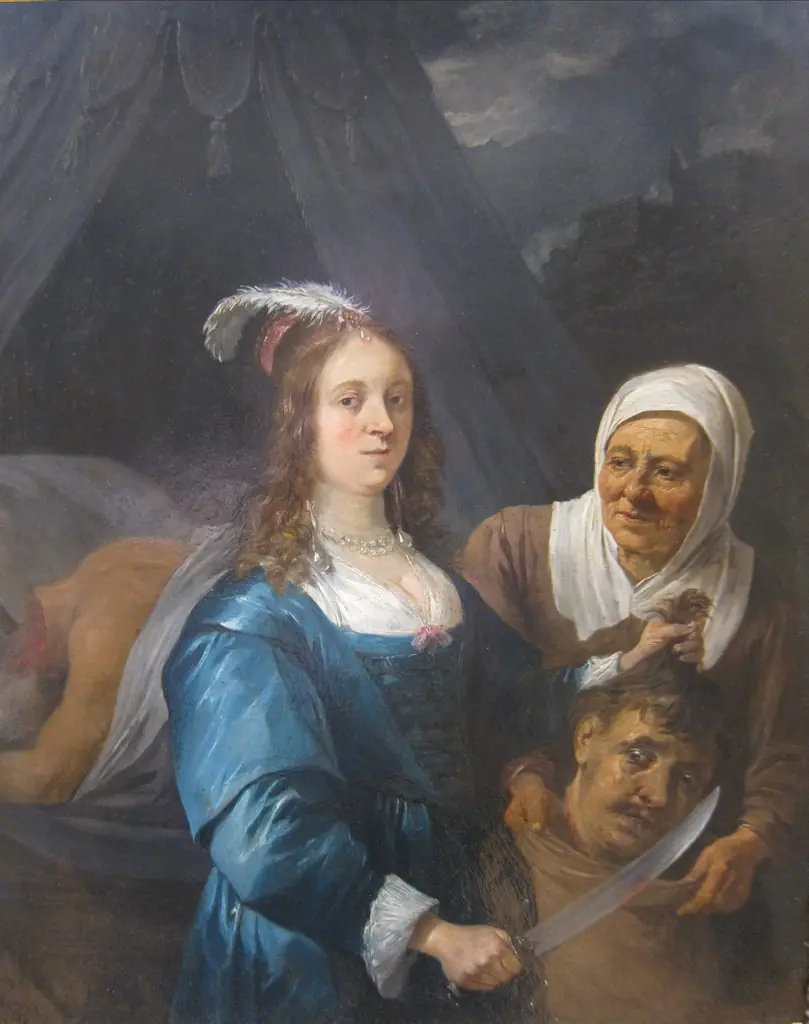
Jan de Bray’s 1659 oil on canvas, *Judith en Holofernes*, presents a dramatic moment from the biblical tale in which Judith prepares to behead the Assyrian general Holofernes. The composition centers on a woman in a vivid red gown, sword raised above a sleeping figure, while a second female figure observes from the side. The work is held in the collection of the Rijksmuseum in Amsterdam.
Subject & Meaning
The painting interprets the story of Judith’s decisive act of violence as a moral exemplar of virtue triumphing over tyranny. By freezing the instant before the beheading, de Bray emphasizes tension and anticipation, inviting viewers to contemplate the ethical weight of Judith’s courage and the consequences of political oppression.
Technique & Style
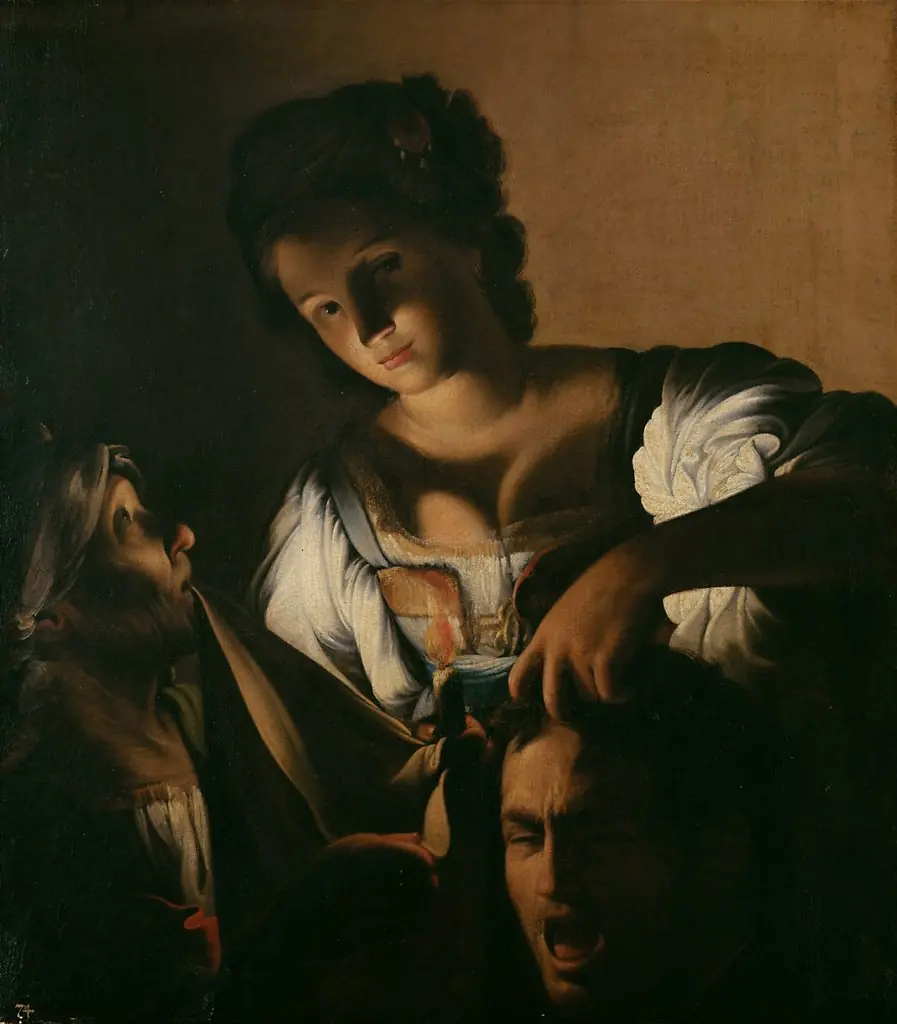
De Bray employs a pronounced chiaroscuro, using a single candle’s glow to carve the figures from a darkened interior. The stark contrast between illuminated flesh and deep shadows heightens the drama and draws attention to the sword’s gleam. The rendering of textures—silk, metal, and flesh—reflects the artist’s training in portraiture and his attention to detail.
History & Provenance
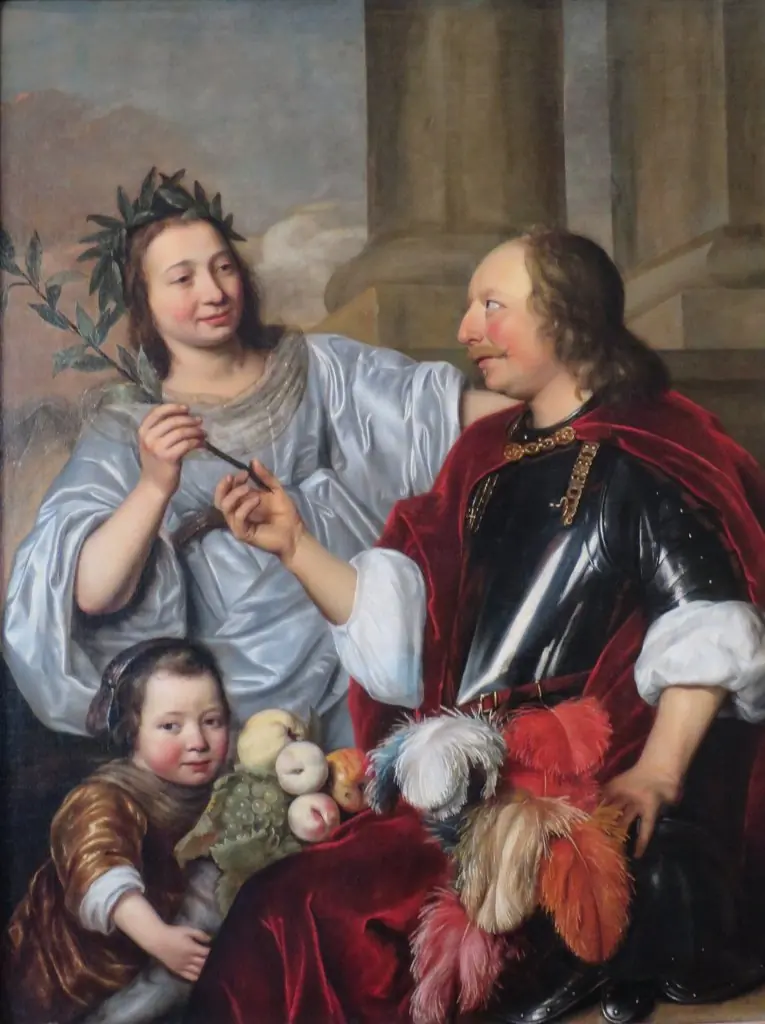
Created in Haarlem, the painting reflects Jan de Bray’s practice of integrating contemporary likenesses into historical scenes, a hallmark of the portrait historié genre. The work originally featured members of the artist’s own family, a common device for personalizing biblical narratives. It entered the Rijksmuseum’s holdings in the early twentieth century, where it remains on display.
Context
During the Dutch Golden Age, biblical subjects were often rendered with a moralizing tone, and de Bray’s approach aligns with the period’s interest in combining narrative content with portraiture. Influences from his father Salomon de Bray and the lively brushwork of Frans Hals can be discerned in the composition’s lively figures and subtle psychological depth.
Own this work as a print
Artist & collection
Artist
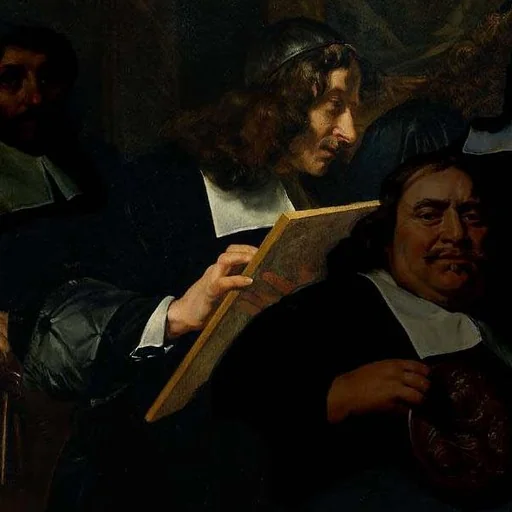
Jan de Bray (c. 1627 – April 4, 1697) was a Dutch Golden Age painter. He lived and worked in Haarlem until the age of 60, when he went bankrupt and moved to Amsterdam. Jan de Bray was influenced by his father Salomon…