Artwork
Hunting
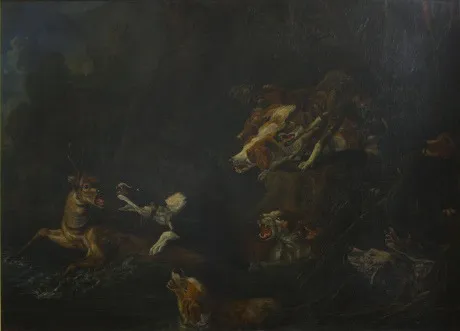
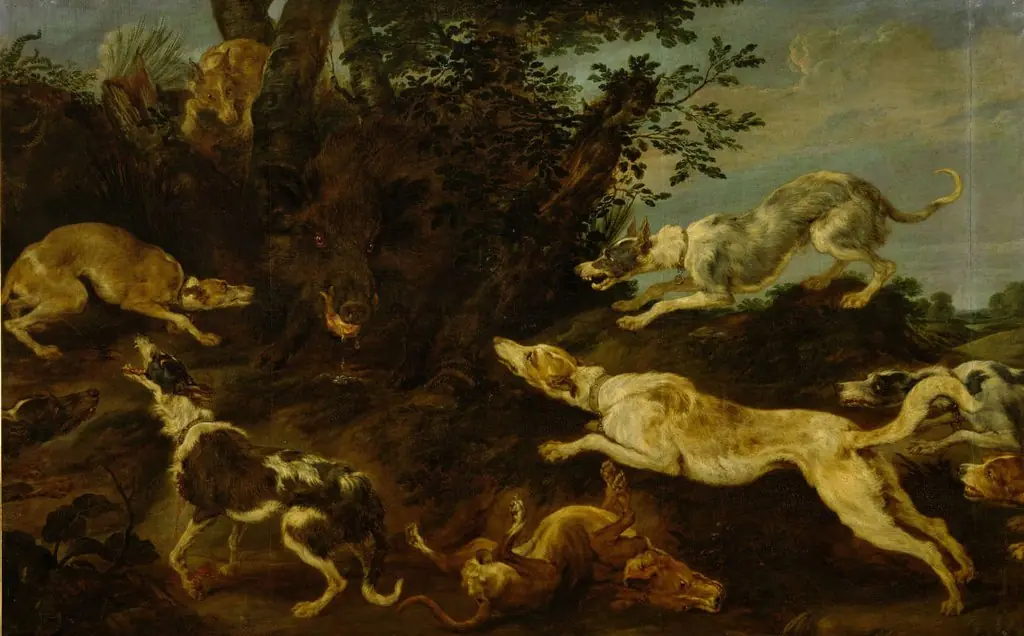
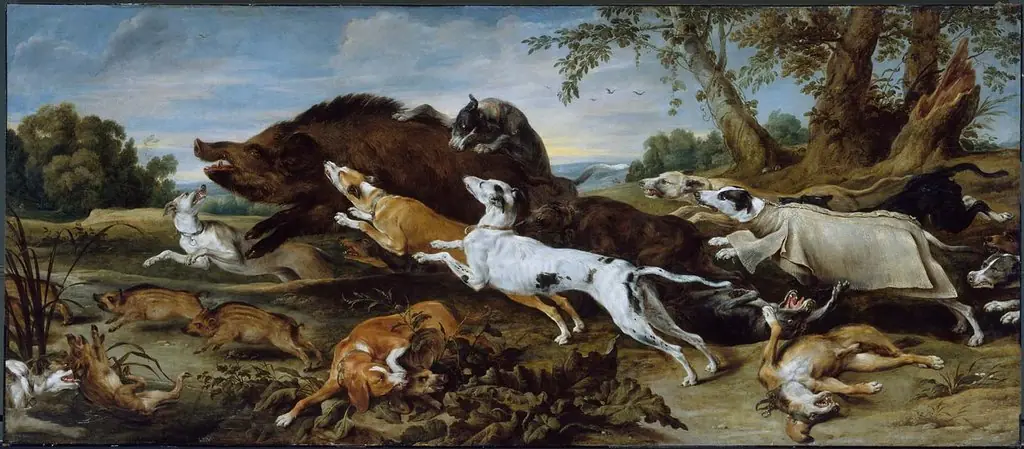
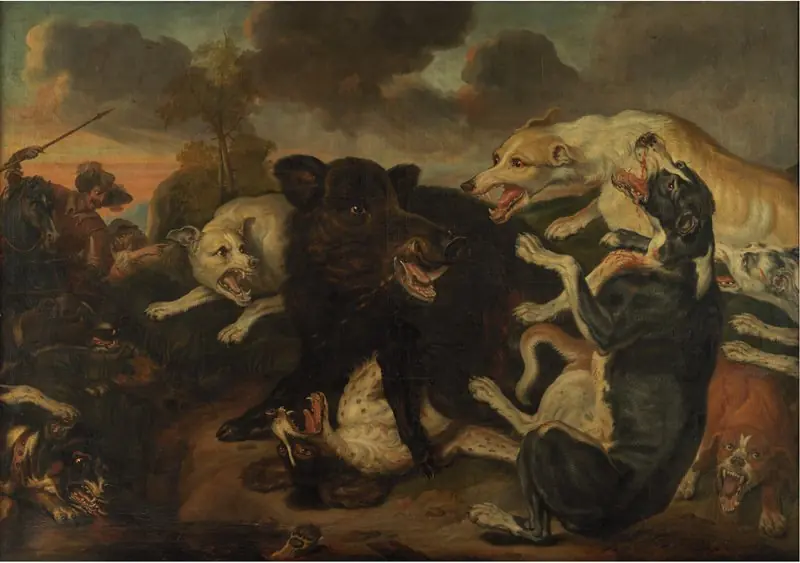
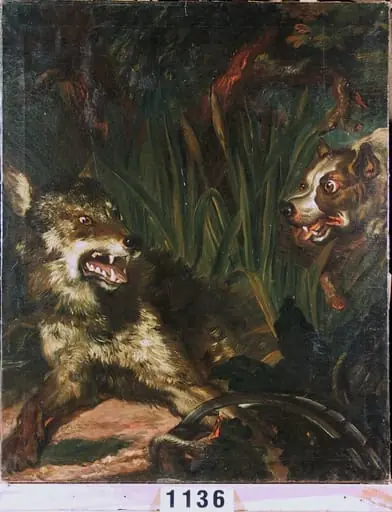
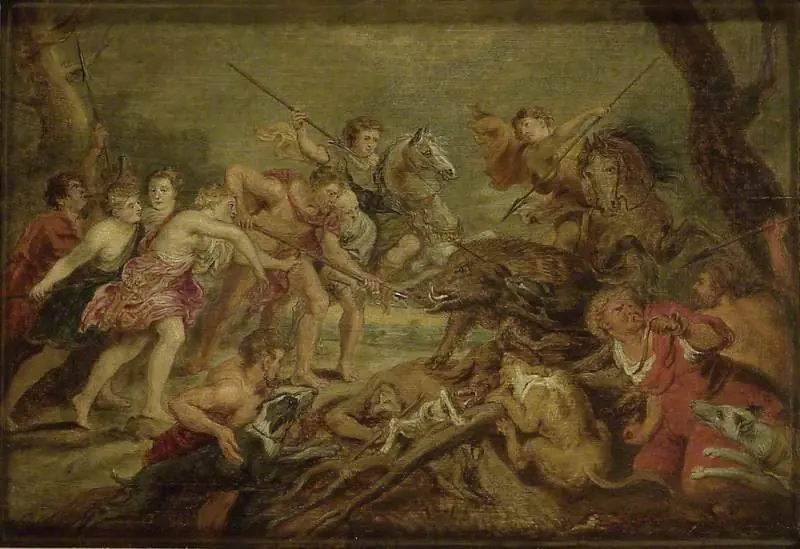
Hunting is an oil painting by the Flemish Baroque painting artist Jan Fyt. It dates from 1650 and is held in the collection of the National Gallery of Armenia.
About this work
Overview
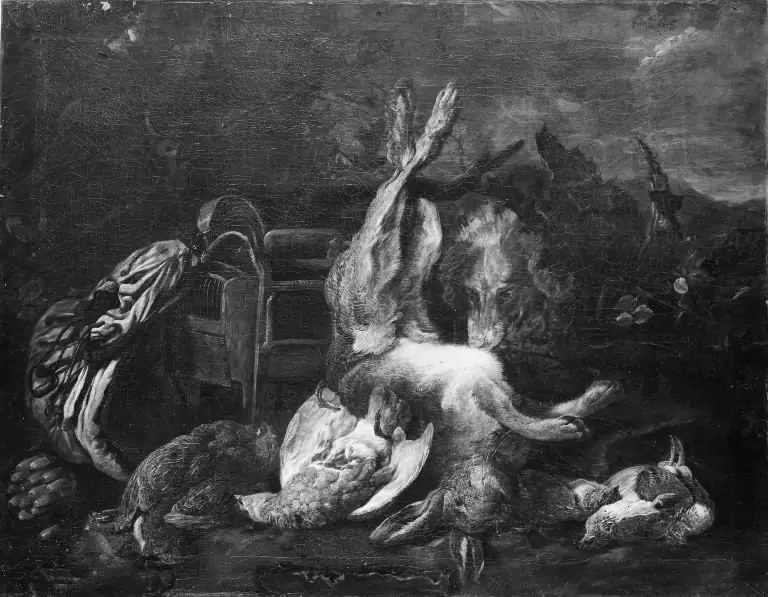
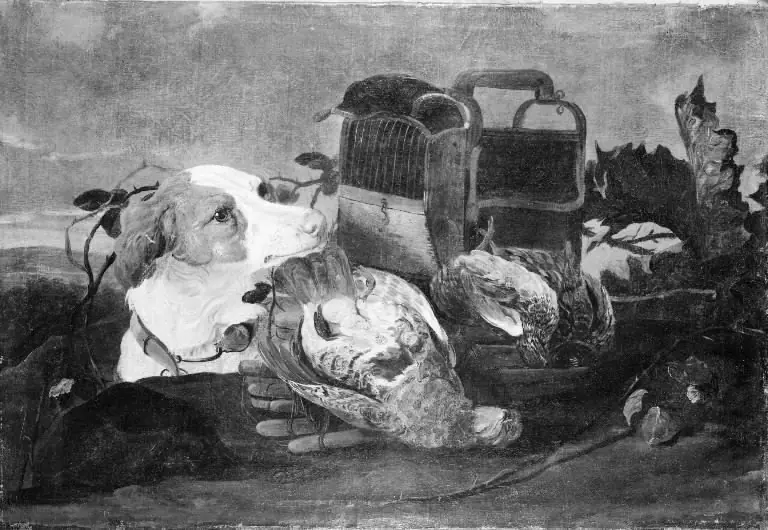
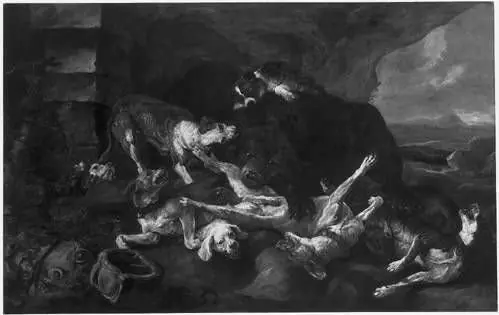
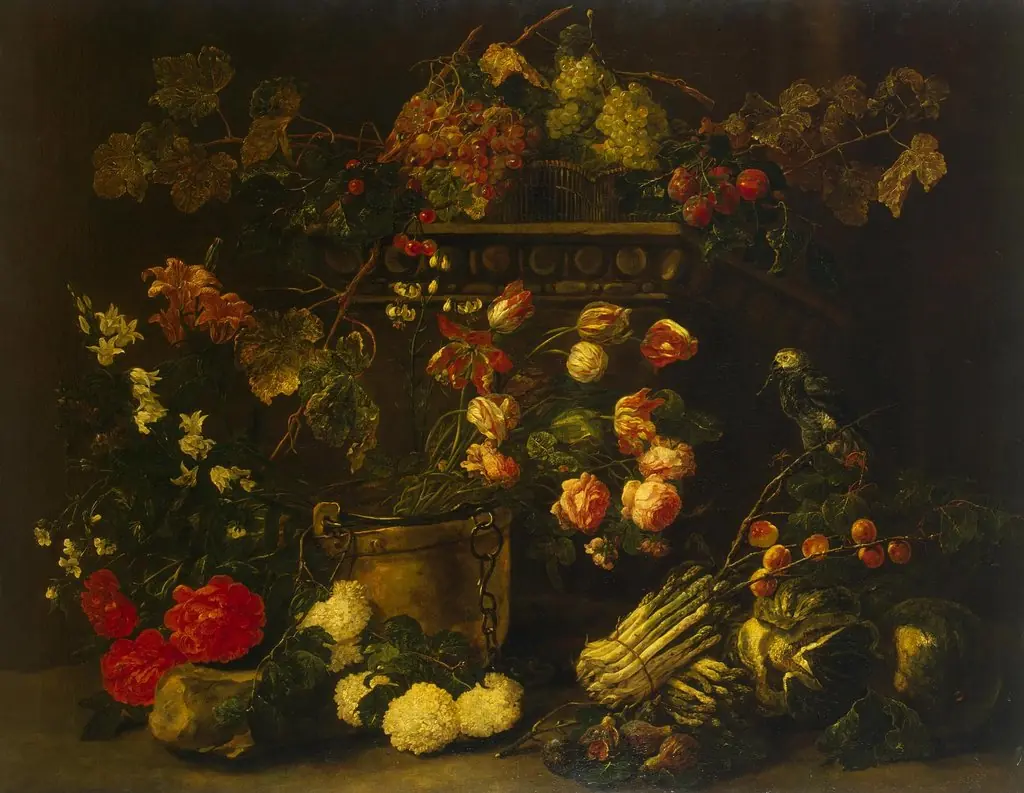
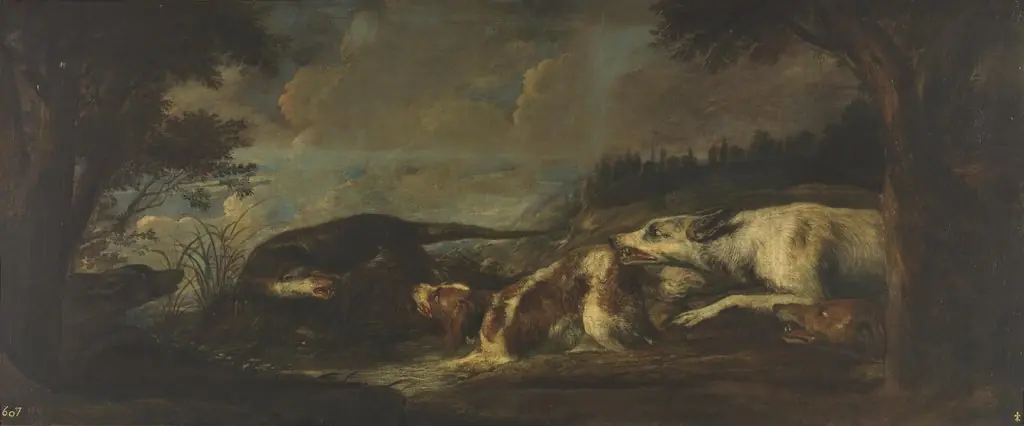
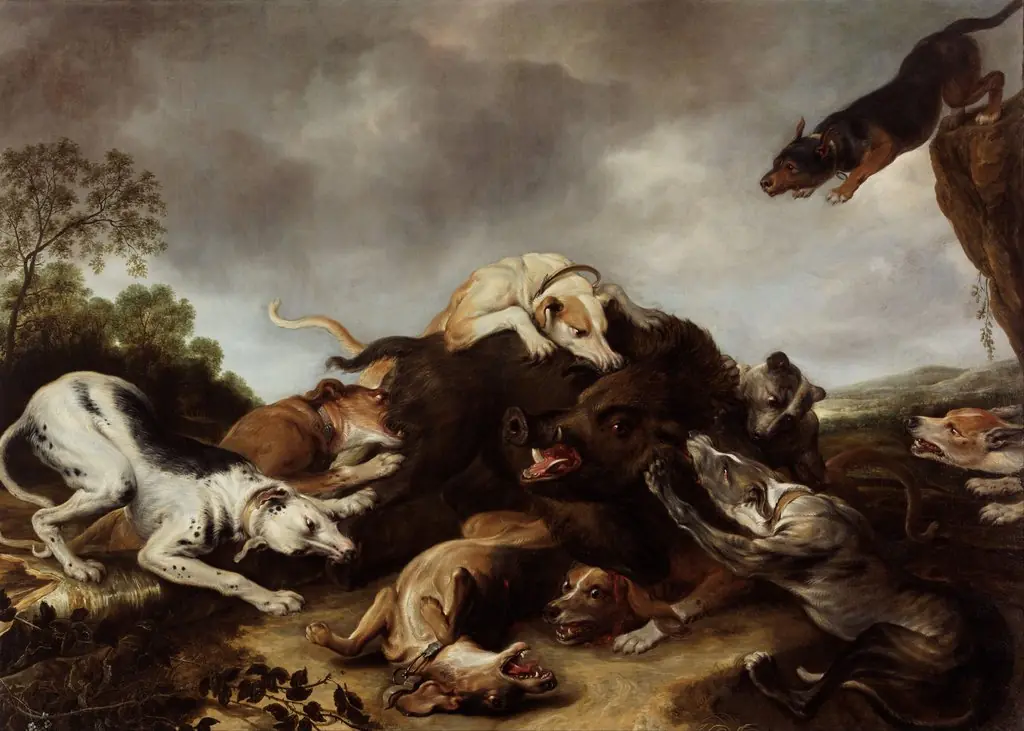
Painted around 1650 by Flemish artist Jan Fyt, this oil on canvas work captures a dynamic hunting scene. It features a group of dogs and horses engaged in motion within a shadowed woodland setting. The painting is currently held in the collection of the National Gallery of Armenia and exemplifies Fyt’s specialization in animal subjects, a hallmark of his career during the Baroque period.
Subject & Meaning
No human figures are present, emphasizing the animals’ agency and the raw energy of the chase.
The scene portrays a moment of intense activity among hunting animals, with dogs in varied stances—running, leaping, pausing—and horses shown in turbulent motion, one seemingly rearing or collapsing. No human figures are present, emphasizing the animals’ agency and the raw energy of the chase. The absence of hunters shifts focus to the natural drama of the hunt itself, reflecting a fascination with animal behavior common in Flemish still-life and animal painting.
Technique & Style
Fyt employed chiaroscuro to heighten the sense of movement and depth, using strong contrasts between dark, muted backgrounds and sharply lit animal forms. Brushwork is detailed yet fluid, capturing fur, muscle, and mane with precision. The composition avoids symmetry, instead arranging figures in a diagonal flow that guides the eye through the chaos. This approach underscores his training in the Flemish tradition of naturalistic animal depiction.
History & Provenance
The painting entered the National Gallery of Armenia’s collection in the 20th century, though its earlier ownership history remains undocumented. It was likely acquired through European art markets following the dispersal of private collections in the Low Countries. Fyt’s works were widely collected in the 17th and 18th centuries, and this piece aligns with the type of hunting scene he produced regularly for aristocratic patrons.
Context
In mid-17th century Flanders, animal painting flourished alongside still life and landscape traditions. Artists like Fyt responded to elite interest in hunting as both sport and status symbol, translating it into visual narratives that celebrated animal vitality. His work stood apart by minimizing human presence, focusing instead on the animals’ physicality and interaction with their environment, a trend that influenced later animaliers such as Pieter Boel.
Legacy
Fyt’s approach to depicting animals with anatomical accuracy and kinetic energy helped define a subgenre of Flemish Baroque painting. His emphasis on naturalism and dramatic lighting influenced a generation of artists who specialized in wildlife subjects. Though less known today than his contemporaries in religious or mythological painting, his contributions remain significant in the history of animal representation in European art.
Artist & collection
Artist
Jan Fijt, Jan Fijt or Johannes Fijt (or Fyt) (19 August 1609 – 11 September 1661) was a Flemish Baroque painter, draughtsman and etcher.