Artwork
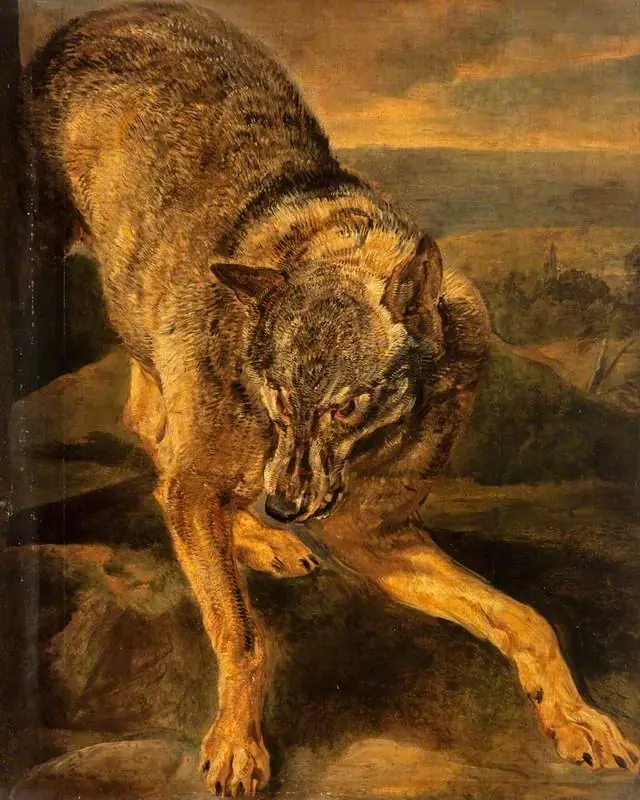
Lup prins în capcană
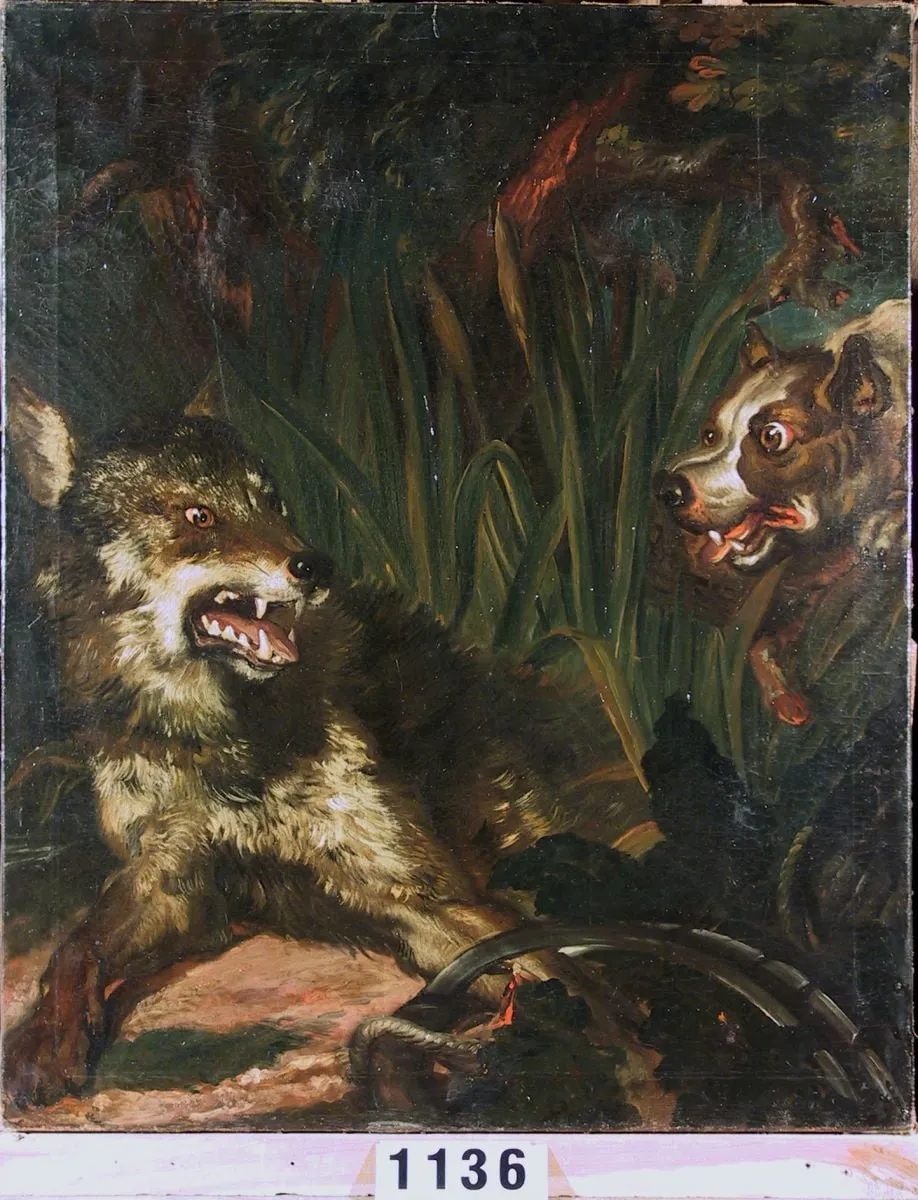
Lup prins în capcană is an unspecified painting by the Baroque artist Johann Martin Stock. It is held in the collection of the Brukenthal National Museum.
About this work
Overview
The composition emphasizes tension through dynamic poses and heavy textures, with the animals positioned against a sparse, naturalistic backdrop.
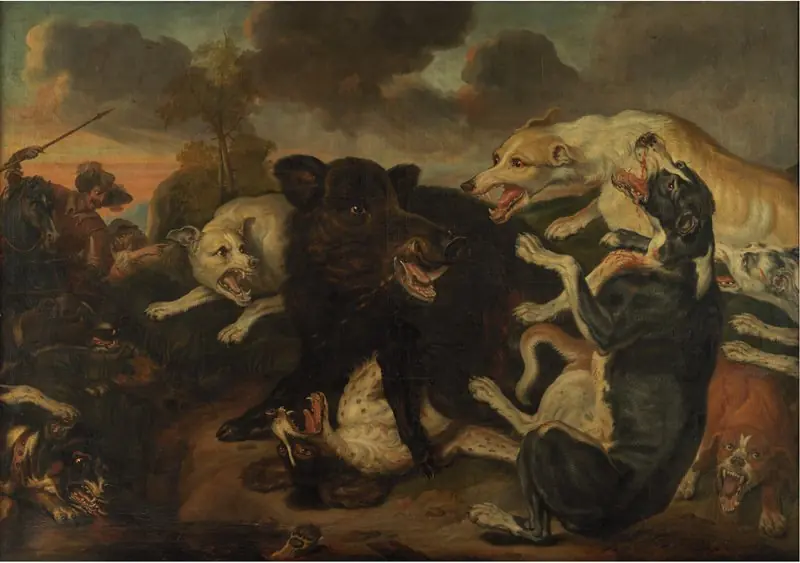
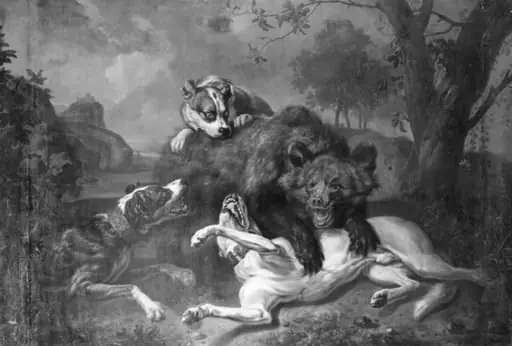
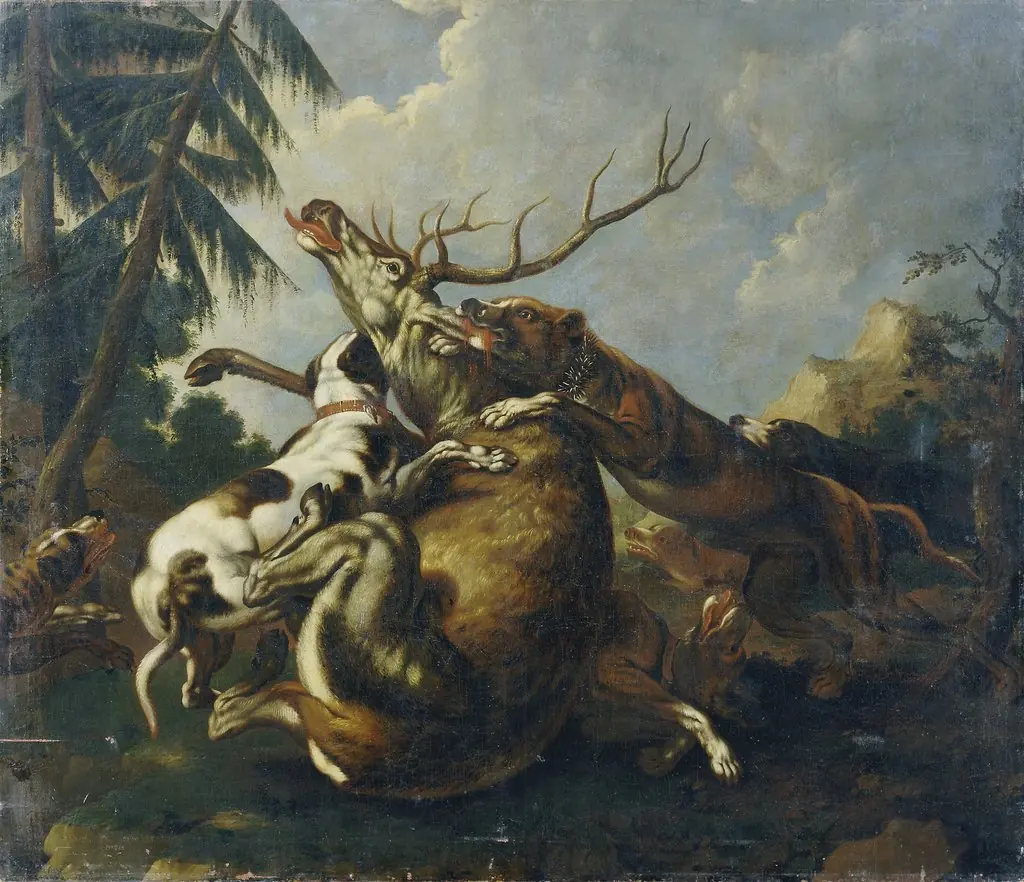
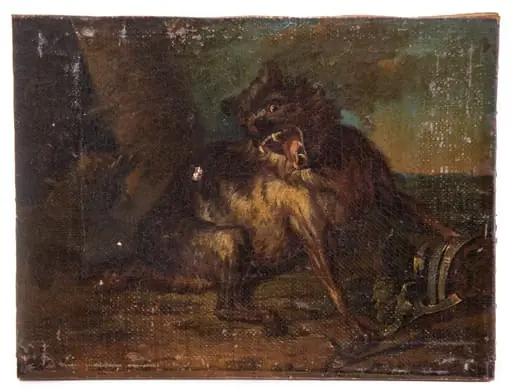
This painting depicts two wolves locked in violent struggle, rendered with aggressive brushwork and a restricted palette of dark browns, blacks, and muted greens. The composition emphasizes tension through dynamic poses and heavy textures, with the animals positioned against a sparse, naturalistic backdrop. Thick impasto strokes define their fur, enhancing the sense of physical exertion and raw energy.
Subject & Meaning
The scene captures a moment of primal conflict between two wolves, one pinned beneath the other. Their bared teeth and tangled limbs suggest a fight for dominance or survival, stripped of anthropomorphic interpretation. The absence of landscape detail focuses attention on the animals’ raw physicality, evoking themes of instinct, struggle, and the unforgiving nature of the wild.
Technique & Style
The artist employs thick, layered brushstrokes to build texture in the wolves’ fur, creating a tactile, almost sculptural surface. Strong chiaroscuro contrasts define muscle and form, with deep shadows amplifying the drama of the confrontation. The dark, earth-toned palette reinforces the somber mood, while minimal background elements prevent distraction from the central conflict.
History & Provenance
No documented provenance or exhibition history is available for this work. The style and technique suggest late 19th- or early 20th-century influence, possibly from regional artists focused on wildlife or naturalist themes. Its origins remain unverified, and no artist attribution has been established in public records.
Context
The painting aligns with broader 19th-century artistic interests in depicting wild animals as symbols of untamed nature, often in moments of conflict or solitude. While not part of a known movement, its emphasis on physical realism and emotional intensity reflects contemporary trends in naturalist and Romantic-era wildlife imagery, particularly in Eastern European and Russian traditions.
Legacy
As an unattributed work with no known exhibition history, its influence on later artists is undocumented. It survives as a standalone example of early modern wildlife painting, valued for its visceral technique and unembellished portrayal of animal behavior. Its preservation offers insight into how non-academic artists engaged with natural subjects during a period of increasing scientific interest in the wild.
Artist & collection
Artist
A late-18th-century Austrian painter, Johann Martin Stock made bold, folksy portraits and still lifes in oils, plus a few prints.