Artwork
Episode from the Thirty Years' War
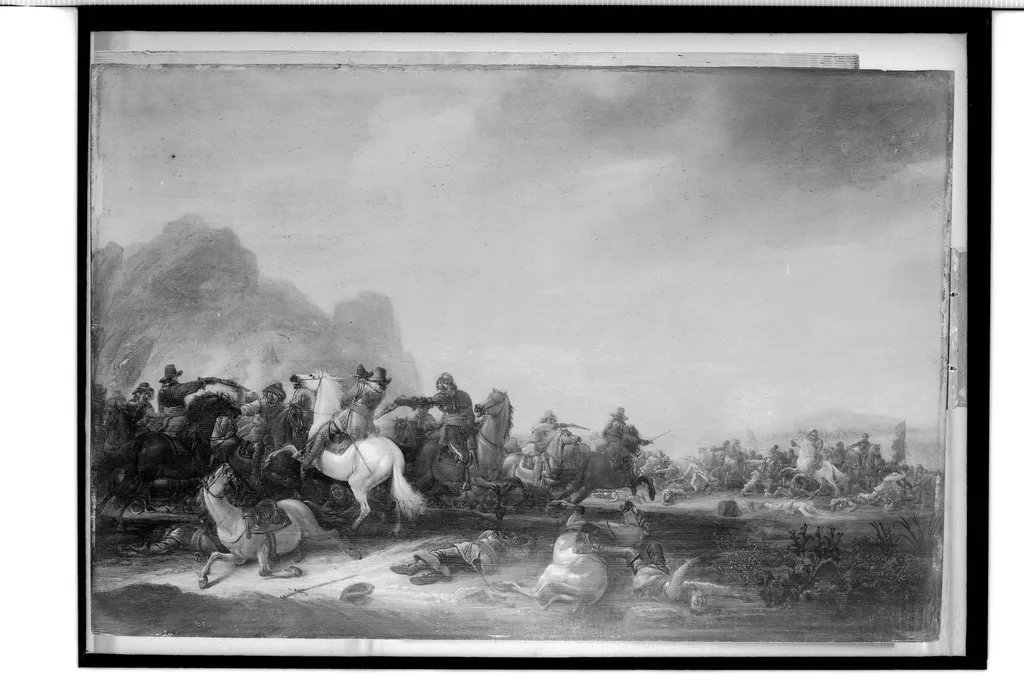
Episode from the Thirty Years' War is an oil painting by the Dutch Golden Age artist Jan Martszen de Jonge. It is held in the collection of the National Museum in Warsaw.
About this work
Overview
Painted in 1651 by Jan Martszen de Jonge, this oil-on-canvas work captures a moment from the Thirty Years' War, a protracted European conflict marked by shifting alliances and widespread devastation. The painting is part of the collection at the National Museum in Warsaw, where it remains one of the few surviving Dutch-influenced historical battle scenes from the mid-seventeenth century.
Subject & Meaning
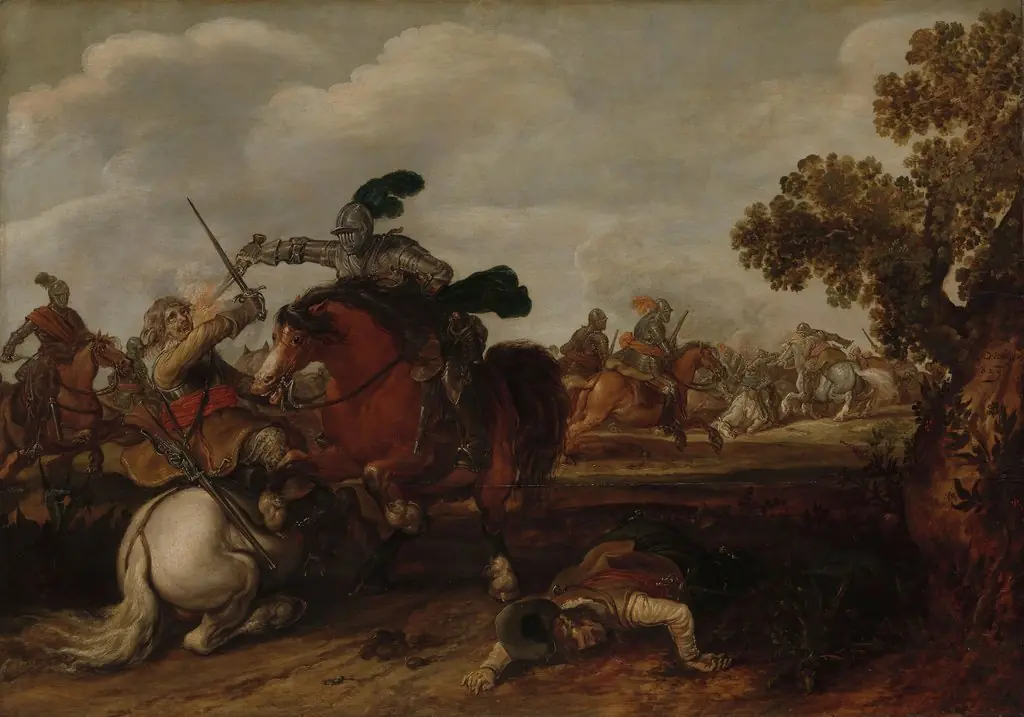
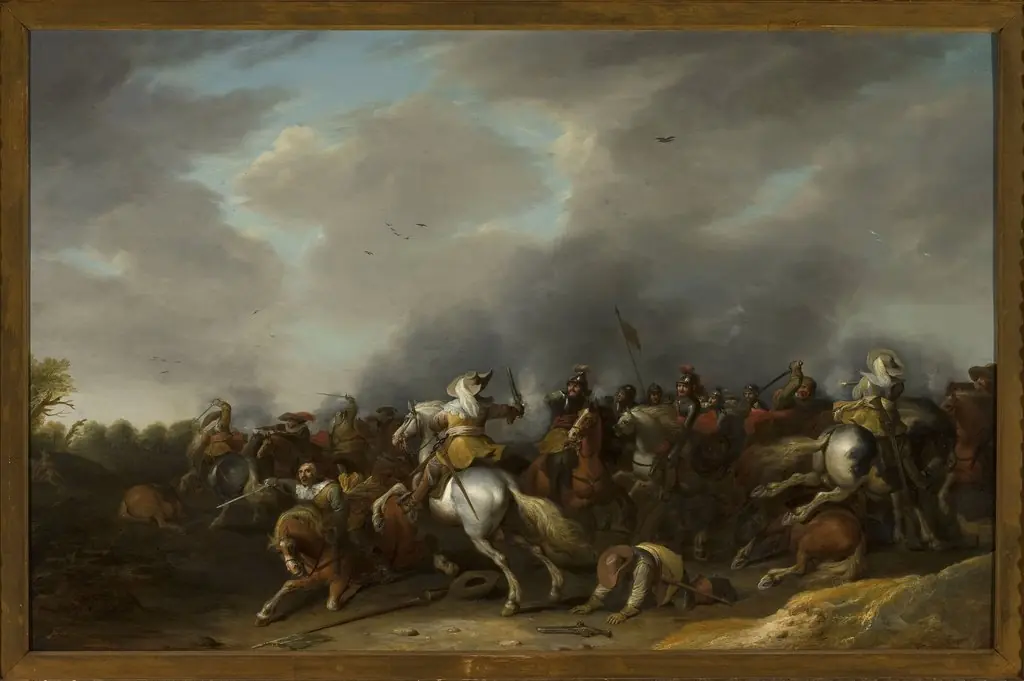
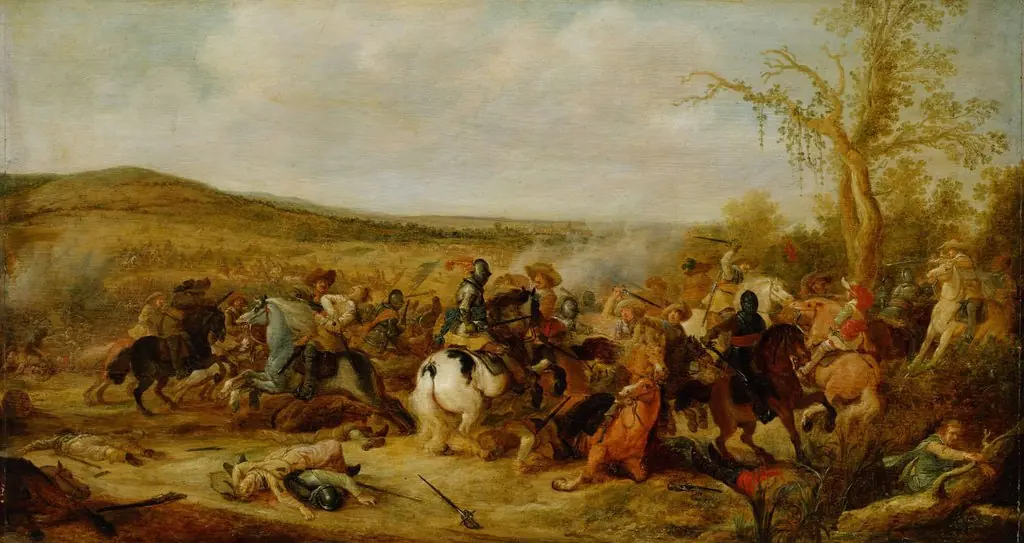
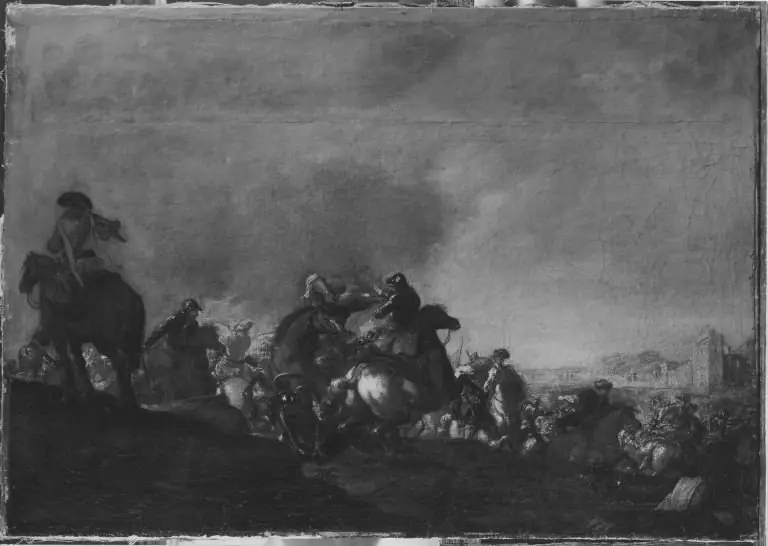
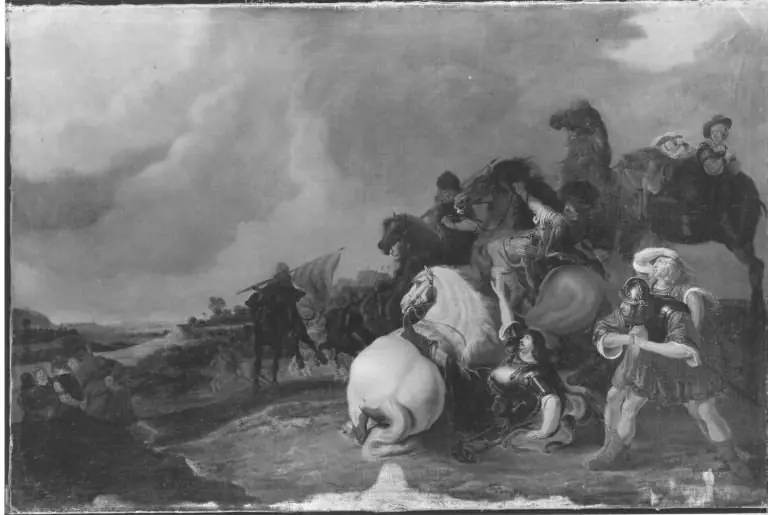
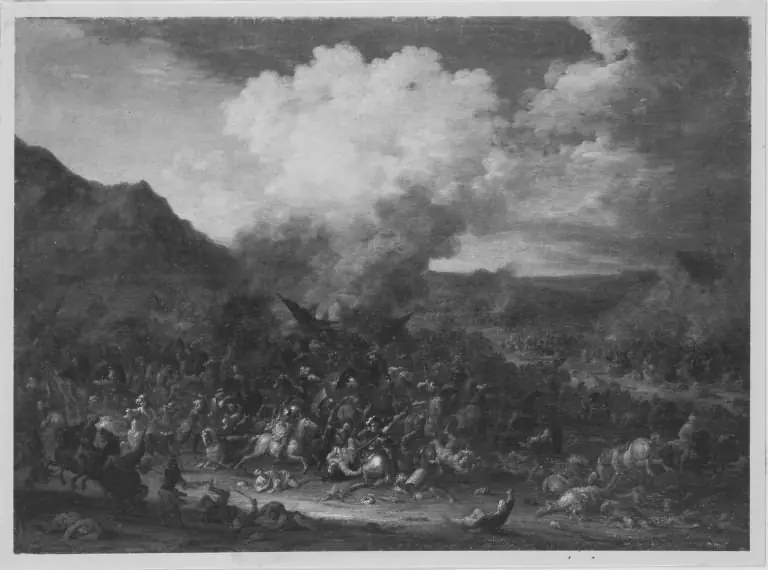
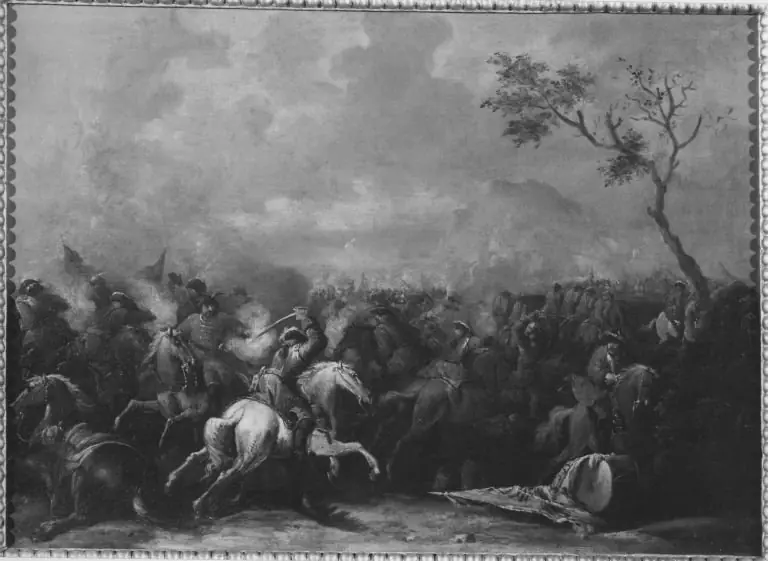
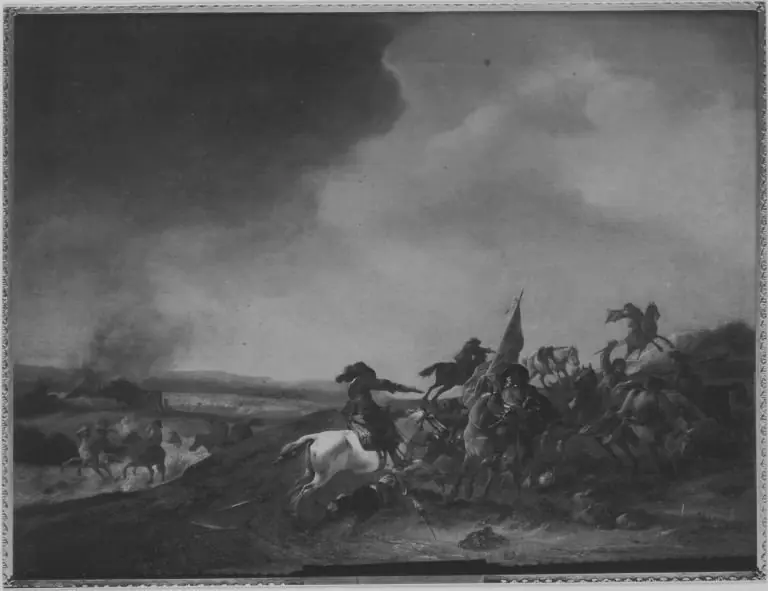
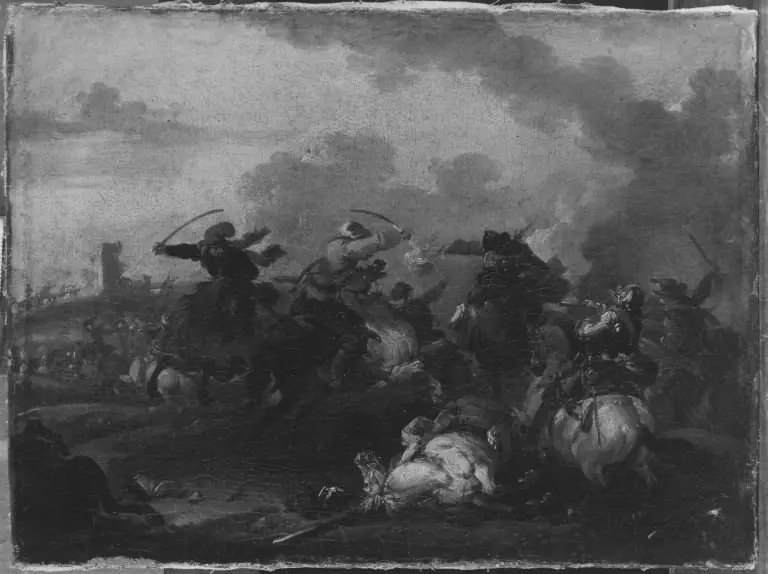
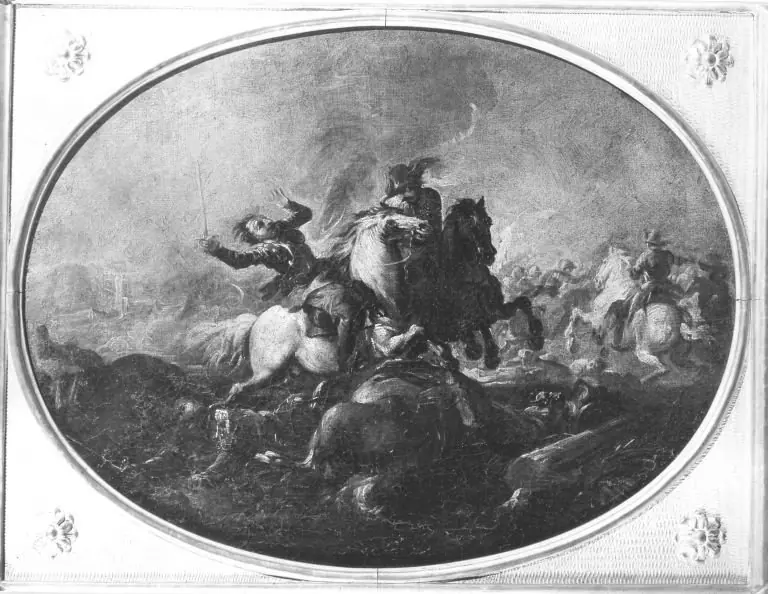
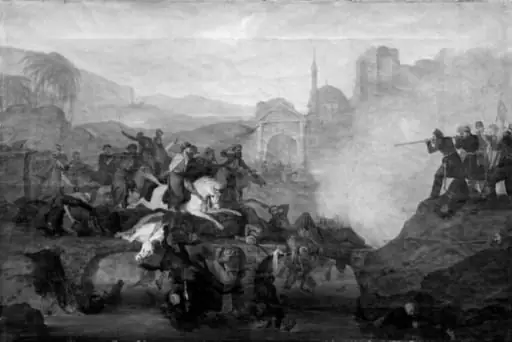
The scene portrays a violent cavalry engagement, with mounted soldiers locked in close combat, swords and spears raised in chaotic motion. No clear side is identified, emphasizing the indiscriminate brutality of war rather than glorifying victory. The absence of identifiable leaders or flags suggests a focus on the human cost, not political narrative.
Technique & Style
De Jonge employs vigorous brushwork and strong contrasts of light and shadow to heighten the drama of the clash. Horses are rendered with muscular tension, their limbs flailing, while the background landscape recedes into muted tones, isolating the violence in the foreground. The palette is rich but restrained, avoiding theatricality in favor of visceral immediacy.
History & Provenance
The painting entered the National Museum in Warsaw’s collection in the early twentieth century, likely acquired during a period of renewed interest in Dutch and Flemish battle scenes. Its origins before that are undocumented, though its style aligns with Northern European traditions of war imagery popular in the decades following the conflict's end.
Context
Created just over a decade after the Peace of Westphalia ended the Thirty Years' War, the painting reflects a broader European tendency to memorialize the war’s chaos through visual art. While many contemporaries produced grander, propagandistic battle scenes, de Jonge’s work stands out for its unembellished focus on disorder and human struggle.
Legacy
Though not widely exhibited beyond Poland, the painting contributes to the understanding of how Northern artists interpreted the war’s aftermath. Its restrained composition and emotional gravity distinguish it from more sensationalist contemporaries, offering a quieter, more reflective commentary on the nature of conflict in early modern Europe.
Artist & collection