Artwork
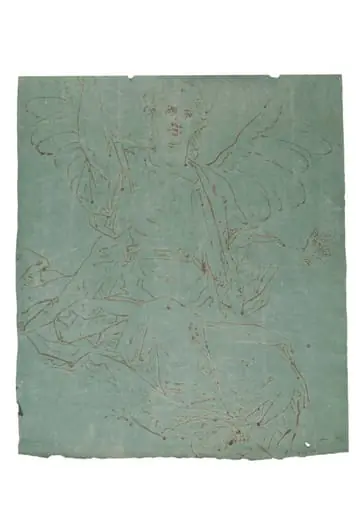
Karton do polichromii Kościoła Mariackiego - Postać anioła grającego na flecie
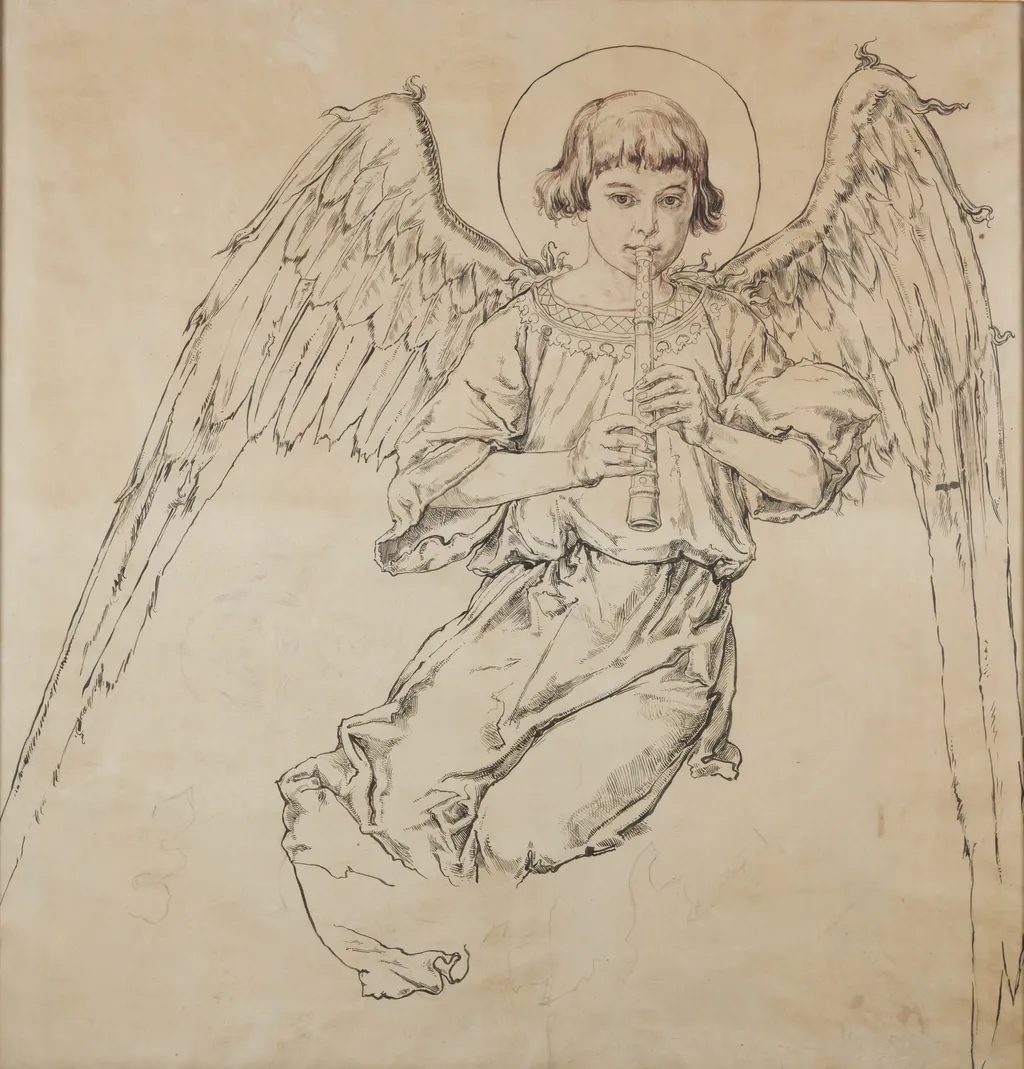
Karton do polichromii Kościoła Mariackiego - Postać anioła grającego na flecie is an unspecified painting by the Realist artist Jan Matejko. It is held in the collection of the National Museum in Kraków.
About this work
Overview
Though Matejko is primarily recognized for monumental historical scenes, this work represents a quieter, devotional commission.
Created in 1895, this preparatory drawing by Jan Matejko was intended as a model for a polychrome decoration in St. Mary’s Basilica in Kraków. Though Matejko is primarily recognized for monumental historical scenes, this work represents a quieter, devotional commission. Executed in black ink on a light brown ground, it captures a single angelic figure in contemplative motion, serving as a detailed guide for artisans executing the final painted surface.
Subject & Meaning
The figure depicts an angel playing a flute, a symbol often associated with divine harmony and celestial music in Christian iconography. The calm expression and gentle smile convey serenity rather than dramatic intensity. Positioned within the basilica’s decorative scheme, the angel likely contributed to an atmosphere of sacred stillness, reinforcing the spiritual function of the space through quiet, meditative imagery rather than narrative spectacle.
Technique & Style
Matejko rendered the angel in precise ink lines, emphasizing the flow of fabric and the curvature of wings with controlled, fluid strokes. The light brown paper provides a warm tonal base, enhancing the softness of the figure. Details such as the flute’s position against the lips and the subtle folds of the robe reflect his commitment to anatomical and textual accuracy, characteristic of his broader realist approach even in smaller religious studies.
History & Provenance
The drawing was produced as part of a larger project to restore and enrich the interior polychromy of St. Mary’s Basilica in the late 19th century. Matejko, already established as a national artist, was entrusted with designing key figures for the church’s decoration. This study remained in Poland, likely preserved within institutional or ecclesiastical archives connected to the basilica’s restoration efforts.
Context
In the 1890s, Poland was partitioned, and cultural institutions like St. Mary’s Basilica became sites of national identity preservation. Matejko’s involvement in religious decoration aligned with broader efforts to revive Polish artistic heritage. While his historical paintings addressed political memory, this angelic figure contributed to a quieter, enduring form of cultural continuity through sacred art.
Legacy
Though less known than his large-scale histories, this preparatory drawing illustrates Matejko’s versatility and his engagement with ecclesiastical art. It stands as a testament to his disciplined draftsmanship and his willingness to serve religious spaces with the same rigor applied to national narratives. The work remains a valuable record of late 19th-century Polish liturgical restoration practices.
Own this work as a print
Artist & collection
Artist
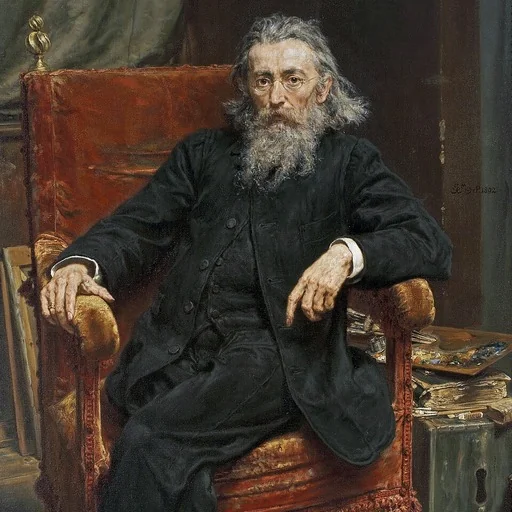
Jan Alojzy Matejko (Polish pronunciation: ; also known as Jan Mateyko; 24 June 1838 – 1 November 1893) was a Polish painter, a leading 19th-century exponent of history painting, known for depicting nodal events from Polish history.

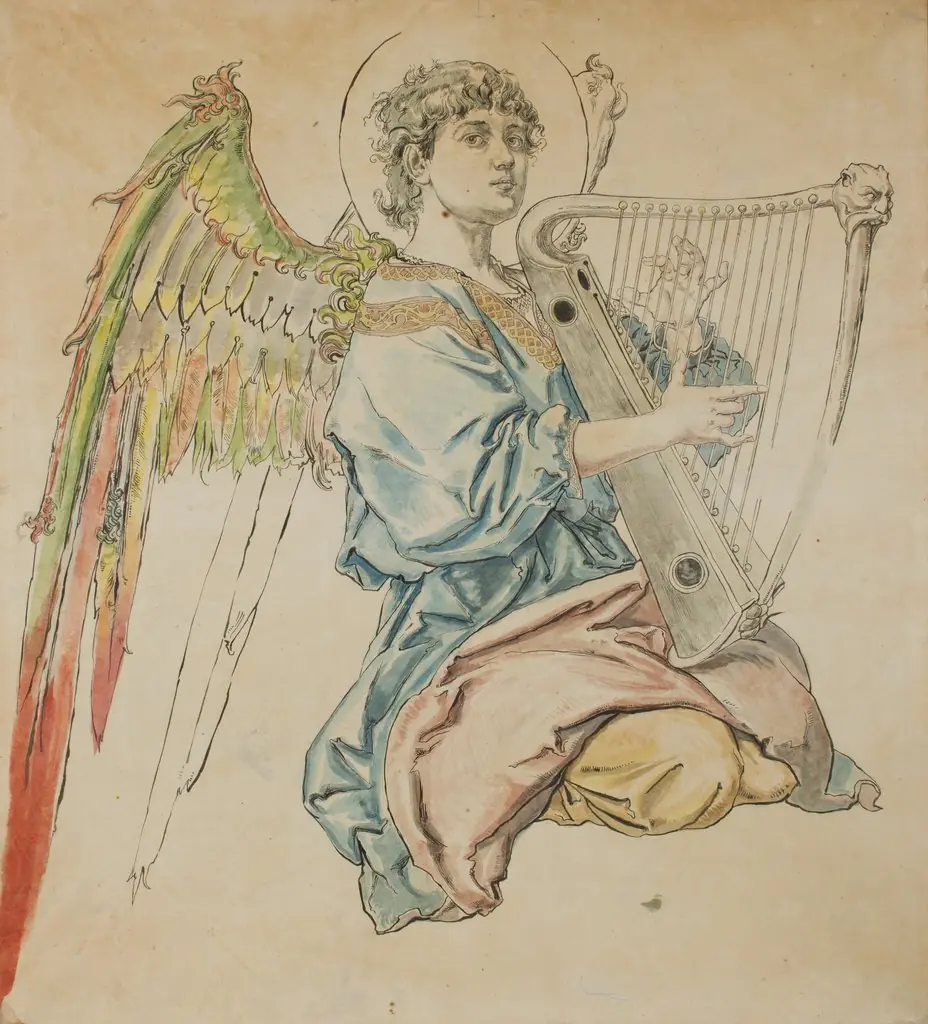 Cardboard for the Polychromy in the St Mary's Church – Figure of an Angel Playing the Lute
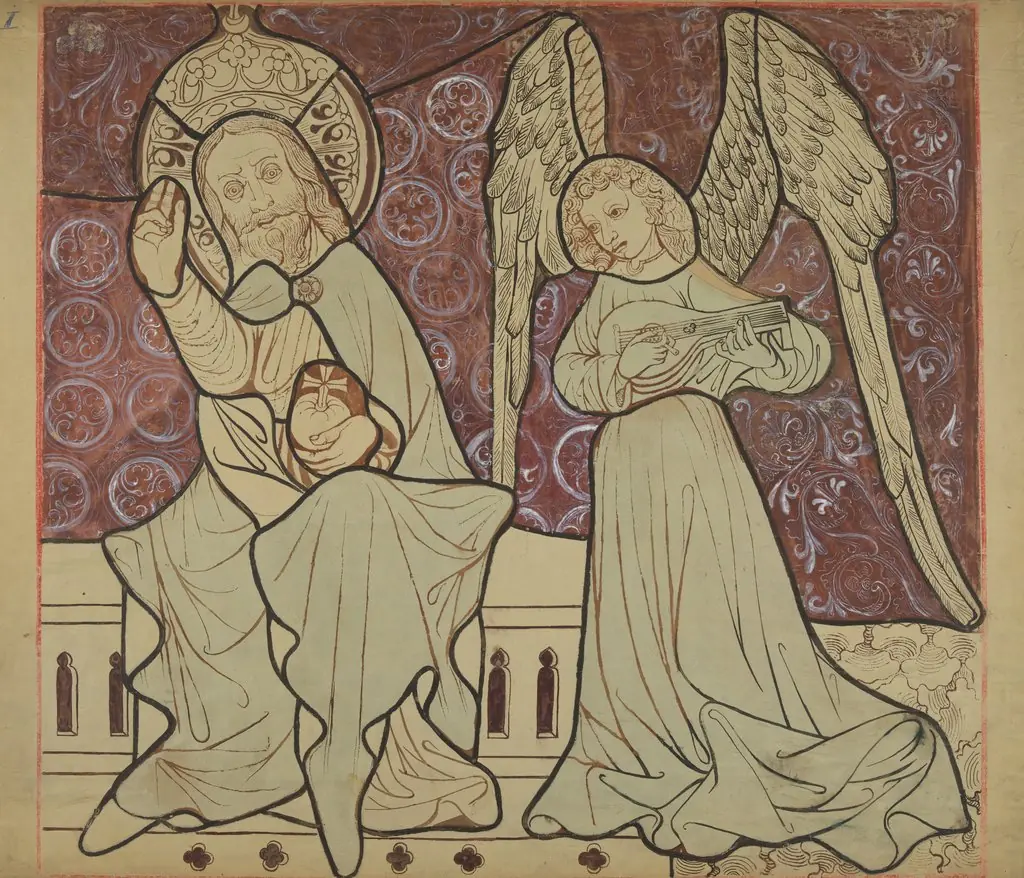 Enthroned Christ with an angel from the scene "Coronation of the Blessed Virgin Mary" (right part). Artistic reconstruction of a stained-glass panel from the Dominican church in Kraków
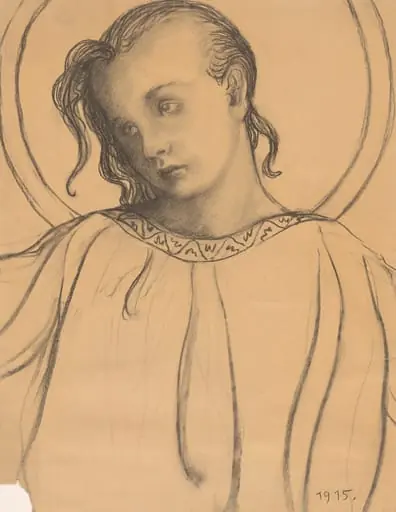 Angel
Angel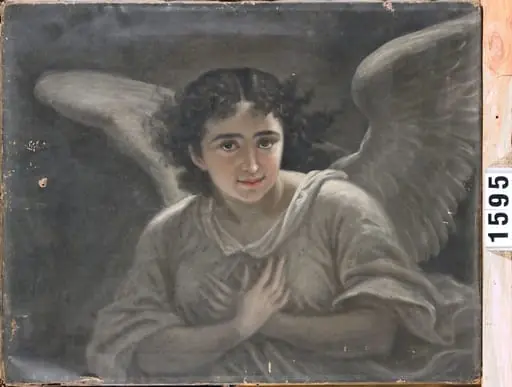 Un înger (Elisa Petrovici)
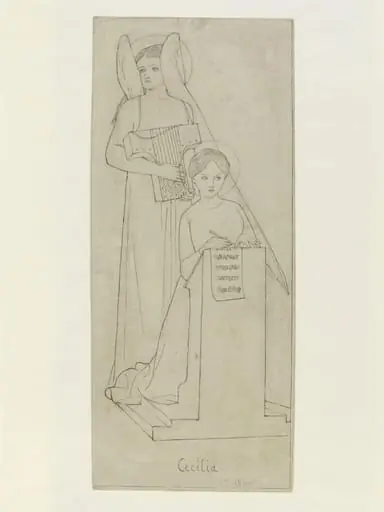 St. Cecilia
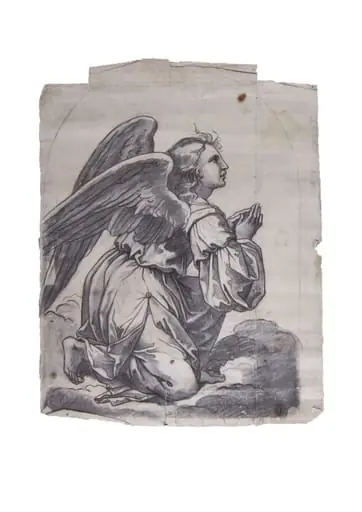 Înger
Înger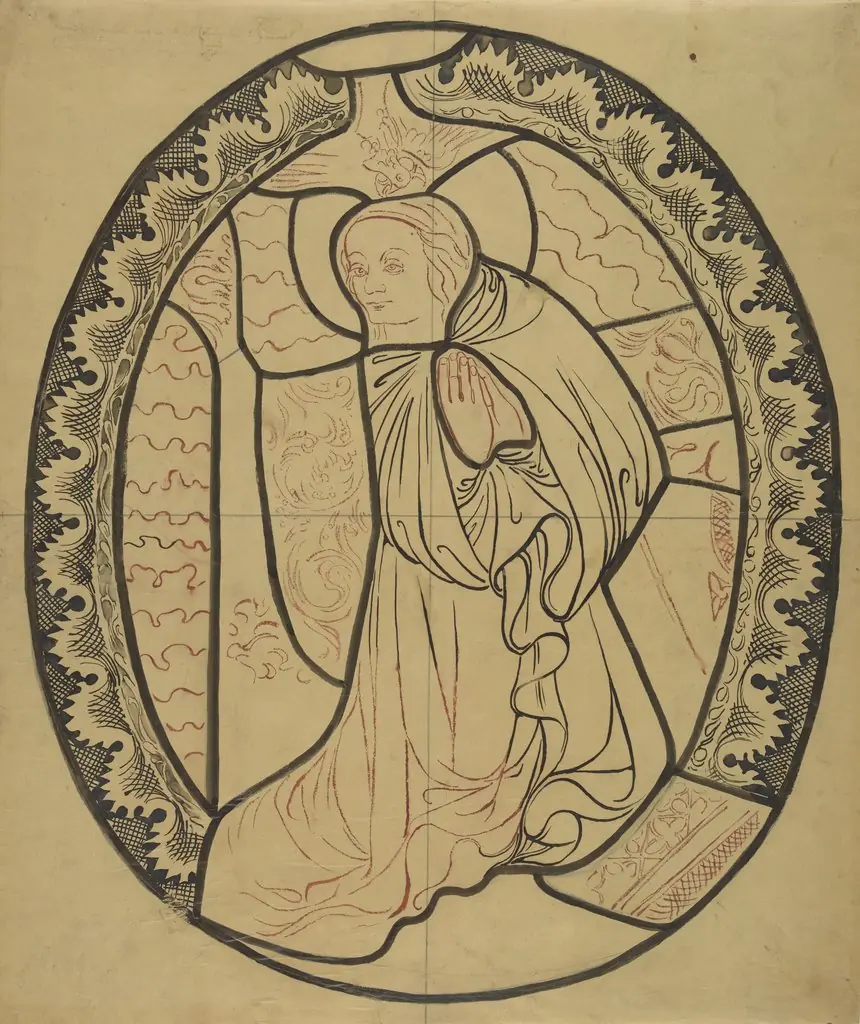 The Blessed Virgin Mary from the scene "Annunciation" (right part). Artistic reconstruction of a stained-glass panel from the Dominican church in Kraków
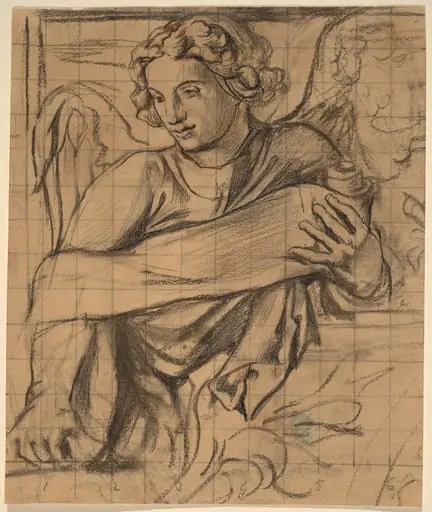 Angel - Trinity Church Mural
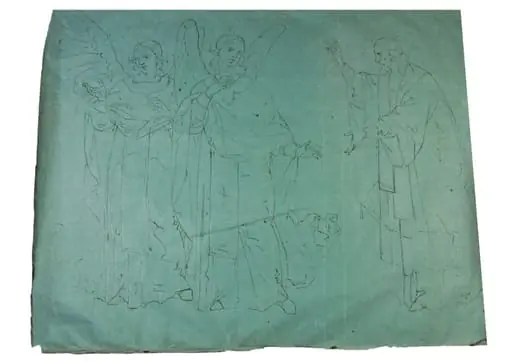 Liturghia îngerilor - scenă religioasă
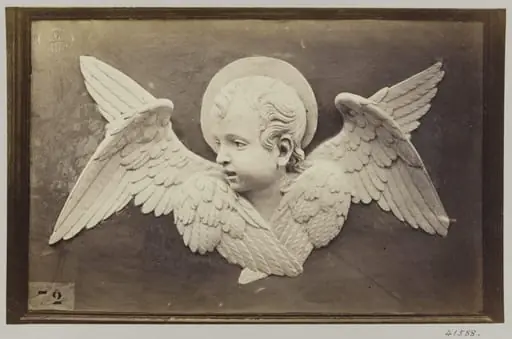 Head of Seraph in glazed earthenware
 The Annunciation
 Liturghia îngerilor - Înger