Artwork
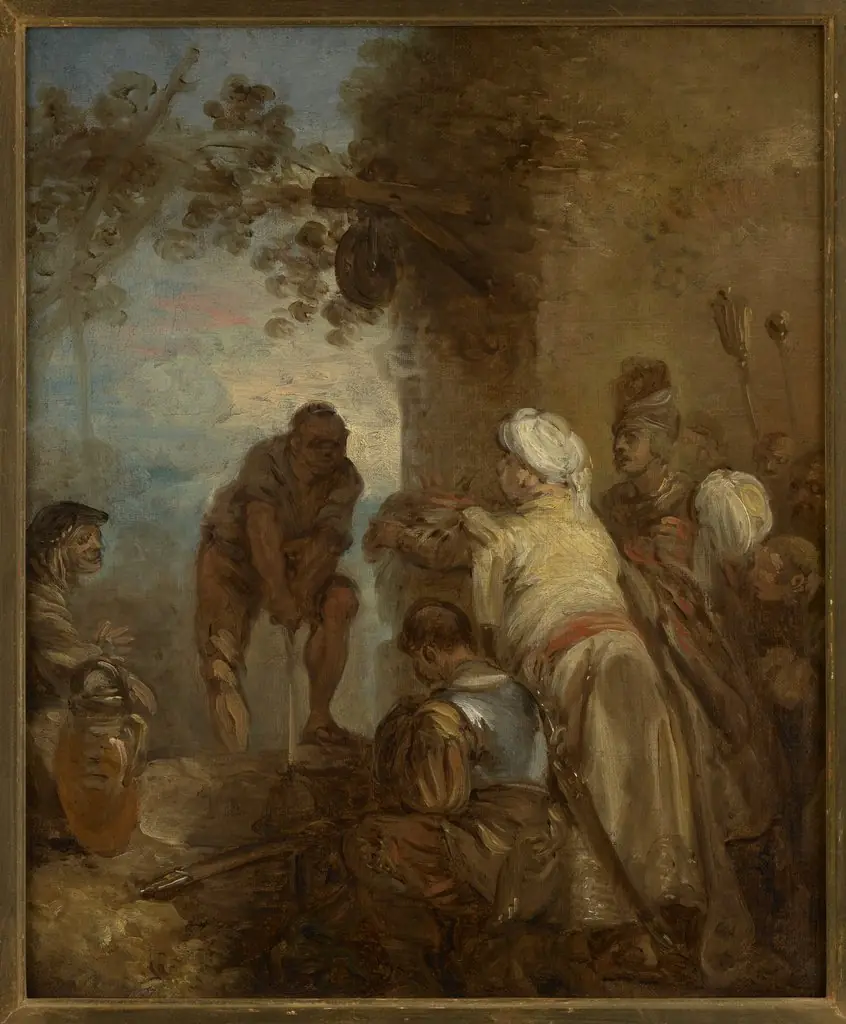
Sketch for the painting “Wernyhora”
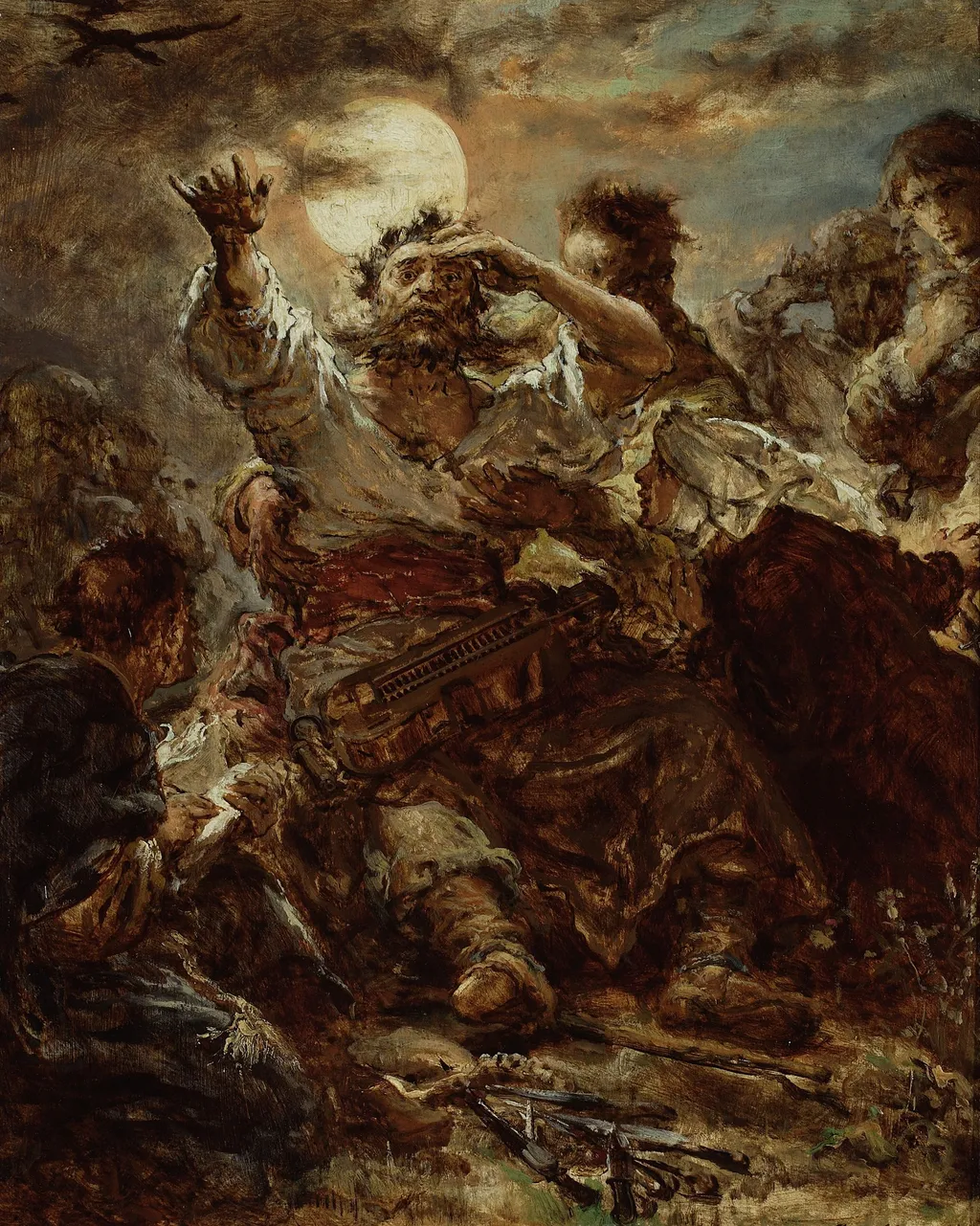
Sketch for the painting “Wernyhora” is an oil painting by the Realist artist Jan Matejko. It dates from 1875 and is held in the collection of the National Museum in Warsaw.
About this work
If you're interested in learning more about this style of painting, you might want to look into the technique of chiaroscuro.
This painting is a sketch for "Wernyhora" by Jan Matejko, created in 1875. It's an oil-on-canvas work held at the National Museum in Warsaw. The scene depicts a man in the center, possibly Wernyhora, with his right arm raised and his left hand on his forehead. He wears a white shirt and brown pants, and has a long brown beard. In the background, there are other people and a full moon shining through the clouds.
The artist's use of chiaroscuro creates a dramatic effect, with the moonlight casting shadows on the figures. The brushstrokes are visible, giving the painting a textured look.
If you're interested in learning more about this style of painting, you might want to look into the technique of chiaroscuro.
Overview
Jan Matejko’s 1875 oil sketch titled “Wernyhora” serves as a preparatory study for a larger historical canvas. Executed in oil on canvas, the work is part of the National Museum in Warsaw’s collection and illustrates Matejko’s practice of working out composition and lighting before committing to the final monumental painting.
Subject & Meaning
The central figure, likely the legendary Cossack poet‑prophet Wernyhora, stands with his right arm uplifted and his left hand pressed to his forehead, evoking a moment of prophetic vision. He is dressed in a simple white shirt and brown trousers, his long beard emphasizing his age and mystique, while surrounding figures and a luminous full moon suggest a nocturnal gathering of listeners.
Technique & Style
Matejko employs chiaroscuro to dramatize the scene, allowing moonlight to carve deep shadows across the figures. Visible brushwork lends a textured surface, revealing the sketch’s exploratory nature and the artist’s focus on tonal contrast and atmospheric effects.
History & Provenance
Created as part of Matejko’s systematic preparation for his large‑scale history paintings, the sketch reflects his Realist commitment to Polish historical narratives. It remained in Matejko’s studio before entering the National Museum in Warsaw, where it is displayed as an example of his compositional planning.
Context
During the 19th century Matejko emerged as a leading interpreter of Polish history, producing monumental canvases, portraits, illustrations, and church murals. This sketch belongs to the same body of work that sought to visualize pivotal national moments, reinforcing a cultural identity through visual storytelling.
Own this work as a print
Artist & collection
Artist
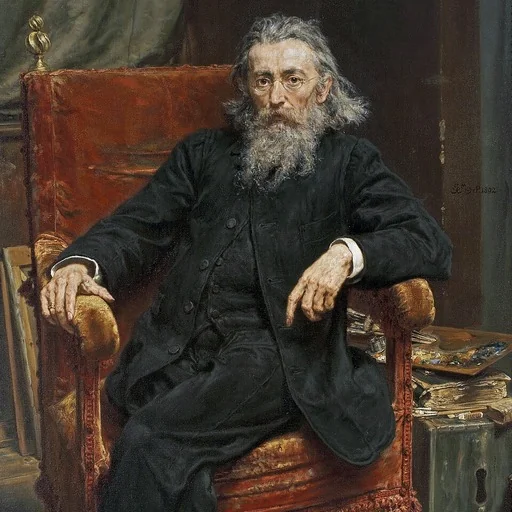
Jan Alojzy Matejko (Polish pronunciation: ; also known as Jan Mateyko; 24 June 1838 – 1 November 1893) was a Polish painter, a leading 19th-century exponent of history painting, known for depicting nodal events from Polish history.

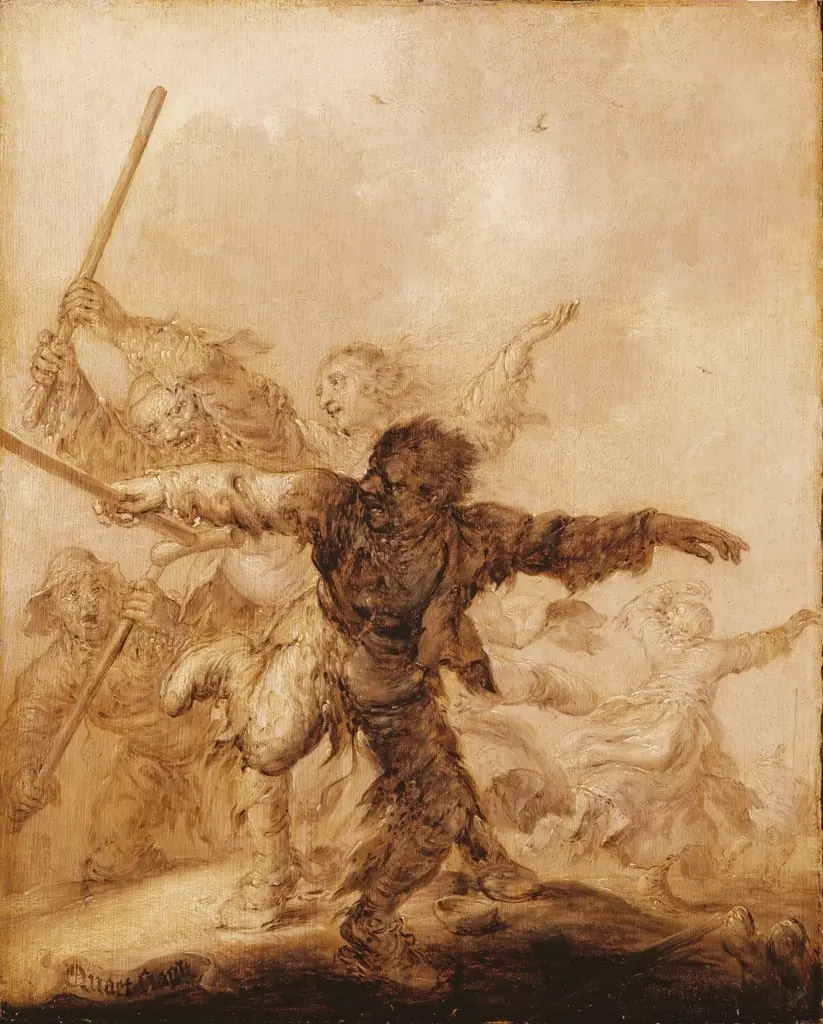 Angry Blows
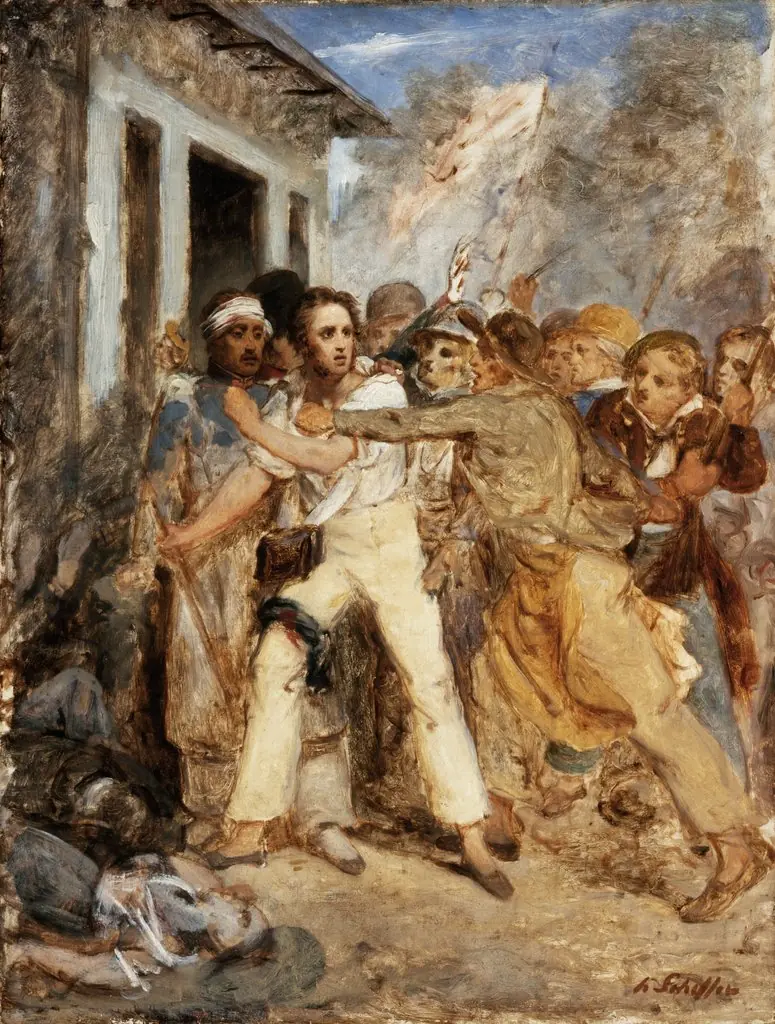 Study for a Battle Scene
 Die Auffindung von Pyramus und Thisbe
 The End of the Game of Cards
 Peasants Fighting at the Village Inn
 Prins Svens lig bliver fundet
 Soldiers Breaking into a Peasant's Cottage
 Encounter of Cuirassiers
 Combate entre un hombre y un moloso en el país valón
 Interior of a peasant hut
 Piast Being Elected as the King