Artwork
Portrait of Govert van Slingelandt (1623-1690), with his First Wife Christina van Beveren (1632-1656) and their Two Children
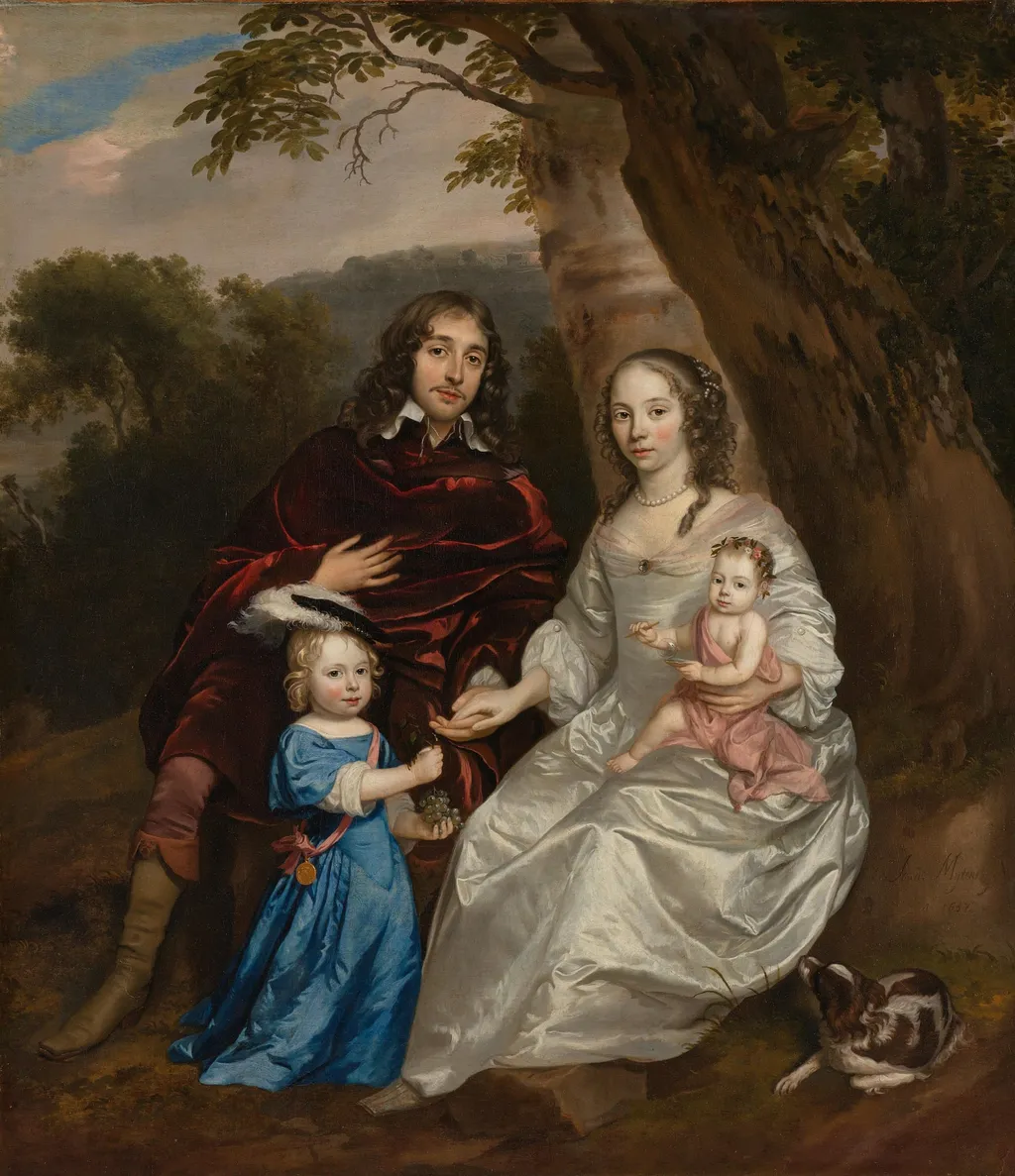
Portrait of Govert van Slingelandt (1623-1690), with his First Wife Christina van Beveren (1632-1656) and their Two Children is an unspecified painting by the Baroque artist Johannes Mytens. It dates from 1657 and is held in the collection of the Rijksmuseum.
About this work
Back then, people used these symbols to remind viewers that happiness doesn’t last.
A well-dressed man and woman sit under a tree with two little boys. One boy holds grapes; the other blows bubbles. A small dog watches nearby.
This family portrait was painted in 1657, but the artist’s name is lost. The bubbles and grapes aren’t just cute—they hint at life’s shortness. Back then, people used these symbols to remind viewers that happiness doesn’t last.
If you like this quiet, detailed style, look up the Baroque movement.
Overview
The canvas depicts Govert van Slingelandt, a 17th‑century Dordrecht pensionary, together with his first wife Christina van Beveren and their two sons, Barthoud and Govert Johan. The family is arranged beneath a leafy tree within a pastoral landscape, a small dog positioned at their right. Executed in 1657, the work remains unsigned, its creator unidentified.
Subject & Meaning
The composition balances domestic intimacy with symbolic caution. The elder boy clutches a bunch of grapes, a traditional emblem of earthly abundance and the fleeting nature of pleasure. The younger child, perched on his mother’s lap, blows soap bubbles—another vanitas motif underscoring the transience of life and happiness.
Technique & Style
Rendered in the detailed, restrained manner typical of mid‑Baroque Dutch portraiture, the painting employs fine brushwork to delineate textiles, foliage, and animal fur. A muted colour palette and careful modelling of light give the scene a calm, naturalistic atmosphere, while the inclusion of still‑life elements integrates genre symbolism within the family portrait.
History & Provenance
Commissioned in 1657, the portrait likely served as a commemorative piece for the van Slingelandt household. Though the artist’s identity has been lost, the work has survived in private collections before entering a museum context, where it now functions as a documentary record of a prominent Dordrecht family and their social standing.
Own this work as a print
Artist & collection
Artist
Johannes Mytens or Jan Mijtens, or "Mytens" to the English (c. 1614 – 24 December 1670) was a Dutch Golden Age painter, almost entirely as a portraitist. Mytens was born in The Hague. According to Houbraken, Johannes…

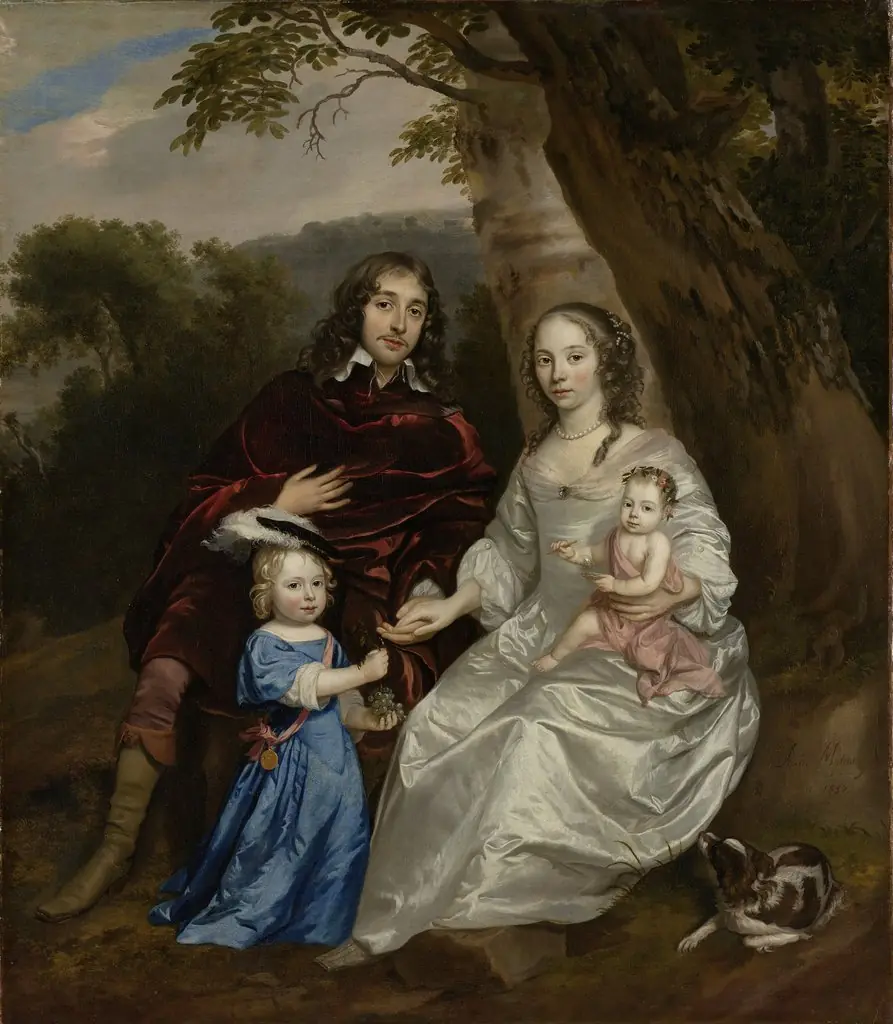 Govert van Slingelandt (1623-90), lord of Dubbeldam. With his first wife Christina van Beveren and their two sons
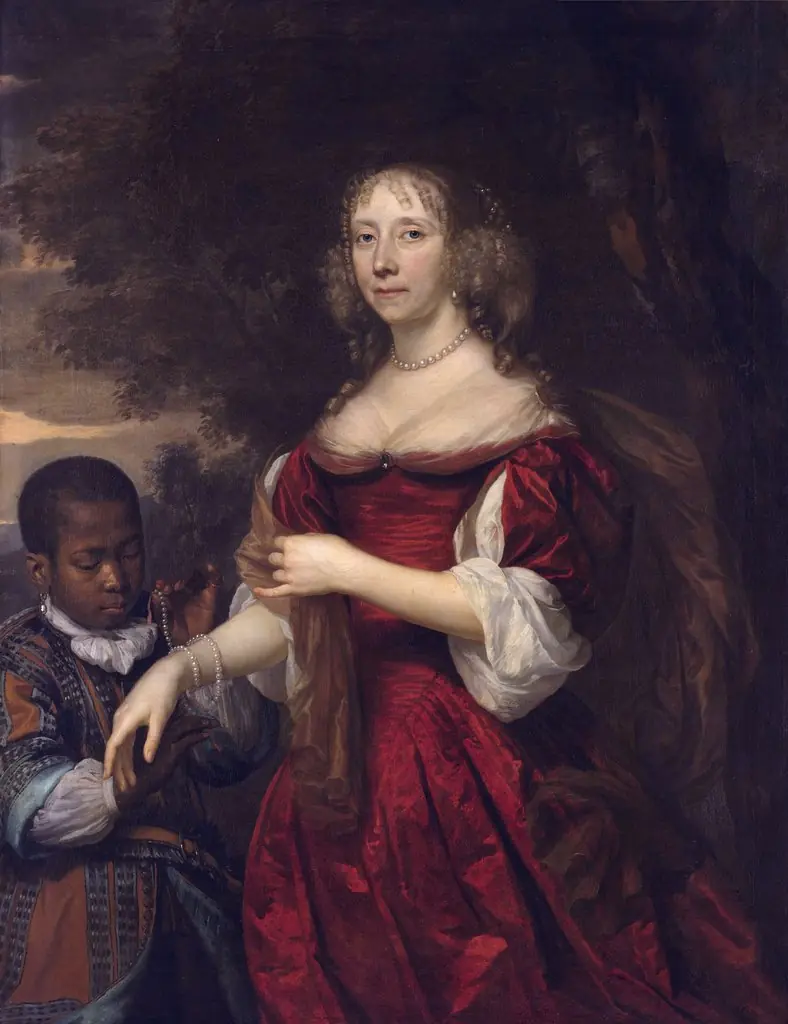 Portrait of Margaretha van Raephorst (d 1690). Wife of Cornelis Tromp
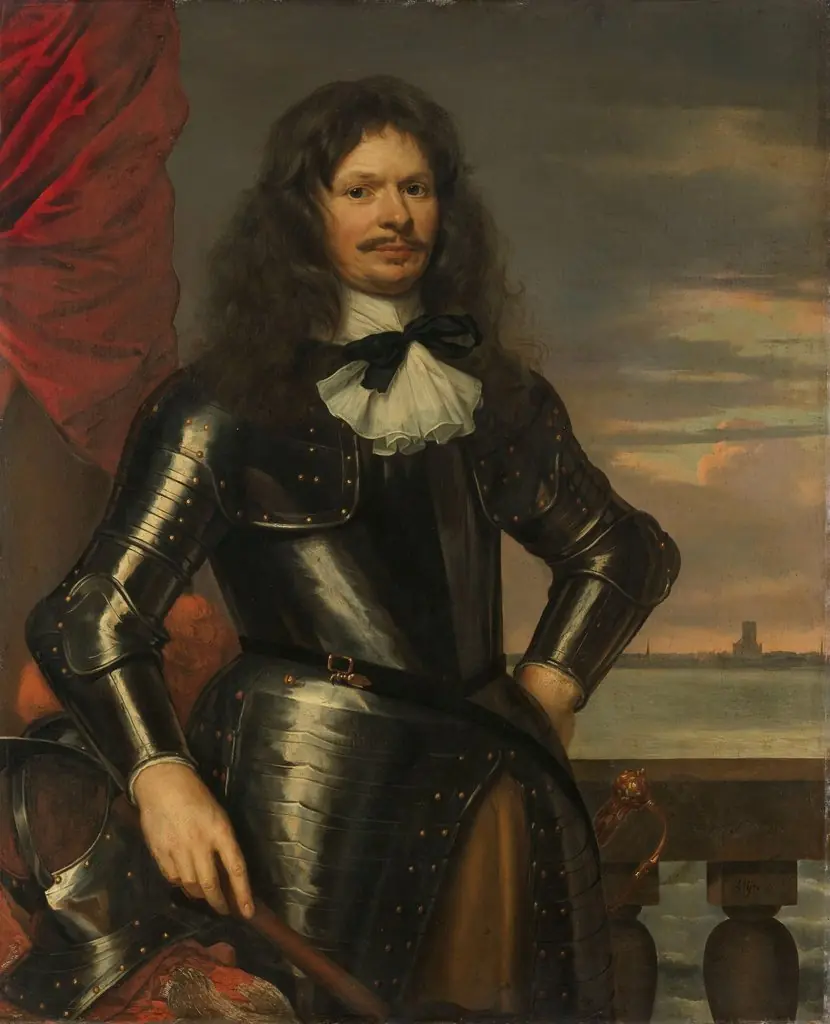 Portrait of Johan van Beaumont. Colonel in the Holland guards and commander of Den Briel
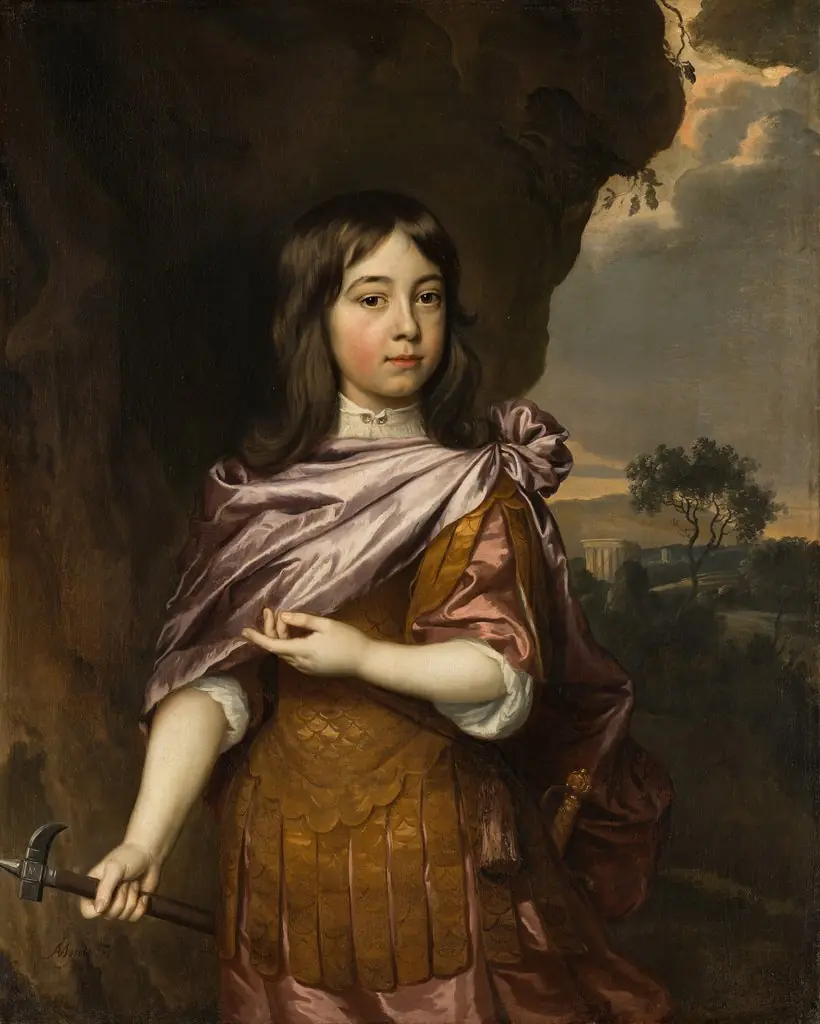 Portrait of Wolfert van Brederode
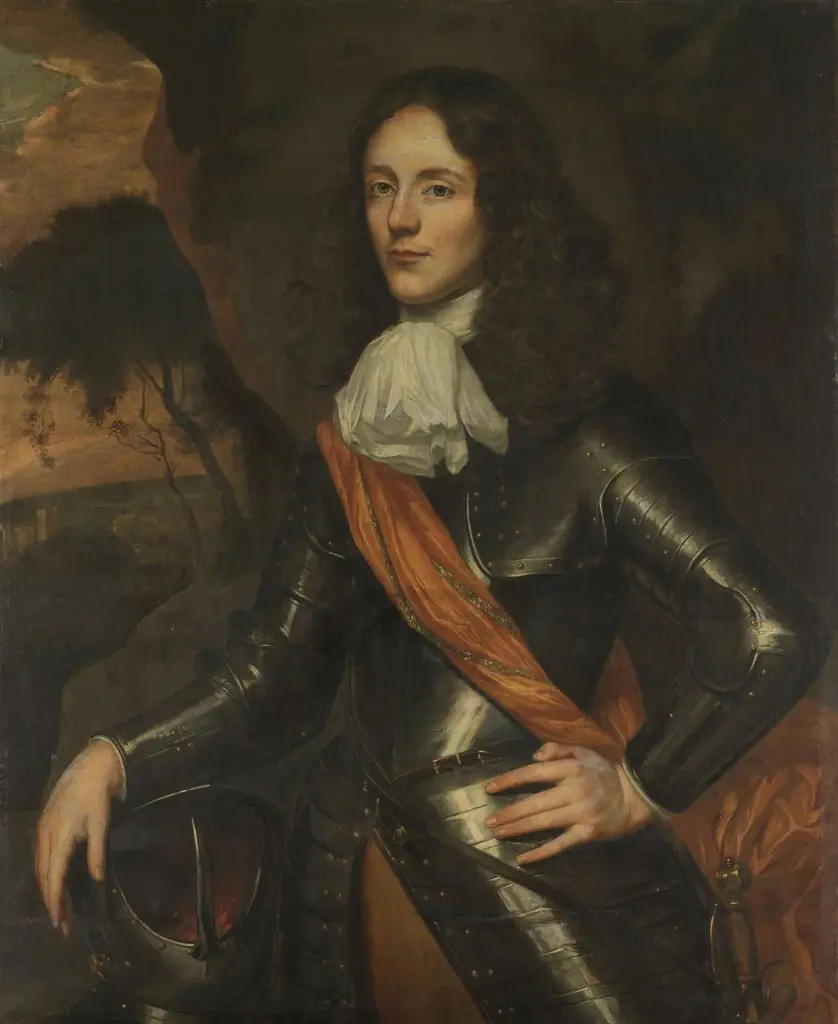 A military officer
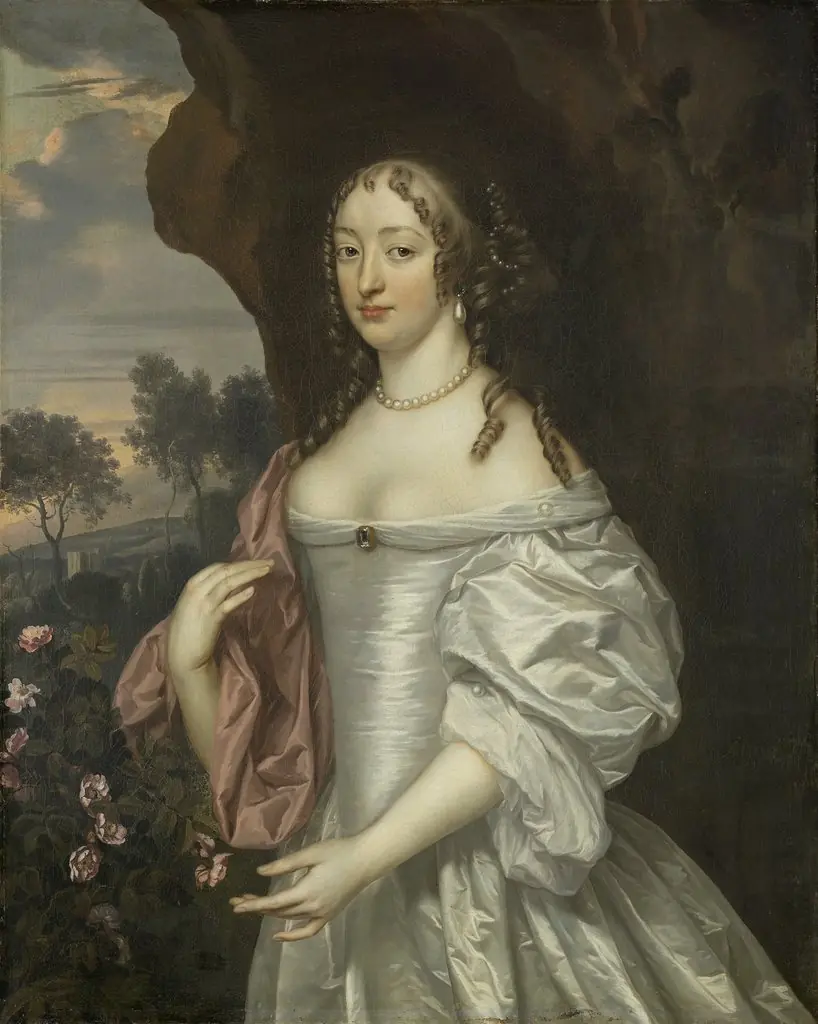 Jacoba van Orliens (1643-91). Wife of Jacob de Witte van Haamstede
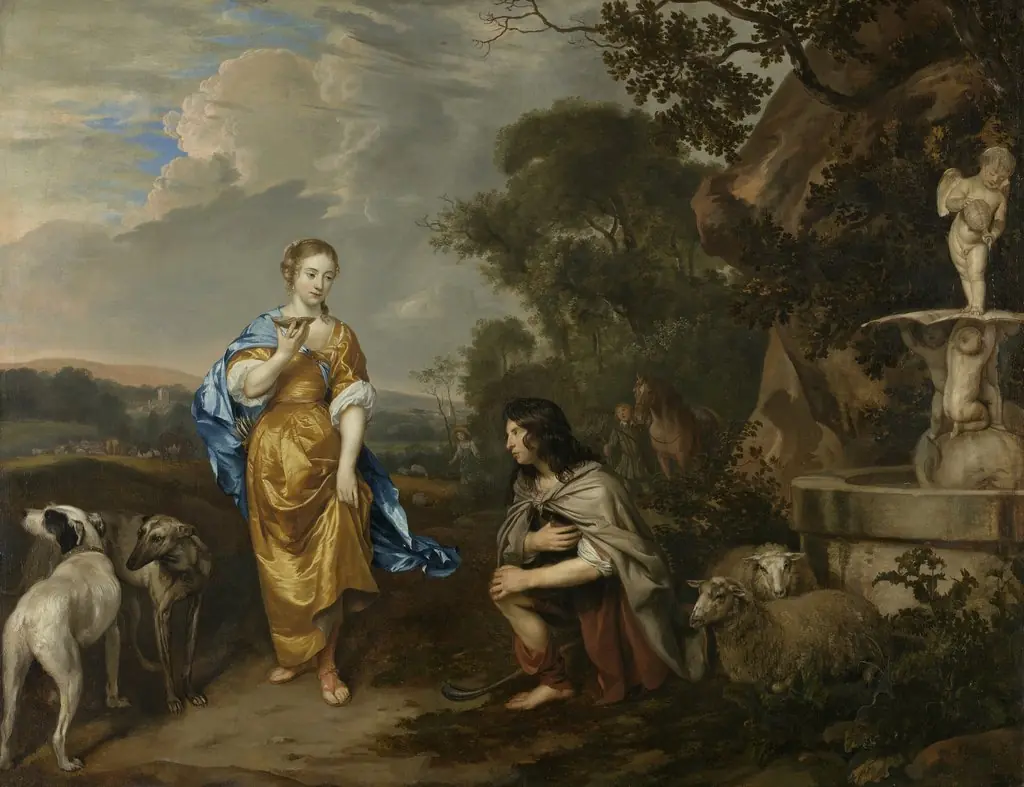 Double portrait of a young couple as Granida and Daiphilo
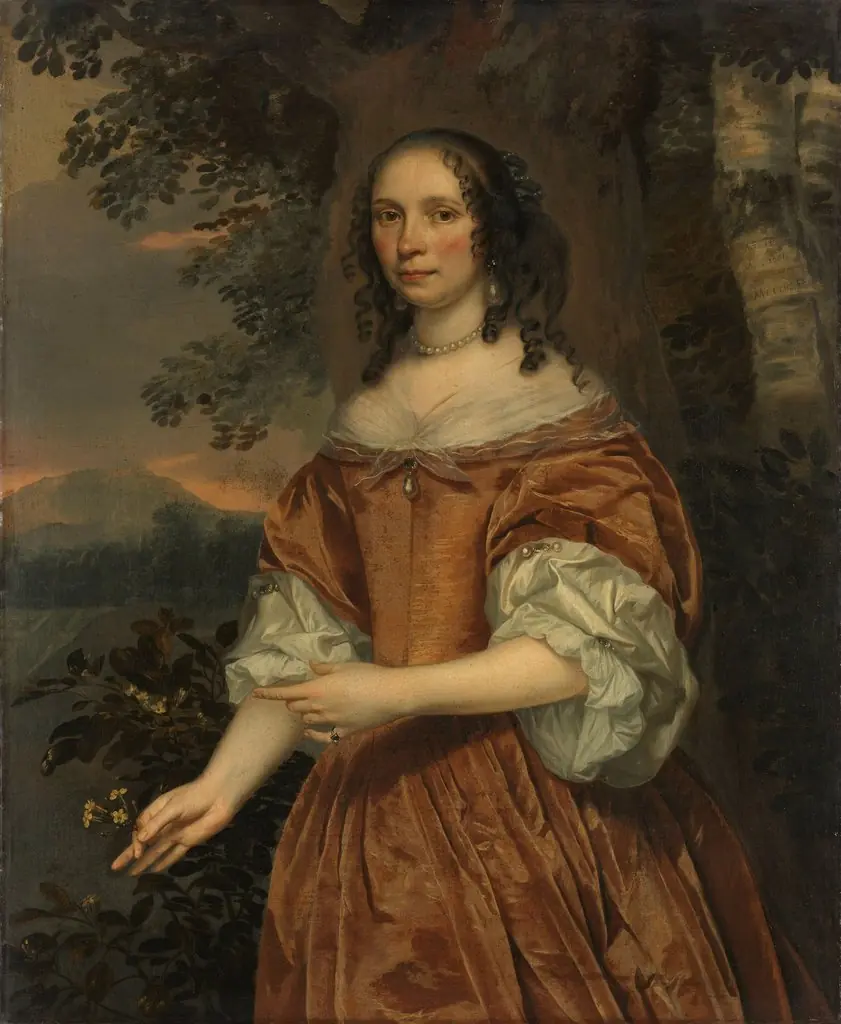 Portrait of Maria de Witte Françoisdr (b 1616). Wife of Johan van Beaumont
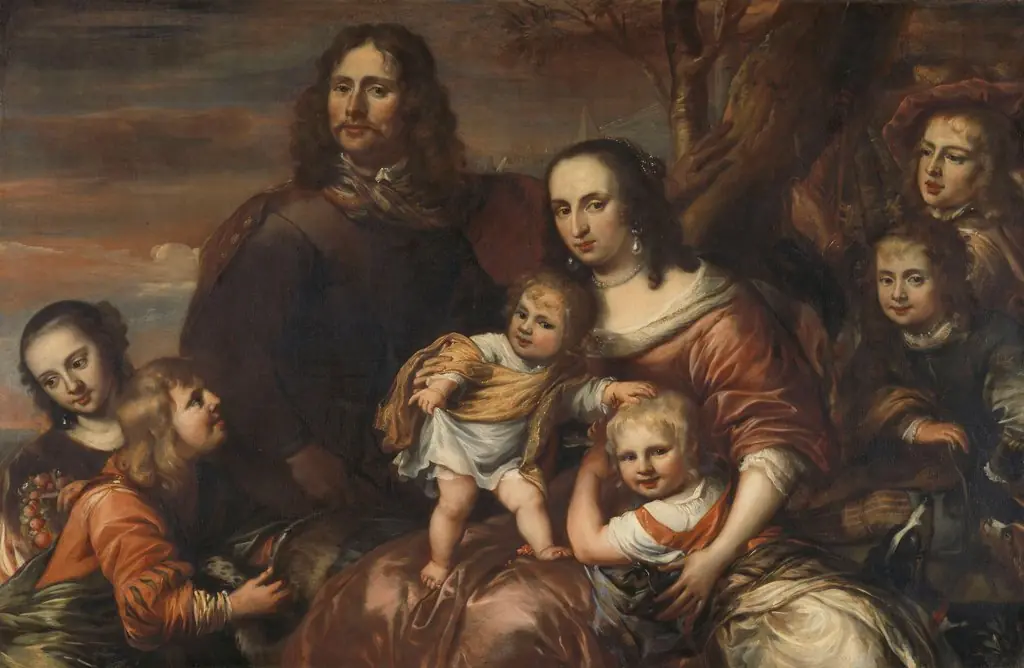 A couple with six children
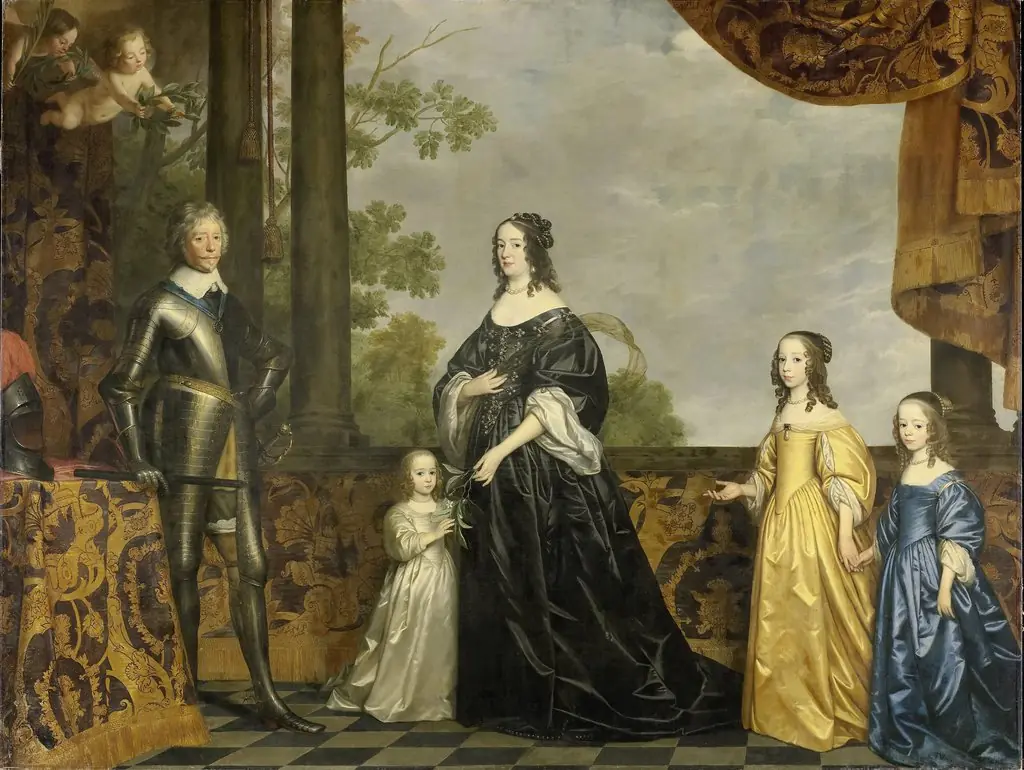 Frederik Hendrik (1584-1647), Prince of Orange, his wife Amalia van Solms (1602-75) and their three youngest daughters, Albertina Agnes (1634-96), Henrietta Catharina (1637-1708) and Maria (1642-88)
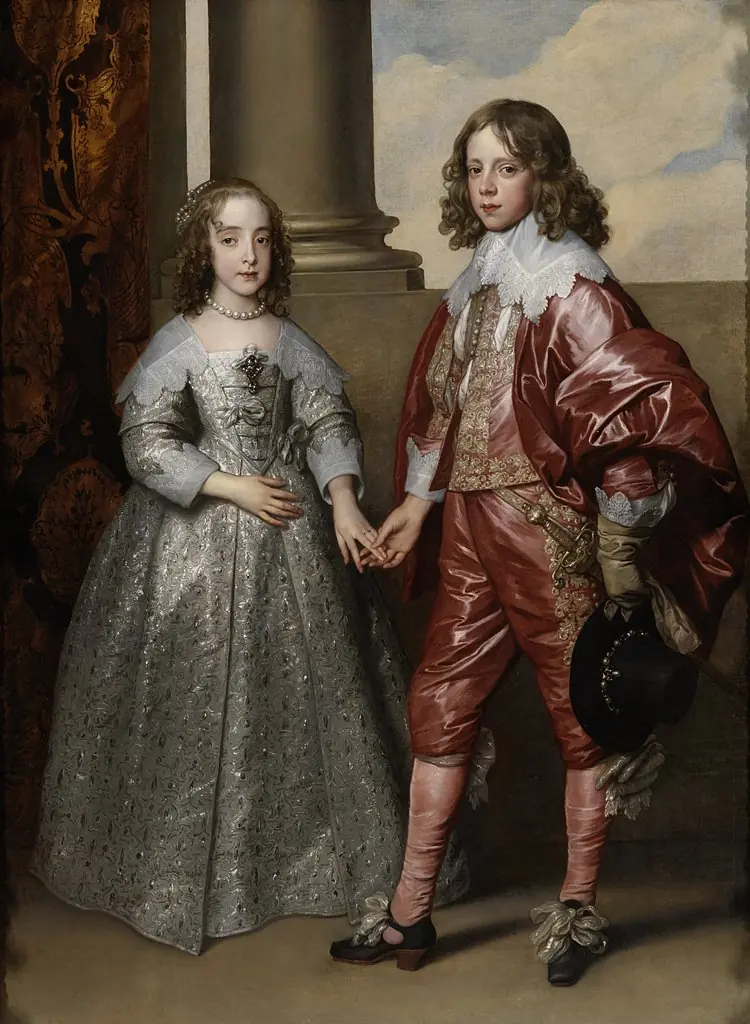 William II, Prince of Orange, and his Bride, Mary Stuart
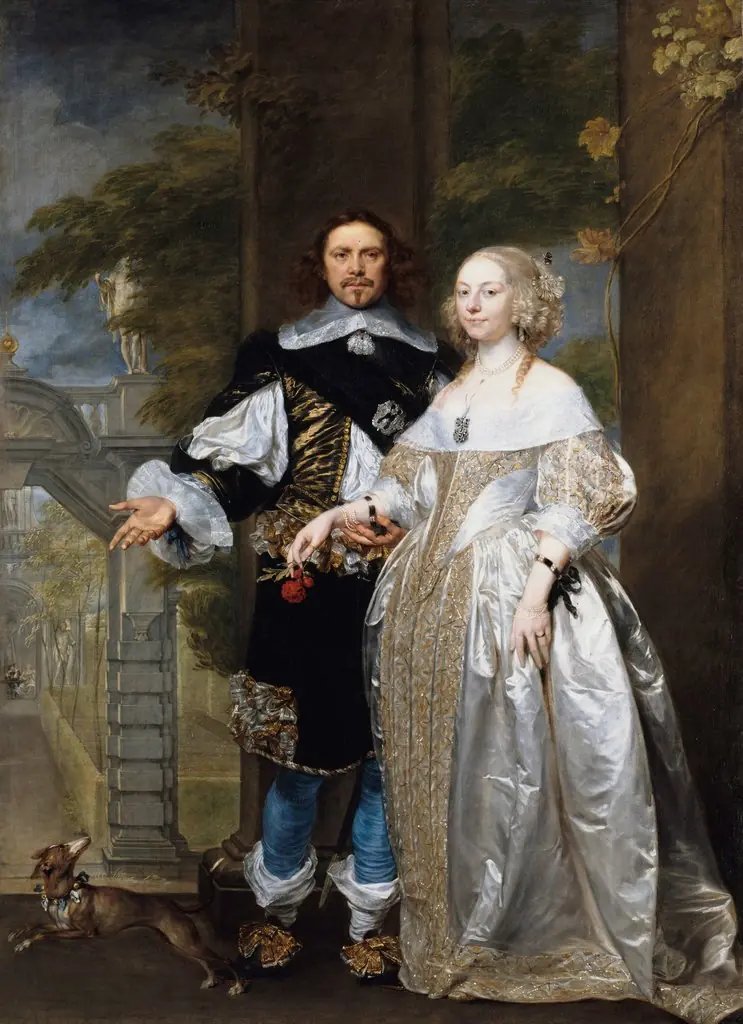 Married Couple in the Park
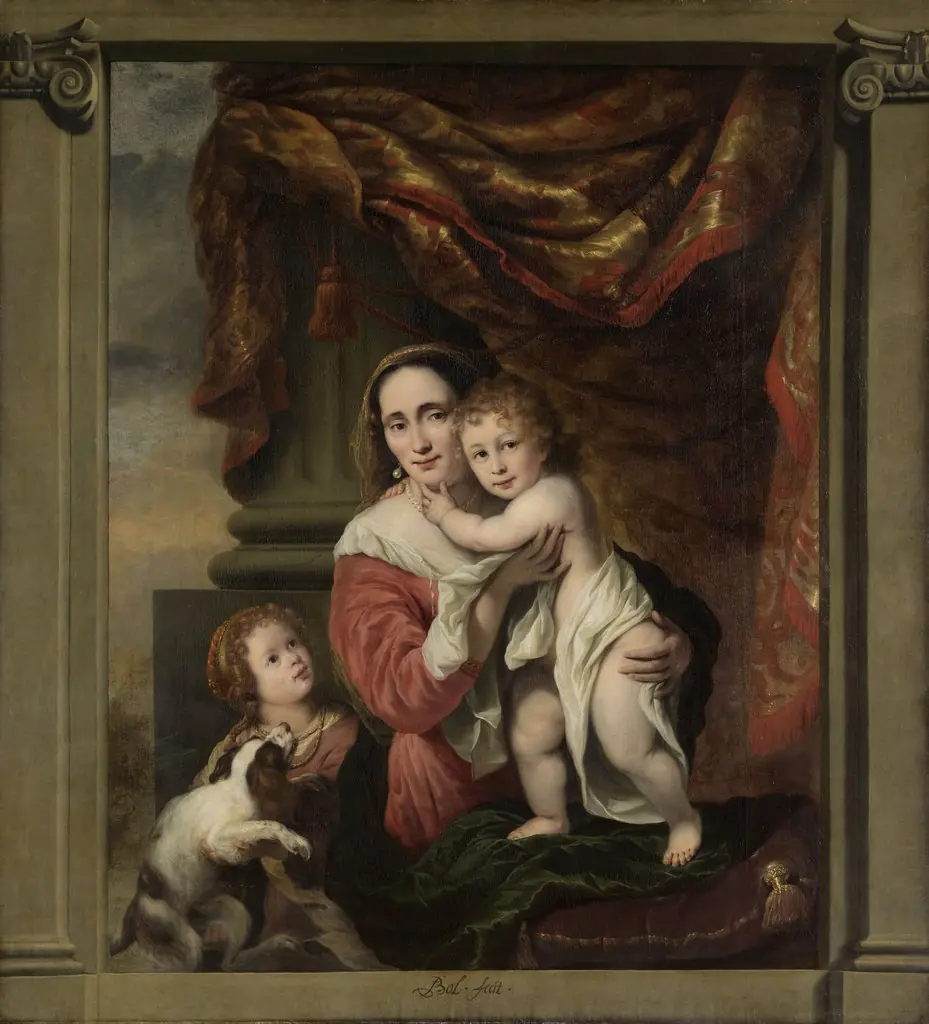 Caritas: Johanna de Geer (1629-91) with her children Cecilia Trip (1660-1728) and Laurens Trip (b 1662)
 Caritas: Joanna de Geer (1629-1691) with her Children Cecilia Trip (1660-1728) and Laurens Trip (b. 1662)
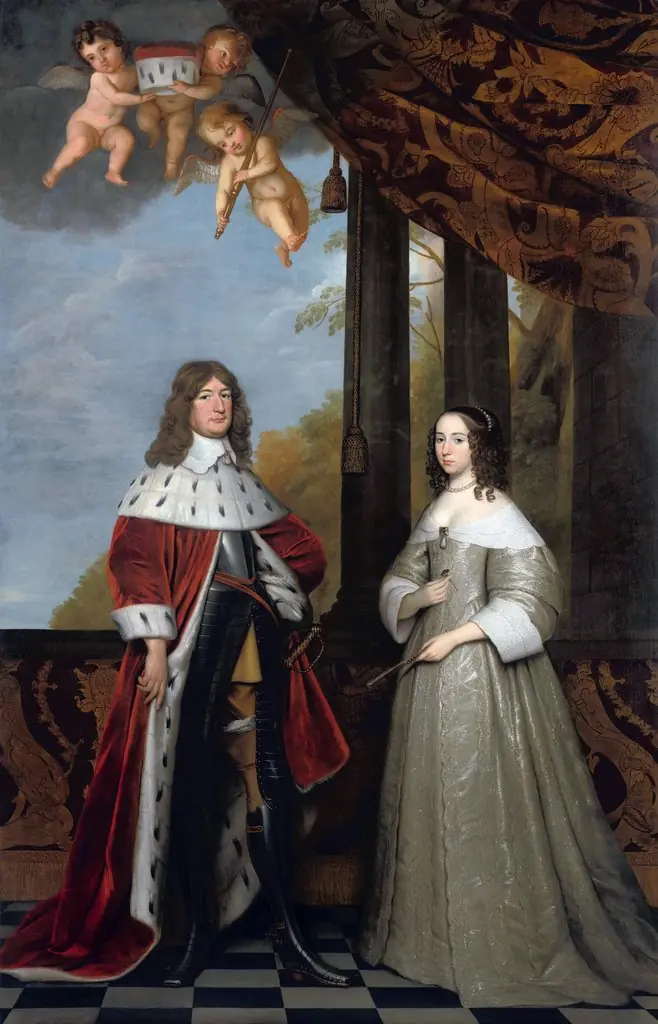 Friedrich Wilhelm (1620-88), Elector of Brandenburg, and his wife Louise Henriette (1627-67), Countess of Orange-Nassau