Artwork
Pallas Athene
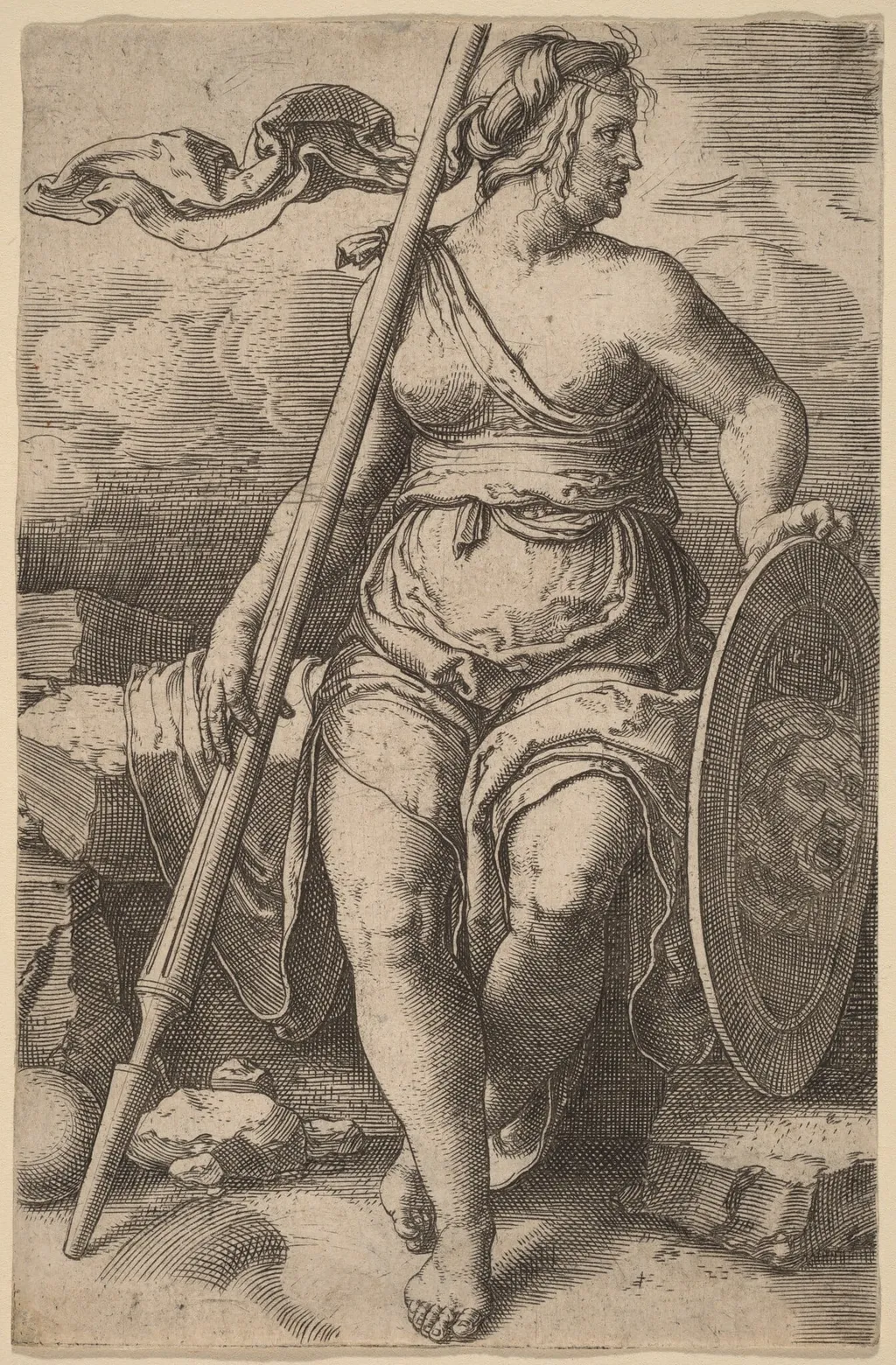
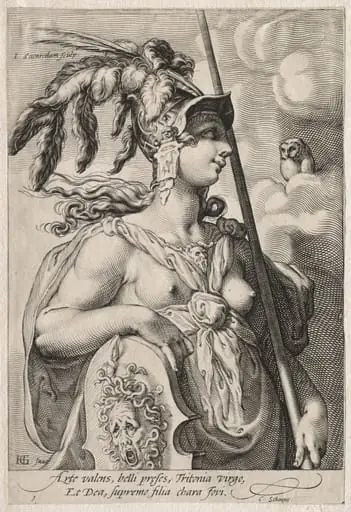
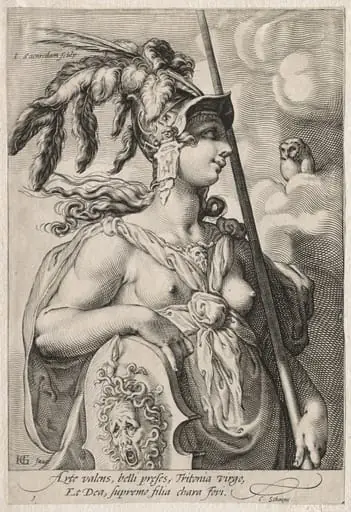
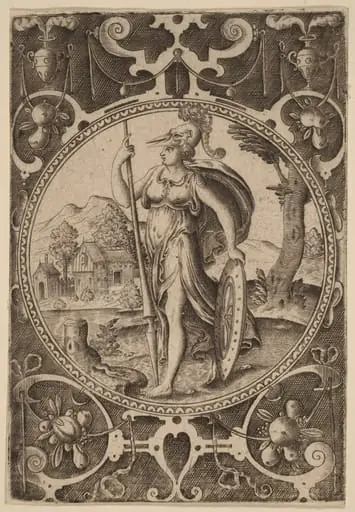
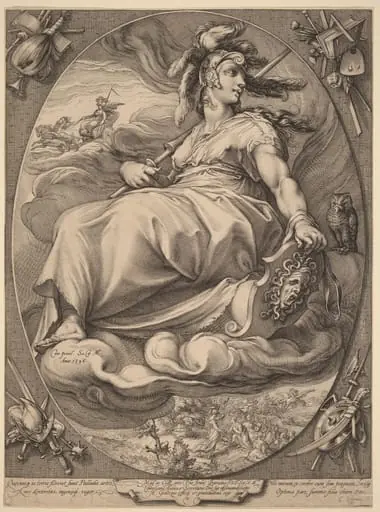
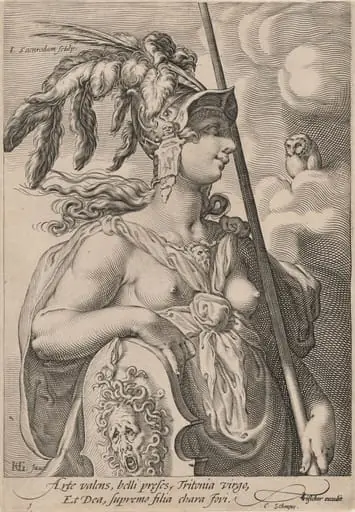
Pallas Athene is an ink print by the Renaissance artist Lucas van Leyden. It dates from 1530 and is held in the collection of the National Gallery of Art.
About this work
Overview
Pallas Athene is a circa 1530 engraving by Lucas van Leyden, a Dutch Northern Renaissance artist accomplished in both painting and printmaking, particularly noted for early genre scenes and technical proficiency in engraving.
Subject & Meaning
The engraving depicts Athena, the Greek goddess of wisdom and war, identifiable by her attributes: a spear in her right hand and a shield beside her left leg. Her strong, wise demeanor is conveyed through her pose, attire, and focused gaze.
Technique & Style
Van Leyden's detailed, precise style is evident in the work. Notably, the engraving showcases his mastery of cross-hatching, a technique employed to achieve depth and texture, particularly in rendering the figure and the rocky landscape.
History & Provenance
Created around 1530, the engraving exemplifies van Leyden's contribution to the Northern Renaissance printmaking. However, specific provenance details are not provided in the available information.
Context
Within the Northern Renaissance, Pallas Athene reflects the period's interest in classical themes. Van Leyden's work bridges the gap between the detailed tradition of Netherlandish art and the revival of ancient Greek motifs.
Legacy
While specific legacy details of Pallas Athene are not detailed, the engraving contributes to van Leyden's reputation as a pivotal figure in Northern Renaissance printmaking, influencing subsequent generations of artists in technique and subject matter.
Own this work as a print
Artist & collection

Artist
Lucas van Leyden (1494 – 8 August 1533), was a Dutch painter and printmaker in engraving and woodcut. Lucas van Leyden was among the first Dutch exponents of genre painting and was a very accomplished engraver.

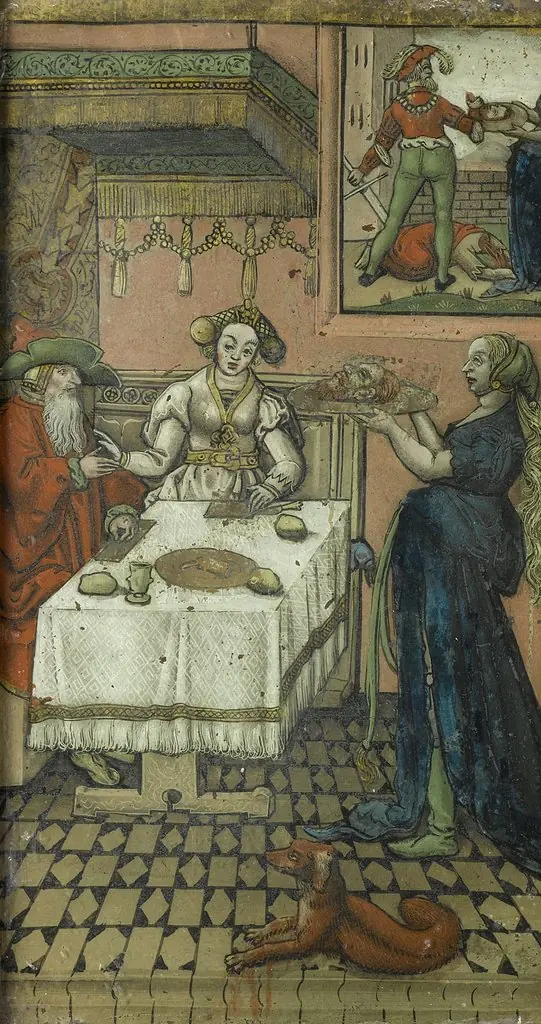 Salome with the head of St John the Baptist
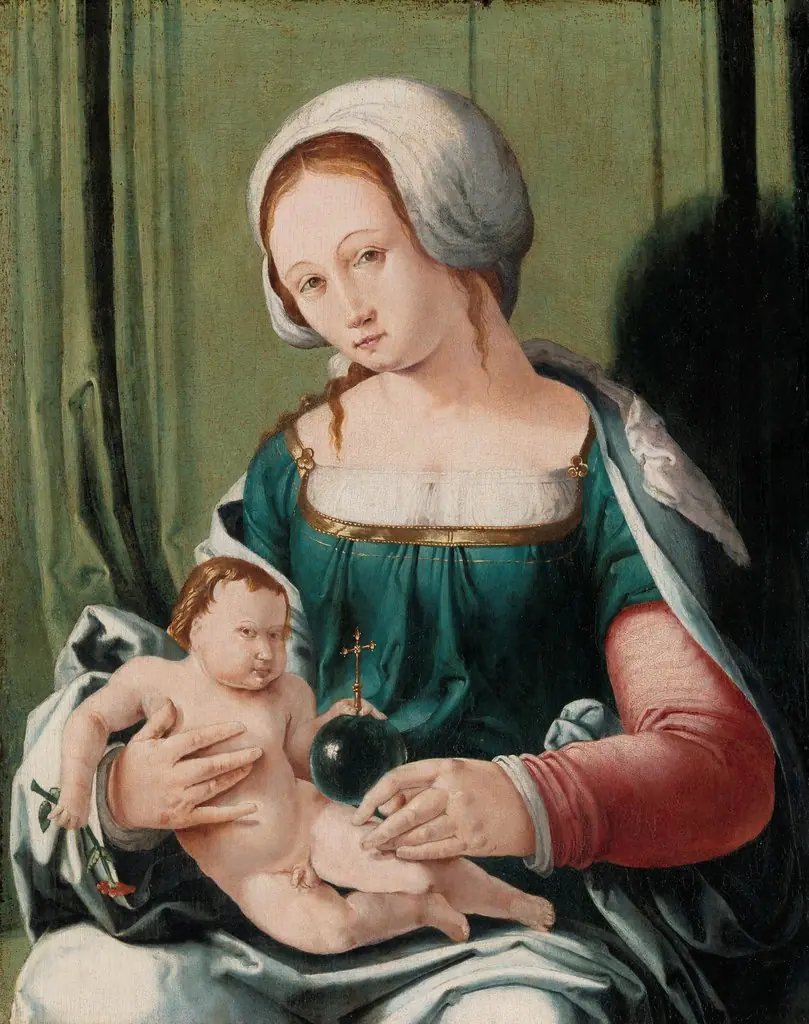 The Virgin and Child
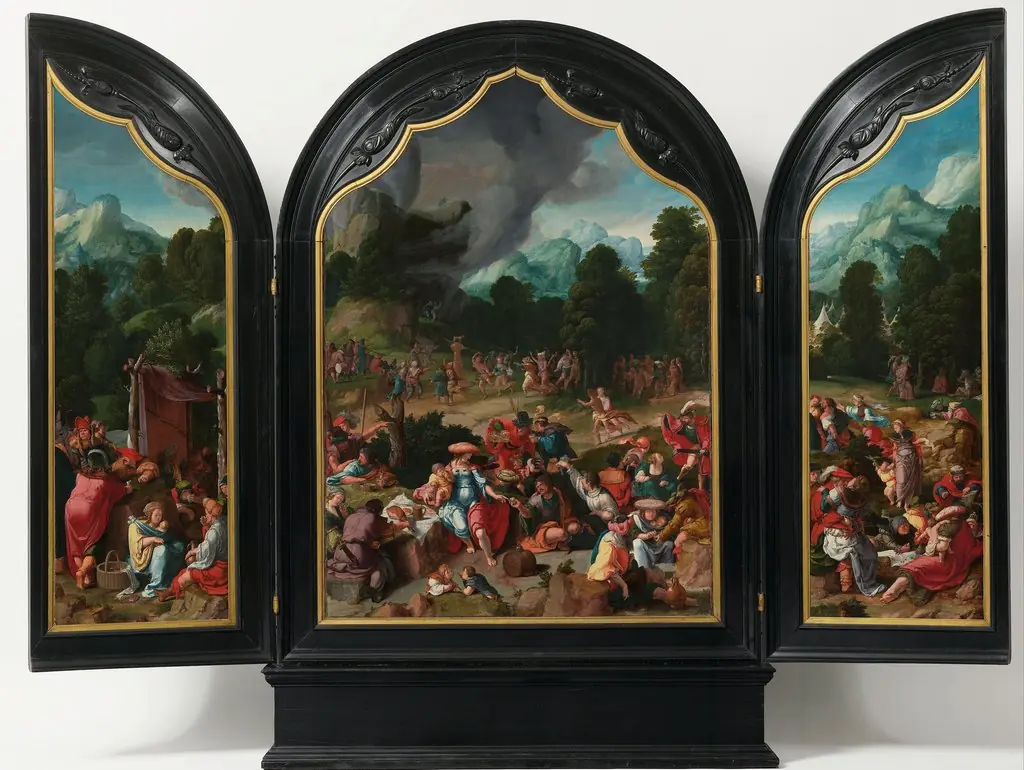 Worship of the Golden Calf
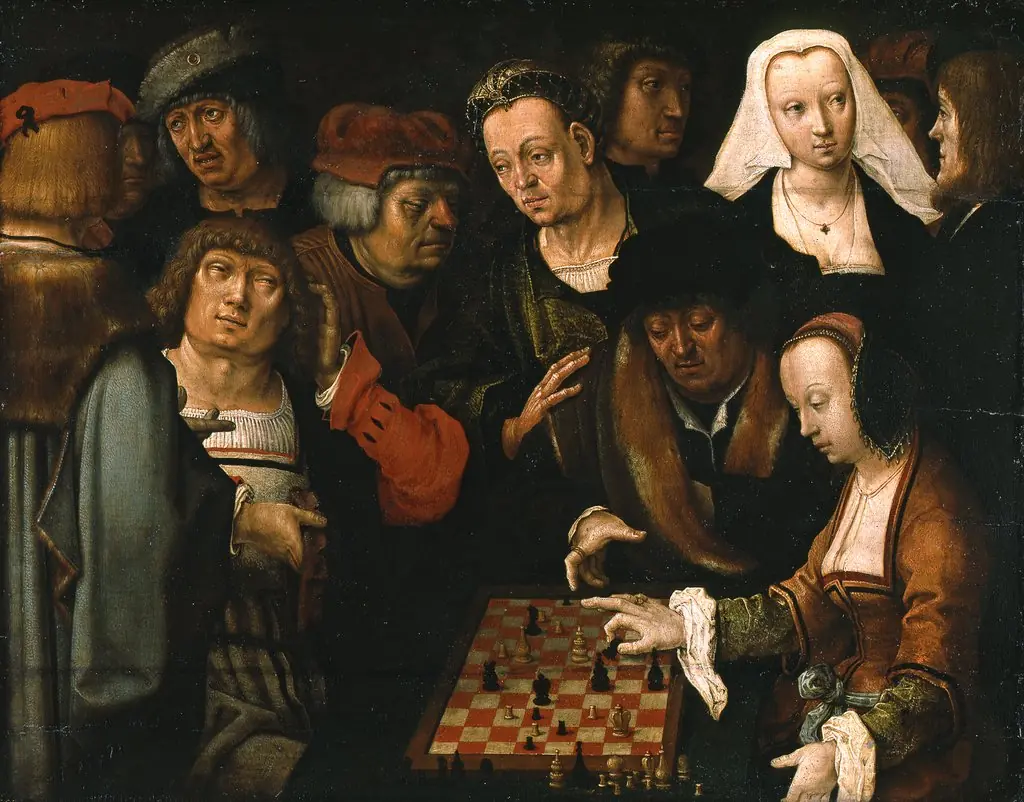 A Game of Chess
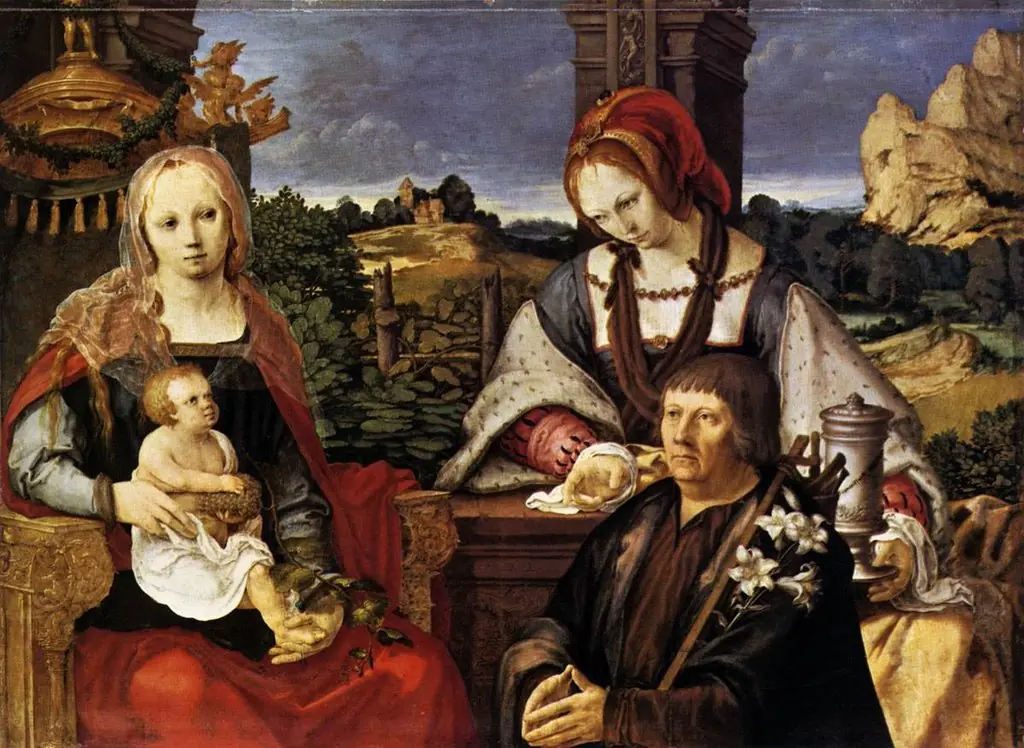 Mary with Child, St. Maria Magdalena and founder (separate outside, Inv. No. 7713)
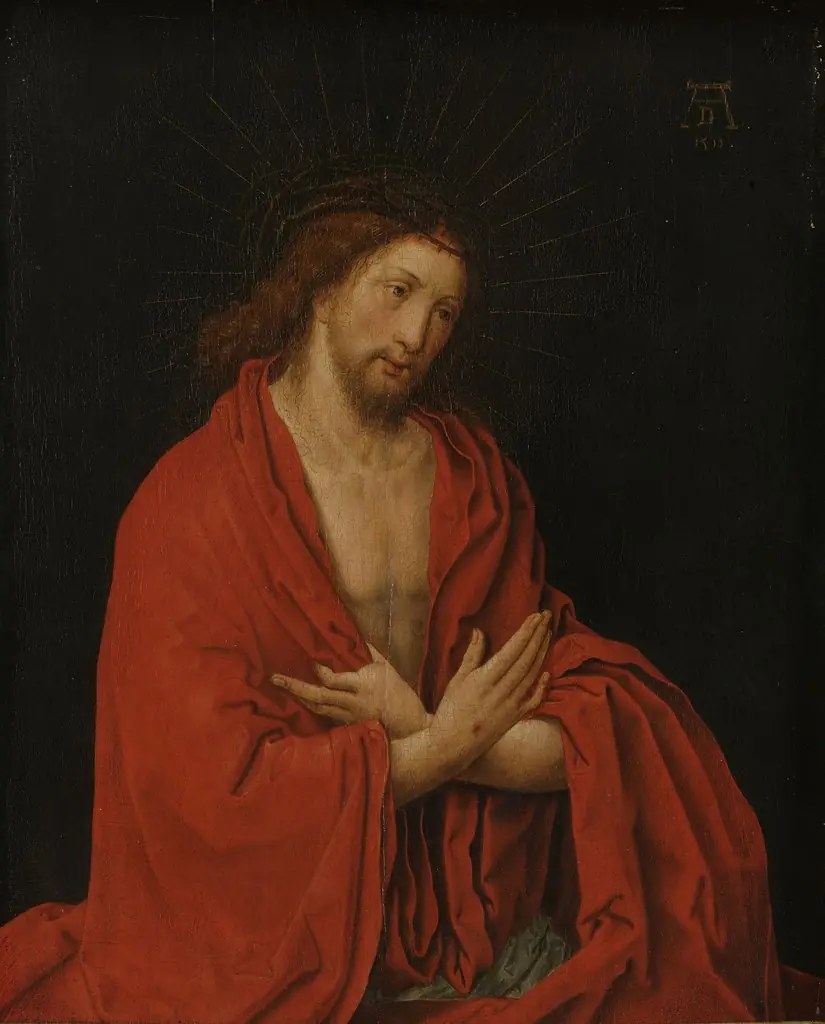 Inner left wing of a diptych with Christ as the Man of Sorrows
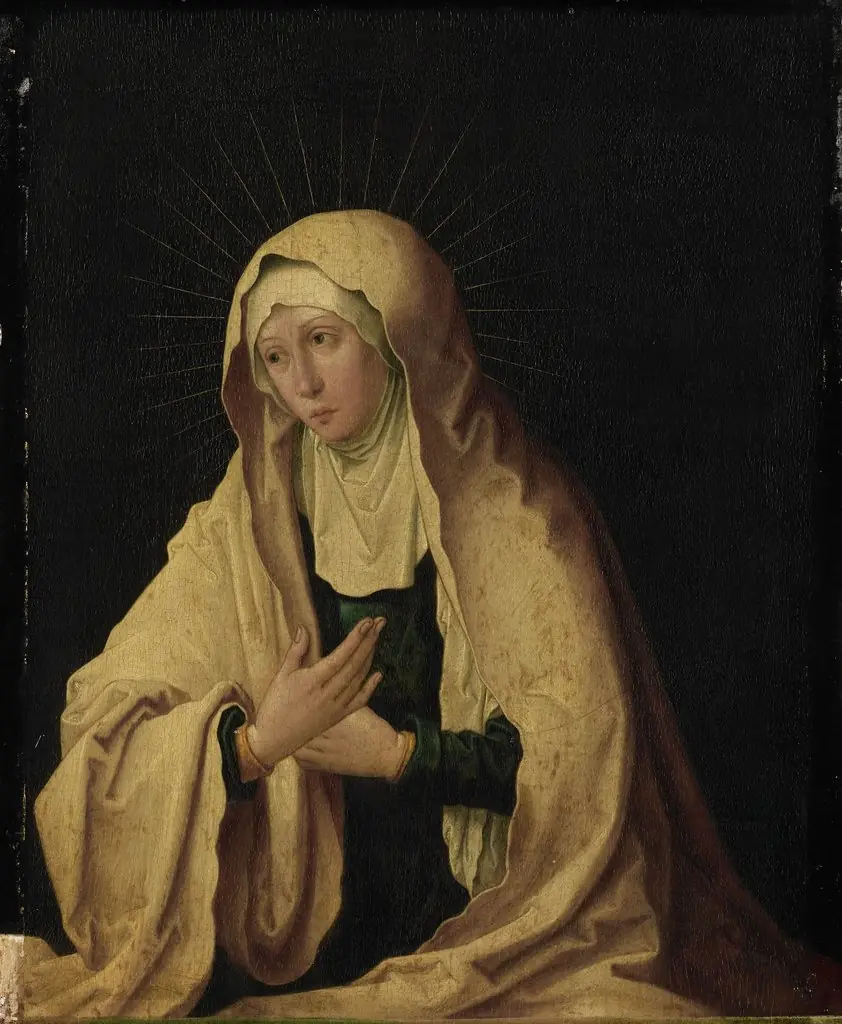 Inner right wing of a diptych with the Virgin as Mater Dolorosa
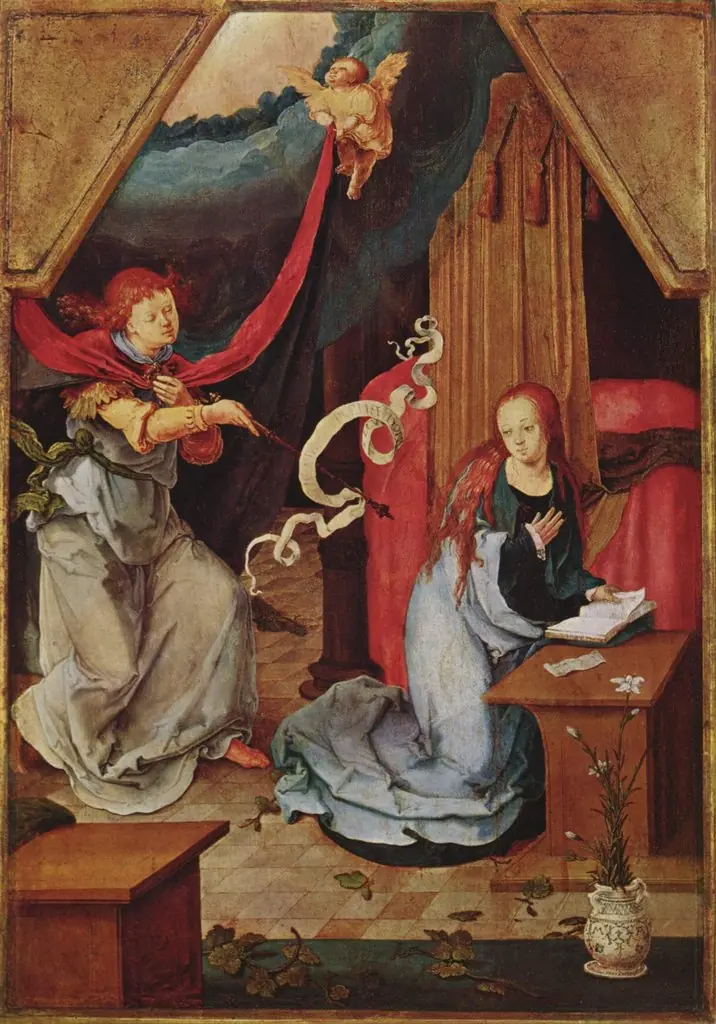 Annunciation