Artwork
The Twelve Months: January
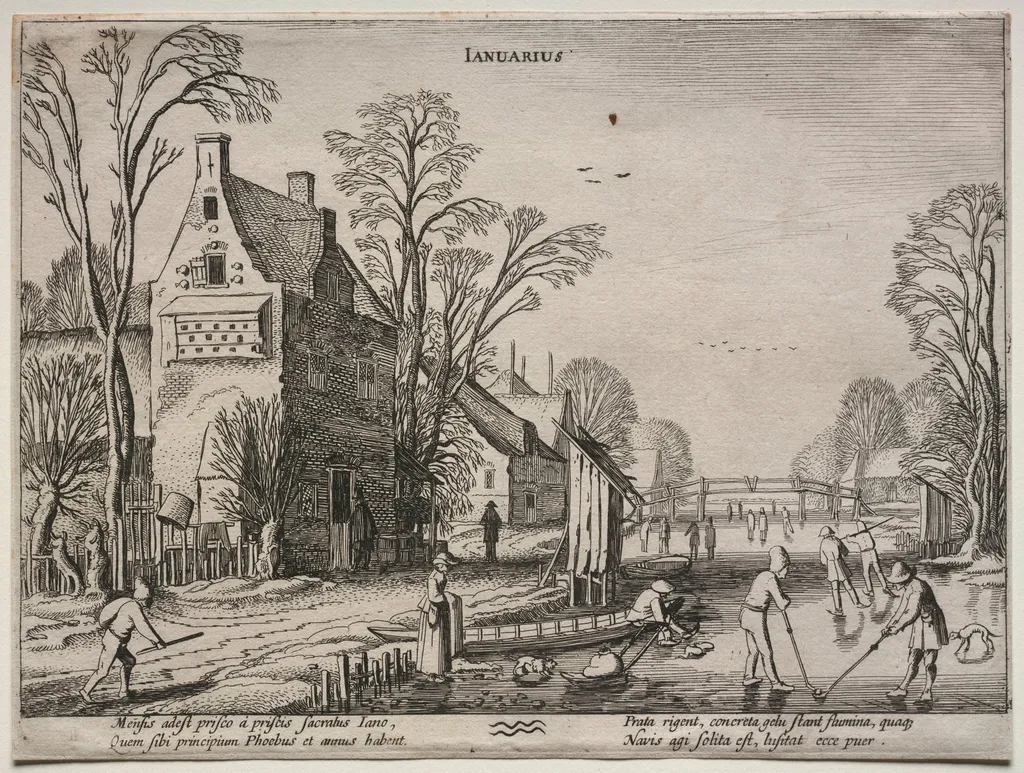
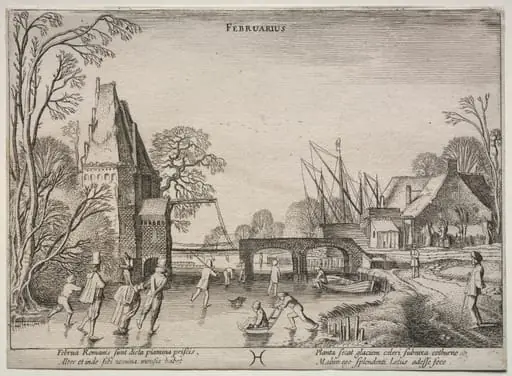
The Twelve Months: January is a print by the Baroque artist Jan van de Velde. It dates from 1613 and is held in the collection of the Cleveland Museum of Art.
About this work
Overview
The work reflects van de Velde’s interest in landscape and rural routines, rendered with fine linear detail typical of early 17th-century printmaking.
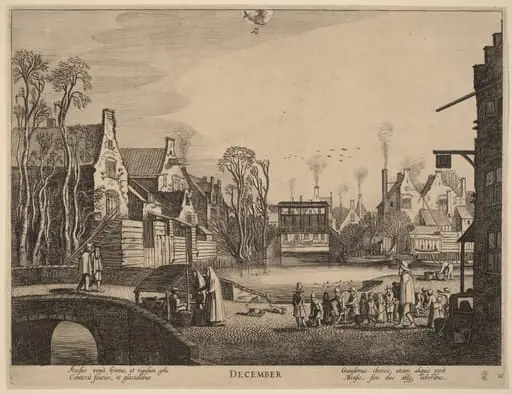
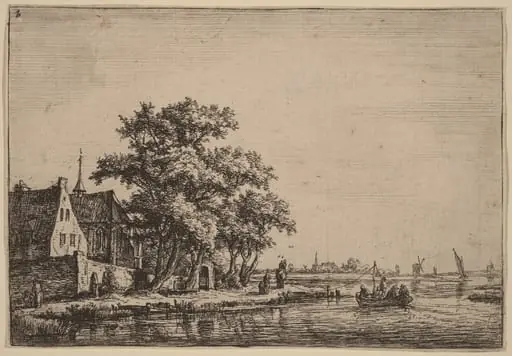
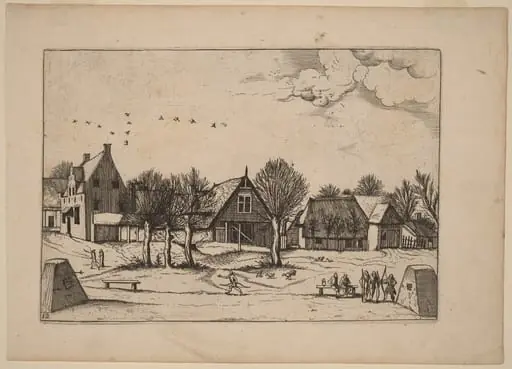
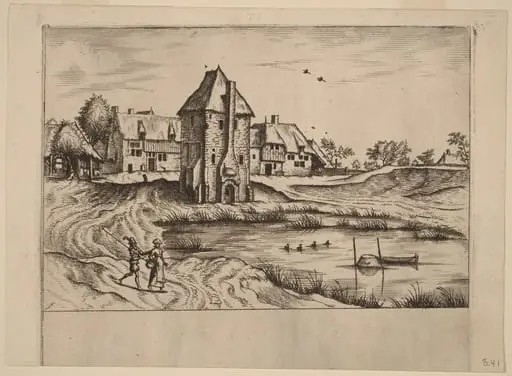
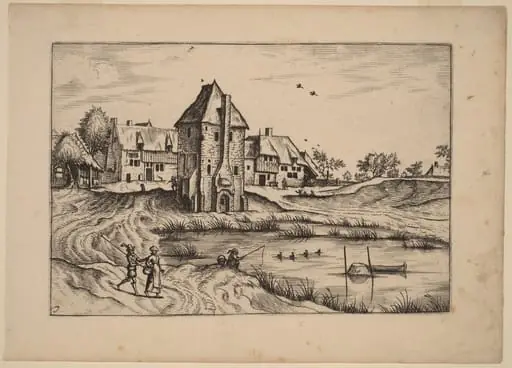
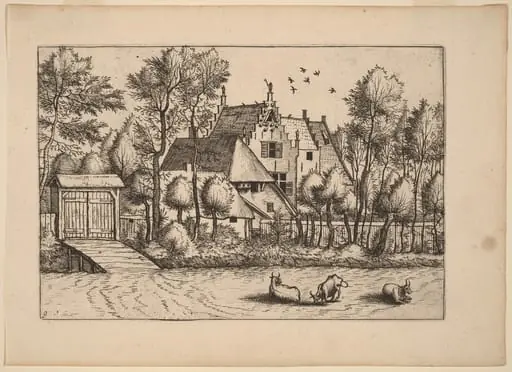
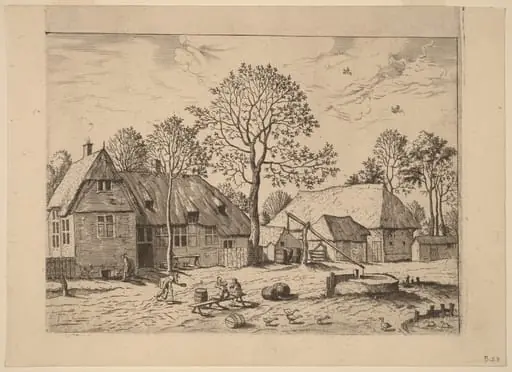
Created in 1613 by Jan van de Velde II, this black-and-white etching is the first in a series illustrating the twelve months of the year. It captures a quiet winter scene in a Dutch village, emphasizing daily life under seasonal constraints. The work reflects van de Velde’s interest in landscape and rural routines, rendered with fine linear detail typical of early 17th-century printmaking. The inscription 'Ianuarius' identifies the month, anchoring the image within a cyclical calendar of seasonal labor and rest.
Subject & Meaning
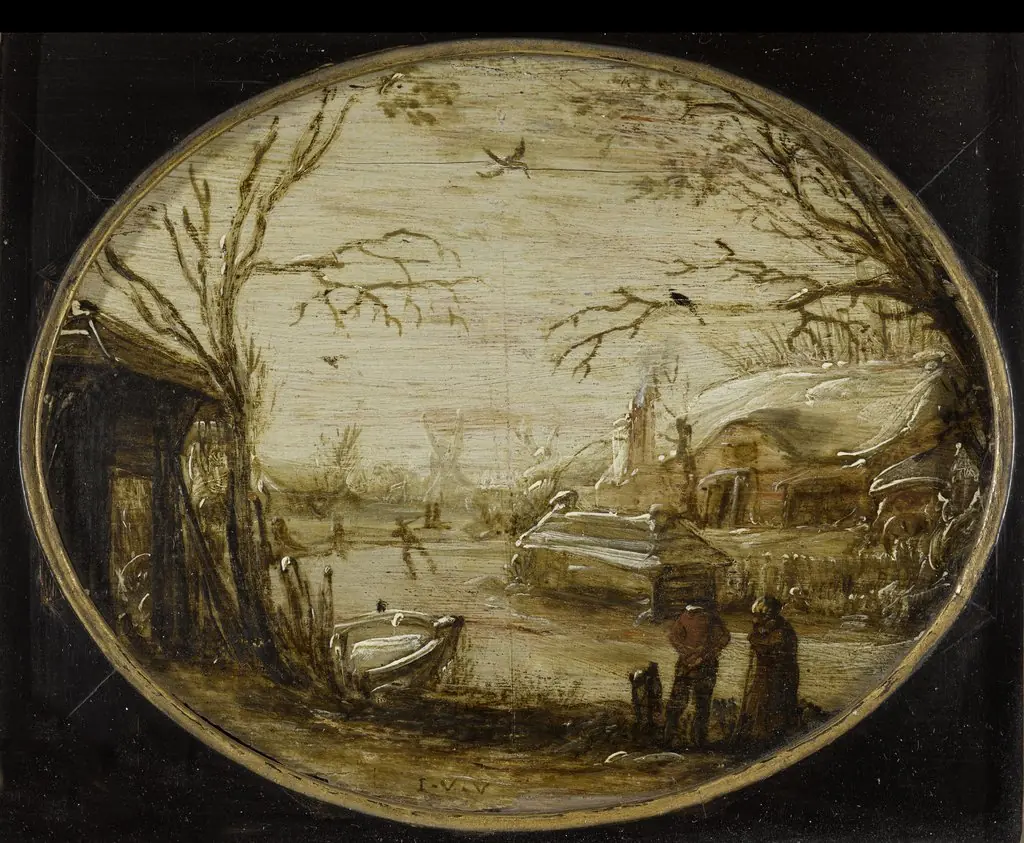
The scene portrays ordinary villagers engaged in winter tasks: shoveling snow, walking along frozen paths, and tending to their homes. A boat trapped in the ice and a resting dog suggest stillness and pause, reinforcing the season’s halted activity. The composition avoids idealization, instead presenting a modest, unembellished view of rural life. The church tower in the background implies spiritual continuity amid physical hardship, grounding the image in both temporal and communal rhythms.
Technique & Style
Executed as an etching, the print uses fine, controlled lines to define textures—thatched roofs, bare branches, and bundled clothing—with precision. The monochrome palette enhances the sense of winter’s austerity, while subtle tonal variations suggest depth and shadow. Van de Velde’s draftsmanship reflects his training in the Dutch print tradition, where clarity and observation outweigh dramatic effect. The composition is balanced, with horizontal elements of the river and rooftops anchoring the vertical rise of the church.
History & Provenance
Jan van de Velde II, part of a multi-generational family of artists, produced this print during the early phase of his career. The work was likely made for a domestic audience interested in seasonal cycles and regional life. It entered the collection of the Cleveland Museum of Art, where it remains as part of a broader group of Dutch prints from the period. Its survival in good condition reflects its careful preservation and historical interest among collectors of Northern European graphic art.
Context
In early 17th-century Holland, depictions of the months were popular in both print and painting, often serving as calendars or moral reminders of nature’s order. Van de Velde’s series aligns with broader trends in Dutch art that valued everyday scenes over religious or mythological narratives. His focus on rural labor and weather reflects a cultural shift toward secular, observational subjects, rooted in the region’s emerging middle-class identity and appreciation for local environment.
Legacy
Though less celebrated than contemporaries like Rembrandt, van de Velde’s prints contributed to the development of Dutch graphic art by refining the depiction of landscape and seasonal life. His series influenced later artists who explored calendar themes and rural economies. The survival of this print in a major public collection ensures continued study of how ordinary life was recorded and valued in early modern Europe, offering insight into the quiet rhythms of pre-industrial society.
Artist & collection
Artist
Jan van de Velde the younger (1593 – c. 1 November 1641) was a Dutch Golden Age painter and printmaker, mostly of animal, landscape and still-life subjects. He was the son of Jan van de Velde the Elder and the father of…