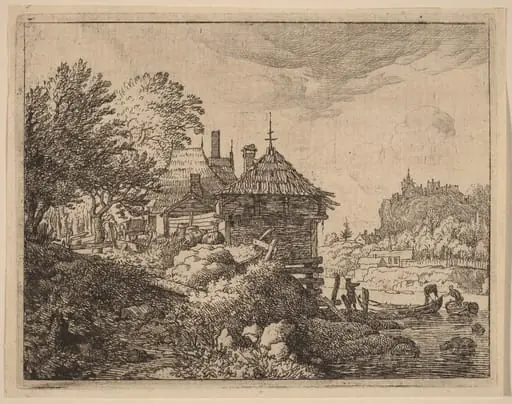
Artwork
June
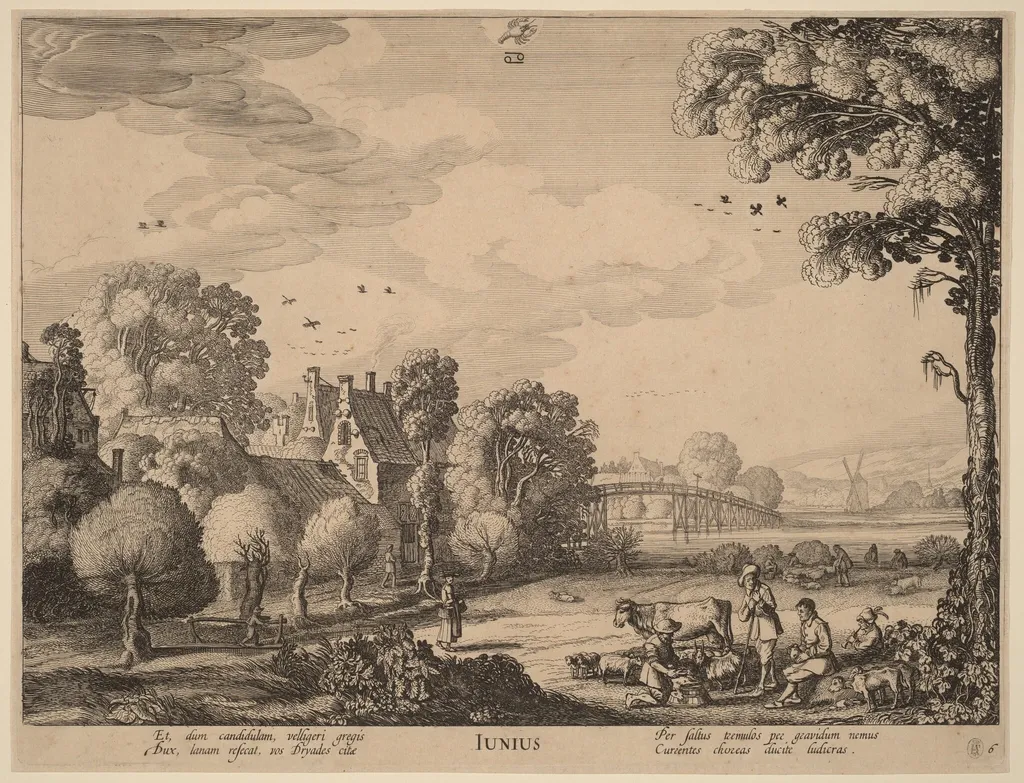
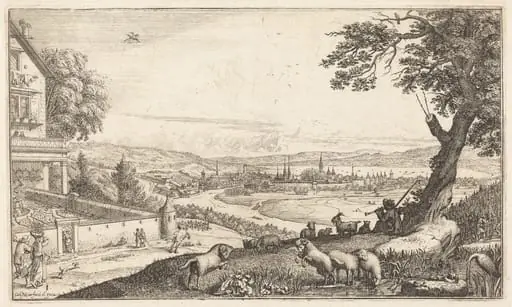
June is an ink print by the Renaissance artist Jan van de Velde. It dates from 1617 and is held in the collection of the National Gallery of Art.
About this work
Overview
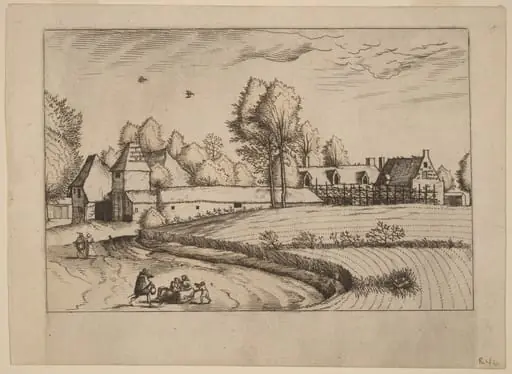
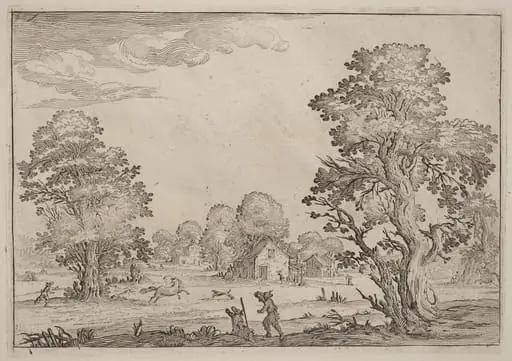
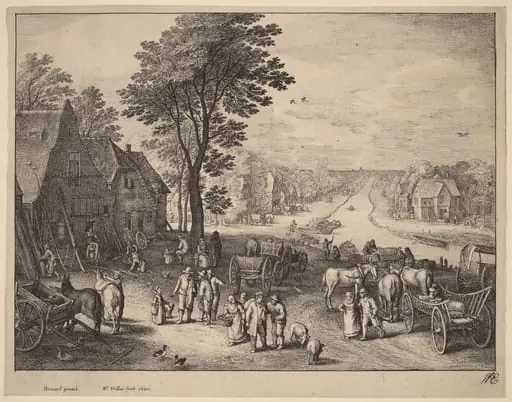
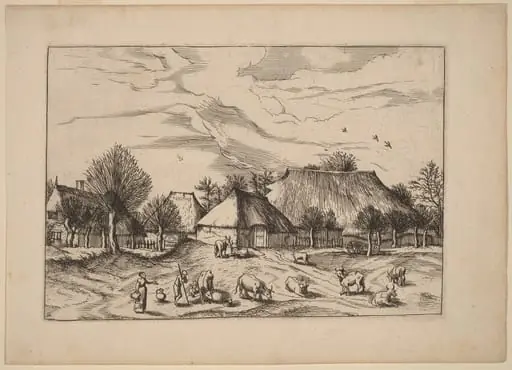
Jan van de Velde the Younger produced the etching titled *June* in 1617. Executed as a black‑and‑white print, the work presents a tranquil summer landscape featuring a river, shepherds, and distant architecture, framed by a prominent tree and two bridges. A brief Latin inscription at the bottom identifies the month, linking the image to the seasonal calendar.
Subject & Meaning
The composition captures a bucolic scene typical of early summer, with shepherds guiding a flock of sheep along the riverbank. The presence of bridges and distant buildings suggests a settled rural community, while birds in the sky add a sense of gentle activity. The depiction aligns with the month of June, evoking warmth, growth, and pastoral labor.
Technique & Style
Van de Velde employed the etching process, incising lines into a copper plate and printing them in monochrome. Through varied hatching and cross‑hatching, he creates tonal depth that renders the landscape three‑dimensional despite the lack of color. The delicate shading of water, foliage, and sky demonstrates his skill in manipulating line to suggest atmosphere and volume.
History & Provenance
The work has survived in several museum collections, illustrating its continued relevance to studies of early 17th‑century printmaking.
Created during the Dutch Golden Age, the print reflects the period’s interest in detailed, observational landscapes. Jan van de Velde the Younger belonged to a family of artists; his father, Jan van de Velde the Elder, was a noted engraver, and his son Jan Jansz van de Velde pursued still‑life painting. The work has survived in several museum collections, illustrating its continued relevance to studies of early 17th‑century printmaking.
Context
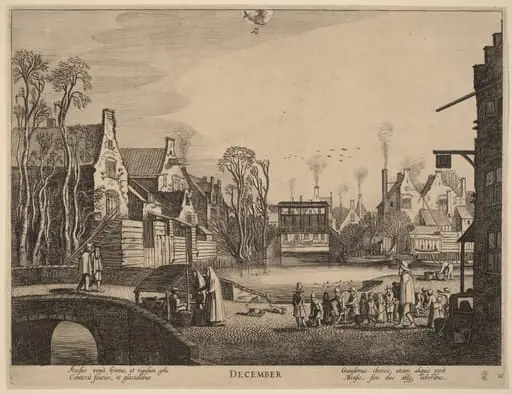
*June* belongs to a broader tradition of seasonal prints that circulated in the Netherlands as both decorative objects and educational tools. Such images often accompanied almanacs or were collected as part of series representing the twelve months. Van de Velde’s focus on a serene countryside aligns with contemporary Dutch values that celebrated the harmony between humanity and the natural environment.
Artist & collection
Artist
Jan van de Velde the younger (1593 – c. 1 November 1641) was a Dutch Golden Age painter and printmaker, mostly of animal, landscape and still-life subjects. He was the son of Jan van de Velde the Elder and the father of…