Artwork
The Town Hall of Amsterdam
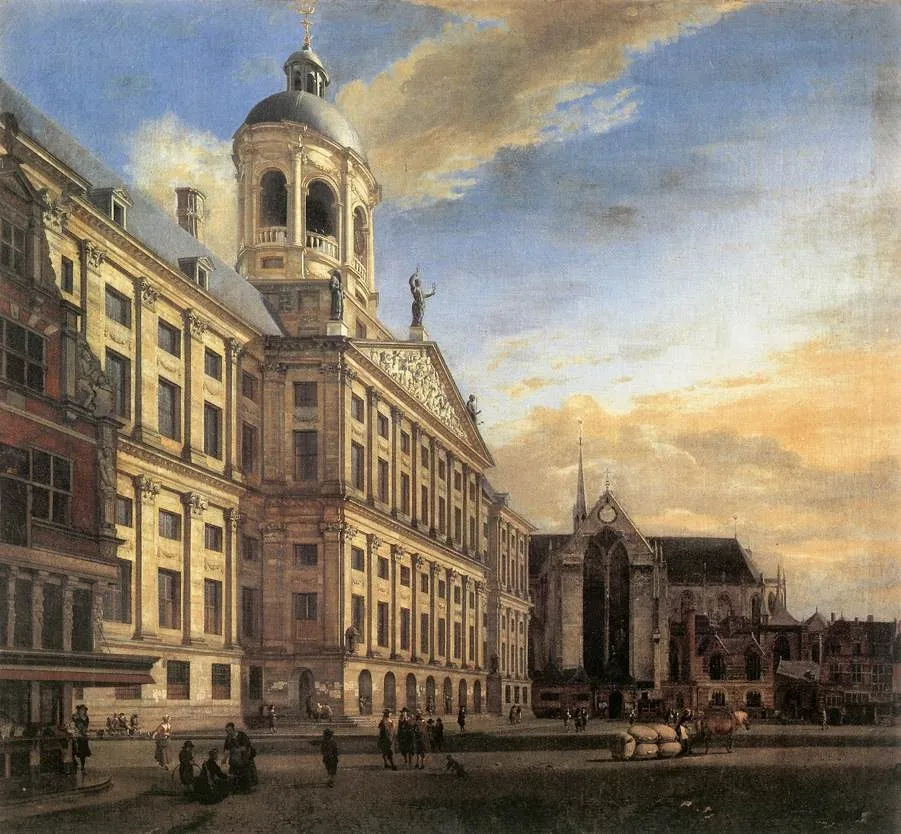
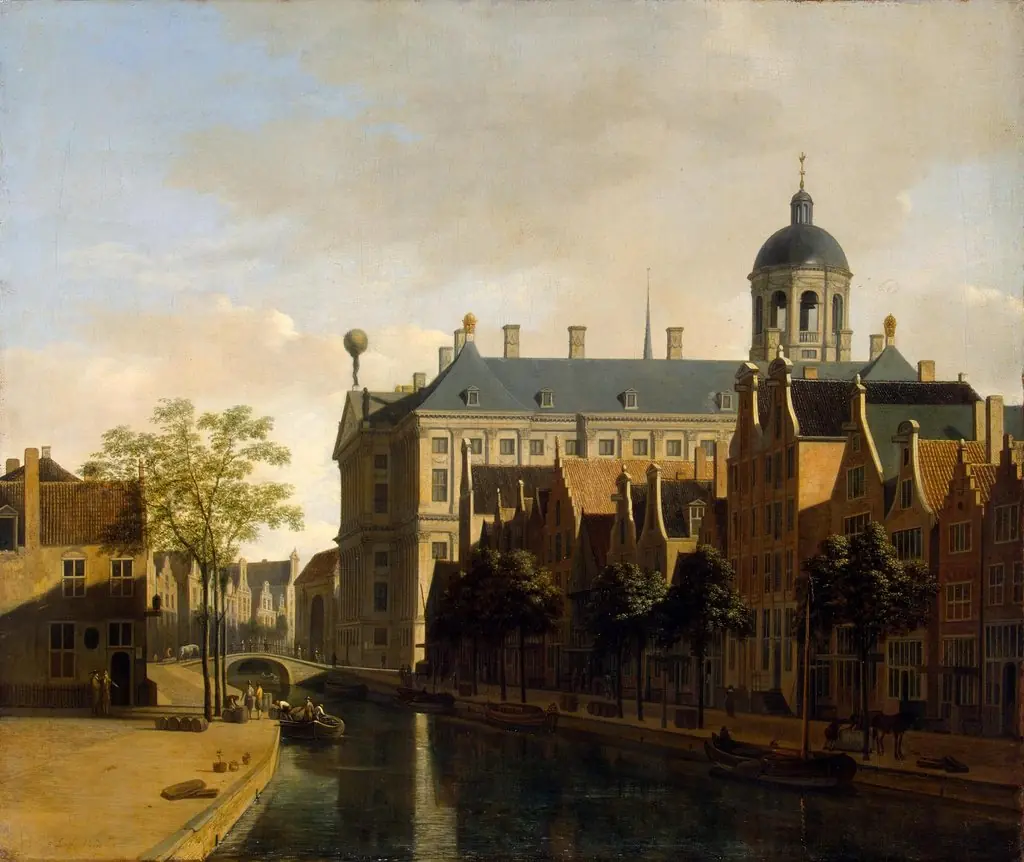
The Town Hall of Amsterdam is an oil painting by the Dutch Golden Age artist Jan van der Heyden. It dates from 1667 and is held in the collection of the Uffizi Gallery.
About this work
Overview
The painting reflects the city’s growing civic pride during the Dutch Golden Age, rendered not as a grand spectacle but as a quiet, orderly scene of urban life.
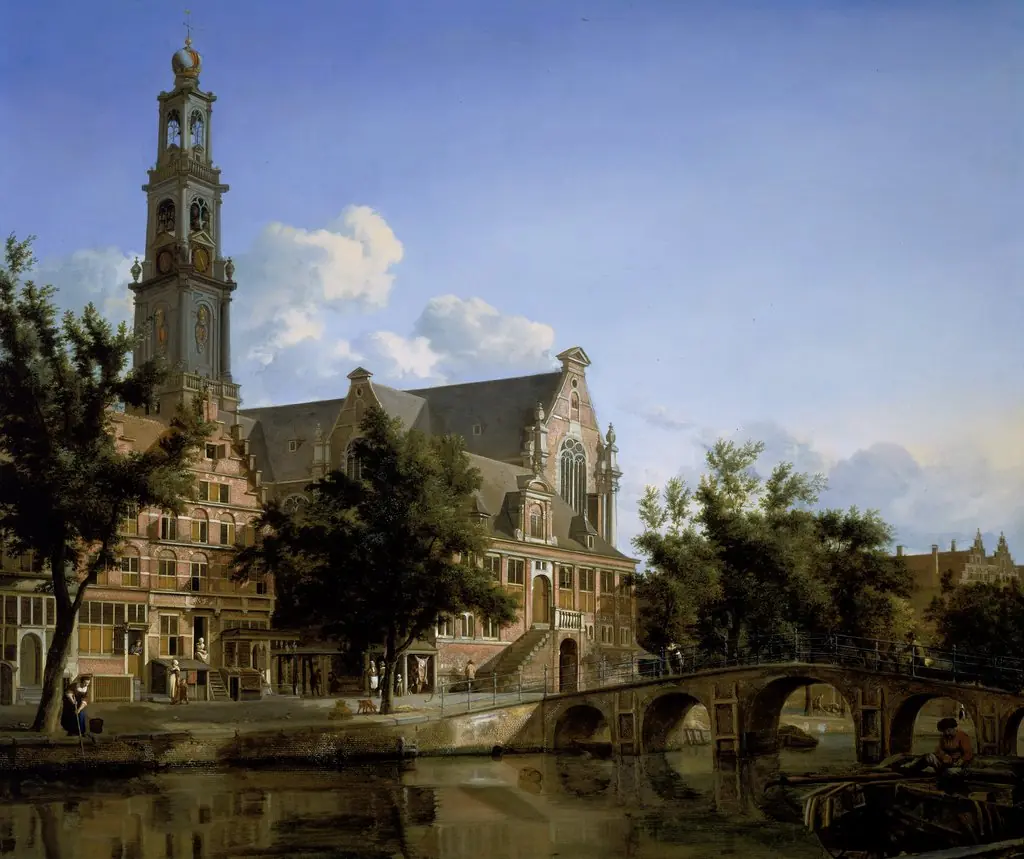
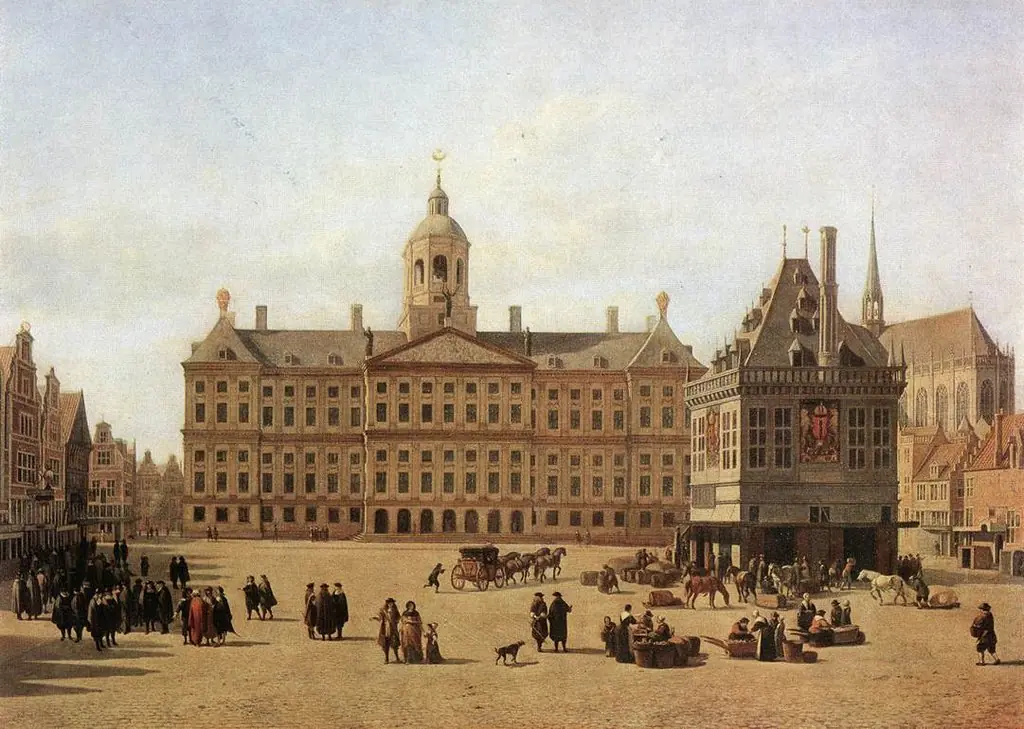
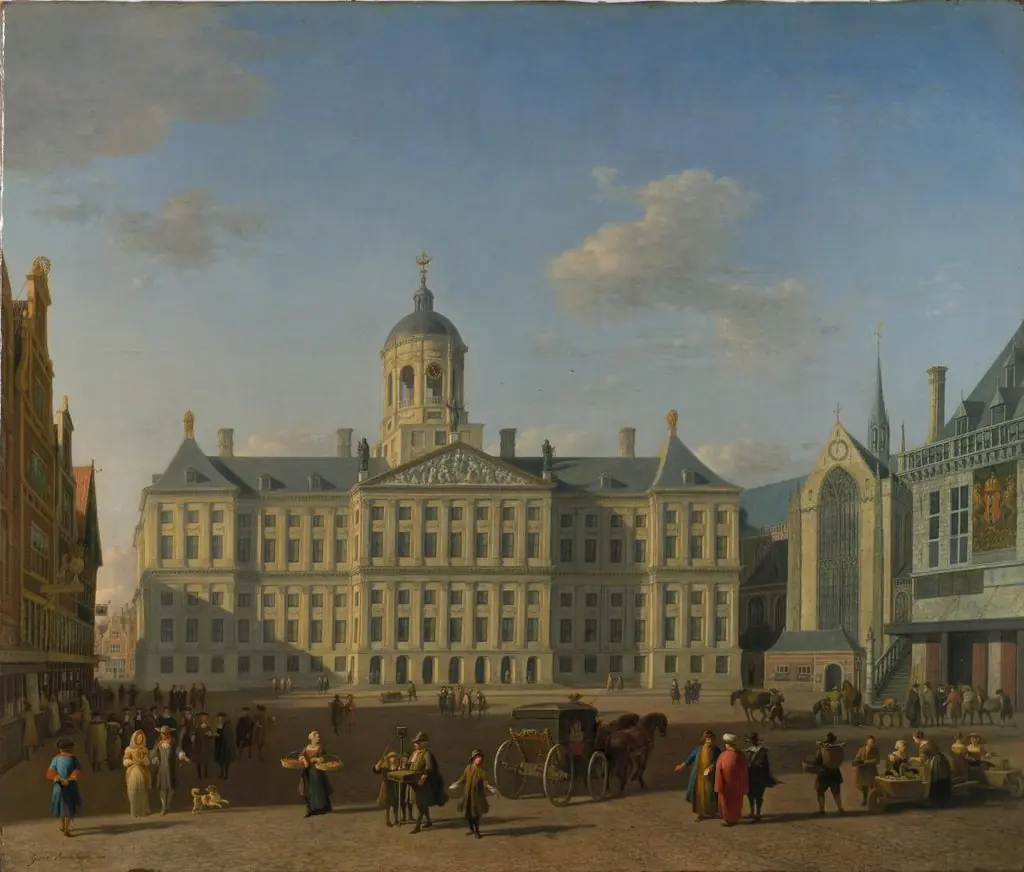
Painted in 1667 by Jan van der Heyden, this oil-on-canvas work presents a precise depiction of Amsterdam’s civic center. Van der Heyden, known for his architectural precision, captured the Royal Palace and the adjacent Nieuwe Kerk with meticulous attention to structure and light. The painting reflects the city’s growing civic pride during the Dutch Golden Age, rendered not as a grand spectacle but as a quiet, orderly scene of urban life.
Subject & Meaning
The composition centers on the Royal Palace, a symbol of municipal authority, flanked by the Nieuwe Kerk. Figures moving along the square suggest routine civic activity, reinforcing the building’s role as a hub of public life. The clock on the facade, clearly visible, underscores the era’s emphasis on punctuality and organized society. Together, these elements convey a sense of communal stability and civic identity rather than royal pomp.
Technique & Style
Van der Heyden employed fine brushwork and controlled perspective to achieve architectural accuracy. The tan stone surfaces are rendered with subtle gradations of light, while the sky, softly modeled with pale clouds, enhances the painting’s calm atmosphere. Details like individual windows and pavement textures are rendered with near-surveyor’s precision, reflecting his background as an inventor and engineer as much as a painter.
History & Provenance
Commissioned during the height of Amsterdam’s prosperity, the painting entered the Medici collection in Florence by the late 17th century, likely through diplomatic or commercial channels. It has remained in the Uffizi Gallery’s holdings since at least the 18th century, one of the few Dutch architectural works in the Italian collection. Its presence there reflects early European appreciation for Northern realism.
Context
In mid-17th century Amsterdam, civic architecture was a source of civic identity, distinct from religious or royal symbolism. Van der Heyden’s focus on the palace and its surroundings aligns with a broader trend in Dutch art that celebrated urban order and public institutions. His work contributed to a genre that valued accuracy over drama, mirroring the values of a mercantile republic.
Legacy
Van der Heyden’s architectural paintings influenced later topographical artists and documentarians of urban space. His methodical approach to rendering buildings set a standard for precision in Dutch landscape painting. While not widely imitated, his work remains a key reference for understanding how Dutch citizens viewed their own civic environment—with dignity, clarity, and quiet pride.
Artist & collection
Artist
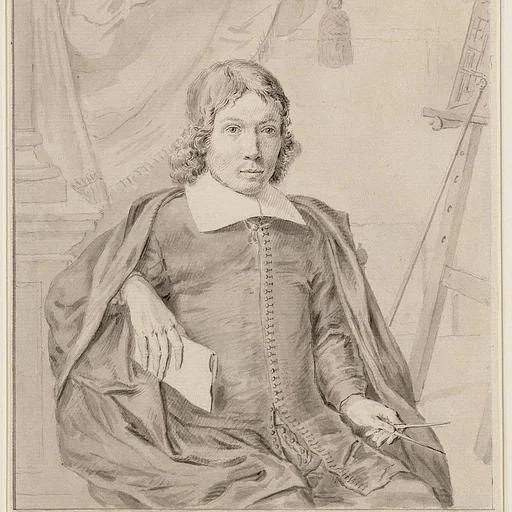
Jan van der Heyden (5 March 1637, Gorinchem – 28 March 1712, Amsterdam) was a Dutch Baroque-era painter, glass painter, draughtsman and printmaker.

 View of the Amsterdam Town Hall
 The Town Hall, Amsterdam
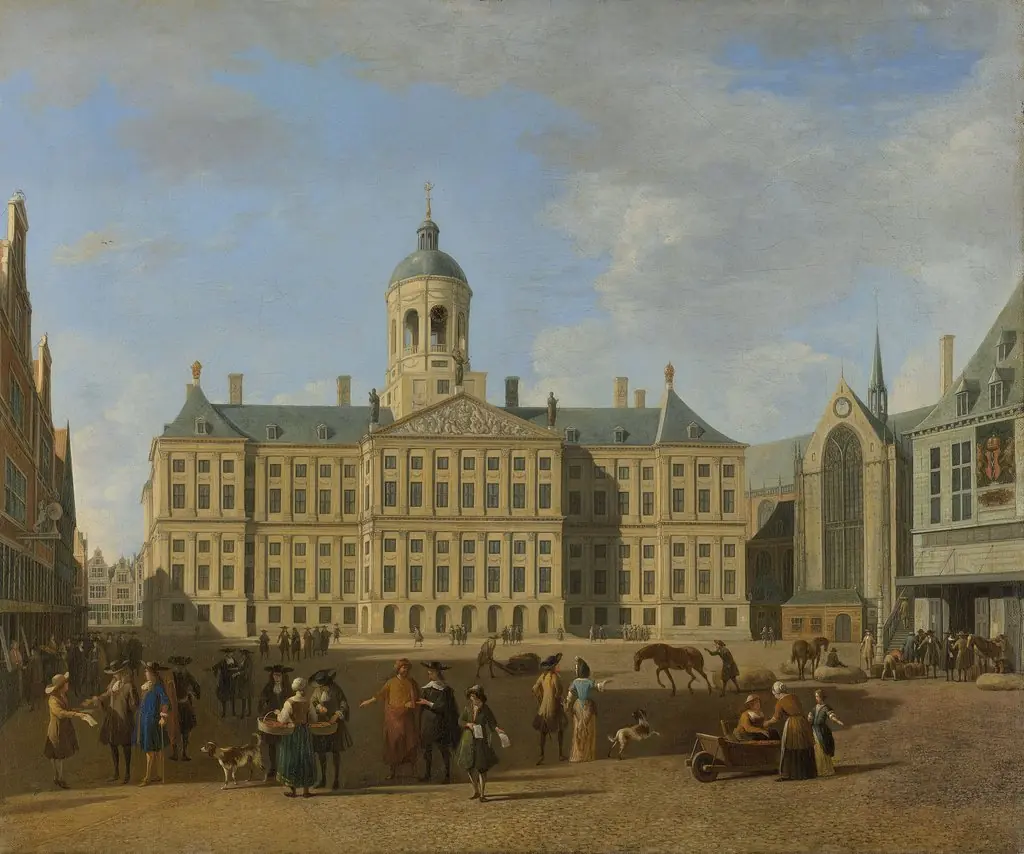 The town hall on the Dam in Amsterdam
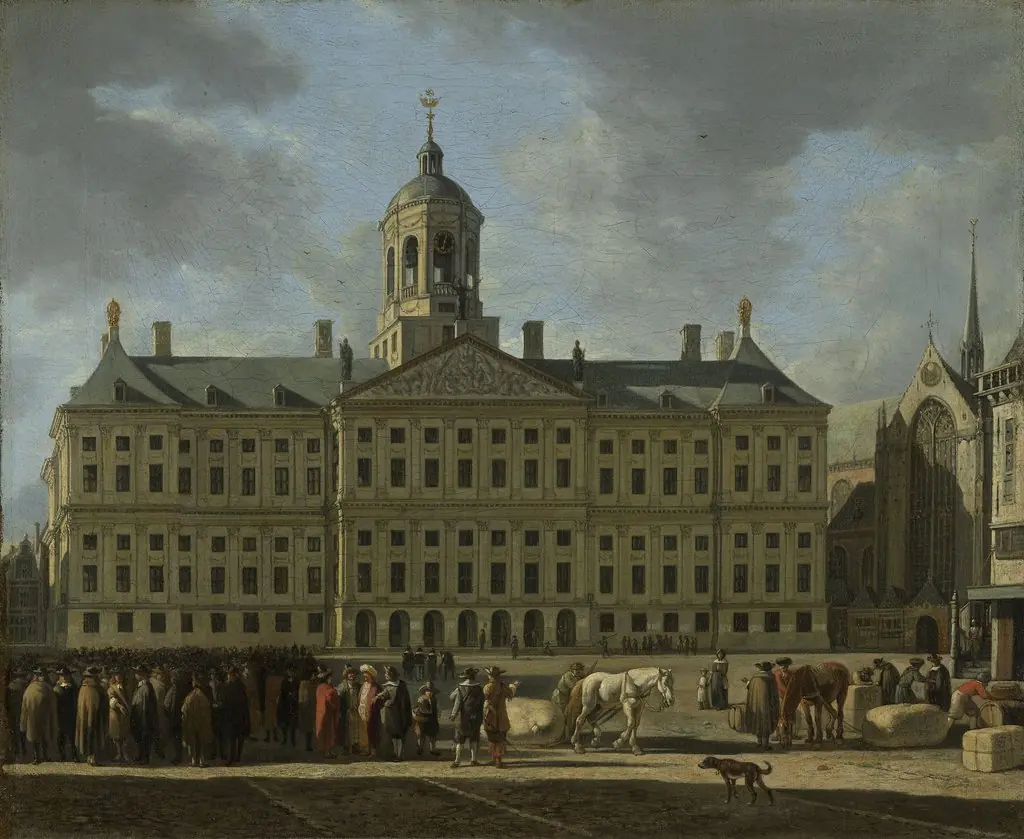 The town hall on Dam Square in Amsterdam
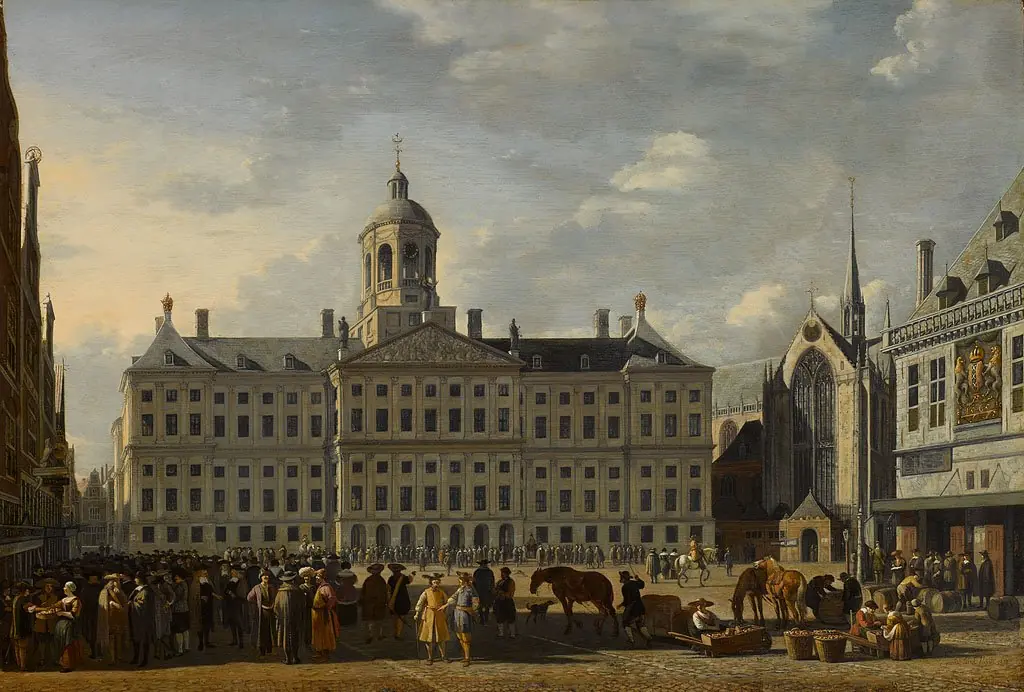 The Town Hall on the Dam in Amsterdam
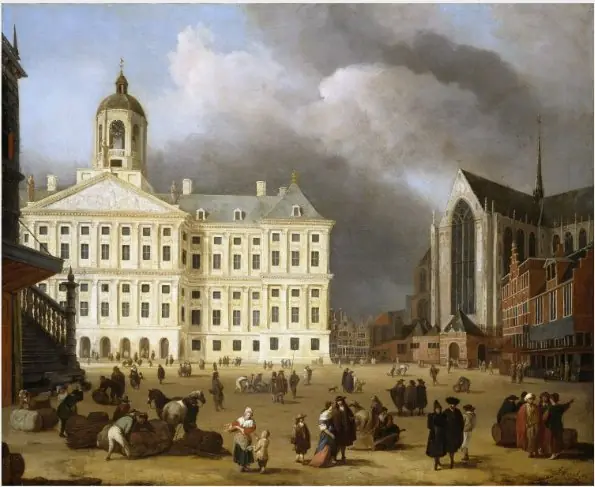 The Dam at Amsterdam
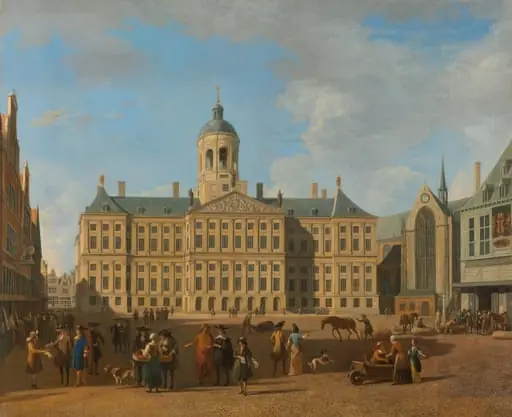 Het stadhuis op de Dam in Amsterdam
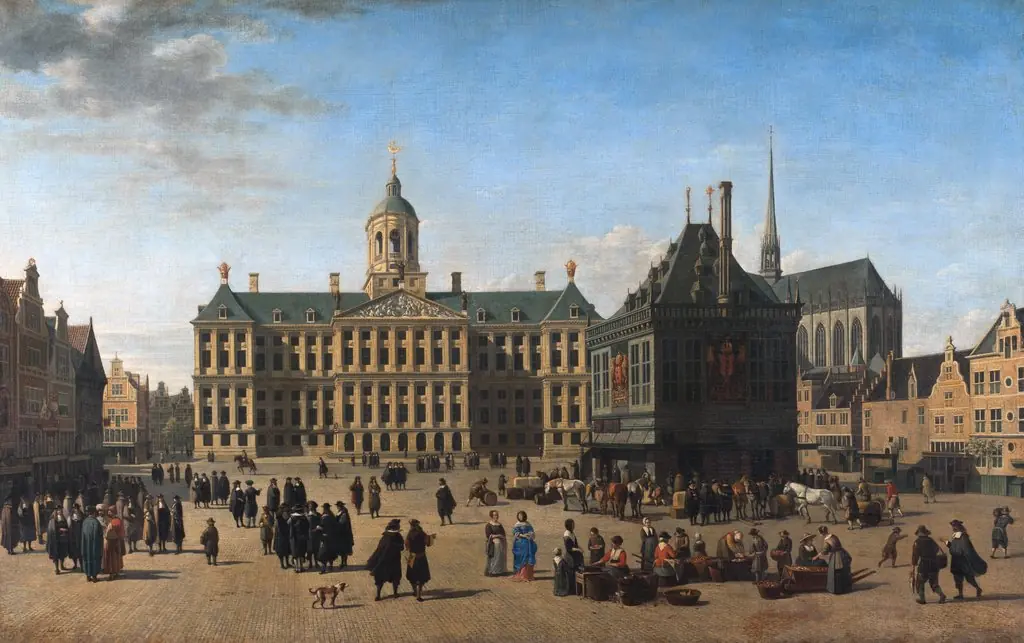 The Dam in Amsterdam
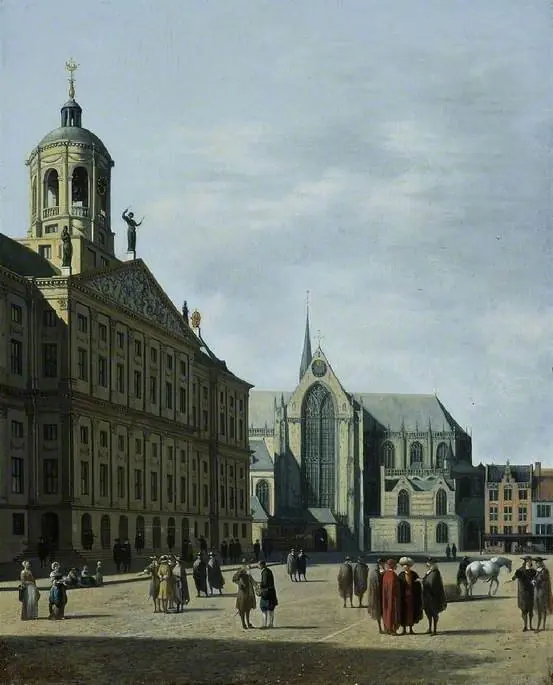 The Town Hall of Amsterdam
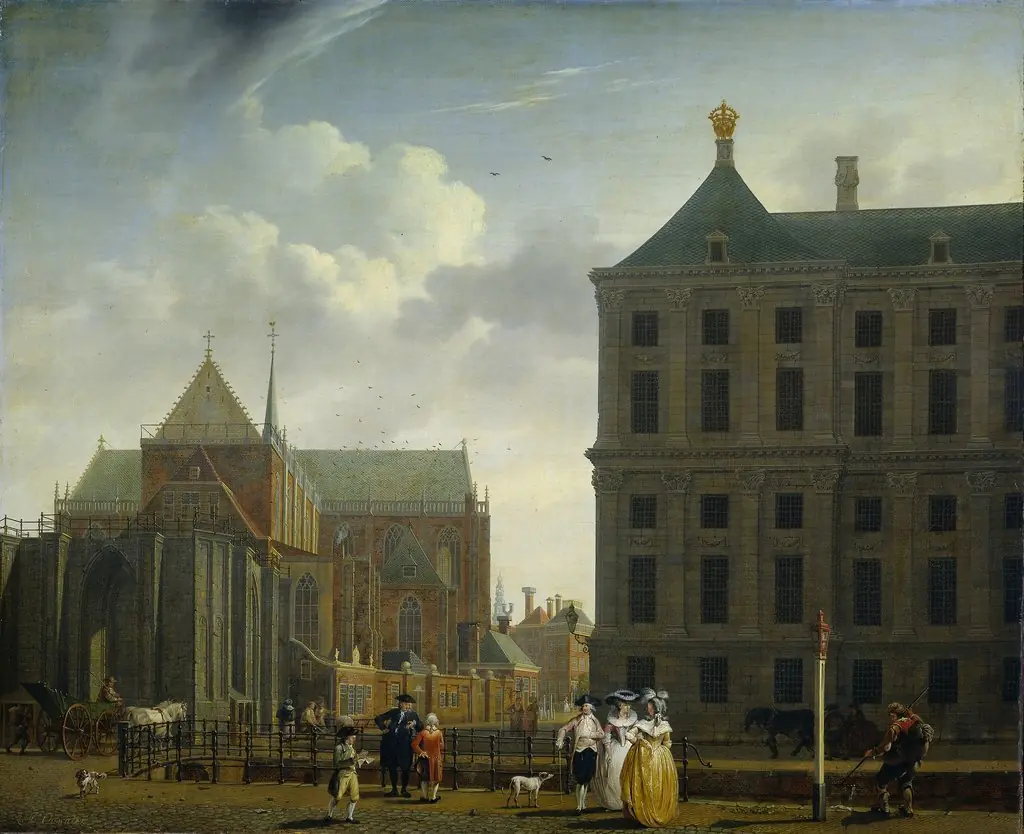 The Nieuwe Kerk and the Town Hall on the Dam in Amsterdam
 View of the Ratshuis in Amsterdam