Artwork
Fruit and flowers
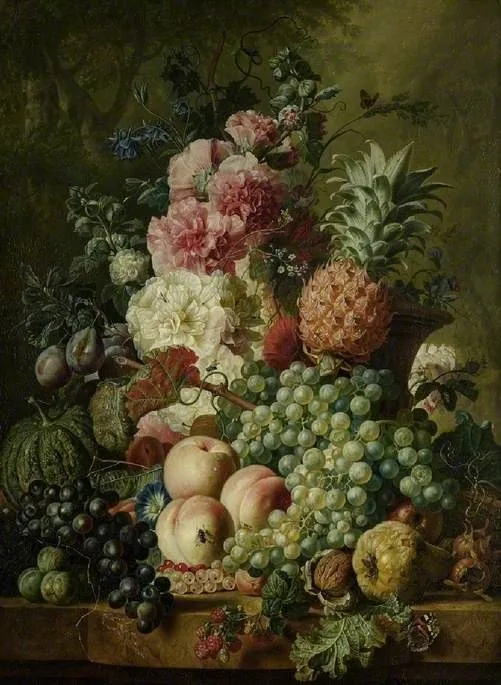
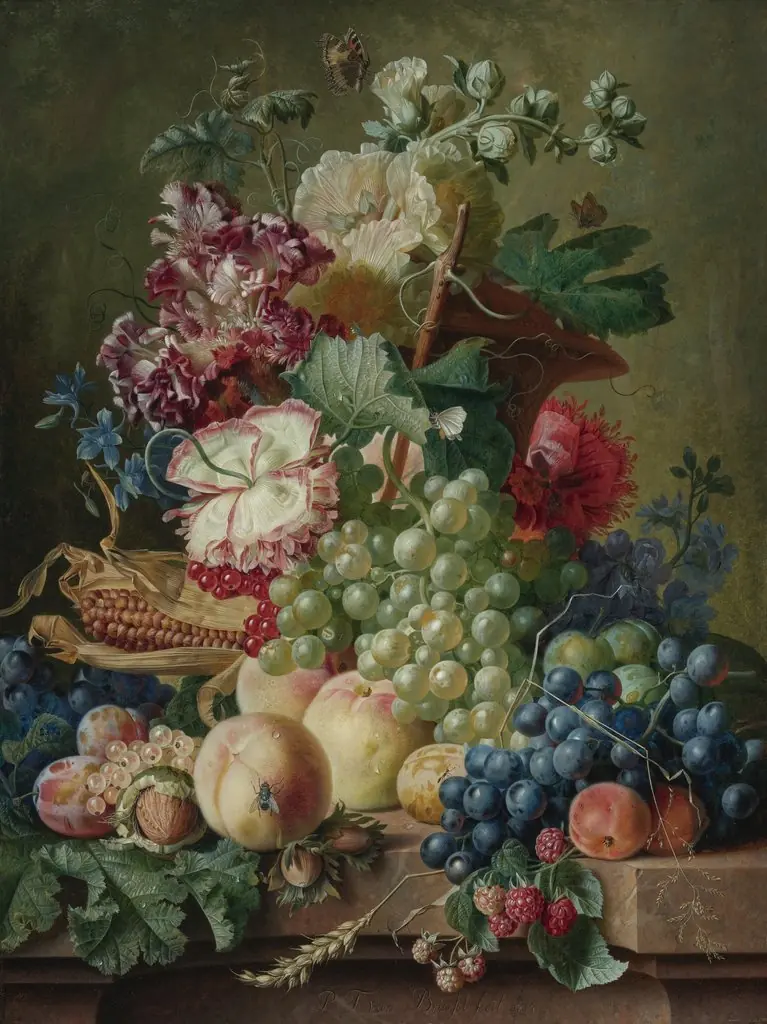
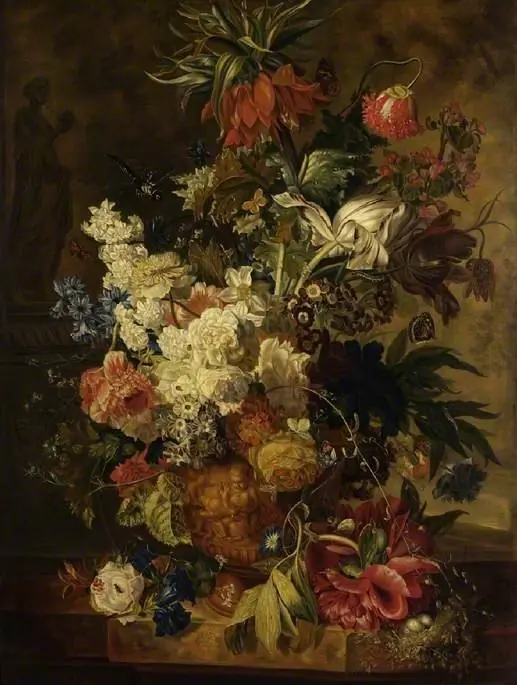
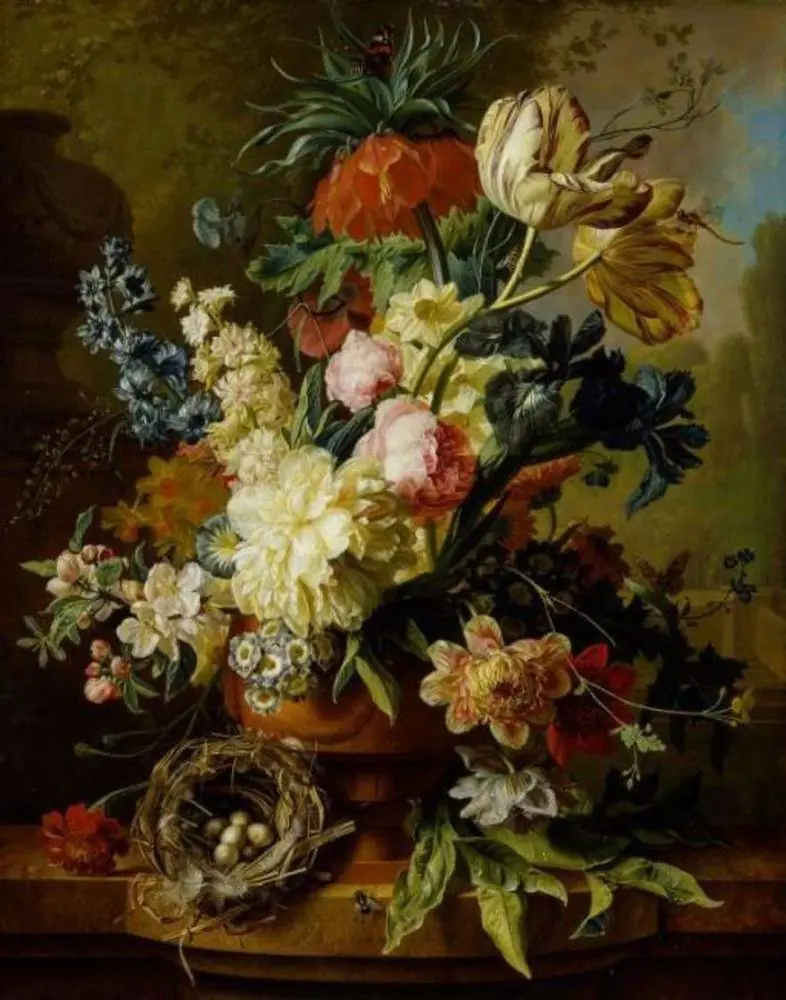
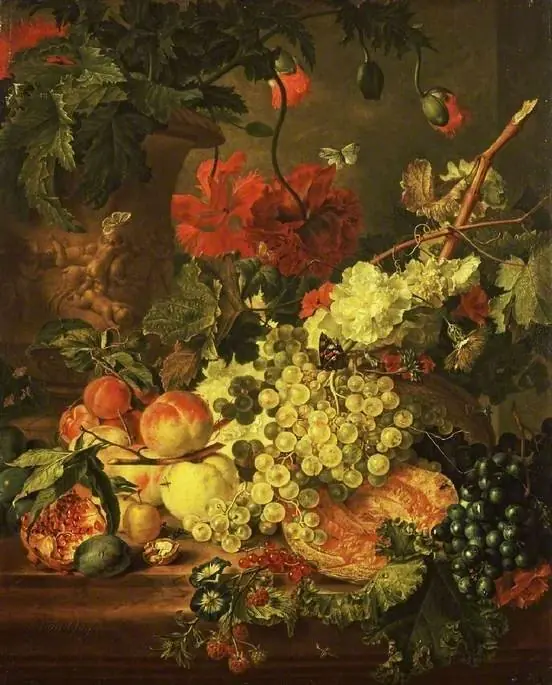
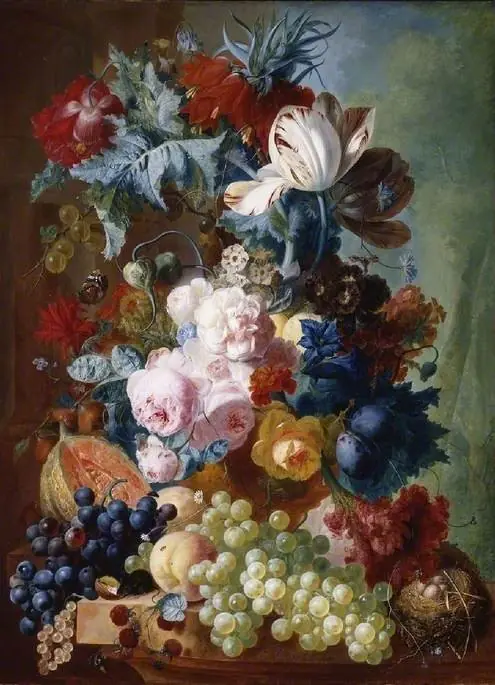
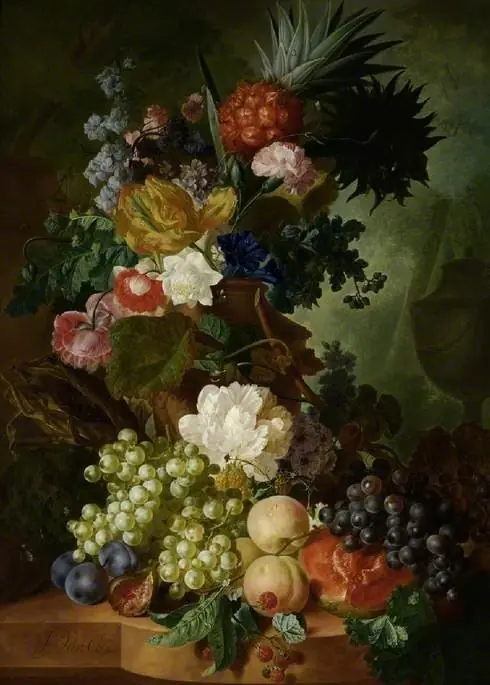
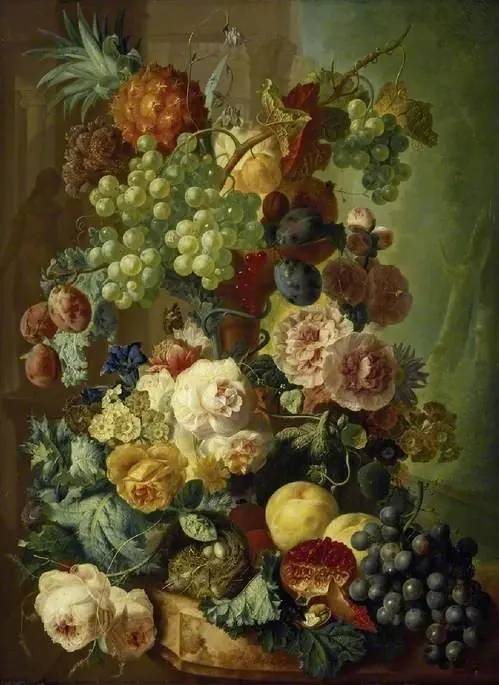
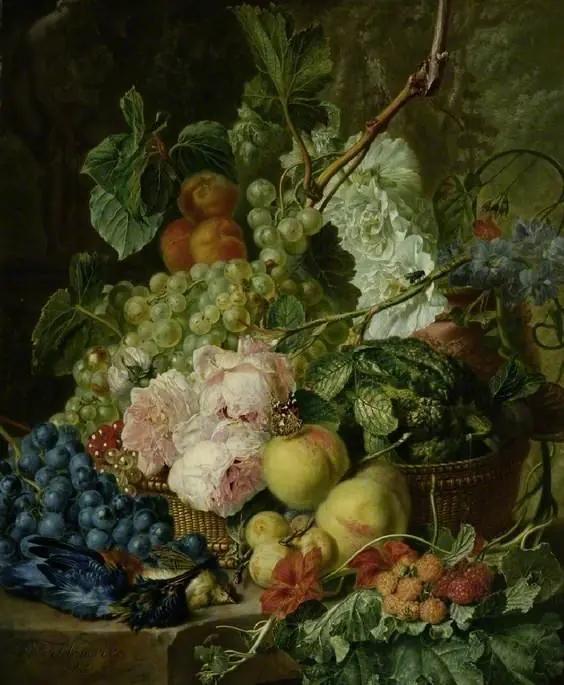
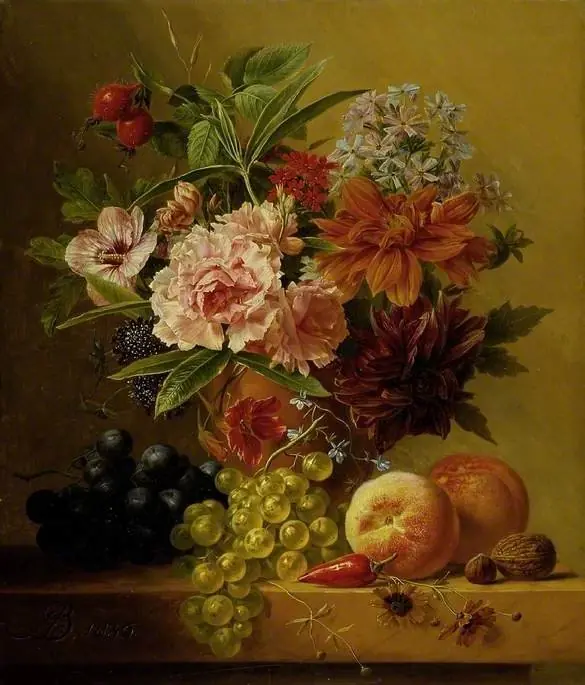
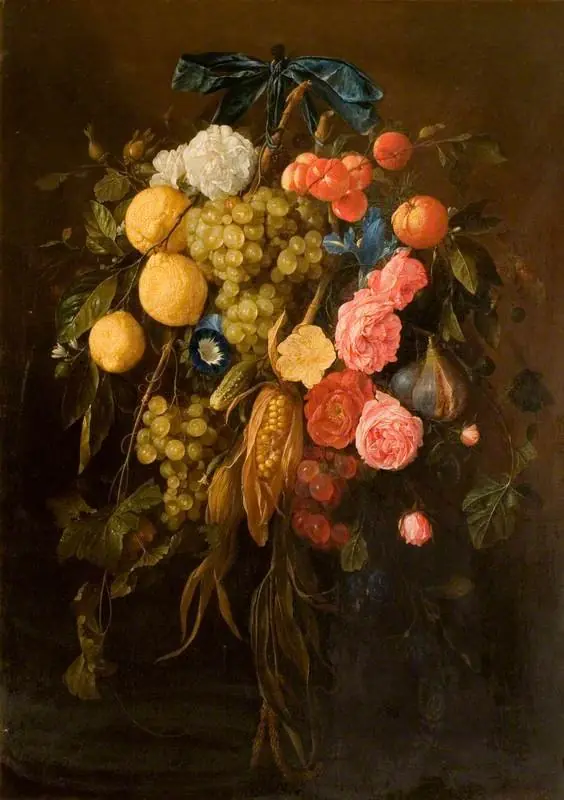
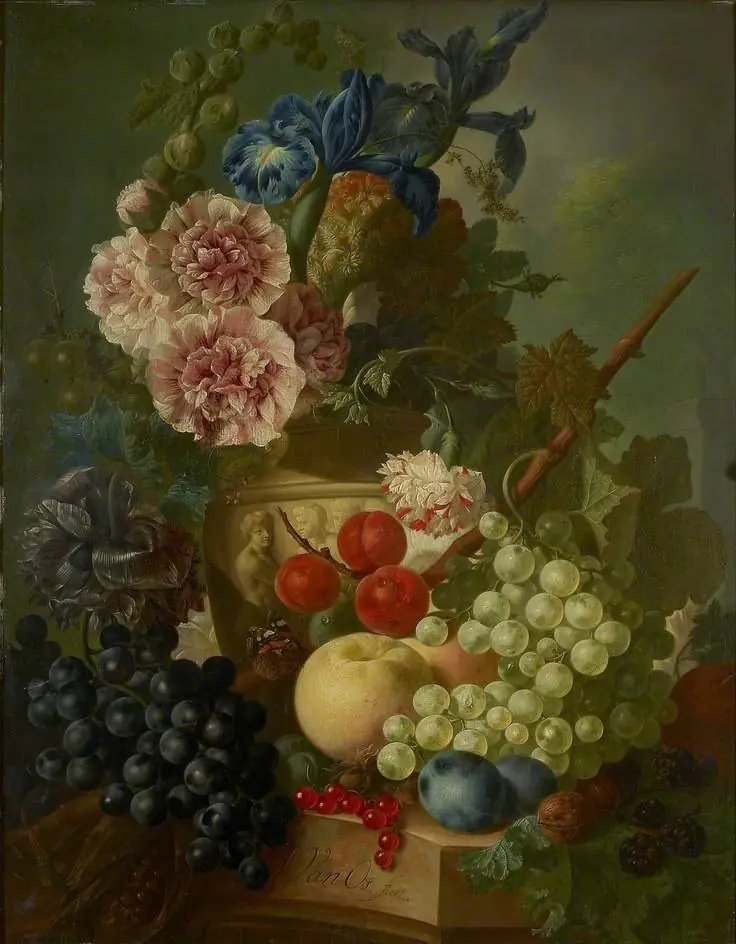
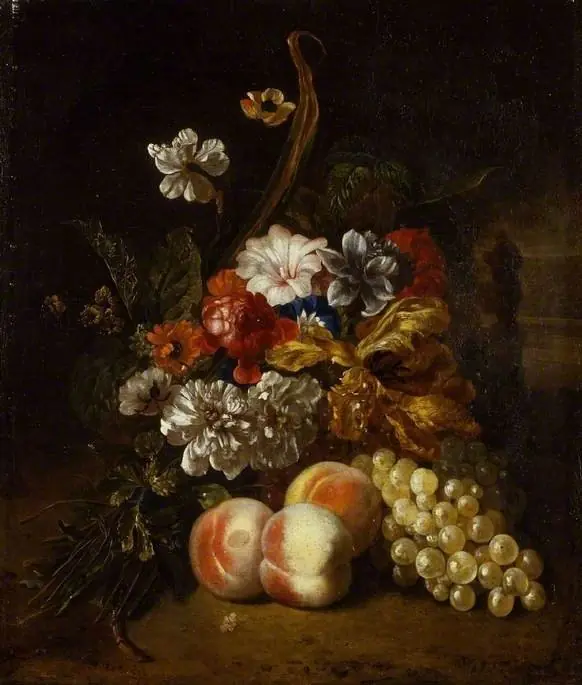
Fruit and flowers is an oil painting by Paul Theodor van Brussel. It is held in the collection of the Fitzwilliam Museum.
About this work
Overview
It presents a lush, densely arranged composition of seasonal produce and blossoms, rendered with careful attention to natural detail.
Painted in 1796, *Fruit and Flowers* is an oil-on-canvas still life by Dutch artist Paul Theodor van Brussel. It presents a lush, densely arranged composition of seasonal produce and blossoms, rendered with careful attention to natural detail. Van Brussel, trained in Haarlem under Jean Augustin and Hendrik Meyer, transitioned from tapestry design to still-life painting, where his precision and color sense found their fullest expression.
Subject & Meaning
The painting features a variety of fruits—grapes, peaches, and pineapple—alongside delicate pink and white blossoms, arranged in a loose, overflowing heap. These elements reflect the Dutch tradition of still life as a celebration of abundance and transience. The inclusion of exotic fruits like pineapple suggests global trade networks, while the fleeting nature of petals and ripe fruit subtly evokes themes of impermanence.
Technique & Style
Van Brussel employed fine brushwork to capture the glossy sheen of fruit skin, the velvety texture of peach fuzz, and the translucent thinness of flower petals. Light falls naturally across the forms, enhancing volume and depth without theatrical contrast. The palette is rich but restrained, emphasizing tonal harmony over flamboyance, and the composition avoids rigid symmetry, lending the scene an organic, almost spontaneous feel.
History & Provenance
Created near the end of van Brussel’s career, this work exemplifies his mature style, developed after years of refining his approach to botanical and fruit subjects. It entered the collection of the Fitzwilliam Museum in Cambridge, where it remains today. While little is documented about its early ownership, its preservation reflects its recognition within 19th-century British collections as a representative example of Dutch still-life painting.
Context
In late 18th-century Holland, still-life painting remained a respected genre, particularly for its technical demands and connection to scientific observation. Van Brussel’s work aligns with a tradition that valued accuracy and naturalism, influenced by earlier masters like Jan van Huysum. His focus on both local and imported flora mirrors the era’s expanding botanical knowledge and colonial trade networks.
Legacy
Van Brussel’s later works, including this one, are regarded as the most accomplished of his output, noted for their quiet precision and balanced composition. Though not widely known outside specialist circles, his paintings contribute to the broader understanding of Dutch still-life evolution in the post-Renaissance period. His emphasis on tactile realism helped sustain the genre’s relevance into the 19th century.
Artist & collection
Artist
Paul Theodor van Brussel (1754–1795) was a Dutch flower painter. He was born at Zuid-Polsbroek, near Schoonhoven, in 1754. He was a scholar of Jean Augustin and of Hendrik Meyer of Haarlem. He was first employed in the…