Artwork
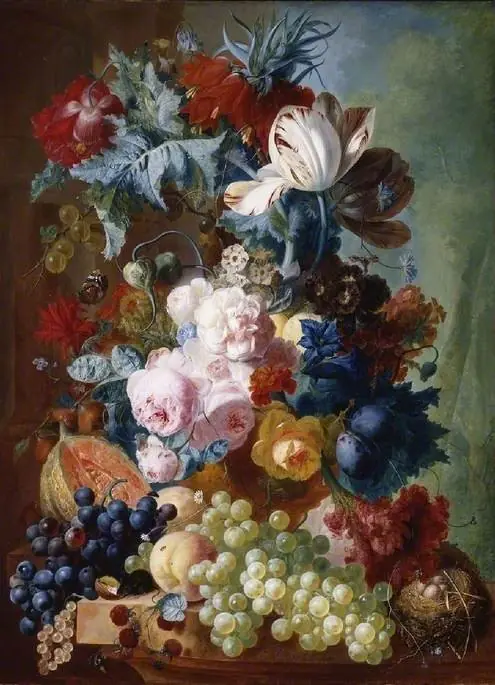
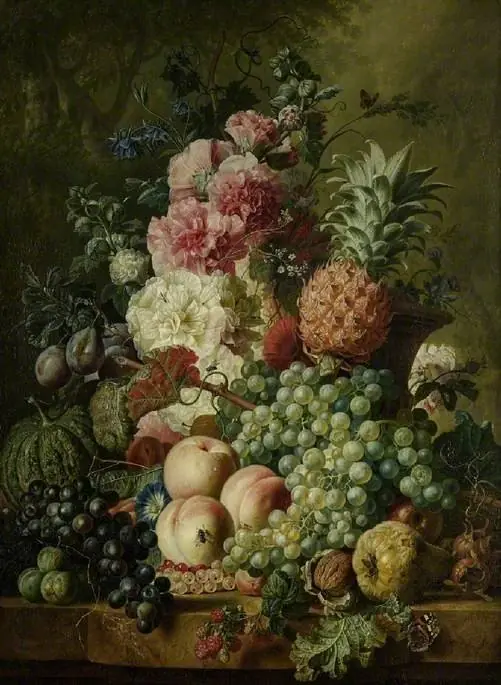
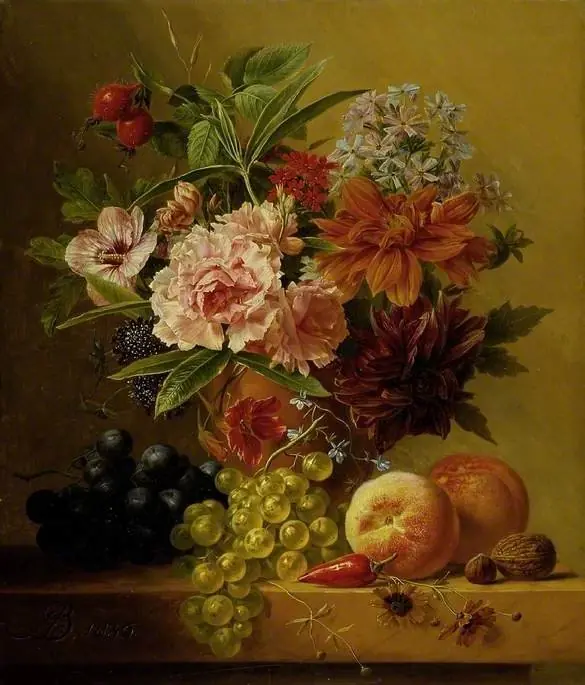
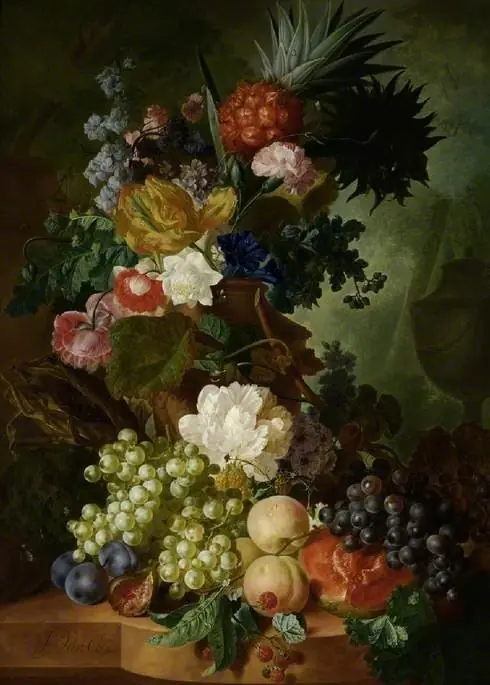
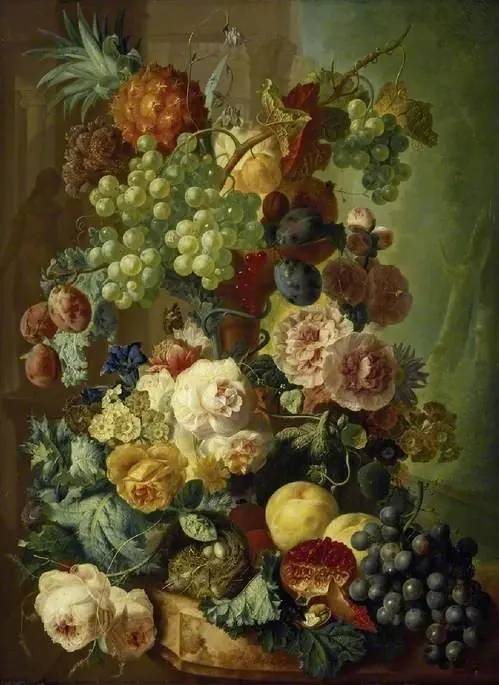
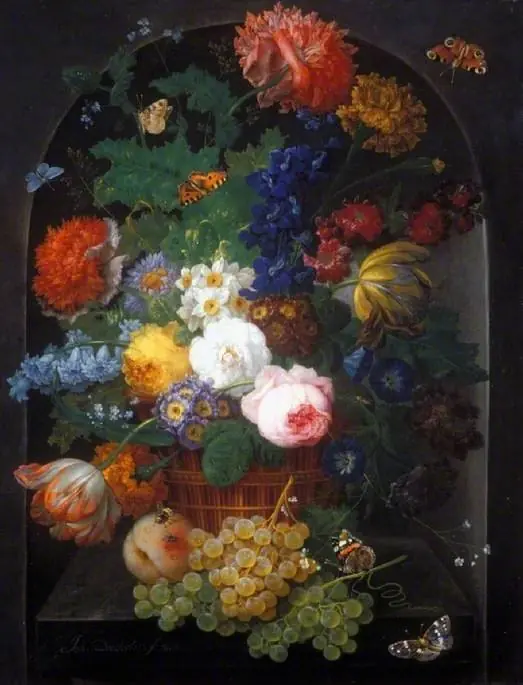
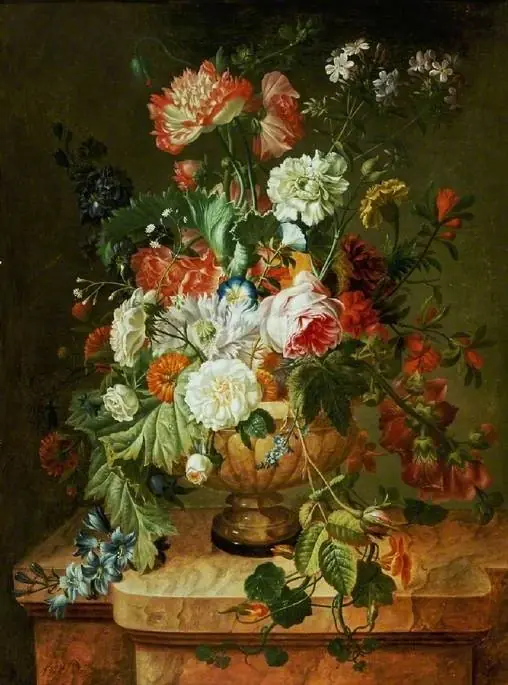
Flowers in an urn, with fruit
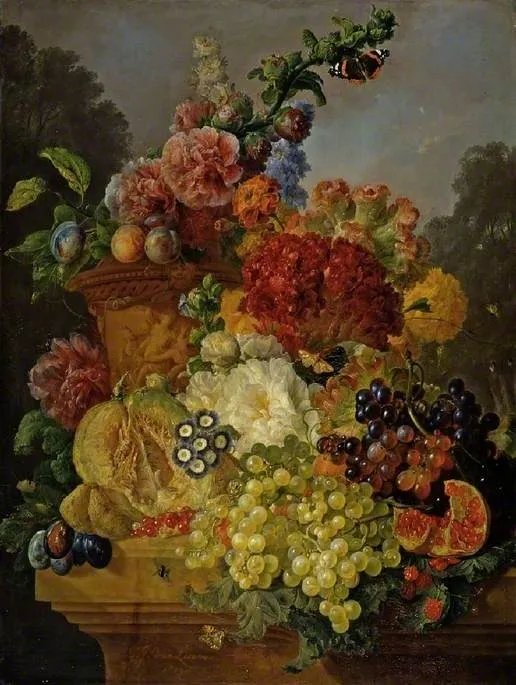
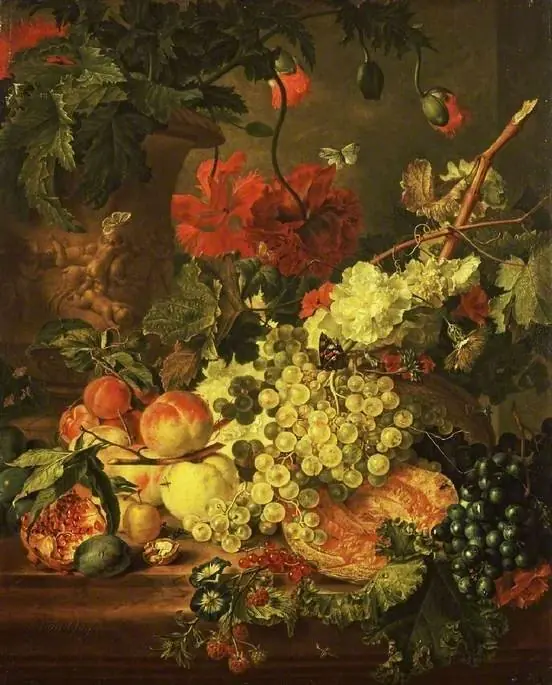
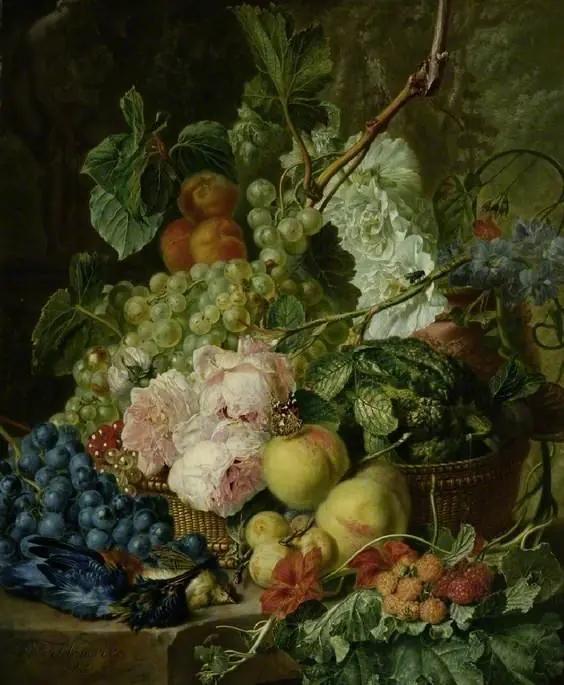
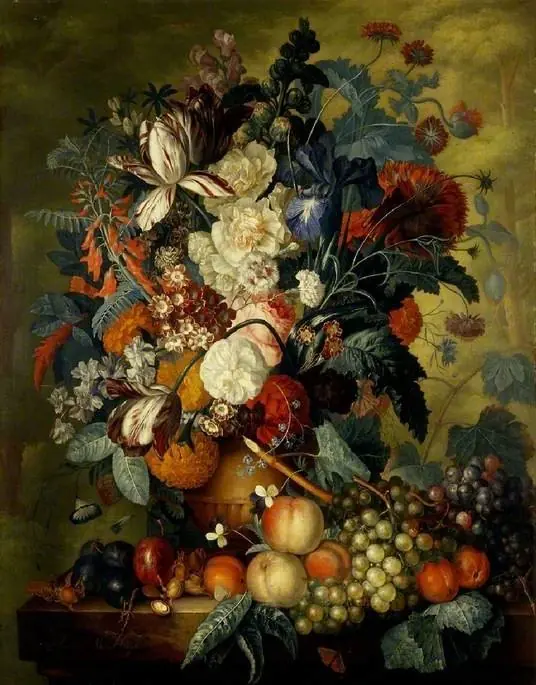
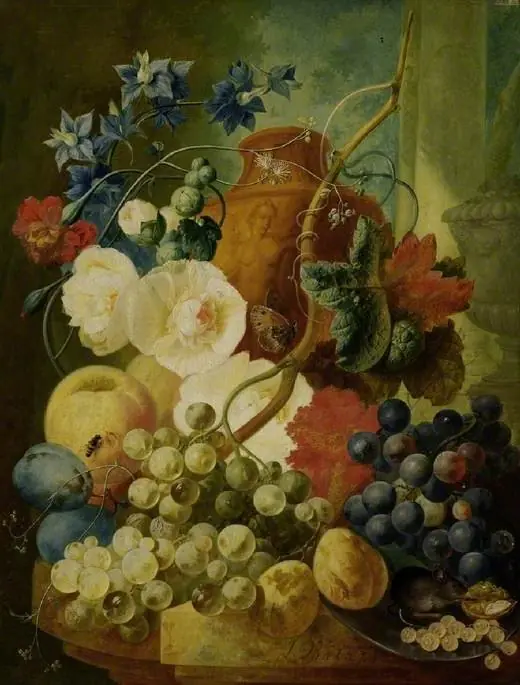
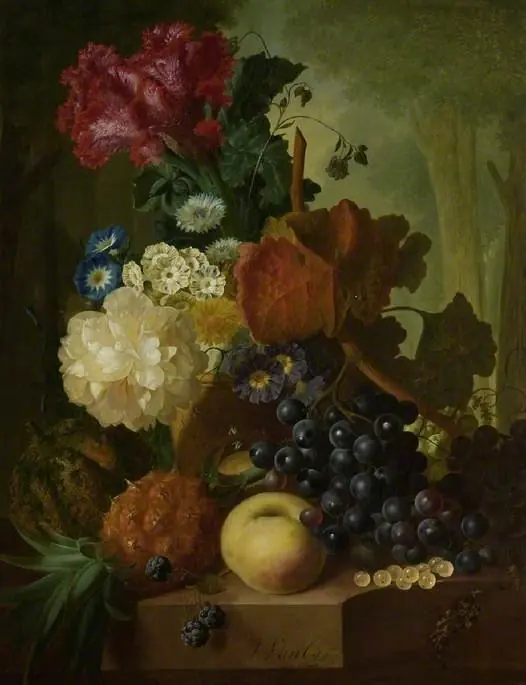
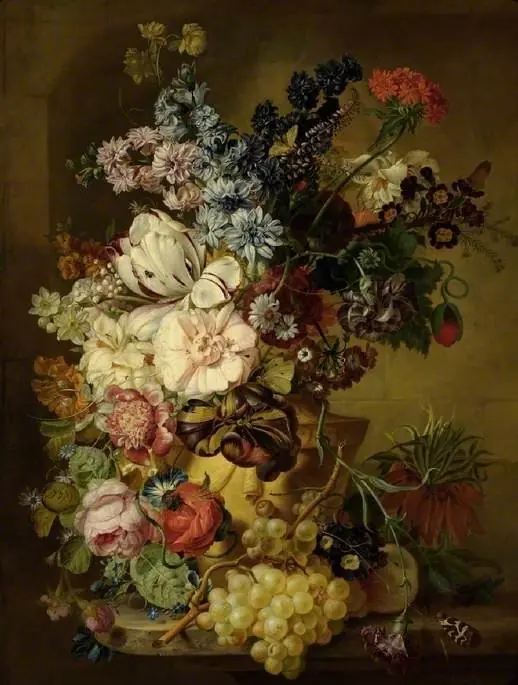
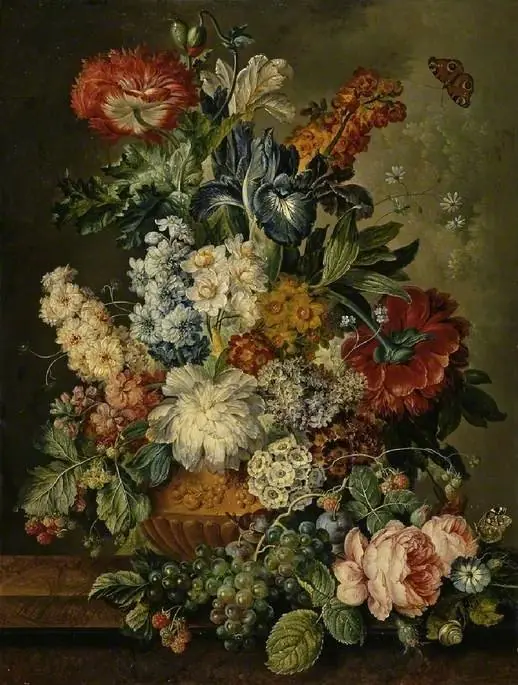
Flowers in an urn, with fruit is an oil painting by Gerrit Johan van Leeuwen. It dates from 1809 and is held in the collection of the Fitzwilliam Museum.
About this work
The painting is titled Flowers in an urn, with fruit.
It was made by Gerrit Johan van Leeuwen in 1809.
The Fitzwilliam Museum holds this oil painting, which falls under the floral genre.
The fact that it's from 1809 makes it interesting because it shows what artists were focusing on back then.
You can learn more about this style by looking into the technique of glazing.
Overview
The painting is part of the permanent collection of the Fitzwilliam Museum in Cambridge, where it is displayed among other examples of period floral art.
Gerrit Johan van Leeuwen’s oil painting Flowers in an urn, with fruit dates from 1809. Executed in the early nineteenth‑century Dutch tradition of still‑life, the work depicts a carefully arranged composition of blossoms spilling from a ceramic vessel alongside assorted fruit. The painting is part of the permanent collection of the Fitzwilliam Museum in Cambridge, where it is displayed among other examples of period floral art.
Subject & Meaning
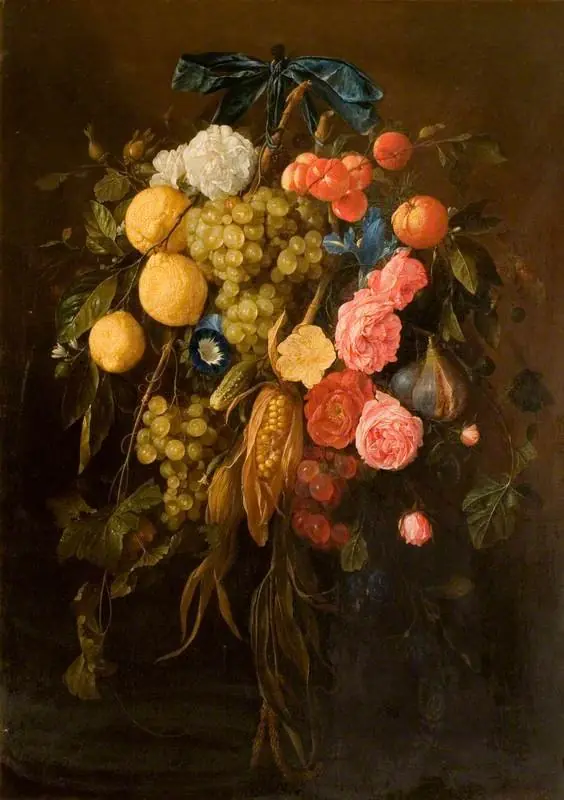
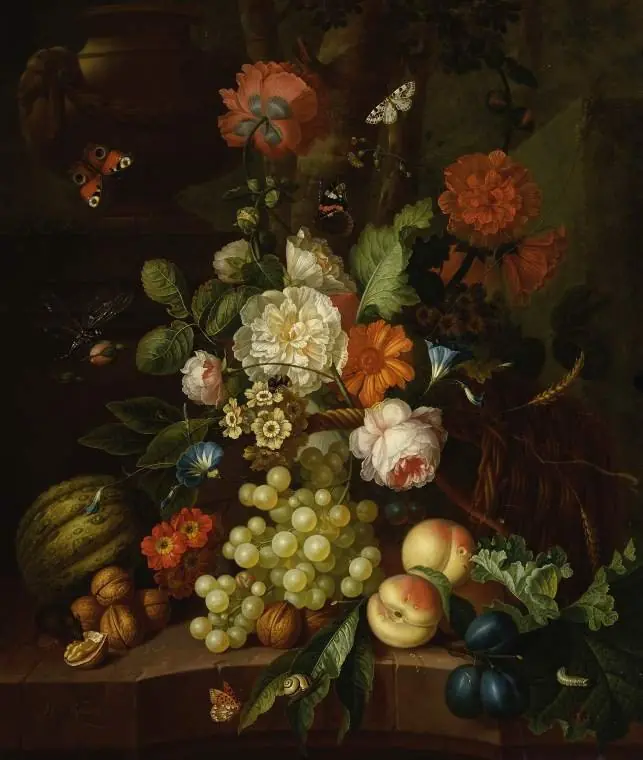
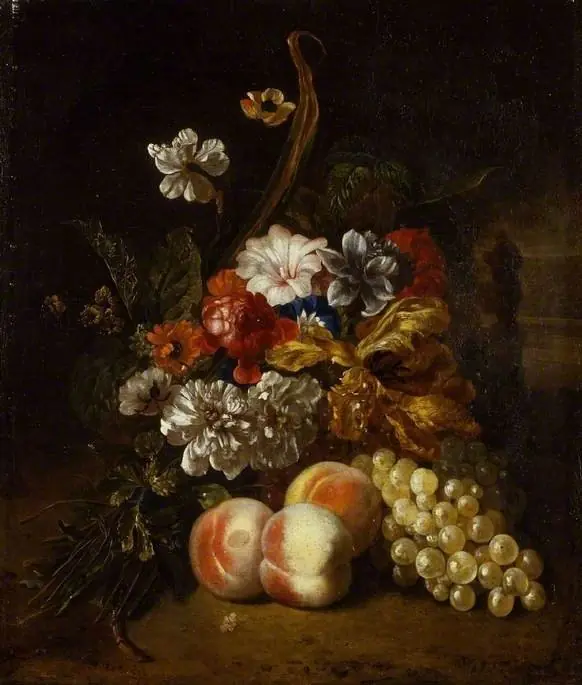
The canvas presents a juxtaposition of delicate flowers and ripe fruit, a common motif that explores themes of transience and abundance. By placing the blooms in an urn, van Leeuwen emphasizes the cultivated elegance of domestic interiors, while the fruit introduces a subtle reminder of nature’s cycles and the fleeting beauty of seasonal harvests.
Technique & Style
Rendered in oil on canvas, the work employs the glazing methods typical of the era, building luminous layers to achieve depth and a refined surface sheen. Van Leeuwen’s handling of light captures the translucency of petals and the glossy texture of fruit skins, while his precise brushwork underscores the meticulous attention to detail characteristic of Dutch still‑life painters.
History & Provenance
Created in 1809, the painting entered the Fitzwilliam Museum’s collection through acquisition in the early twentieth century, though the exact path of ownership prior to that remains undocumented. Its presence in the museum reflects the institution’s broader effort to represent European decorative painting and to preserve examples of early‑nineteenth‑century genre work.
Context
The early 1800s saw a resurgence of interest in domestic still‑life subjects among Dutch artists, who combined traditional compositional rules with contemporary tastes for decorative interiors. Van Leeuwen’s work aligns with this trend, offering a window into the aesthetic preferences of the period, where the careful rendering of botanical and fruit subjects served both decorative and didactic purposes.
Artist & collection