Artwork
Maria Magdalena
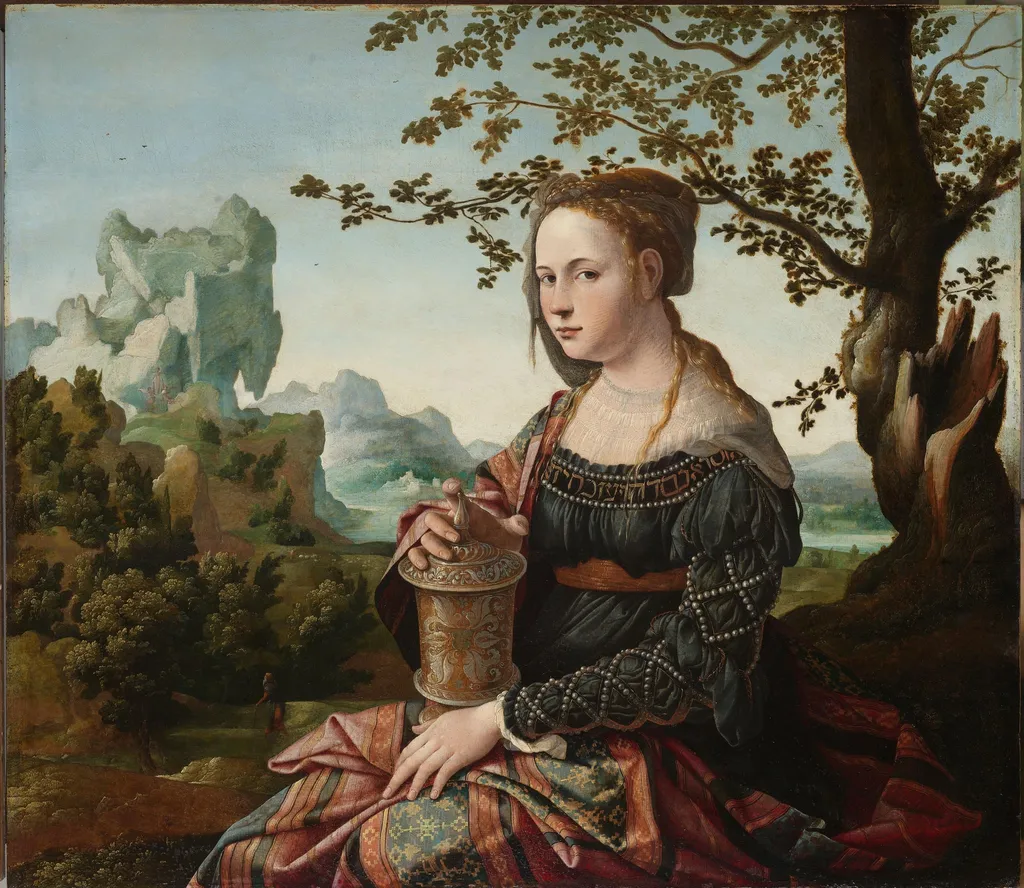
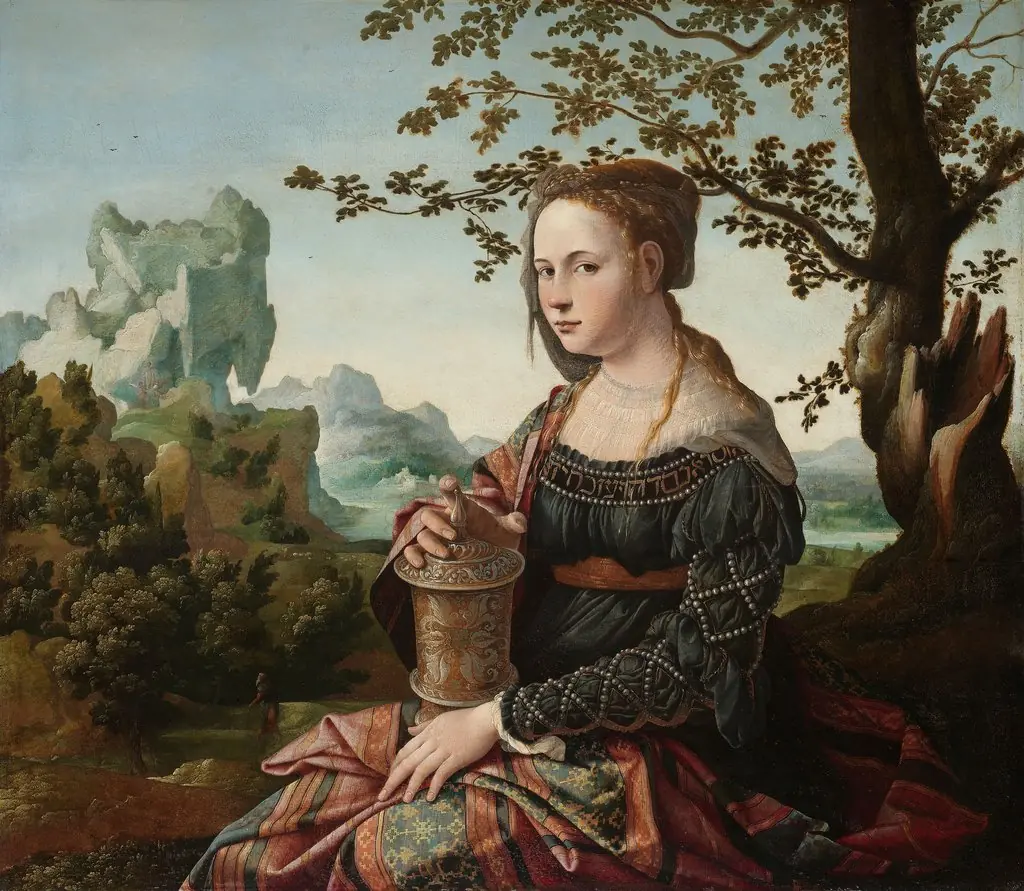
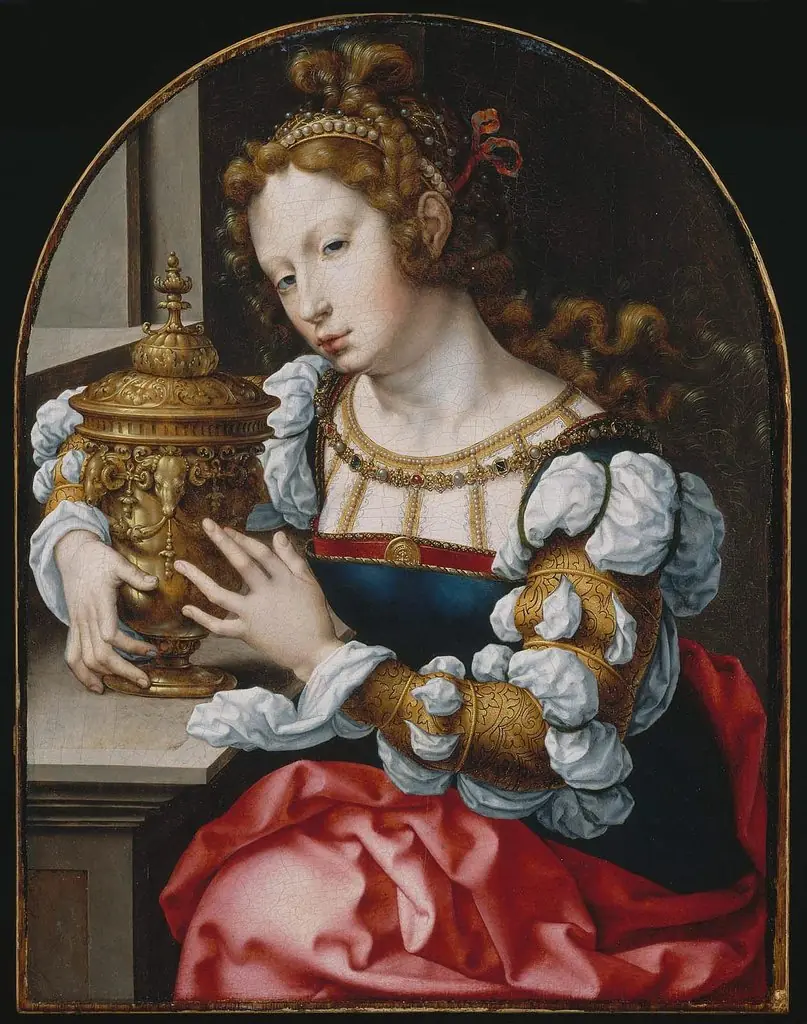
Maria Magdalena is an unspecified painting by the Northern Renaissance artist Jan van Scorel. It dates from 1530 and is held in the collection of the Rijksmuseum.
About this work
Overview
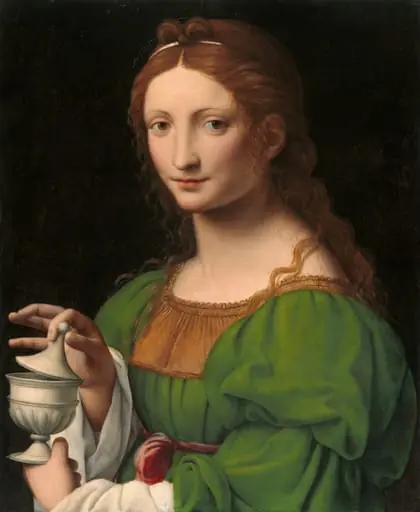
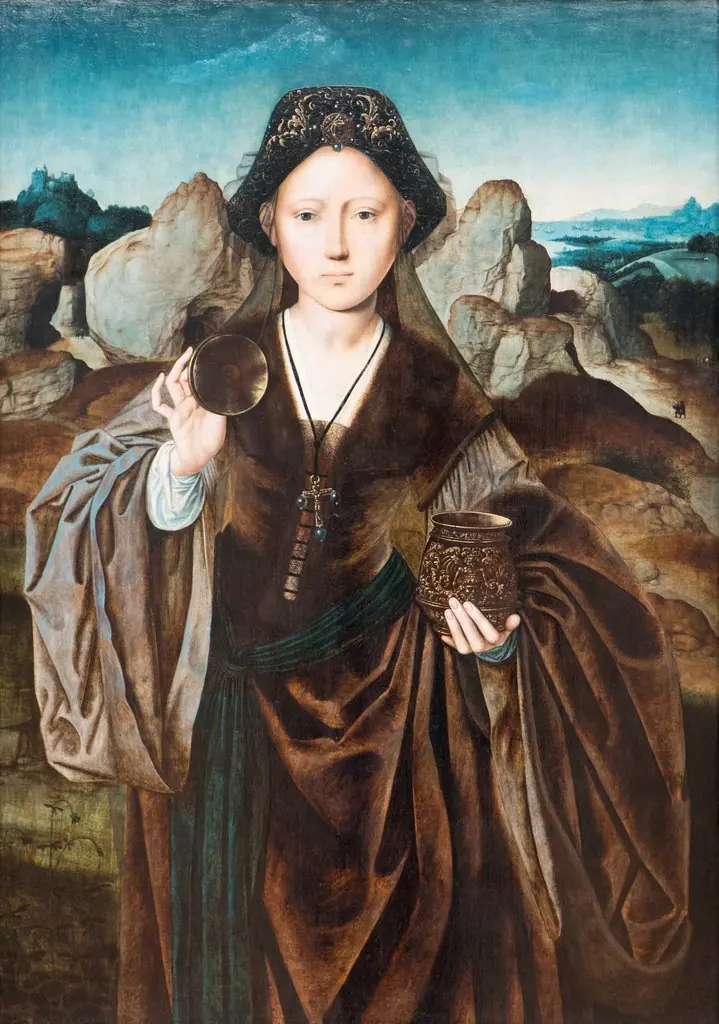
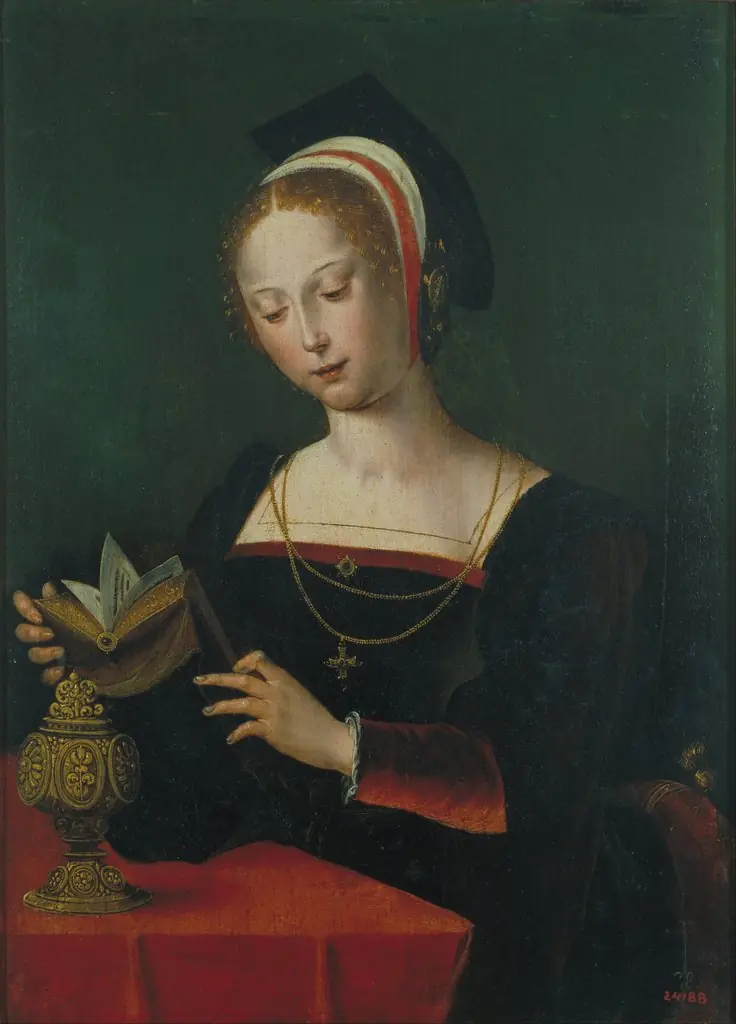
The work entitled *Maria Magdalena* portrays a solitary female figure holding a small vessel. Her loose, flowing hair and the gentle expression suggest a moment of introspection. The composition centers on the woman’s calm demeanor, emphasizing a personal, contemplative atmosphere rather than narrative drama.
Subject & Meaning
The presence of the jar identifies the sitter as Mary Magdalene, recalling the biblical episode in which she anointed Jesus’ feet with ointment after her conversion. While traditional iconography often links her to a former life of prostitution, this rendition opts for a quieter, more reflective interpretation of her penitence and devotion.
Technique & Style
The painting displays soft, gradated modeling of light across the face and drapery, echoing the sfumato technique popularized in Italian Renaissance art. The folds of the garment and the subtle transitions between light and shadow reveal the artist’s familiarity with the visual language encountered in Rome and Venice.
History & Provenance
The work reflects the influence of Dutch painter Jan van Scorel, who absorbed Italian artistic principles during his travels to Rome and Venice in the early sixteenth century. This cross‑cultural exposure informed his approach to clothing and atmospheric effects in the *Maria Magdalena*.
Context
During the period when van Scorel was active, Northern artists increasingly incorporated Italian compositional strategies, merging detailed observation with a softened tonal palette. The painting exemplifies this synthesis, situating a biblical figure within a Northern European aesthetic while borrowing Italian chiaroscuro.
Artist & collection

Artist
Jan van Scorel was a Dutch painter, who played a leading role in introducing aspects of Italian Renaissance painting into Dutch and Flemish Renaissance painting.