Artwork
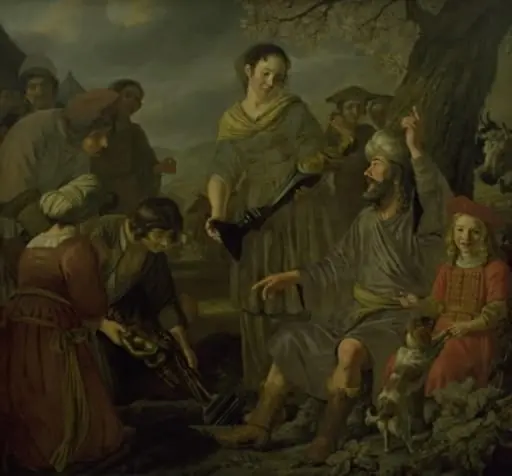
Jacob Burying the Pagan Idols
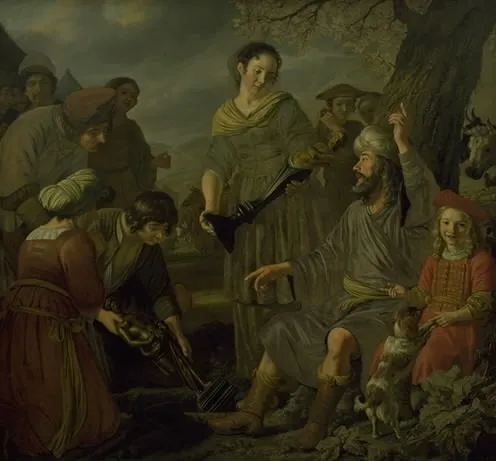
Jacob Burying the Pagan Idols is an oil painting by the Dutch Golden Age artist Jan Victors. It dates from 1655 and is held in the collection of the Statens Museum for Kunst.
About this work
Overview
Painted in 1655 by Dutch artist Jan Victors, this oil-on-canvas work illustrates a moment from the Book of Genesis in which Jacob instructs his household to discard their foreign deities. Part of a series of biblical narratives produced during the Dutch Golden Age, the painting reflects Victors’s commitment to Calvinist principles, avoiding overtly sacred figures and focusing instead on moral and domestic piety.
Subject & Meaning
The scene captures Jacob, seated and holding a staff, addressing his family as they surrender household idols.
The scene captures Jacob, seated and holding a staff, addressing his family as they surrender household idols. The act symbolizes spiritual purification and covenantal loyalty, central themes in Reformed theology. The diverse group—men, women, and children—emphasizes communal responsibility in religious renewal. No divine figures appear; the weight of the moment rests on human choice and collective action.
Technique & Style
Victors employs warm, earth-toned pigments to unify the figures within a naturalistic landscape, enhancing the intimacy of the gathering. Soft modeling of faces and fabrics suggests gentle illumination, likely inspired by Rembrandtesque chiaroscuro, though without dramatic contrasts. The composition directs attention to Jacob’s gesture, while the background hills and trees ground the scene in a quiet, believable world.
History & Provenance
The painting entered the collection of Statens Museum for Kunst in Copenhagen, where it remains today. Its survival and preservation reflect its recognition within Dutch art circles of the 17th century. Though not widely exhibited outside Denmark, it is documented in early inventories as a significant example of Victors’s biblical output, valued for its moral clarity and restrained execution.
Context
In mid-17th-century Holland, religious imagery was shaped by Calvinist doctrine, which discouraged depictions of Christ and angels. Artists like Victors turned to Old Testament stories to convey spiritual lessons without violating theological boundaries. This painting aligns with a broader trend of domesticated biblical narratives, emphasizing personal and familial devotion over grandeur or spectacle.
Legacy
Jan Victors’s approach influenced later Dutch painters who sought to reconcile religious narrative with everyday realism. While not as widely known as his contemporaries, his work contributed to a visual language of quiet piety. *Jacob Burying the Pagan Idols* endures as a testament to how theological conviction could shape composition, tone, and subject matter in a secularizing age.
Artist & collection
Artist
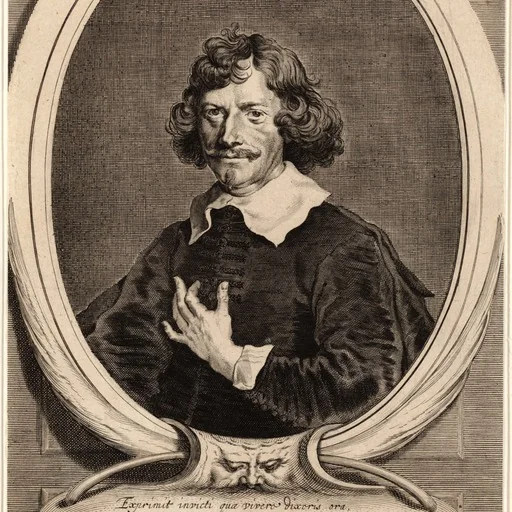
Jan Victors (or Fictor; 1619 – 1676) was a Dutch Golden Age painter mainly of history paintings of Biblical scenes, with some genre scenes.

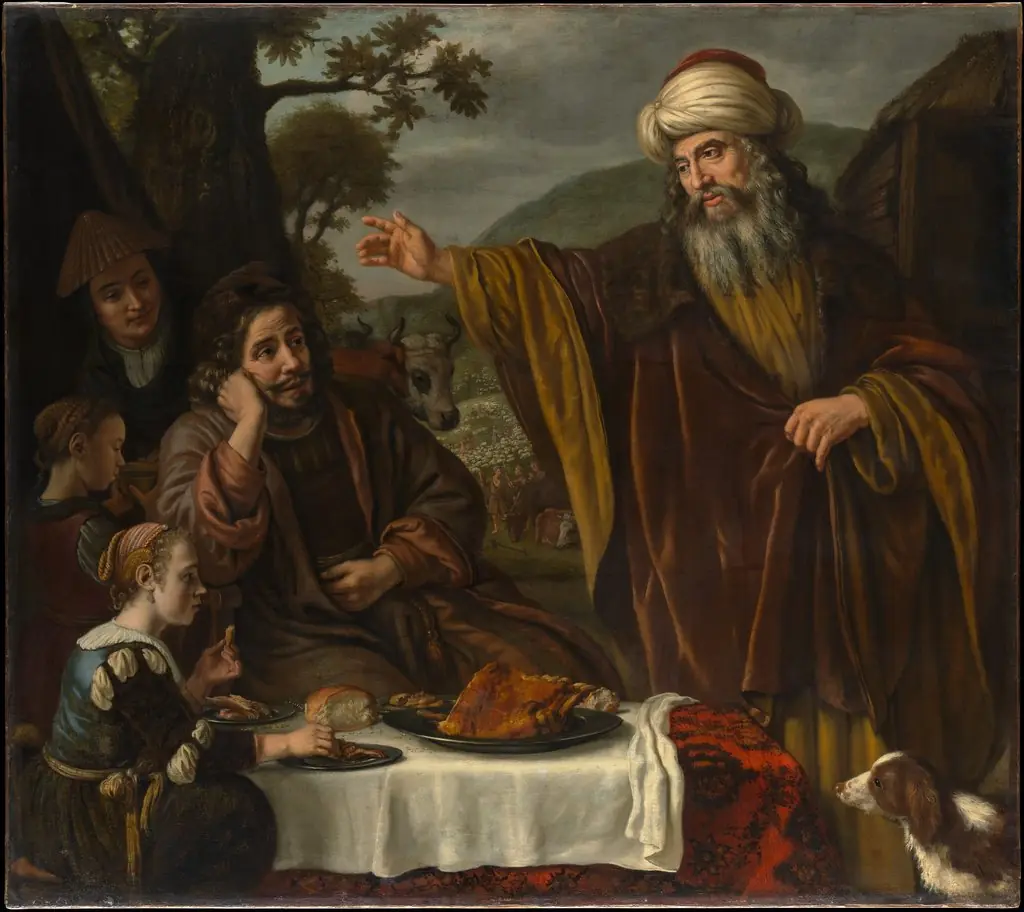
 Boaz and Ruth
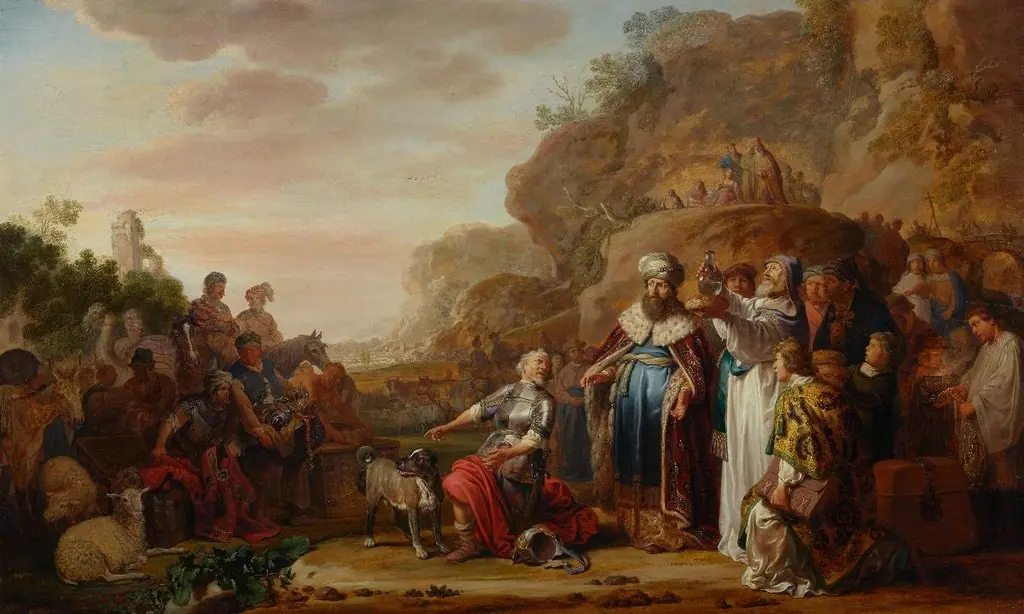 Abraham und Melchisedek
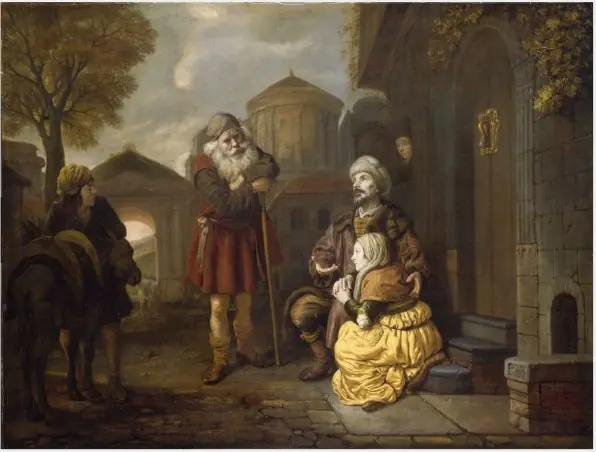 The Levite and his Concubine at Gibeah
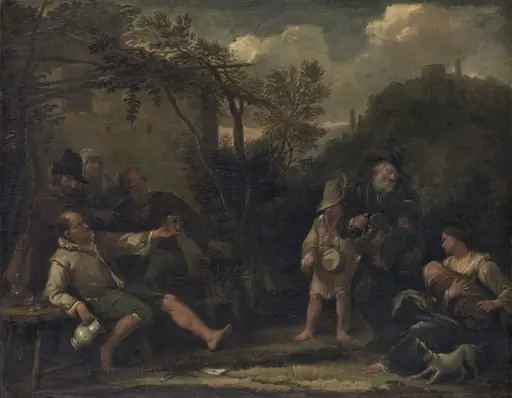 Merry Company
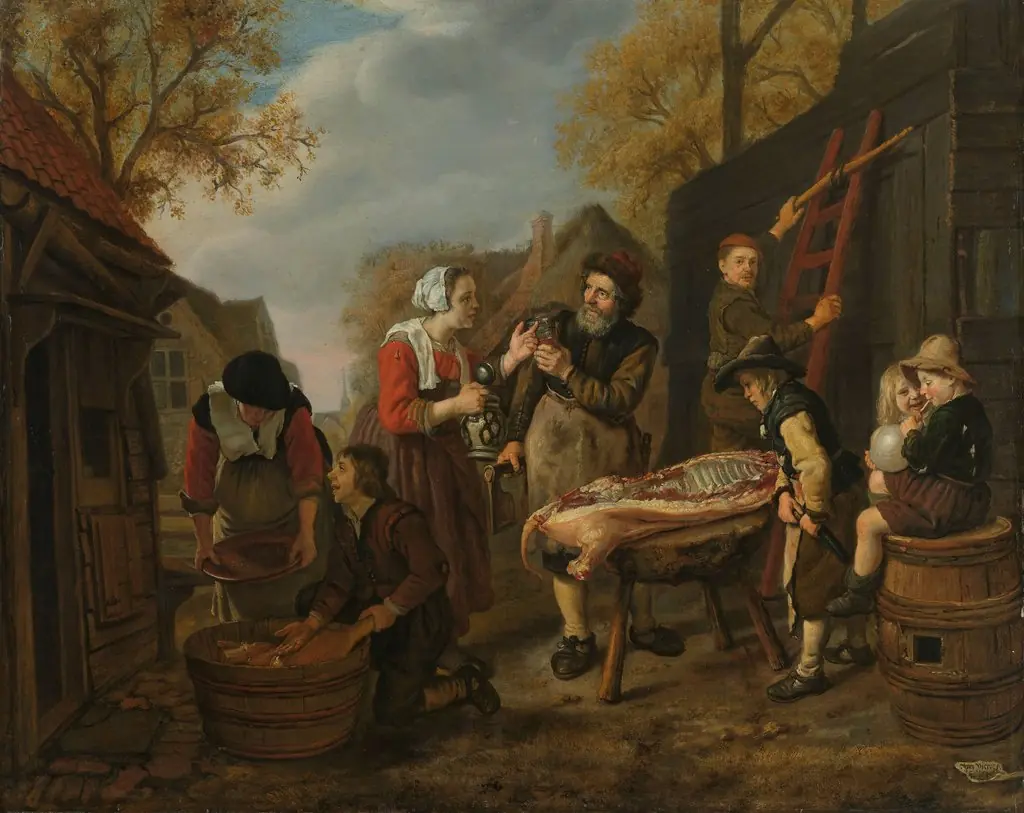
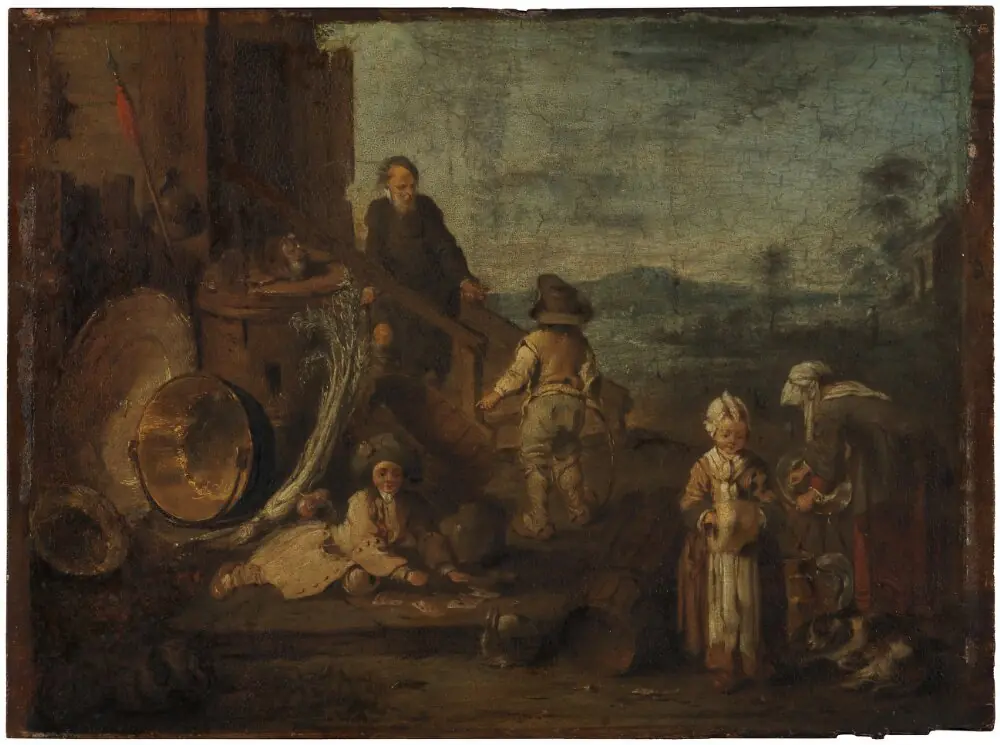 Rural Scene in front of a Peasant's Cottage
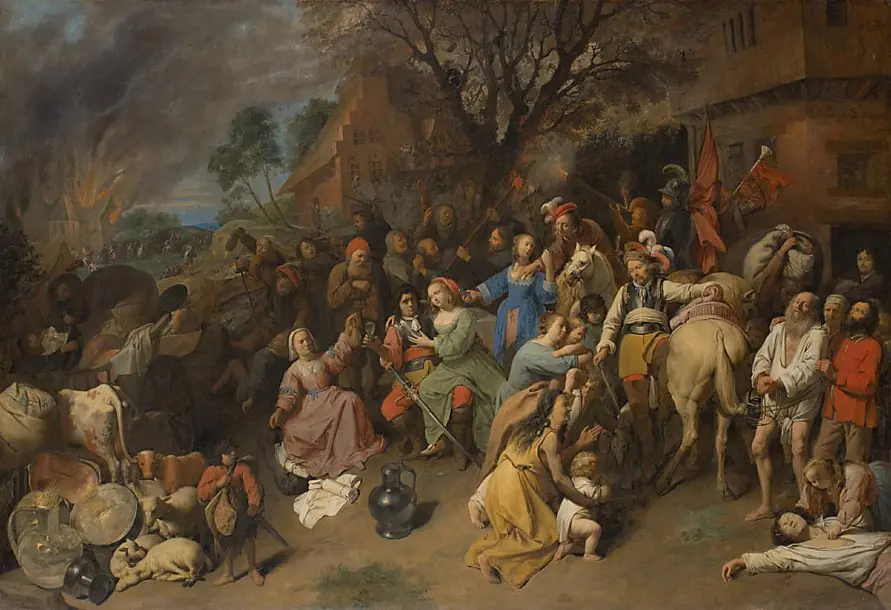 The suffering of the peasants: soldiers plundering a village
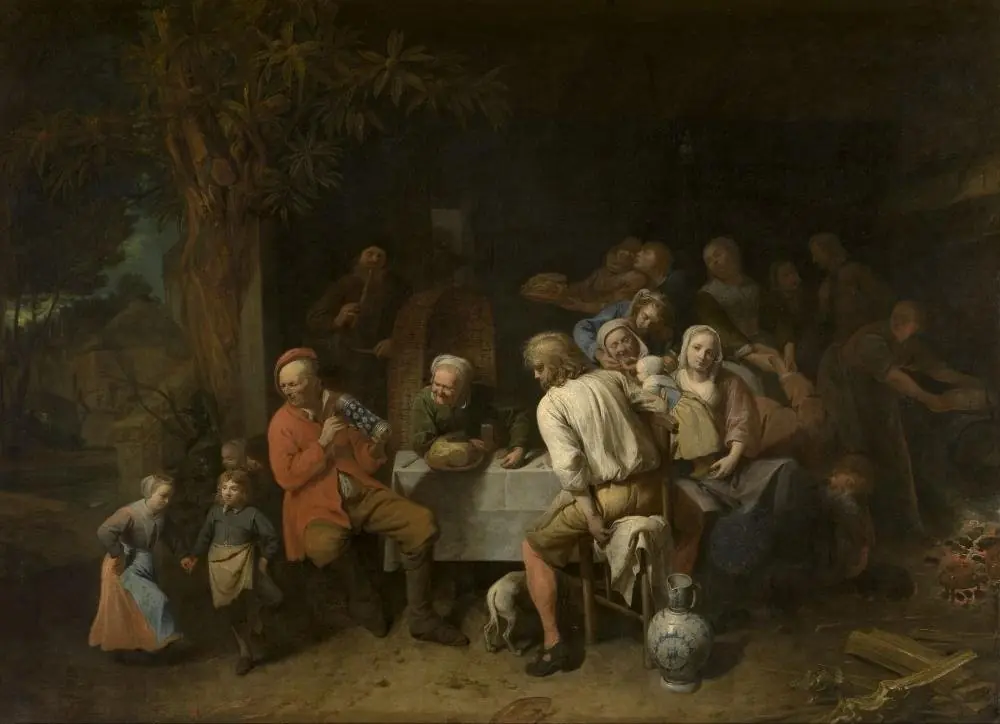 Peasant Meal
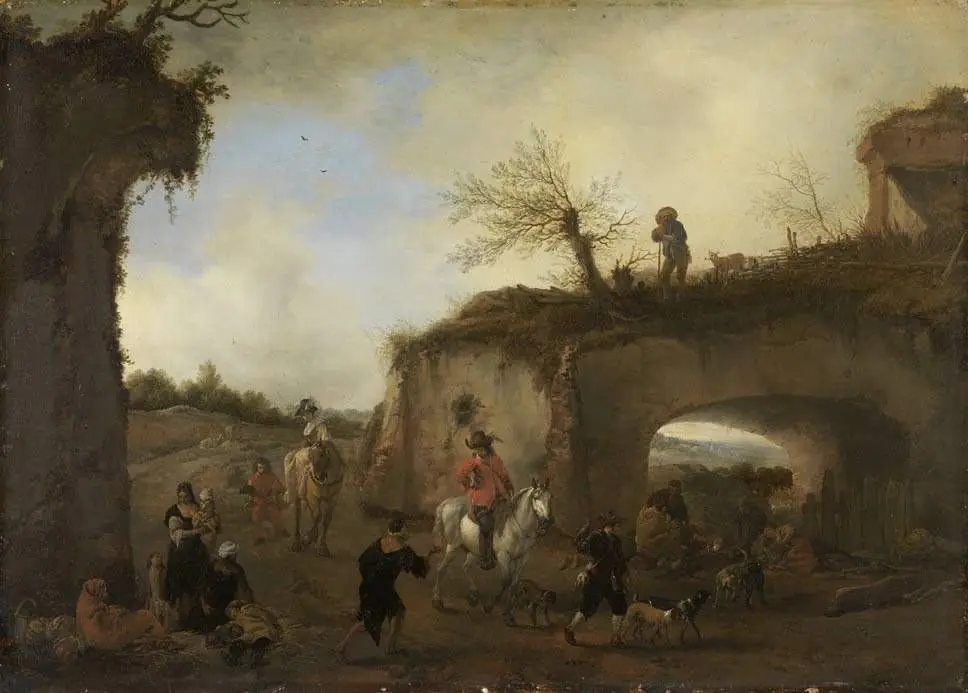 The falconry
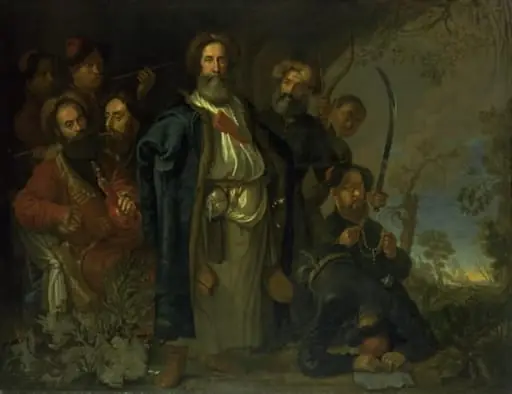 Et tatarisk gesandtskab på besøg i København
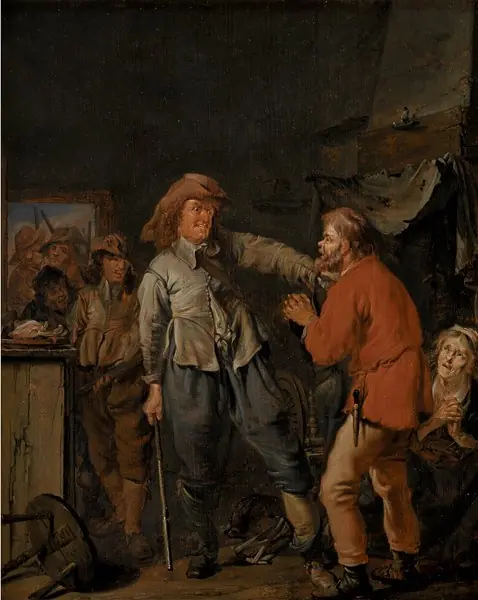 Soldiers Breaking into a Peasant's Cottage
 Jacob Burying the Pagan Idols