Artwork
Zwei Reiter
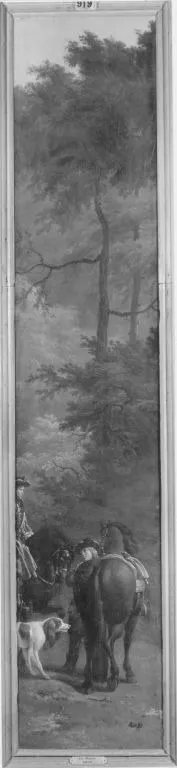
Zwei Reiter is an unspecified painting by the Dutch Golden Age artist Jan Weenix. It dates from 1690 and is held in the collection of the Bavarian State Painting Collections.
About this work
Overview
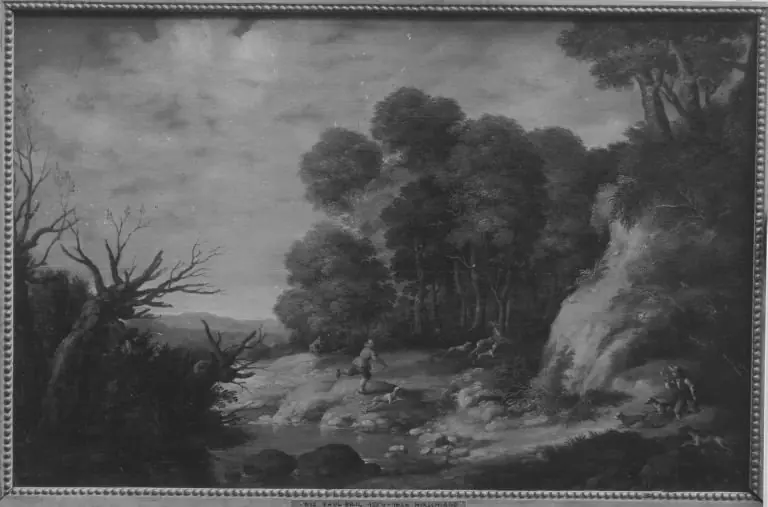
Painted in 1690 by Jan Weenix, *Zwei Reiter* is a quiet equestrian scene from the Dutch Golden Age. Though Weenix is best known for still lifes of hunted game, this work shifts focus to a solitary horse and dog in a natural setting. The painting is held in the Alte Pinakothek, Munich, and exemplifies the period’s interest in restrained, observational realism rather than dramatic narrative.
Subject & Meaning
The composition centers on a horse standing still, turned away from the viewer, with a dog at its side, gazing upward. No human figures are present, and the scene lacks overt action or symbolism. The stillness suggests contemplation or pause, possibly evoking themes of quiet companionship between animal and landscape, consistent with Dutch preferences for understated, everyday moments in nature.
Technique & Style
Weenix employed fine, smooth brushwork to render the horse’s coat, the dog’s fur, and the soft textures of foliage and sky. The palette is subdued, dominated by earthy browns and cool grays, enhancing the painting’s tranquil mood. Light is diffused and even, avoiding strong chiaroscuro; instead, subtle tonal gradations create depth without theatrical contrast.
History & Provenance
The painting entered the Alte Pinakothek’s collection in the 19th century, following the broader acquisition of Dutch Golden Age works by Bavarian collectors.
The painting entered the Alte Pinakothek’s collection in the 19th century, following the broader acquisition of Dutch Golden Age works by Bavarian collectors. Previously, some of Weenix’s paintings were misattributed to his father, Jan Baptist Weenix, due to stylistic similarities. Scholarly reevaluation in the 20th century clarified authorship, affirming *Zwei Reiter* as a mature work from Jan Weenix’s later period.
Context
During the late 17th century, Dutch painters increasingly turned from grand historical or religious themes to intimate natural scenes. Weenix’s shift from game still lifes to tranquil landscapes reflects this broader trend. His work resonated with urban patrons who valued serene, meticulously observed depictions of the rural world, even as the Dutch Republic’s economic power began to wane.
Legacy
Though less celebrated than his still lifes, *Zwei Reiter* illustrates Weenix’s versatility and his role in expanding the boundaries of Dutch genre painting. The work contributes to a quieter strand of 17th-century art that prioritized atmosphere over drama. Its preservation in a major European museum underscores its significance as a representative example of refined, contemplative landscape painting from the era.
Artist & collection
Artist
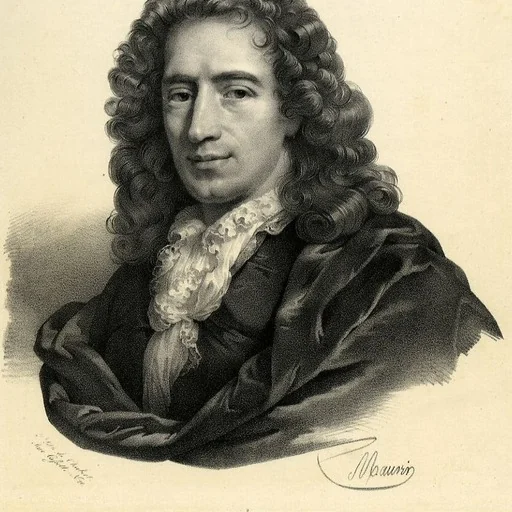
Jan Weenix or Joannis Wenix (between 1641/1649 – 19 September 1719 (buried)) was a Dutch painter.

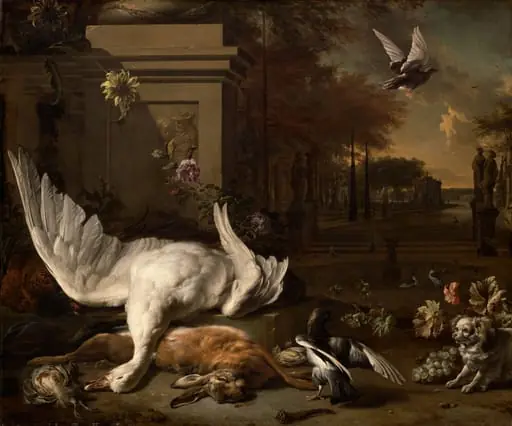 Still Life with Goose and Game before a Country Estate
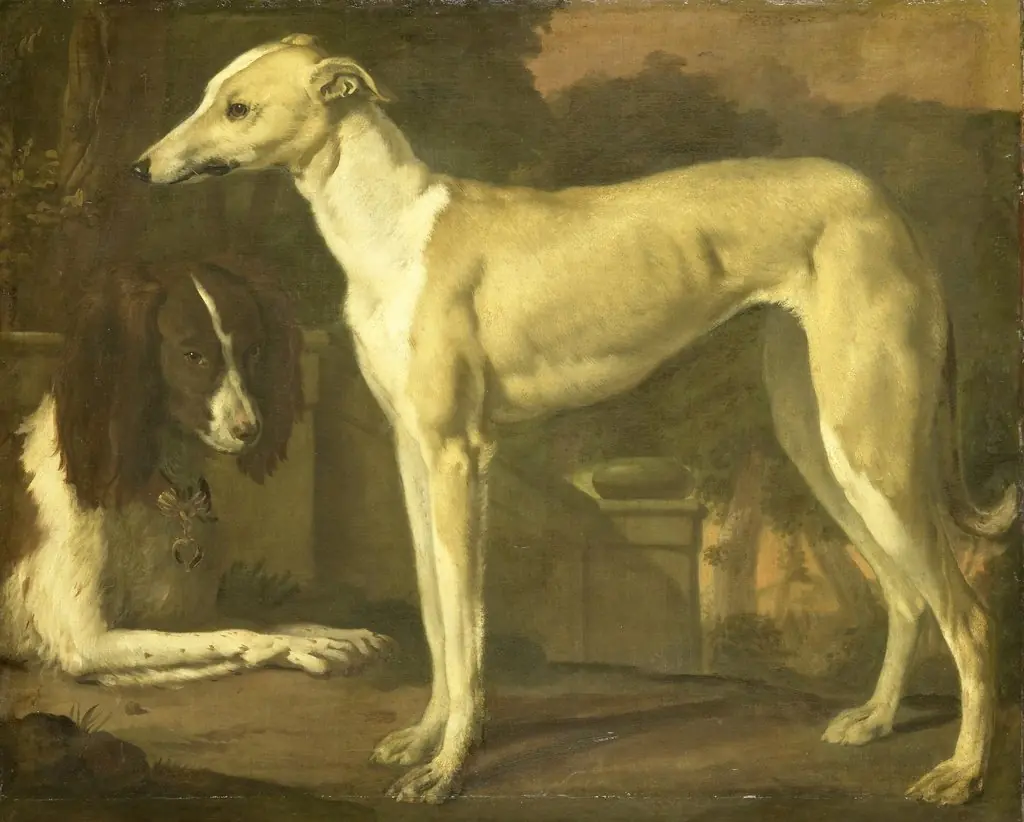 Portrait of a greyhound and a spaniel
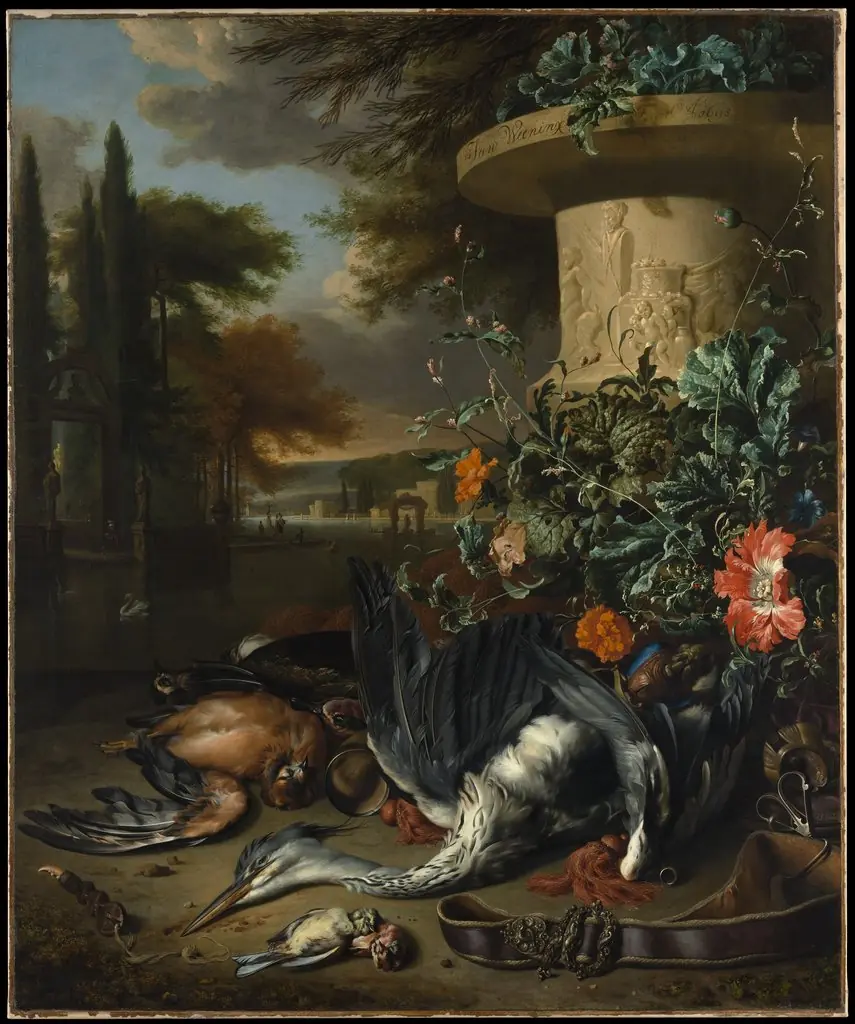 Gamepiece with a Dead Heron ("Falconer's Bag")
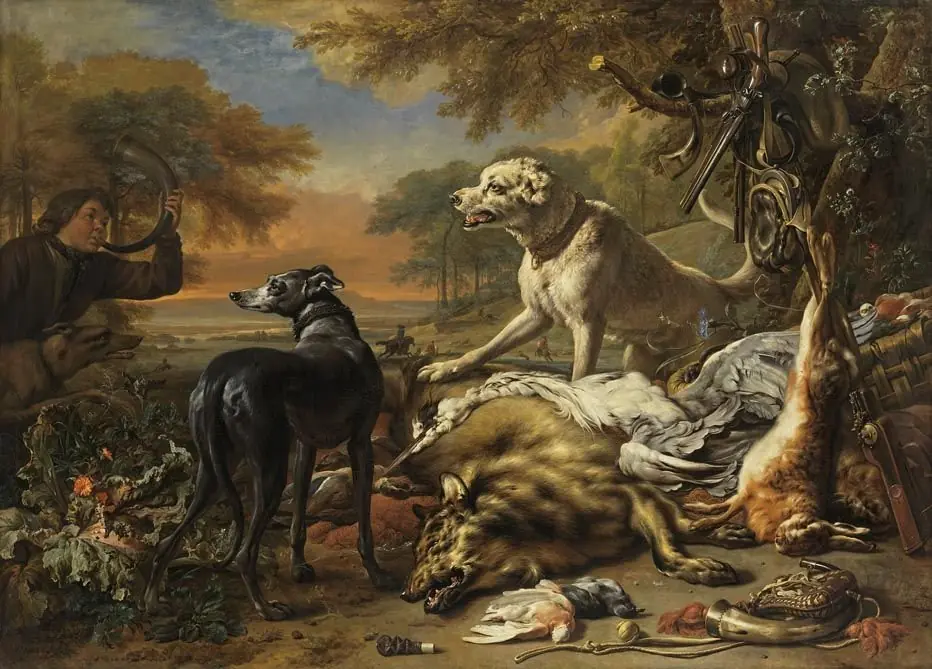 Hunting still life with wolf
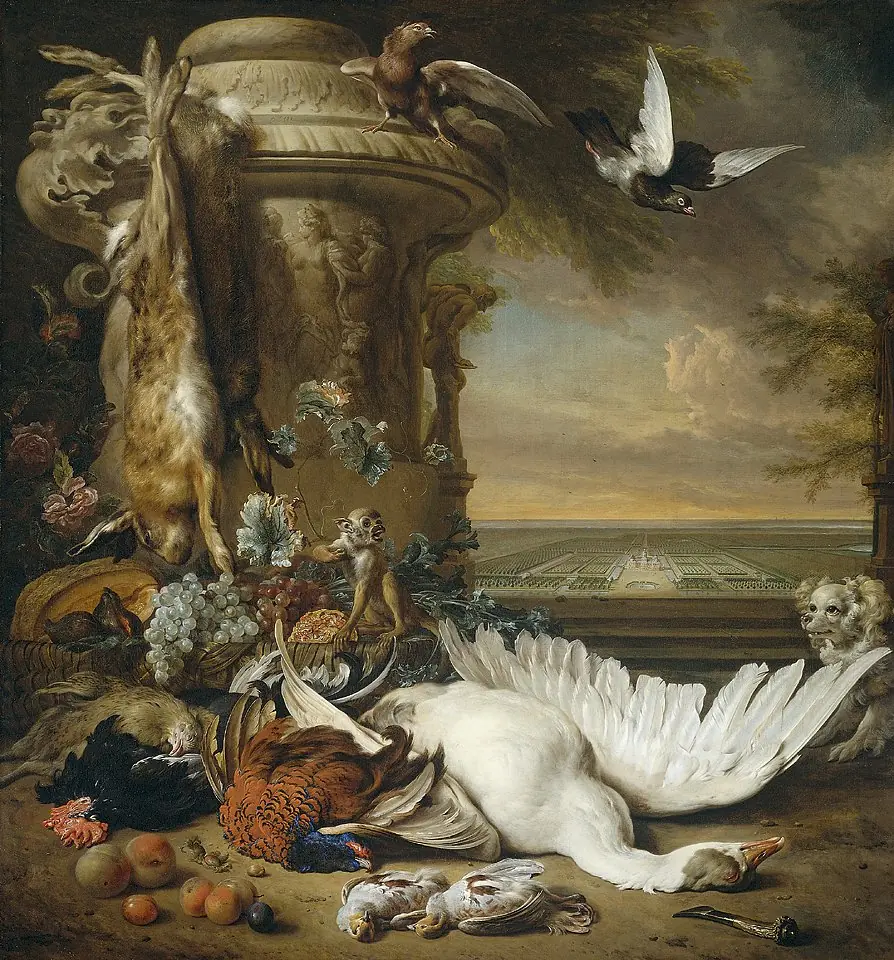 Still Life with Dead Game and Fruit beside a Garden Vase, with a Monkey, a Dog and Two Pigeons; in the Background Rijksdorp near Wassenaar, the Estate of Jonkheer Jacob Emmery, Baron of Wassenaar
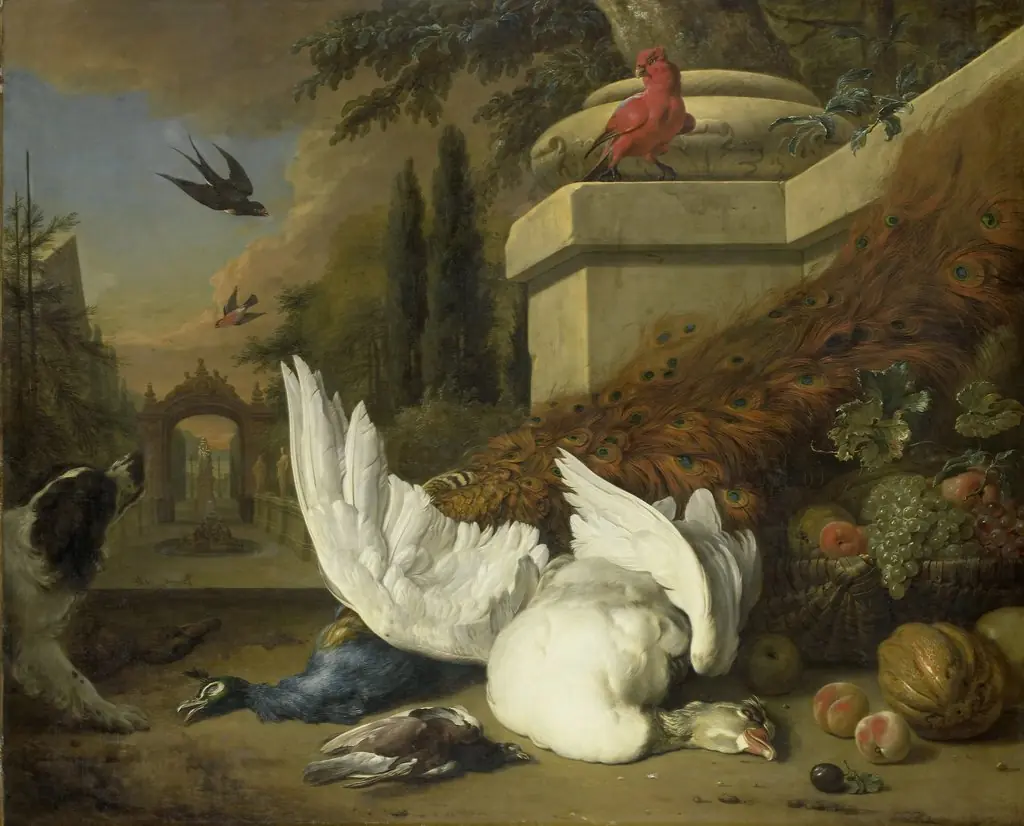 A monkey and a dog beside dead game and fruits, with the estate of Rijxdorp near Wassenaar in the background
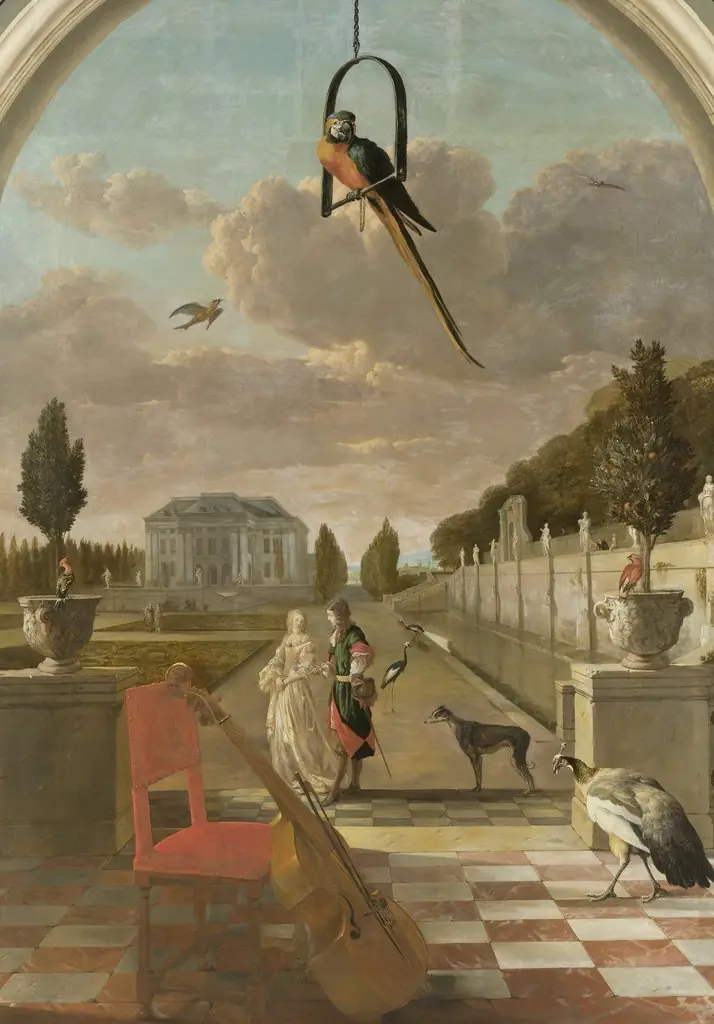 Park with country home
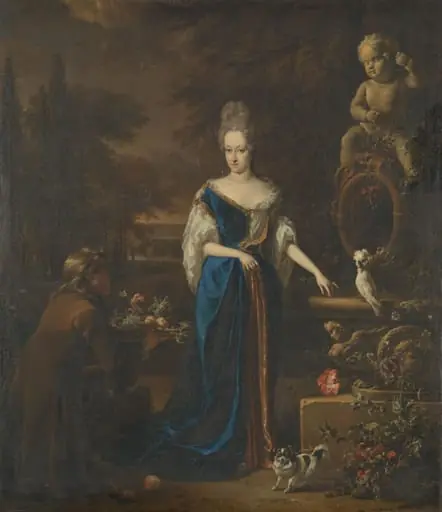 Portrait of Maria Cornelisz, Wife of Silvester van Tongeren