Artwork
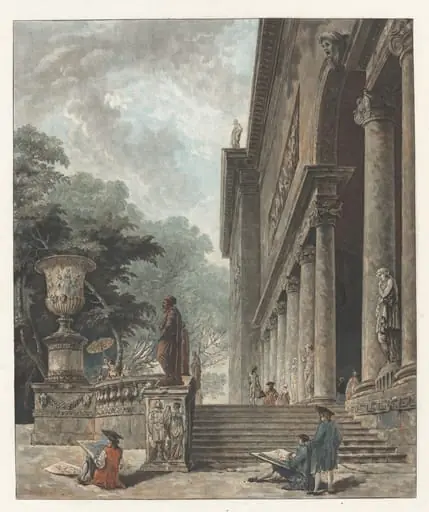
Colonade et Jardins du Palais Medicis (Colonnade and Gardens of the Medici Palace)
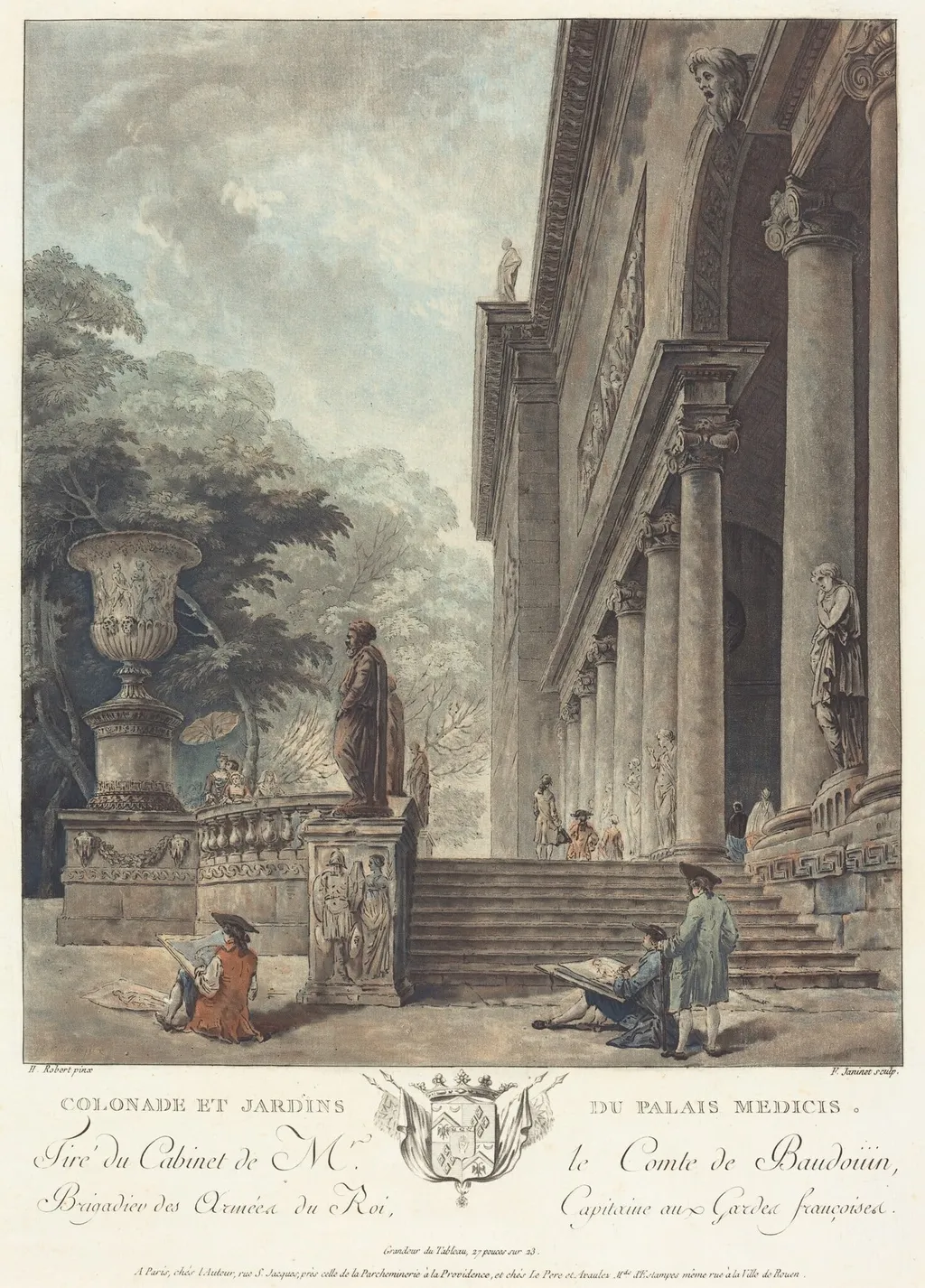
Colonade et Jardins du Palais Medicis (Colonnade and Gardens of the Medici Palace) is an ink print by the Romanticist artist Jean-François Janinet. It dates from 1776 and is held in the collection of the National Gallery of Art. This print, dated around 1776, depicts the colonnaded courtyard and gardens of the Palazzo Medici in Florence.
About this work
Overview
The composition balances architectural grandeur with human activity, presenting a scene that merges classical design with contemporary observation.
This print, dated around 1776, depicts the colonnaded courtyard and gardens of the Palazzo Medici in Florence. Created by Jean-François Janinet, it employs a multi-plate etching technique, combining yellow, blue, red, and black inks on pale green paper. The composition balances architectural grandeur with human activity, presenting a scene that merges classical design with contemporary observation.
Subject & Meaning
The image portrays the Medici Palace’s colonnaded courtyard, a symbol of Renaissance architectural ambition. Figures in period attire populate the scene, lending scale and narrative to the structured environment. While the title identifies the location, the inclusion of human elements suggests a meditation on the relationship between power, art, and daily life within such spaces.
Technique & Style
Janinet’s print employs the *à la poupée* method, a labor-intensive process involving selective inking of a single plate to achieve multiple colors. The sharp, etched lines and layered hues create a tonal richness, approximating the effects of both drawing and painting. This technique reflects the 18th-century fascination with replicating the vibrancy of oil paintings through printmaking.
History & Provenance
Produced in Paris around 1776, the print reflects the era’s interest in Italian Renaissance architecture. Though titled after the Palazzo Medici, the depicted elements may blend idealized motifs with artistic license. Its survival in collections underscores its role as both a decorative work and a technical demonstration of color printing innovations.
Context
The late 18th century saw a revival of classical forms in European art, fueled by Grand Tour travel and antiquarian studies. Janinet’s print participates in this trend, offering viewers a vision of Italian grandeur filtered through French printmaking traditions. The work aligns with contemporaneous efforts to elevate prints from reproductive tools to independent artistic expressions.
Legacy
Janinet’s print exemplifies the period’s experimentation with color etching, influencing later printmakers. Its depiction of the Medici Palace contributed to the enduring visual canon of Renaissance architecture. Today, it serves as a document of 18th-century artistic techniques and the cross-cultural exchange between Italian heritage and French innovation.
Artist & collection


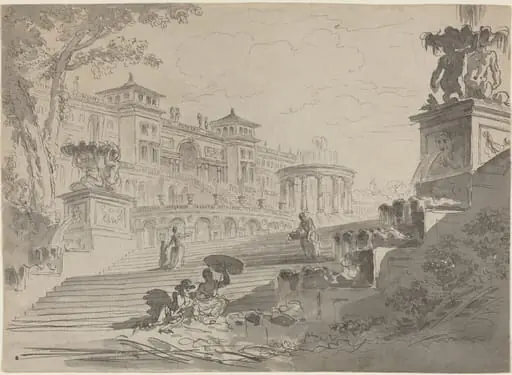 Fantasy on the Villa Medici with Fountains
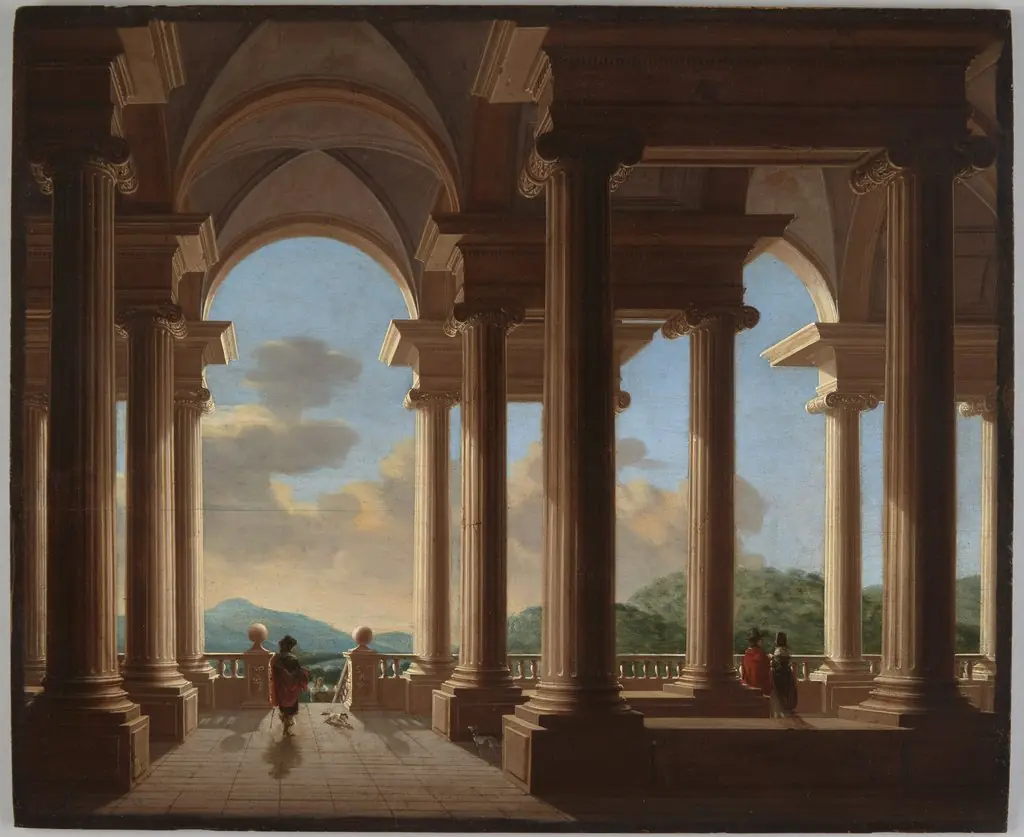 Terrace with a Colonnade
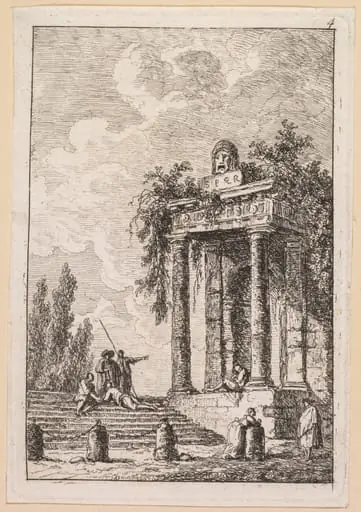 Les Soirées de Rome: L'Escalier aux quatre bornes
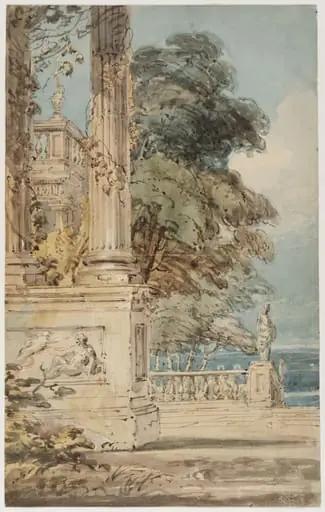 A Garden Terrace
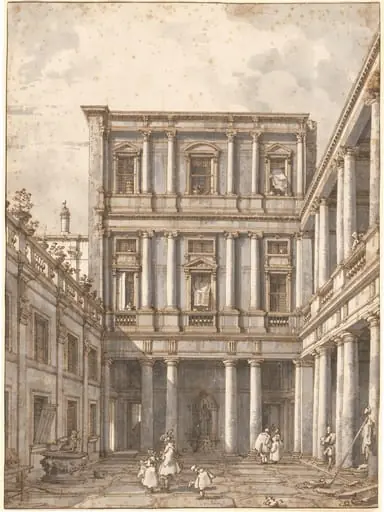 A Venetian Courtyard, in the Procuratie Nuove
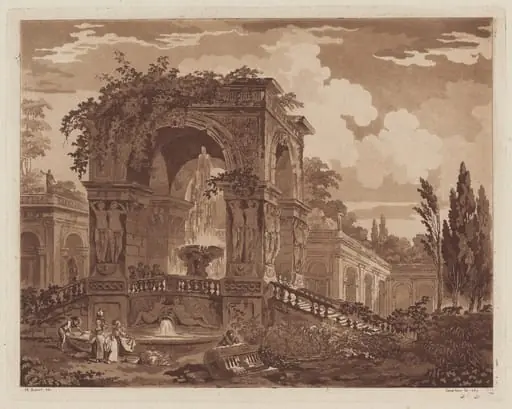 View of an Antique Fountain
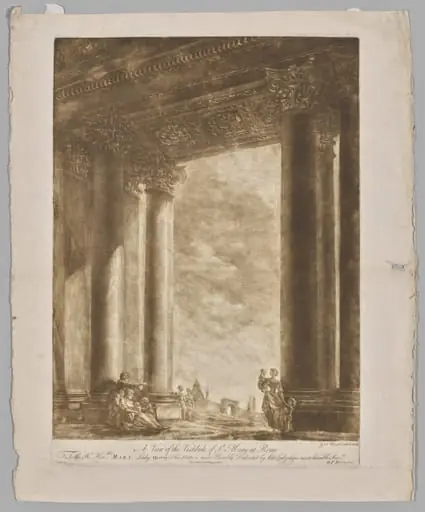 A View of the Vestibule of Saint Mary at Rome
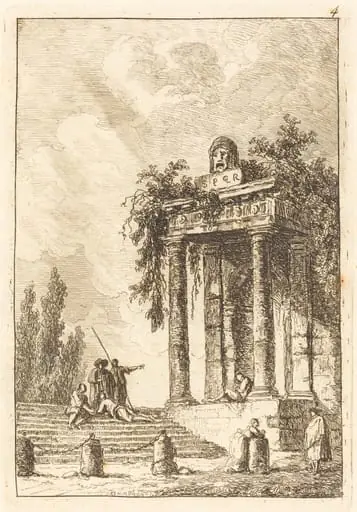 Steps to the Four Landmarks
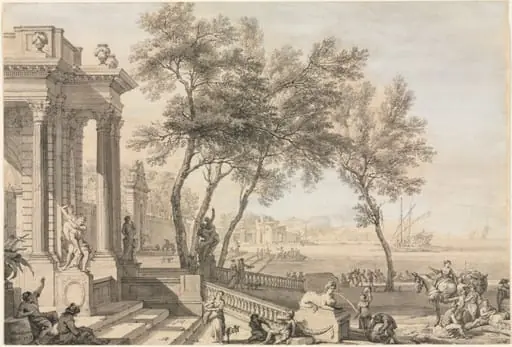 Fantastic Harbor Scene with Architecture and Figures
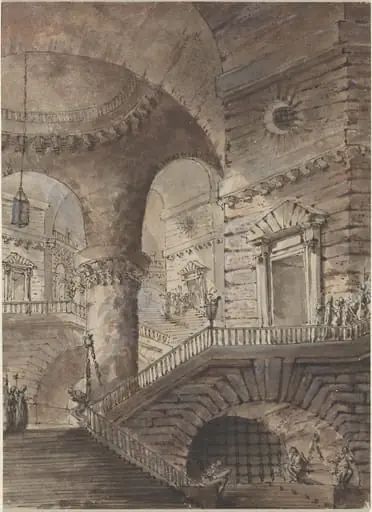 Roman Prison
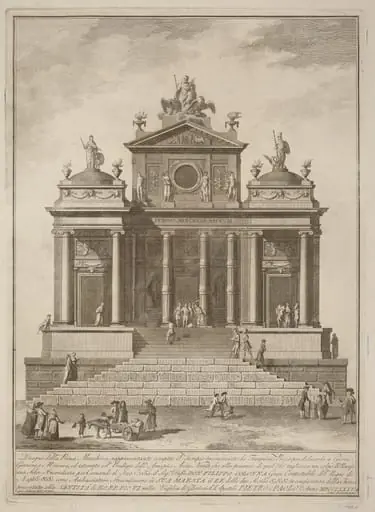 The Prima Macchina for the Chinea of 1785: The Temple of Jupiter Begun by Tarquinius Priscus with the Marvel of Accius Naevius
 Colonnade et Jardins du Palais de Medici (Colonnade and Gardens of the Palazzo Medici)