Artwork
The Prima Macchina for the Chinea of 1785: The Temple of Jupiter Begun by Tarquinius Priscus with the Marvel of Accius Naevius
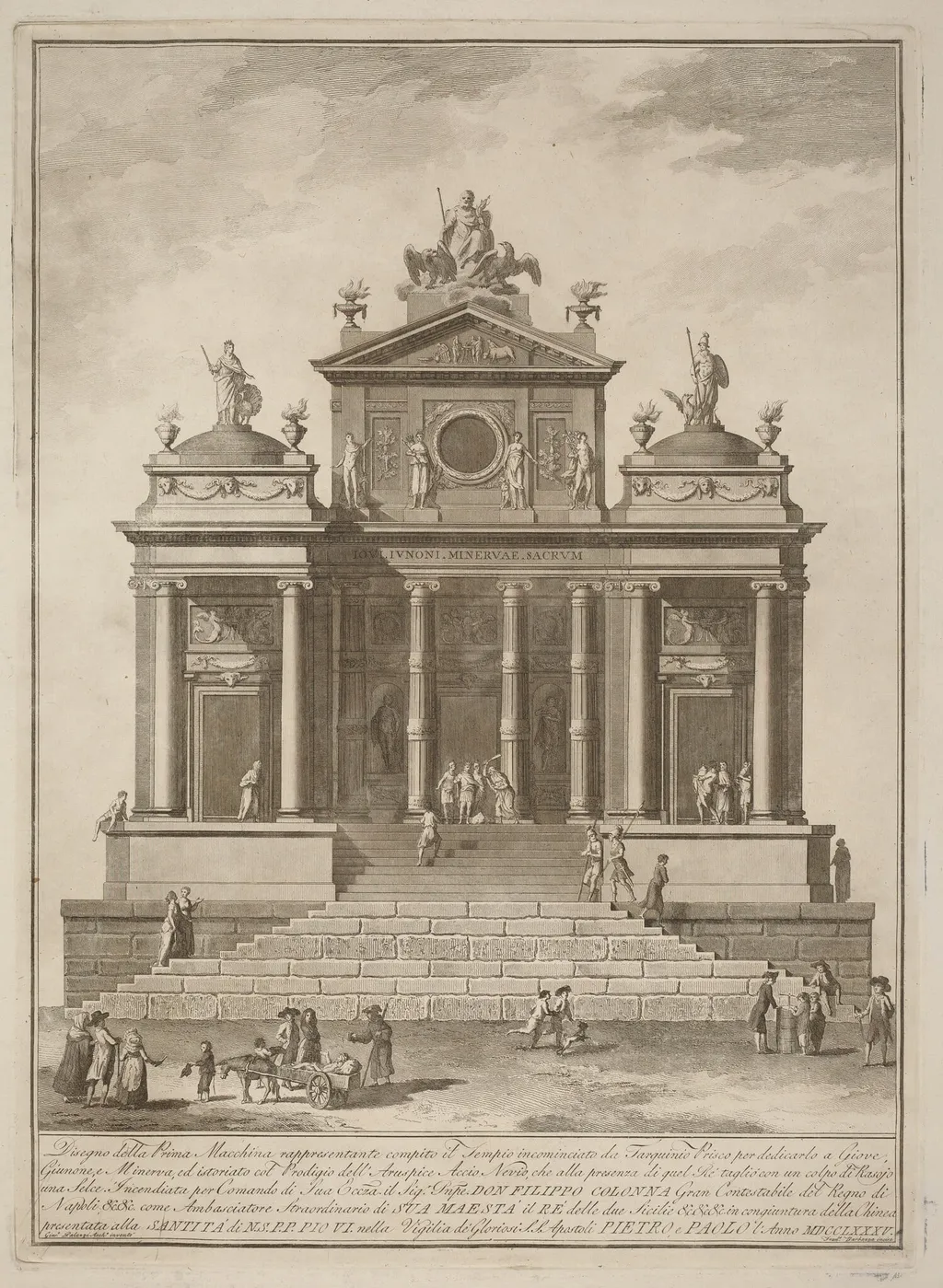
The Prima Macchina for the Chinea of 1785: The Temple of Jupiter Begun by Tarquinius Priscus with the Marvel of Accius Naevius is an ink print by the Romanticist artist Francesco Barbazza. It dates from 1785 and is held in the collection of the National Gallery of Art.
About this work
Overview
Created in 1785 by Francesco Barbazza, this etching documents a temporary architectural spectacle commissioned for the annual Chinea procession in Naples.
Created in 1785 by Francesco Barbazza, this etching documents a temporary architectural spectacle commissioned for the annual Chinea procession in Naples. It depicts a fictionalized reconstruction of the Temple of Jupiter, attributed by legend to King Tarquinius Priscus, designed as a theatrical centerpiece for a religious tribute to the Virgin Mary. The work belongs to a tradition of ephemeral pageantry, rendered in fine detail to preserve the fleeting event for posterity.
Subject & Meaning
The scene portrays an imagined ancient temple, adorned with columns, statues, and elaborate ornamentation, symbolizing both Roman imperial grandeur and sacred devotion. The gathering figures around it reflect the civic and religious participation central to the Chinea ceremony, where Naples honored the Virgin with offerings. The inclusion of Accius Naevius, a legendary Roman architect, ties the structure to mythic origins, blending historical memory with devotional spectacle.
Technique & Style
Barbazza employed fine-line etching on laid paper to capture intricate architectural details and atmospheric depth. The composition emphasizes verticality and symmetry, with precise rendering of columns, pediments, and sculptural elements. Delicate hatching suggests light and shadow, while the small human figures provide scale and narrative context without dominating the monumental structure. The style reflects the precision of 18th-century topographical printmaking.
History & Provenance
The print was produced as part of a series documenting the 1785 Chinea procession, a longstanding Neapolitan tradition involving elaborate temporary structures. Barbazza, a local artist and engraver, was commissioned to record the event for aristocratic and ecclesiastical patrons. The etching likely circulated among collectors and institutions interested in ceremonial culture, preserving a structure that was dismantled shortly after the procession.
Context
The Chinea was an annual tribute paid by Naples to the Vatican, marked by processions featuring temporary architectural displays. In 1785, the theme centered on Roman antiquity, drawing on classical myths to reinforce the city’s cultural prestige. Barbazza’s etching aligns with broader Enlightenment-era interests in archaeology and historical reconstruction, even as it served a devotional purpose rooted in local religious practice.
Legacy
Barbazza’s etching remains a key visual record of 18th-century Neapolitan ceremonial culture. While the physical structure it depicts no longer exists, the print offers insight into how myth, religion, and architecture converged in public ritual. It contributes to the study of ephemeral art and the role of printmaking in documenting civic life, rather than serving as a standalone artistic innovation.
Artist & collection


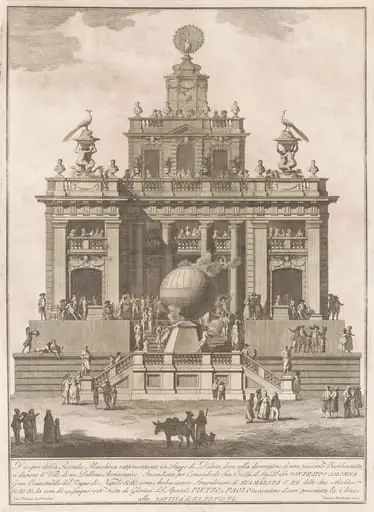 The Seconda Macchina for the Chinea of 1785: A Pleasure Palace with an Air Balloon
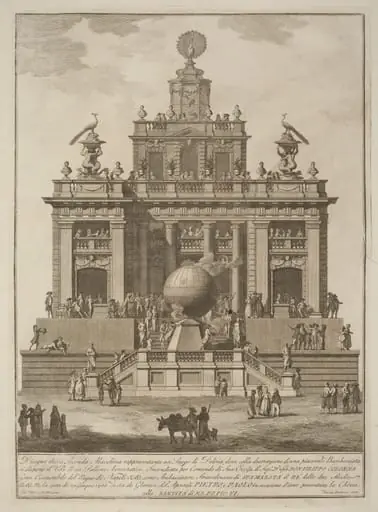 The Seconda Macchina for the Chinea of 1785: A Pleasure Palace with an Air Balloon
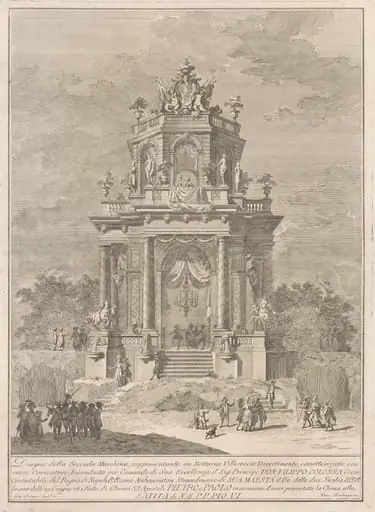 The Seconda Macchina for the Chinea of 1782: A Countryside Festival at Night
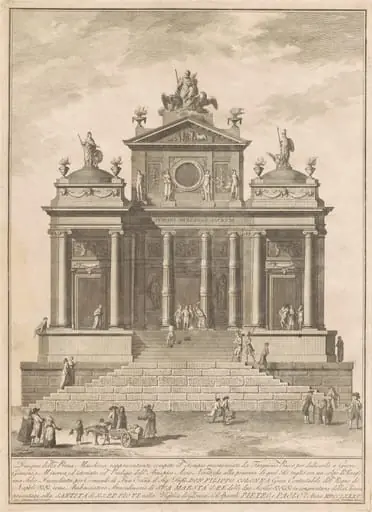 The Prima Macchina for the Chinea of 1785: The Temple of Jupiter Begun by Tarquinius Priscus with the Marvel of Accius Naevius
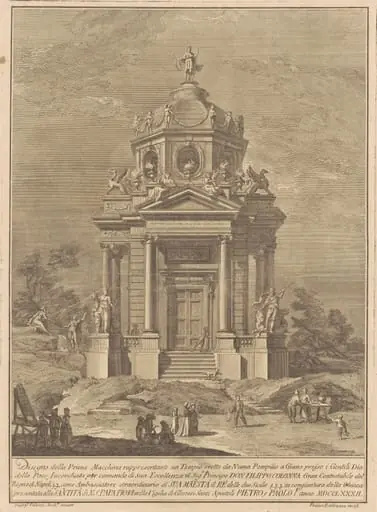 The Prima Macchina for the Chinea of 1782: The Temple of Janus Built by Numa Pompilius
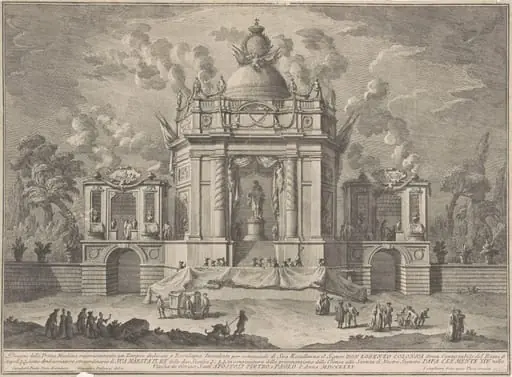 The Prima Macchina for the Chinea of 1771: The Temple of Asclepius
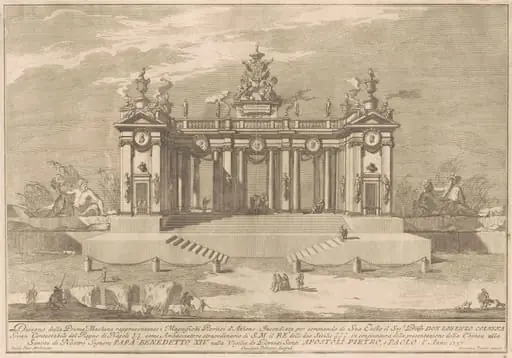 The Prima Macchina for the Chinea of 1757: The Colonnade of the Athenian Lyceum
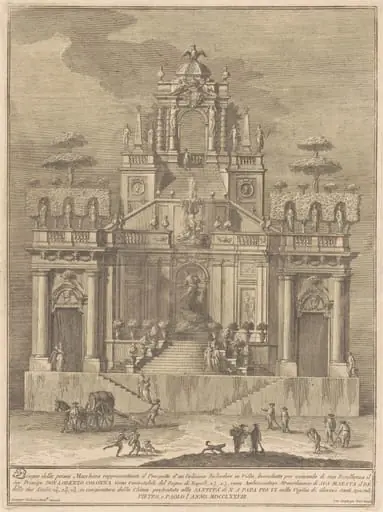 The Prima Macchina for the Chinea of 1778: A Countryside Belevedere with Hercules and Antaeus
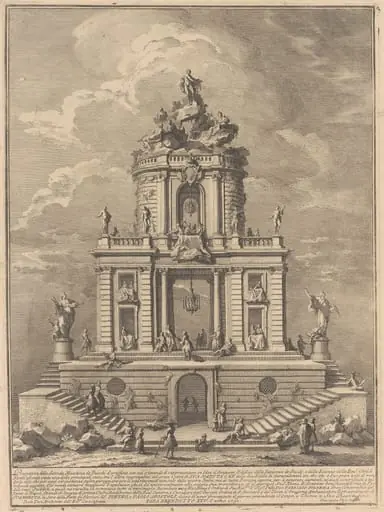 The Seconda Macchina for the Chinea of 1751: The Palace of Wisdom, Studies, and the Sciences
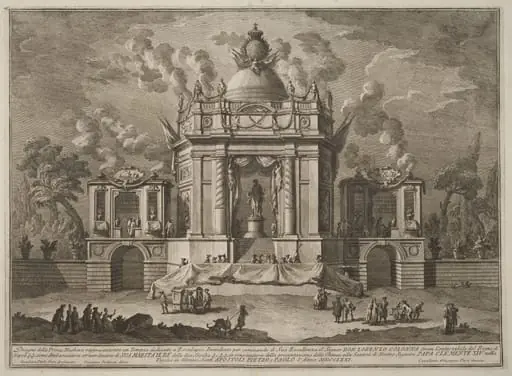 The Prima Macchina for the Chinea of 1771: The Temple of Asclepius
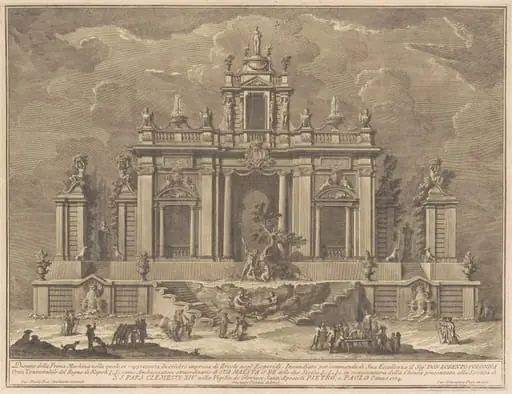 The Prima Macchina for the Chinea of 1774: Hercules and the Dragon in the Garden of the Hesperides
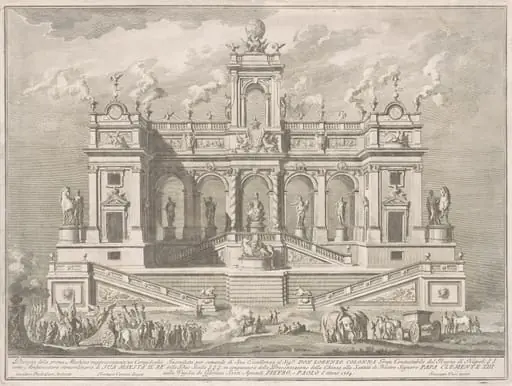 The Prima Macchina for the Chinea of 1764: A Capitol Building
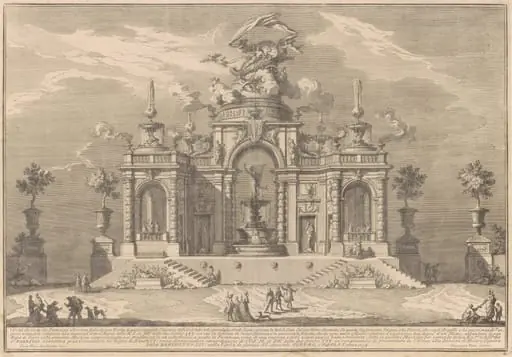 The Prima Macchina for the Chinea of 1754: The Palace of Venus in Cyprus
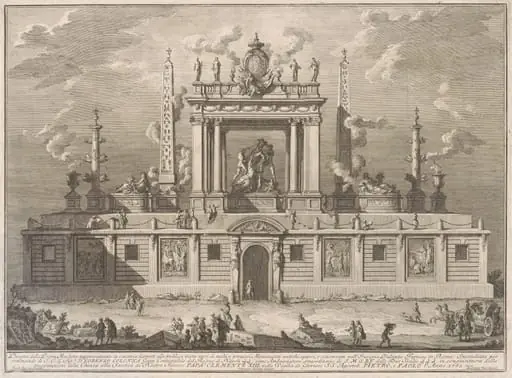 The Prima Macchina for the Chinea of 1762: The Farnese Bull and Other Antiquities from Palazzo Farnese