Artwork
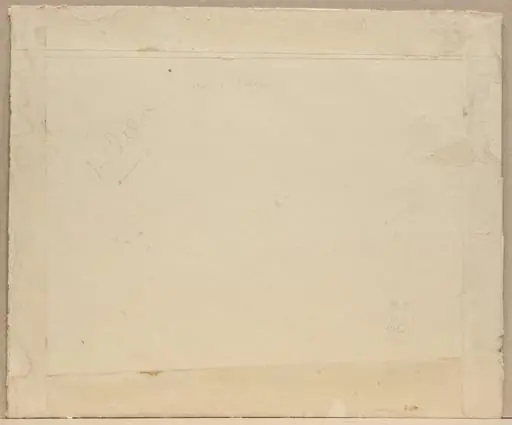
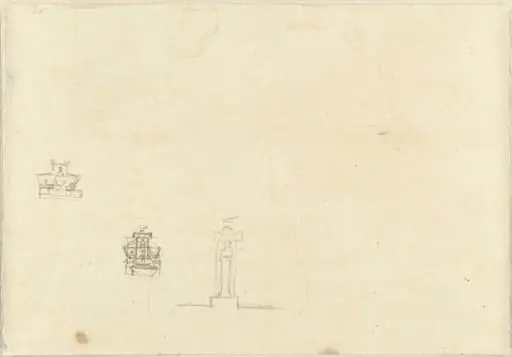
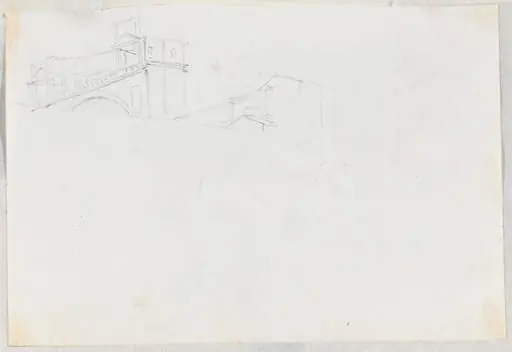
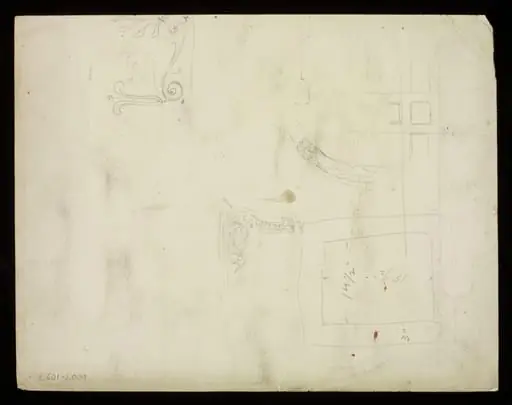
Sketch for a Landscape (verso)
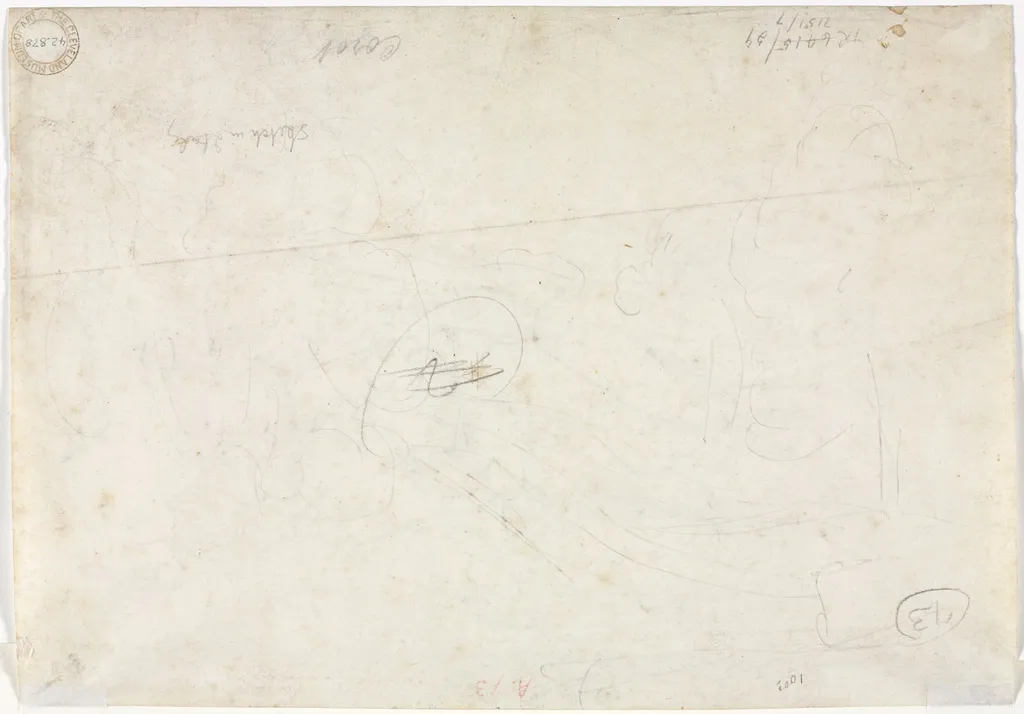
Sketch for a Landscape (verso) is a drawing by the Romanticist artist Jean Baptiste Camille Corot. It dates from 1827 and is held in the collection of the Cleveland Museum of Art. Created in 1827, this drawing by Jean-Baptiste-Camille Corot is a preparatory study for a landscape composition.
About this work
If you're interested in learning more about the artist behind this sketch, you might want to look up Jean Baptiste Camille Corot.
This painting is a sketch for a landscape, created by Jean Baptiste Camille Corot in 1827. The medium used is unknown. The work is part of the Romanticism movement and is held at The Cleveland Museum of Art.
The image is a simple pencil drawing on a piece of paper, with some faint writing and scribbles in the background. The main focus of the sketch is a landscape with trees, hills, and a body of water in the distance. The drawing is rough and unfinished, with many lines and shapes that are not fully defined.
If you're interested in learning more about the artist behind this sketch, you might want to look up Jean Baptiste Camille Corot.
Overview
Created in 1827, this drawing by Jean-Baptiste-Camille Corot is a preparatory study for a landscape composition. Executed in pencil on paper, it reflects the artist’s early engagement with outdoor sketching. The work is held in the collection of The Cleveland Museum of Art and exemplifies Corot’s practice of capturing natural forms with immediacy, prior to developing finished paintings in the studio.
Subject & Meaning
The drawing depicts a quiet rural scene: rolling hills, clustered trees, and a distant body of water. There is no narrative or human presence; the focus lies in the arrangement of landforms and atmospheric space. This study conveys Corot’s interest in observing nature’s quiet rhythms, laying groundwork for his later emphasis on tonal harmony and subtle light shifts in landscape painting.
Technique & Style
Rendered in pencil with loose, rapid strokes, the sketch reveals an unpolished, exploratory hand. Lines are layered and partially erased, suggesting revision and observation in real time. Faint annotations and incidental marks around the margins hint at the artist’s working process. The absence of shading or detail underscores its function as a quick record rather than a finished piece.
History & Provenance
The drawing entered The Cleveland Museum of Art’s collection as part of a broader acquisition of Corot’s works on paper. Its provenance traces back to the artist’s personal archive, preserved by his estate and later dispersed among institutions. While its exact path before museum acquisition is not fully documented, its condition and markings align with other known studies from Corot’s early career.
Context
In 1827, Corot was transitioning from formal academic training toward direct observation of nature. This sketch reflects the influence of the Barbizon movement’s emerging ideals, even before its formal emergence. Such studies were uncommon among academic painters of the time, making Corot’s practice a quiet precursor to the plein-air methods that would define later generations of landscape artists.
Legacy
This sketch exemplifies Corot’s foundational role in shifting landscape painting from idealized compositions to direct, sensory responses to nature. His habit of producing numerous working drawings influenced artists like the Impressionists, who adopted his emphasis on spontaneity and light. Though modest in scale, such studies became vital to the evolution of modern landscape art.
Artist & collection
Artist
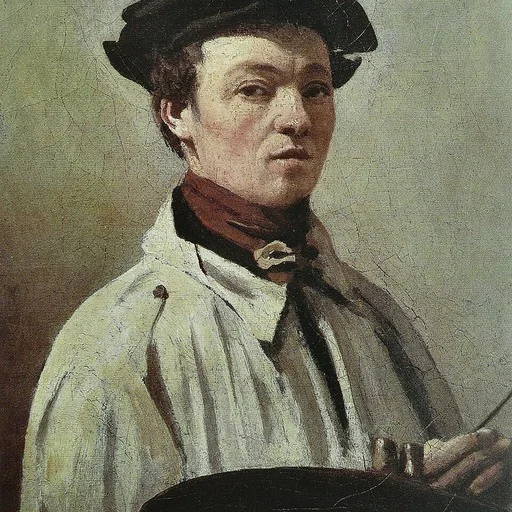
Jean-Baptiste-Camille Corot (UK: KORR-oh, US: kə-ROH, kor-OH; French: ; 16 July 1796 – 22 February 1875), or simply Camille Corot, was a French landscape and portrait painter as well as a printmaker in etching.

![Head of a Monkey; Inventory of Bottles and Beverages [verso], by Paul Gauguin](https://artifactworldgallery.com/img/paul-gauguin--head-of-a-monkey-inventory-of-bottles-and-beverages-verso--0d4bb62a8bd056d4-w320.webp)
![Figure on Horseback and Other Studies [verso], by Winslow Homer](https://artifactworldgallery.com/img/winslow-homer--figure-on-horseback-and-other-studies-verso--3909dbf700a8f786-w320.webp)
![Sketch of a Sphinx [?] (verso), by Luc-Olivier Merson](https://artifactworldgallery.com/img/luc-olivier-merson--sketch-of-a-sphinx-verso--01aae5545d384a57-w320.webp)
![Sketch for the Flight into Egypt [verso], by Giovanni Domenico Tiepolo](https://artifactworldgallery.com/img/giovanni-domenico-tiepolo--sketch-for-the-flight-into-egypt-verso--c1883479f90269fc-w320.webp)