Artwork
Pool in the Wood
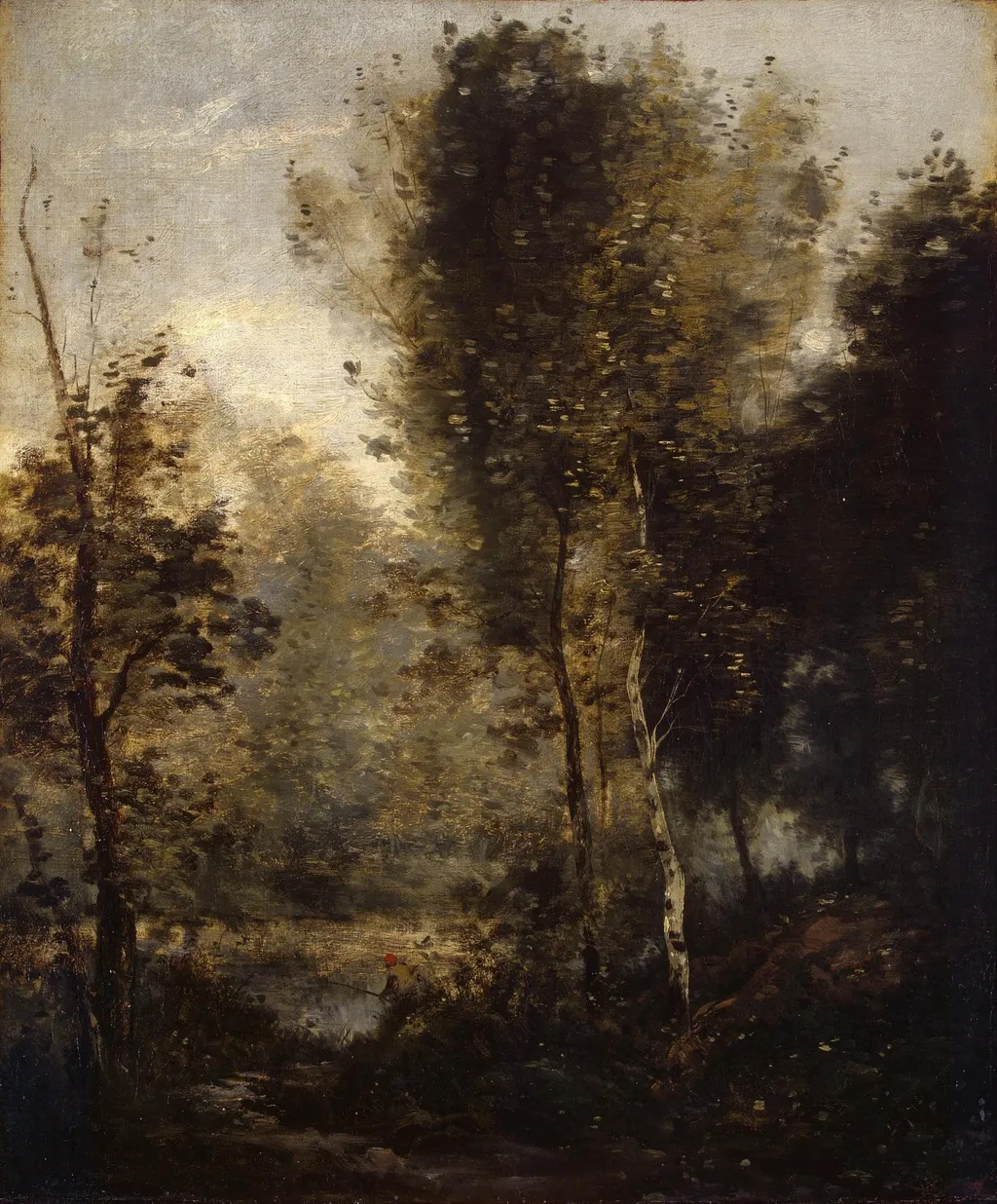
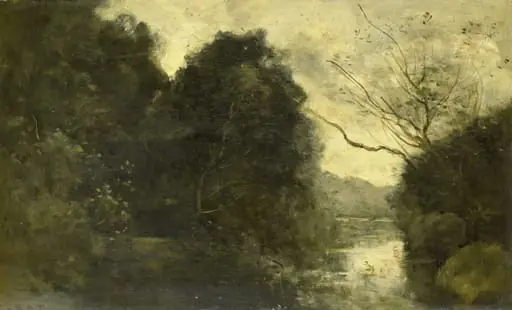
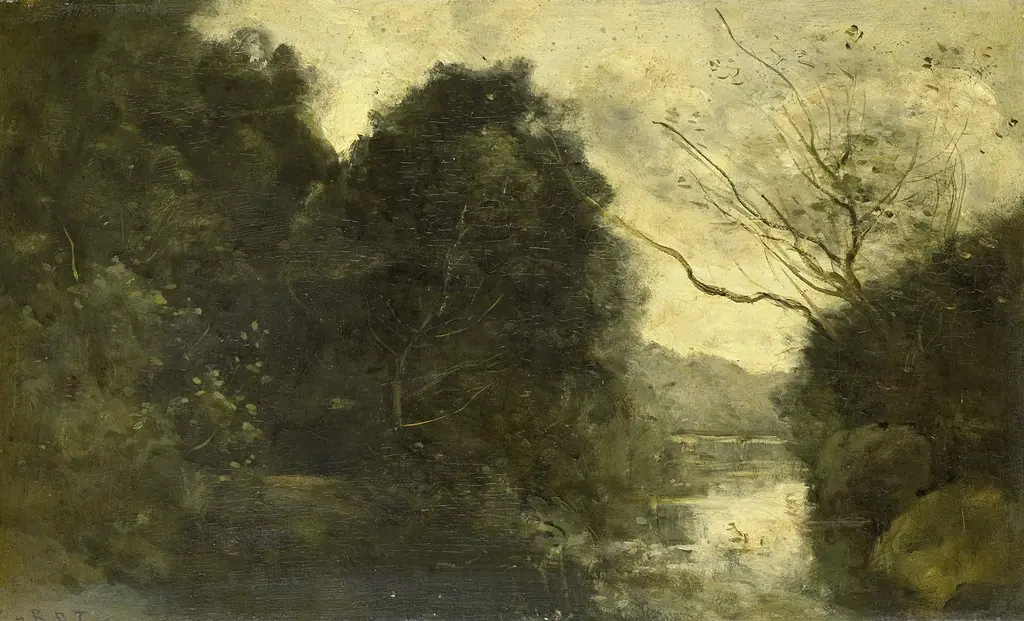
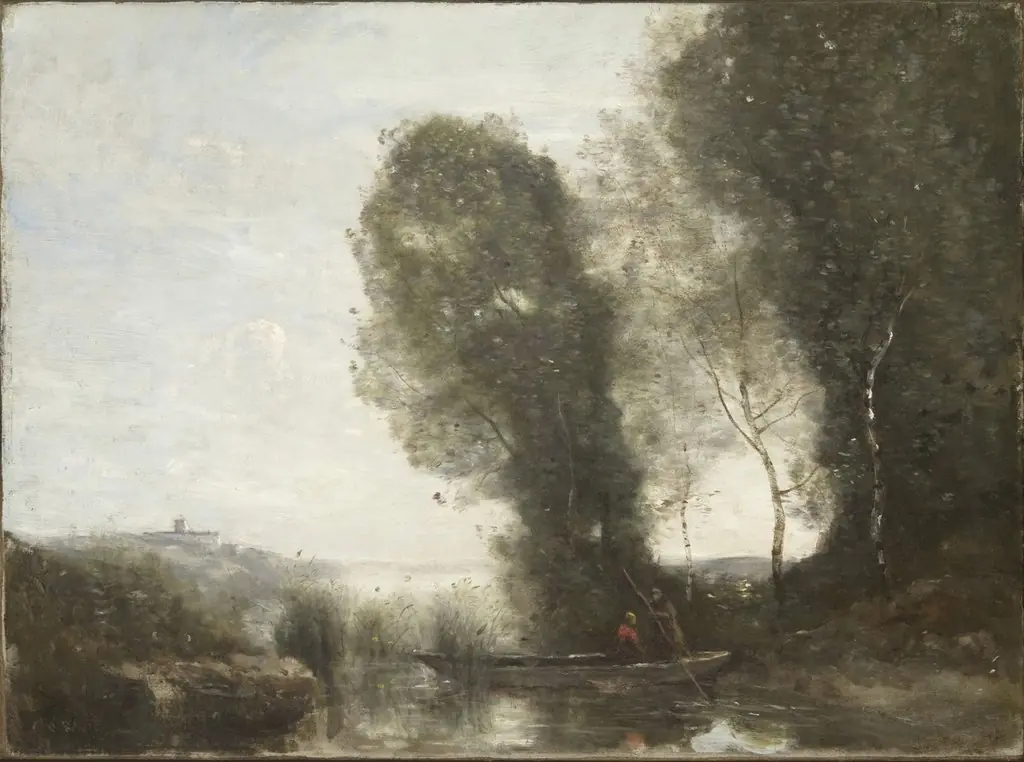
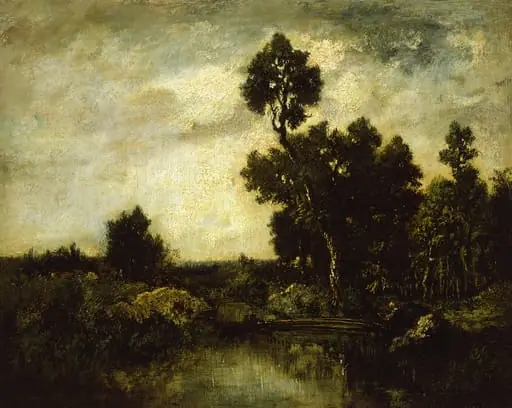
Pool in the Wood is an oil painting by the Barbizon school artist Jean Baptiste Camille Corot. It dates from 1867 and is held in the collection of the Hermitage Museum.
About this work
Overview
It resides today in the State Hermitage Museum, part of a broader body of work that influenced the evolution of landscape painting in the 19th century.
Painted in 1867, *Pool in the Wood* is an oil landscape by Jean-Baptiste-Camille Corot, a French artist whose work connected the structured ideals of Neo-Classicism with the observational practices of outdoor painting. The piece exemplifies the Barbizon School’s commitment to depicting rural nature with quiet authenticity. It resides today in the State Hermitage Museum, part of a broader body of work that influenced the evolution of landscape painting in the 19th century.
Subject & Meaning
The painting presents a secluded woodland pool, framed by dense trees and undergrowth, with no human figures or signs of activity. The absence of narrative or drama emphasizes stillness and solitude. Corot invites contemplation rather than storytelling, suggesting a reverence for nature’s quiet rhythms. The scene feels neither idealized nor romanticized, but observed with attentive neutrality, reflecting a shift toward personal, introspective landscape expression.
Technique & Style
Corot employed soft, layered brushwork to capture the play of light through foliage and the reflective surface of the water. His palette is restrained—dominated by muted greens, grays, and earth tones—enhancing the painting’s atmospheric calm. Shadows are rendered with subtle gradations, and tree trunks gain texture through delicate strokes rather than sharp definition. The technique balances precision with spontaneity, characteristic of his mature style and his move toward tonal harmony over detail.
History & Provenance
Created in 1867, *Pool in the Wood* entered the collection of the State Hermitage Museum in Saint Petersburg, likely through acquisition during the late 19th or early 20th century. Corot’s reputation in Russia was strong among collectors and artists, and his works were actively sought after. The painting has remained in the museum’s holdings since, preserved as part of its significant Western European collection without notable public exhibitions or transfers.
Context
In the mid-19th century, French artists increasingly turned away from historical or mythological subjects to focus on everyday natural environments. Corot, aligned with the Barbizon painters, worked directly outdoors, capturing transient effects of light and atmosphere. While his peers emphasized rugged terrain, Corot favored intimate, wooded settings like this one, blending observational rigor with poetic restraint, influencing later Impressionists without adopting their brighter palette or broken brushwork.
Legacy
Corot’s *Pool in the Wood* exemplifies a transitional moment in landscape painting: neither fully academic nor fully avant-garde. Its quiet intensity and emphasis on mood over detail paved the way for more subjective approaches to nature. Though not widely reproduced, the work remains a touchstone for understanding how 19th-century artists redefined the relationship between perception, emotion, and the natural world through restrained, contemplative means.
Artist & collection
Artist
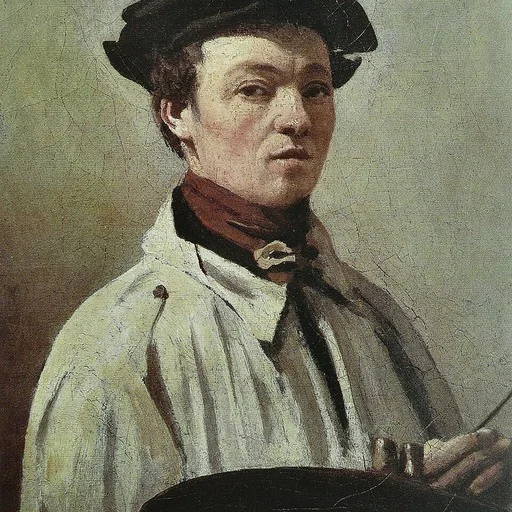
Jean-Baptiste-Camille Corot (UK: KORR-oh, US: kə-ROH, kor-OH; French: ; 16 July 1796 – 22 February 1875), or simply Camille Corot, was a French landscape and portrait painter as well as a printmaker in etching.