Artwork
Le Moine au Violoncelle
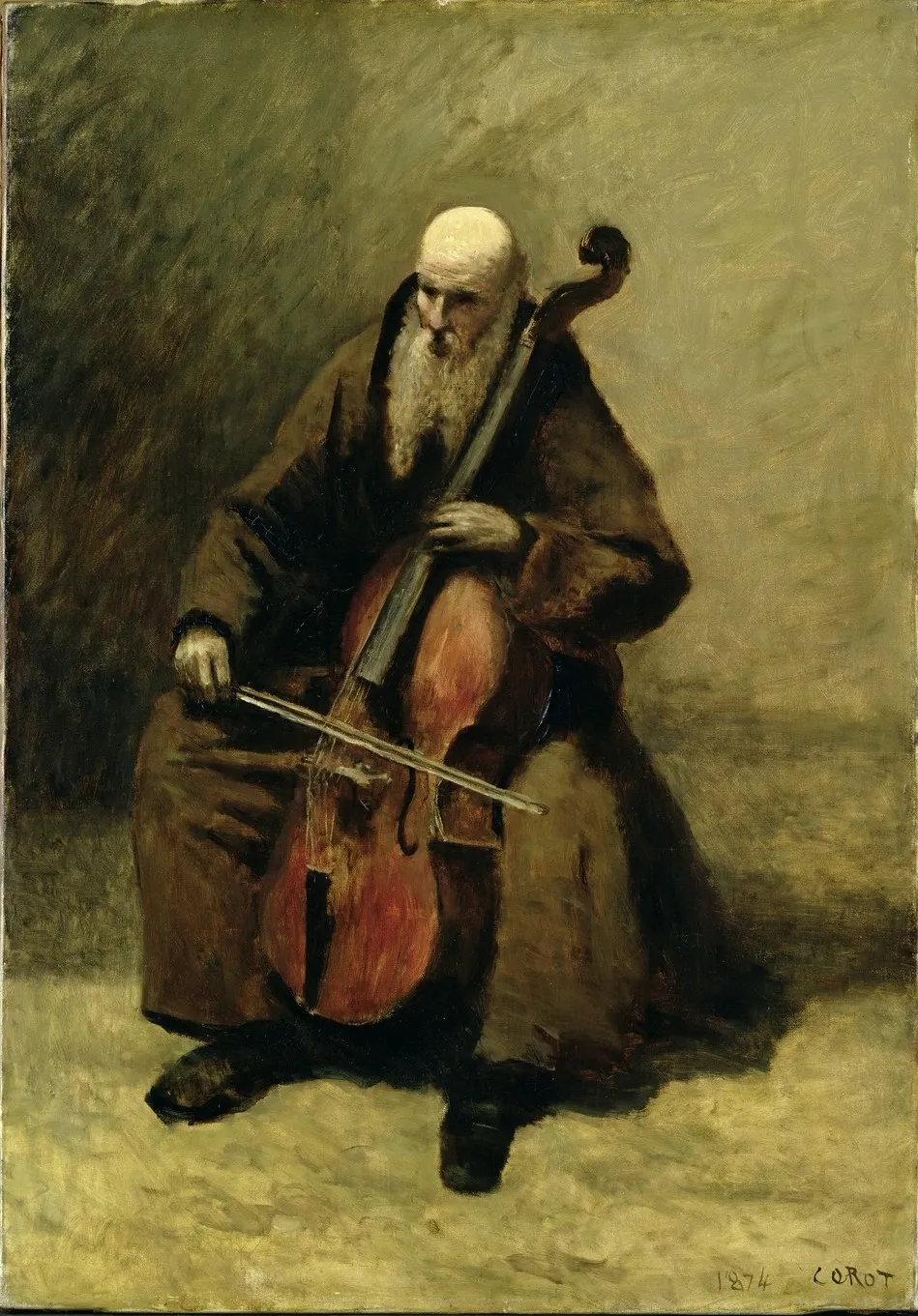
Le Moine au Violoncelle is an oil painting by the Barbizon school artist Jean Baptiste Camille Corot. It dates from 1874 and is held in the collection of the Hamburger Kunsthalle.
About this work
Overview
Le Moine au Violoncelle, painted by Jean-Baptiste-Camille Corot in 1874, is an oil painting characterized by its serene depiction of a monk engaged with a cello in a rural context.
Subject & Meaning
The subject, a monk dressed in a long brown coat with a white beard, sits contemplatively on the ground, poised to play the cello. The scene conveys a sense of quiet introspection, emphasizing the personal, meditative moment over external narrative.
Technique & Style
Executed in oil paint, the work reflects Corot's blend of Neo-Classical influences and plein-air naturalism, though the plain brown background suggests a more subdued, intimate approach than his typical landscapes.
History & Provenance
Created in 1874, Le Moine au Violoncelle is associated with the Barbizon School, a movement favoring naturalistic, everyday scenes. The painting is part of the Hamburger Kunsthalle's collection.
Context
While Corot is renowned for landscapes, this piece highlights his capacity for introspective, figure-based works, blending the tranquility of natural settings with the contemplation of religious life.
Artist & collection
Artist
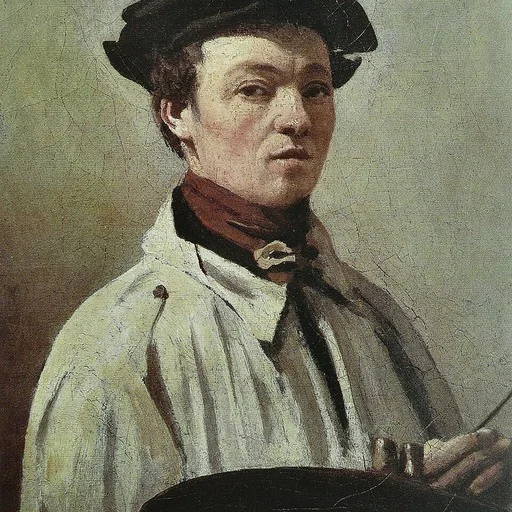
Jean-Baptiste-Camille Corot (UK: KORR-oh, US: kə-ROH, kor-OH; French: ; 16 July 1796 – 22 February 1875), or simply Camille Corot, was a French landscape and portrait painter as well as a printmaker in etching.