Artwork
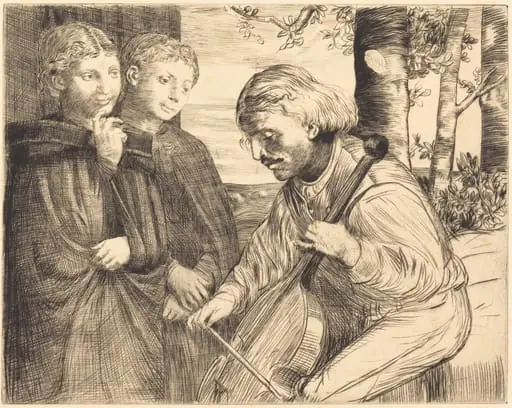
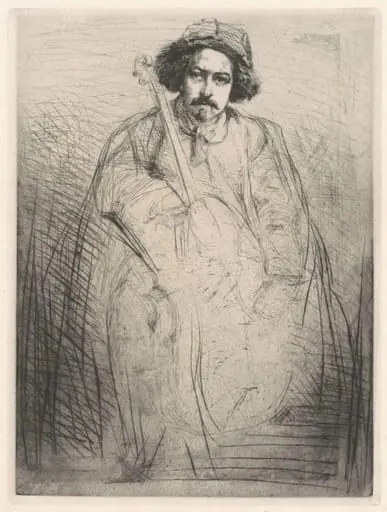
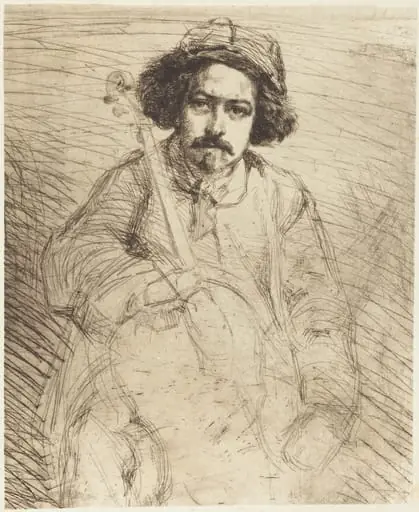
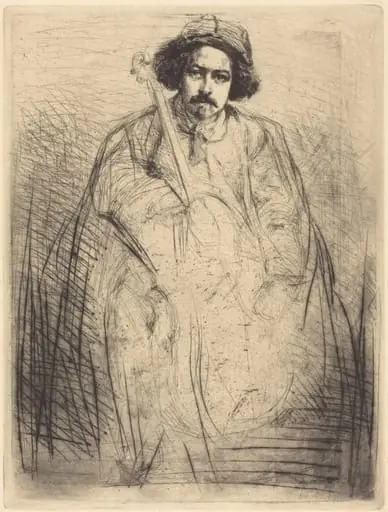
The Bass Player (Le Jouer de Contre-Basse)
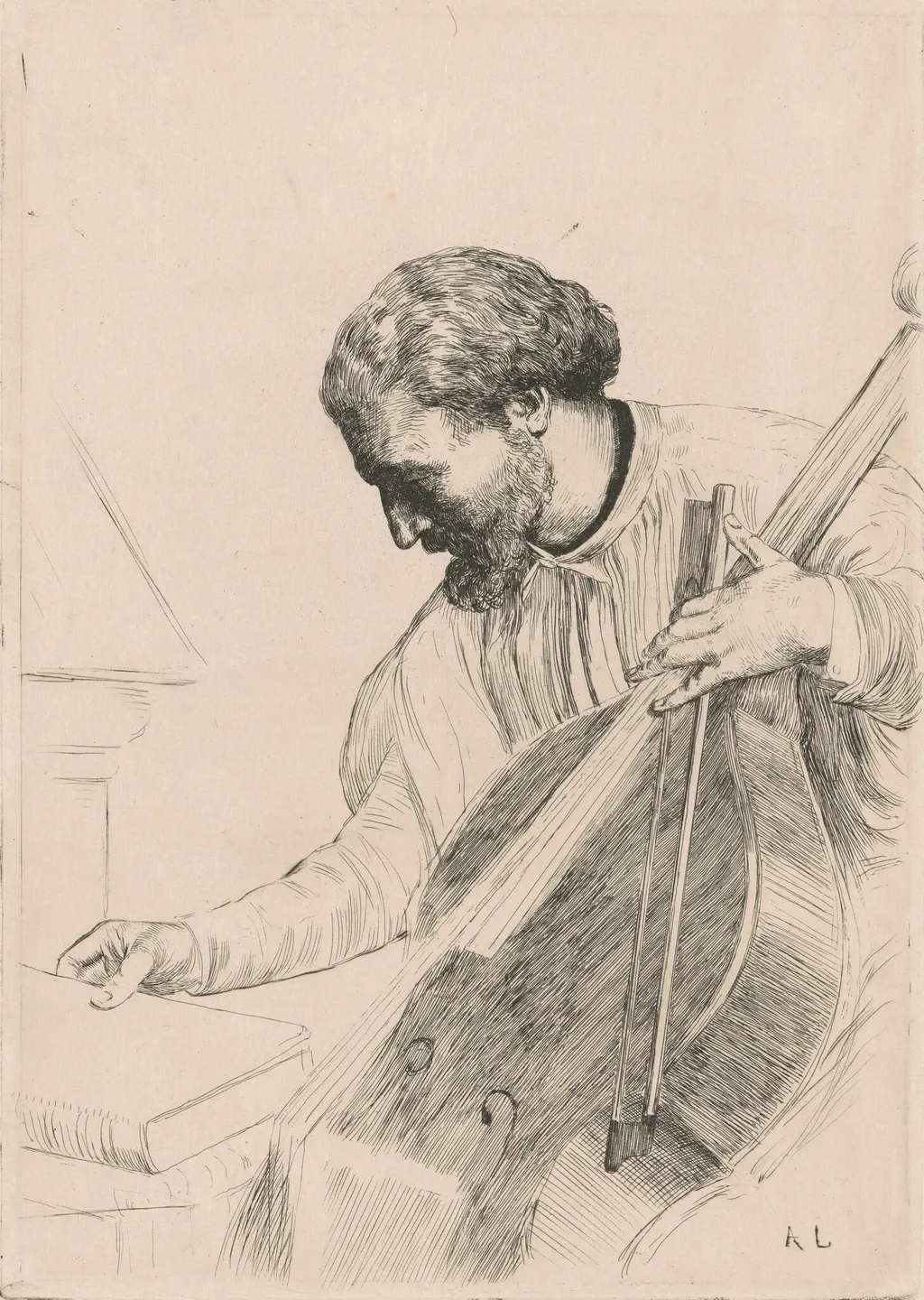
The Bass Player (Le Jouer de Contre-Basse) is an ink print by the Impressionist artist Alphonse Legros. It dates from 1864 and is held in the collection of the National Gallery of Art.
About this work
Overview
Alphonse Legros produced the etching *The Bass Player (Le Jouer de Contre-Basse)* in 1864. Executed shortly after his relocation from France to London, the work exemplifies his early British output and his interest in everyday scenes rendered in a direct, observational manner.
Subject & Meaning
The image captures a solitary figure absorbed in playing a large stringed instrument, most likely a double bass. The musician’s profile is turned away from the viewer, emphasizing the physical engagement of hands and instrument rather than personal identity, aligning the piece with genre traditions that foreground ordinary activity.
Technique & Style
Created through the etching process, Legros employed swift, gestural lines that convey motion and immediacy. The marks are deliberately loose, focusing on the contours of the hands and the instrument’s shape, producing a study-like quality rather than a highly finished print. This approach highlights the artist’s command of line to suggest form and atmosphere.
History & Provenance
Legros, originally from France, arrived in London in 1863 and quickly became instrumental in the revival of British etching. *The Bass Player* emerged during this formative period, reflecting his contribution to re‑establishing the medium in the United Kingdom. The print remains documented as part of his early British oeuvre.
Artist & collection

Artist
Alphonse Legros (French pronunciation: ; 8 May 1837 – 8 December 1911) was a French, later British, painter, etcher, sculptor, and medallist.