Artwork
The Bass Player (Le joueur de contre-basse)
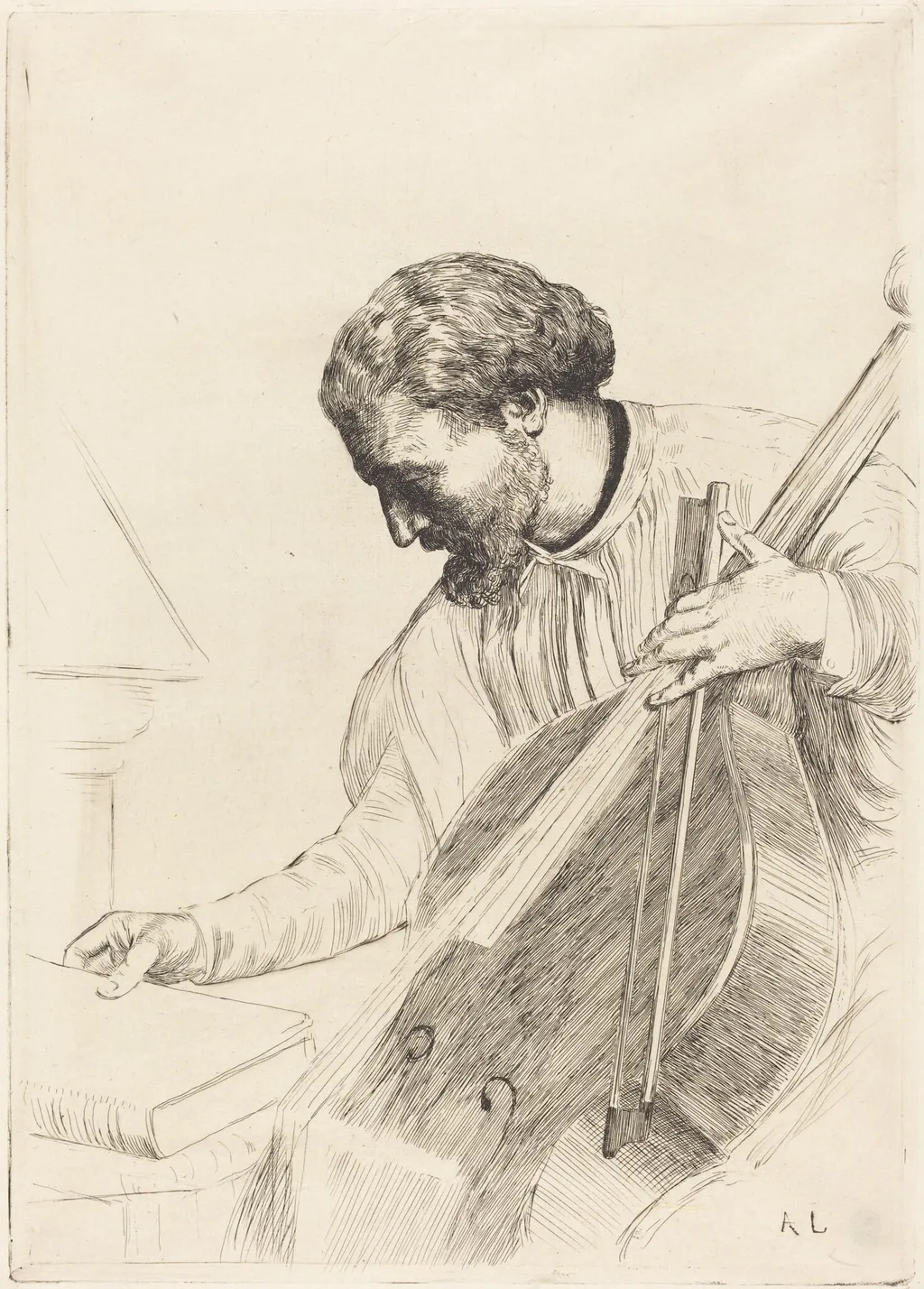
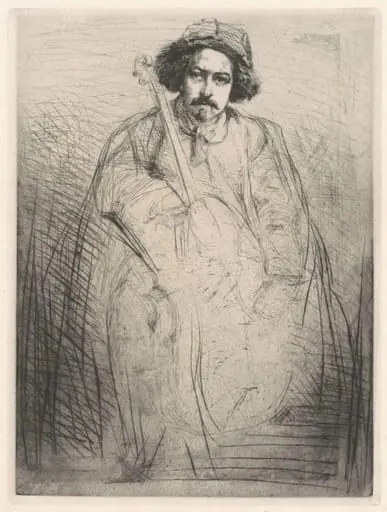
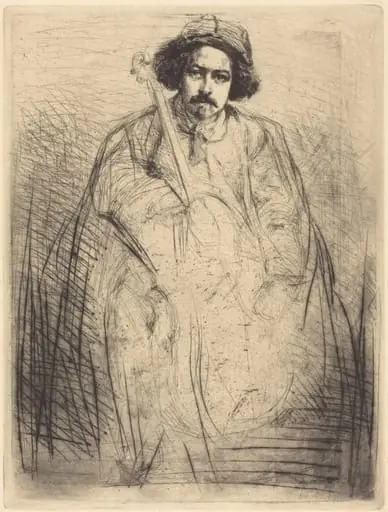
The Bass Player (Le joueur de contre-basse) is an ink print by the Romanticist artist Alphonse Legros. It dates from 1874 and is held in the collection of the National Gallery of Art.
About this work
Overview
As a practitioner of multiple media, he brought a sculptor’s sensitivity to line and form, elevating etching as a serious artistic medium in Victorian Britain.
Created in 1874, *The Bass Player (Le joueur de contre-basse)* is an etching by Alphonse Legros, a French artist who moved to London in 1863 and became influential in British printmaking. The work belongs to a series of figure studies in which Legros explored the physicality and emotional presence of musicians. As a practitioner of multiple media, he brought a sculptor’s sensitivity to line and form, elevating etching as a serious artistic medium in Victorian Britain.
Subject & Meaning
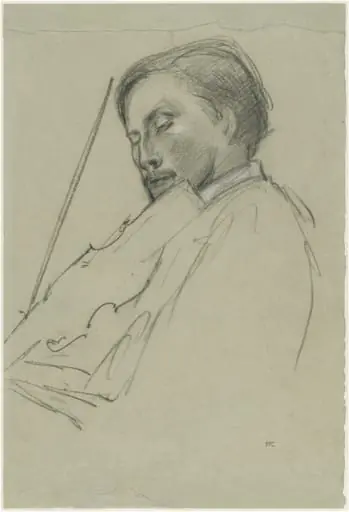
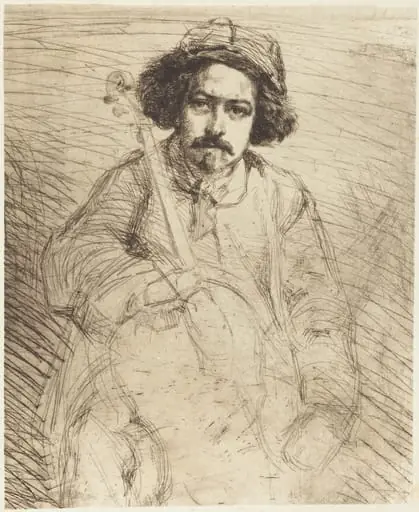
The print portrays a bearded bassist absorbed in the act of playing, his posture tense with focus. The instrument, large and heavy, is anchored against his shoulder, suggesting both physical strain and intimate connection. Legros avoids theatricality; instead, he captures a quiet, private moment of musical immersion. The subject’s anonymity reinforces the universality of artistic dedication, turning an ordinary musician into a symbol of quiet labor and concentration.
Technique & Style
Legros employed loose, varied etching lines to convey texture and motion—thick strokes define the beard and sleeve folds, while finer marks suggest the instrument’s wood grain and the musician’s fingers on the strings. The contrast between dense shadow and open space creates depth without modeling. The technique’s spontaneity mirrors the musician’s gesture, as if the plate was drawn with the same immediacy as the performance itself, emphasizing rhythm over precision.
History & Provenance
Made during Legros’s early years in London, the etching reflects his efforts to reintroduce the expressive potential of etching to British audiences, who favored more polished reproductive prints. It was likely produced for private circulation or exhibition among artists and collectors. Though not widely published, it became a touchstone for later British etchers drawn to its directness and emotional honesty.
Context
In the 1870s, British art circles were reevaluating printmaking as an original art form, not merely a reproduction method. Legros, trained in Paris and influenced by Realist ideals, aligned with this shift by focusing on everyday subjects rendered with psychological depth. His choice of a bass player—a figure rarely depicted in fine art—challenged conventional themes and emphasized the dignity of working musicians.
Legacy
Legros’s etching contributed to the revival of etching as a vehicle for personal expression in late 19th-century Britain. Artists such as James McNeill Whistler and Frank Brangwyn acknowledged his influence. The work remains a quiet example of how technical restraint and observational rigor could convey emotional resonance, shaping the trajectory of British printmaking toward greater authenticity and individual voice.
Artist & collection

Artist
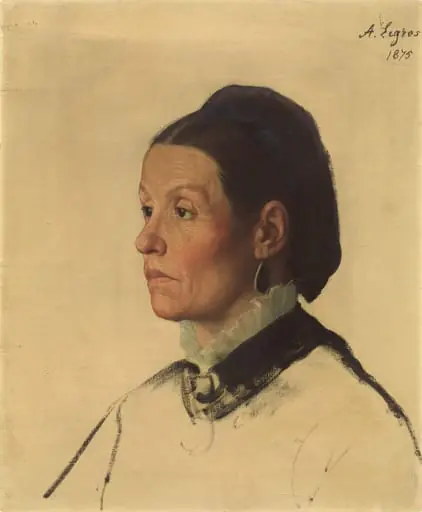
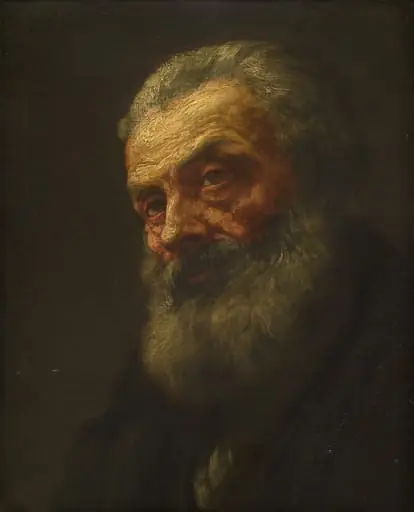
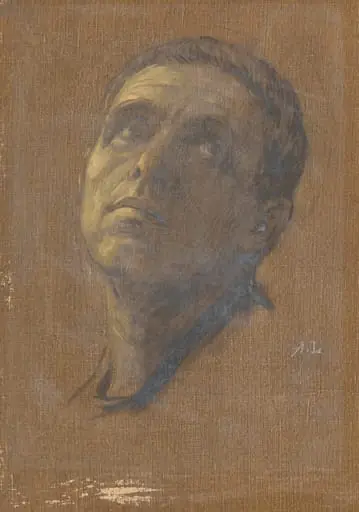
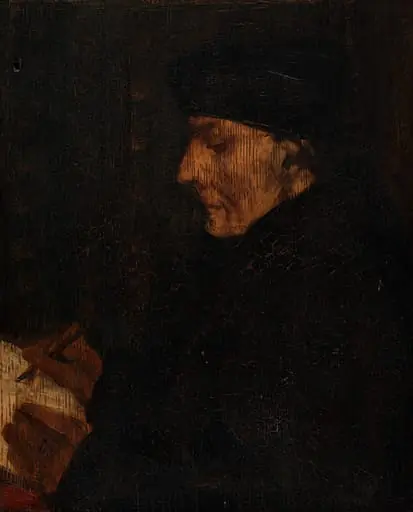
Alphonse Legros (French pronunciation: ; 8 May 1837 – 8 December 1911) was a French, later British, painter, etcher, sculptor, and medallist.