Artwork
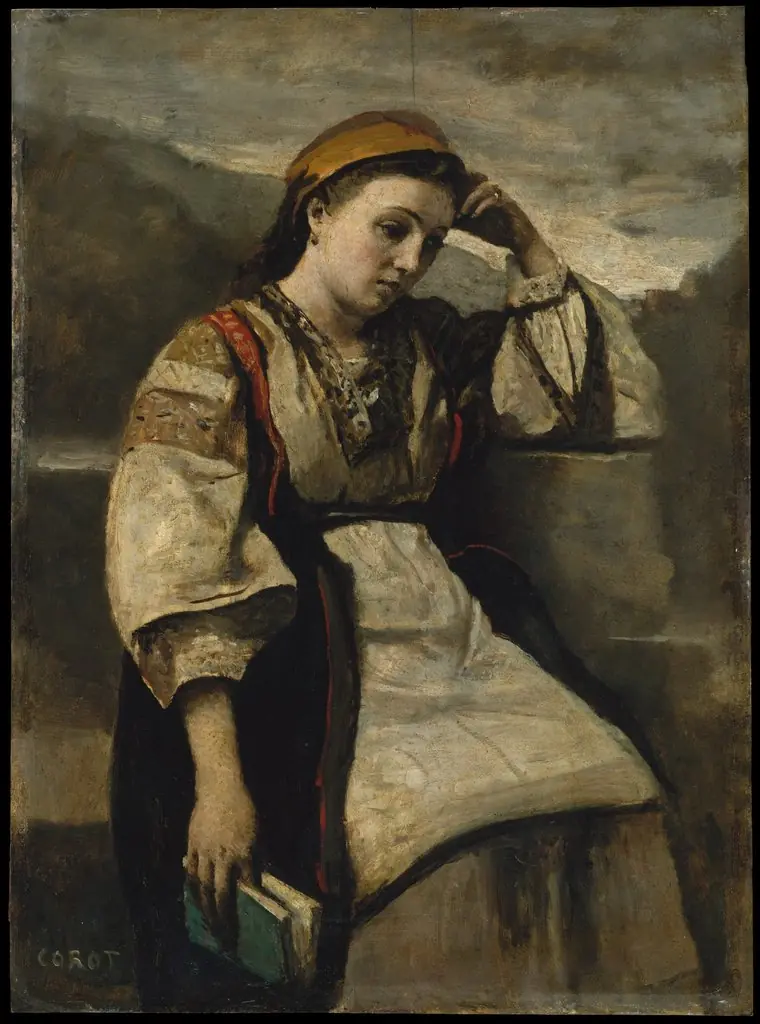
Woman Resting on Her Elbow
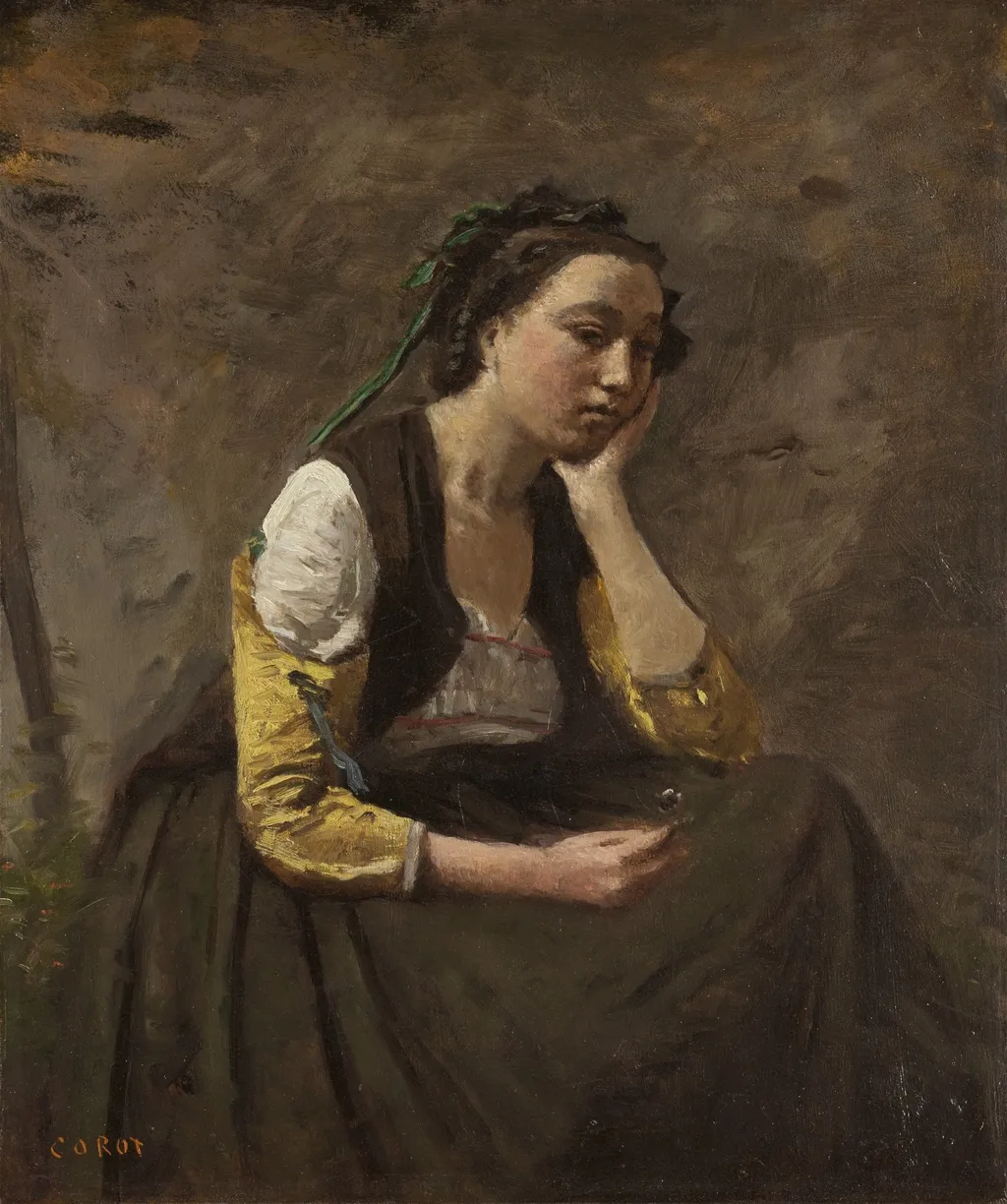
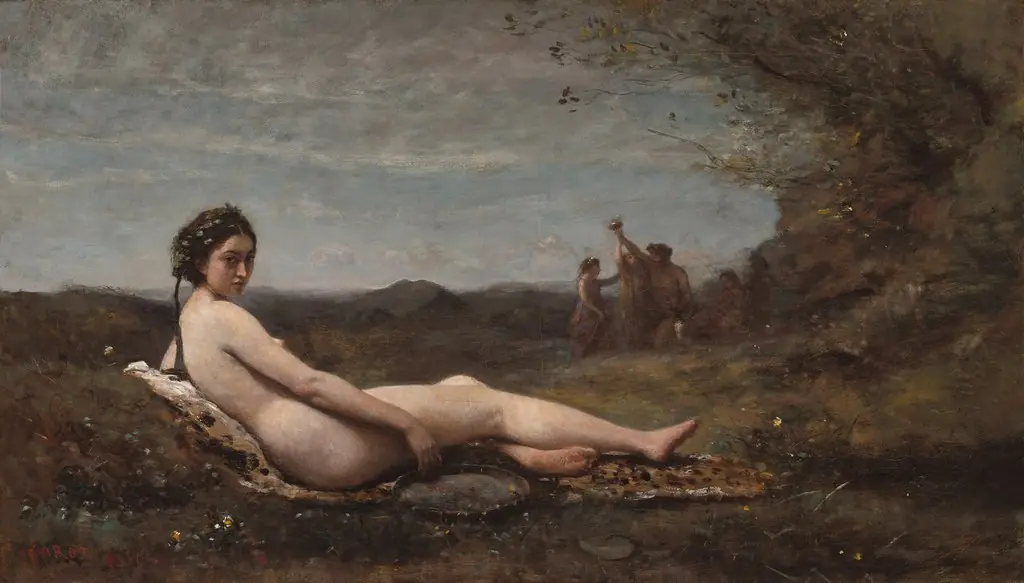
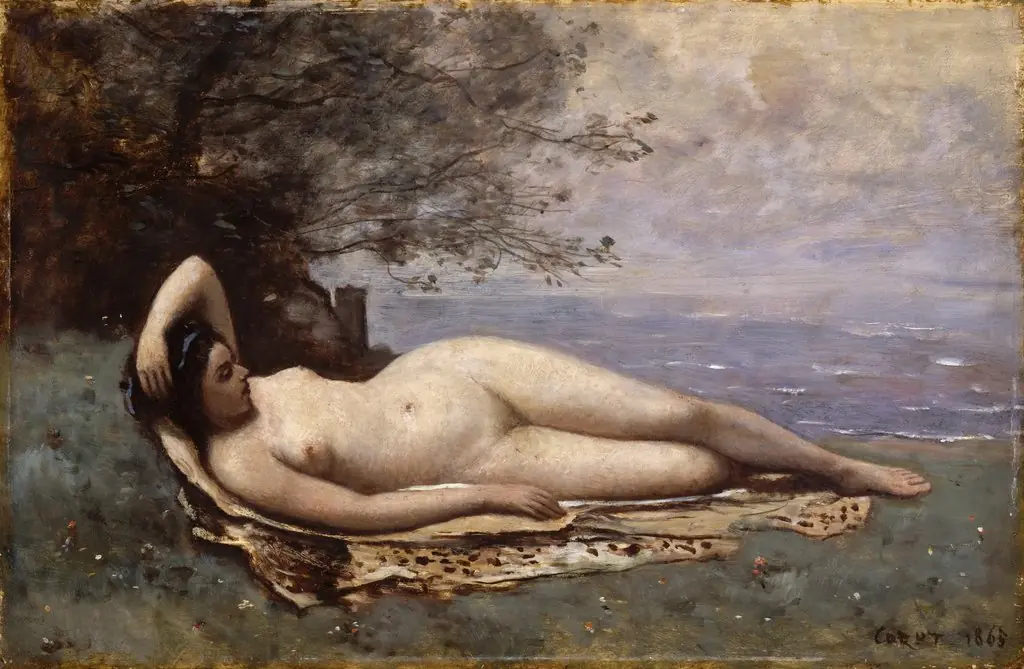
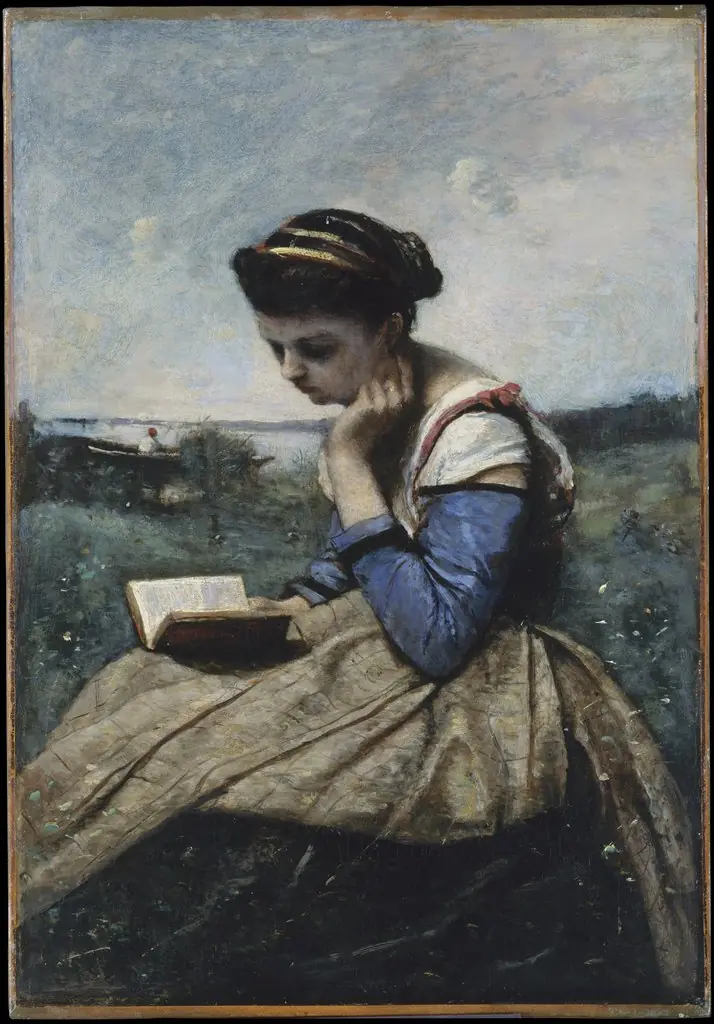
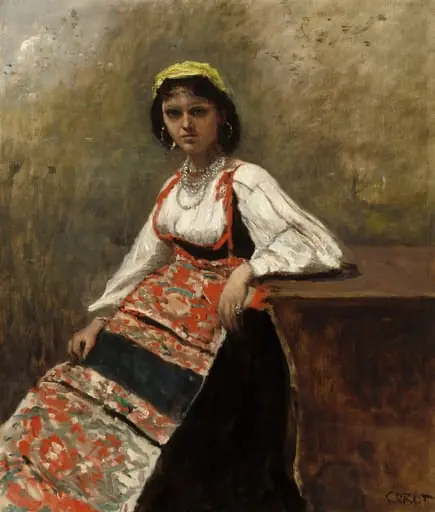
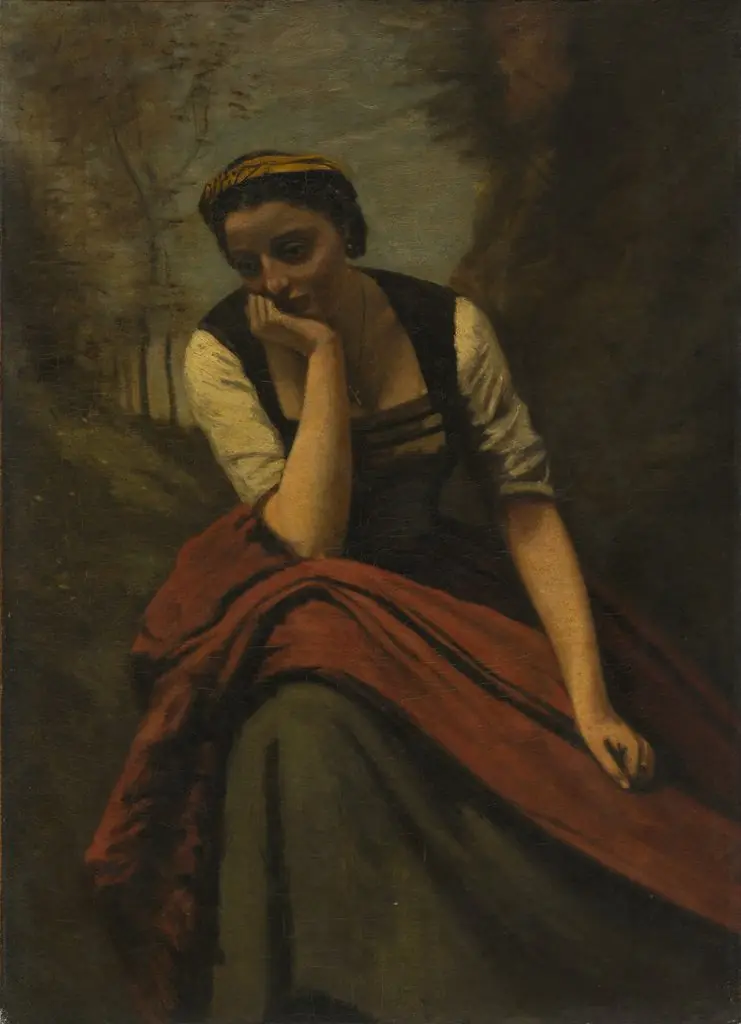
Woman Resting on Her Elbow is an oil painting by the Realist artist Jean Baptiste Camille Corot. It dates from 1856 and is held in the collection of the Denver Art Museum. Painted in 1856 by Jean-Baptiste-Camille Corot, this oil on canvas portrait captures a solitary woman in a quiet moment of repose.
About this work
Overview
Painted in 1856 by Jean-Baptiste-Camille Corot, this oil on canvas portrait captures a solitary woman in a quiet moment of repose.
Painted in 1856 by Jean-Baptiste-Camille Corot, this oil on canvas portrait captures a solitary woman in a quiet moment of repose. Corot, primarily recognized for his landscape work, turned his attention here to a figure study that bridges classical portraiture with emerging naturalistic approaches. The composition emphasizes stillness and introspection, avoiding theatricality in favor of subtle emotional resonance.
Subject & Meaning
The figure, seated with her head supported by her elbow, gazes downward in a posture of quiet contemplation. Her stillness suggests an interior state rather than a staged pose, inviting the viewer into a private, unguarded moment. The absence of narrative context or symbolic elements directs focus to the dignity of ordinary human presence, reflecting a shift toward intimate, everyday subjects in mid-19th-century art.
Technique & Style
Corot employed soft transitions between light and shadow, using chiaroscuro to model the figure with gentle gradations rather than sharp contours. The brushwork is restrained, favoring smooth surfaces and muted tones that enhance the sense of calm. The background is deliberately subdued, allowing the woman’s form to emerge through nuanced tonal shifts, a technique that anticipates the atmospheric concerns of later Impressionists.
History & Provenance
Created during Corot’s mature period, the painting entered the Denver Art Museum’s collection in the 20th century. While its early ownership history is not widely documented, its inclusion in a major American institution reflects broader interest in French Realist and proto-Impressionist works during the postwar era of museum expansion and collecting.
Context
In the 1850s, French art was navigating between academic traditions and new observational methods. Corot stood apart by integrating the tonal harmony of Neo-Classicism with direct study from life, often painting outdoors. This portrait exemplifies his role as a transitional figure—neither fully aligned with the Salon’s conventions nor the radical experiments of younger contemporaries.
Legacy
Though less celebrated than his landscapes, this portrait contributes to Corot’s reputation as a quiet innovator in figure painting. Its emphasis on naturalism, subdued palette, and psychological restraint influenced later artists seeking to capture unposed human presence. The work remains a quiet testament to the expressive potential of restraint in 19th-century painting.
Own this work as a print
Artist & collection
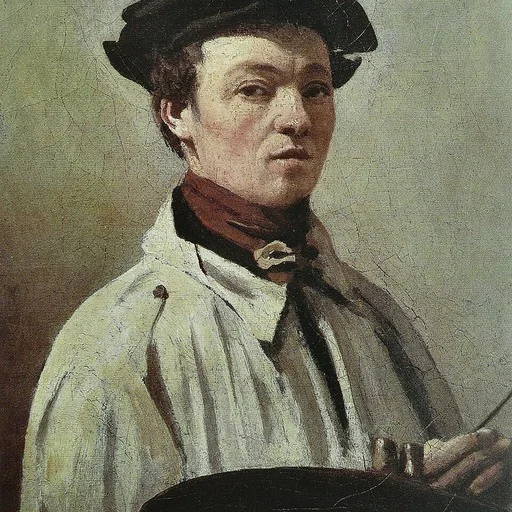
Artist
Jean-Baptiste-Camille Corot (UK: KORR-oh, US: kə-ROH, kor-OH; French: ; 16 July 1796 – 22 February 1875), or simply Camille Corot, was a French landscape and portrait painter as well as a printmaker in etching.