Artwork
Eugène Isabey
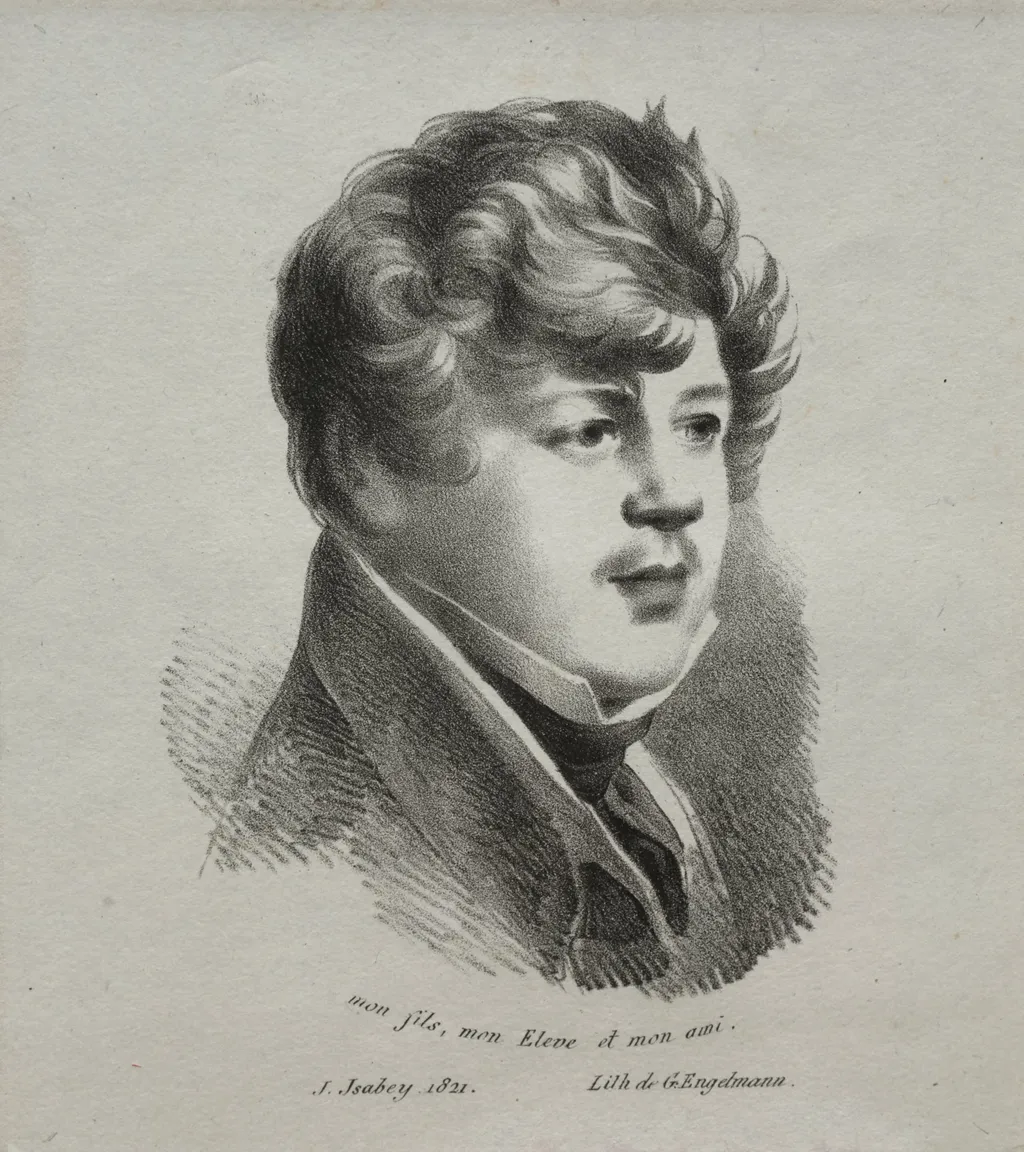
Eugène Isabey is a print by the Romanticist artist Jean-Baptiste Isabey. It dates from 1821 and is held in the collection of the Cleveland Museum of Art.
About this work
The French artist signed it in 1821 and added a note: *"mon fils, mon élève et mon ami"* ("my son, my student, and my friend").
This is a black-and-white sketch of a young man facing left. His hair is neatly combed, and he wears a high-collared coat with a ruffled neckline. The shading is loose, giving his face a soft, slightly smudged look.
The French artist signed it in 1821 and added a note: *"mon fils, mon élève et mon ami"* ("my son, my student, and my friend"). That’s Eugène Isabey, the artist’s own son.
If you like this style, check out chiaroscuro—a technique using strong light and dark contrasts.
Overview
This 1821 black-and-white drawing by Jean-Baptiste Isabey depicts his son, Eugène, in profile, facing left. Executed in ink or graphite, the work is a sensitive portrait rendered with loose, expressive shading. The artist inscribed it with a personal note identifying Eugène as his son, student, and friend, revealing the intimate nature of the piece. It resides in the collection of The Cleveland Museum of Art.
Subject & Meaning
The subject is Eugène Isabey, the artist’s only son, who would later become a noted painter and illustrator. The inscription—'my son, my student, and my friend'—suggests a bond beyond familial duty, blending personal affection with artistic mentorship. The quiet, unadorned pose and direct gaze convey a sense of quiet dignity, reflecting both the sitter’s character and the artist’s emotional investment.
Technique & Style
The portrait employs soft, fluid shading to model the face and clothing, avoiding sharp outlines in favor of atmospheric tone. The high collar and ruffled neckcloth are suggested with minimal strokes, while the hair is rendered with delicate, controlled lines. The overall effect is intimate and immediate, prioritizing emotional resonance over formal precision, characteristic of Jean-Baptiste’s approach to private drawings.
History & Provenance
Created in 1821 during the Bourbon Restoration, the drawing remained within the Isabey family before entering the Cleveland Museum of Art’s collection. Its survival as a personal sketch, rather than a commissioned portrait, underscores its role as a private memento. The inscription and date confirm its origin and timing, offering rare insight into the artist’s domestic life during a politically turbulent era.
Context
Jean-Baptiste Isabey was a favored portraitist of Napoleon’s court and later served the restored monarchy. While his public works were formal and polished, this drawing reveals a more informal side of his practice. Such intimate studies were common among artists of the period, serving as exercises in observation and expressions of familial connection amid the demands of professional commissions.
Legacy
Eugène Isabey followed his father’s path, becoming a respected artist in his own right, known for maritime scenes and illustrations. This portrait stands as an early testament to his artistic lineage and the transmission of skill within the family. As a personal artifact, it offers a quiet counterpoint to the grander historical narratives of early 19th-century French art.
Artist & collection
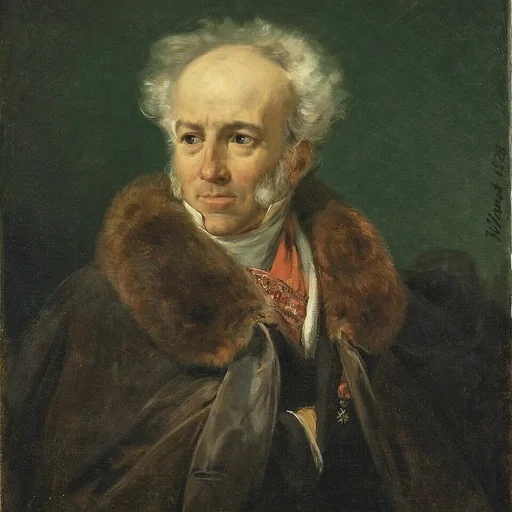
Artist
Jean-Baptiste Isabey (French pronunciation: ; 11 April 1767 – 18 April 1855) was a French artist during both the First Empire and the Restoration.