Artwork
Jonction des deux torrents qui forment la Cascade de Grésy
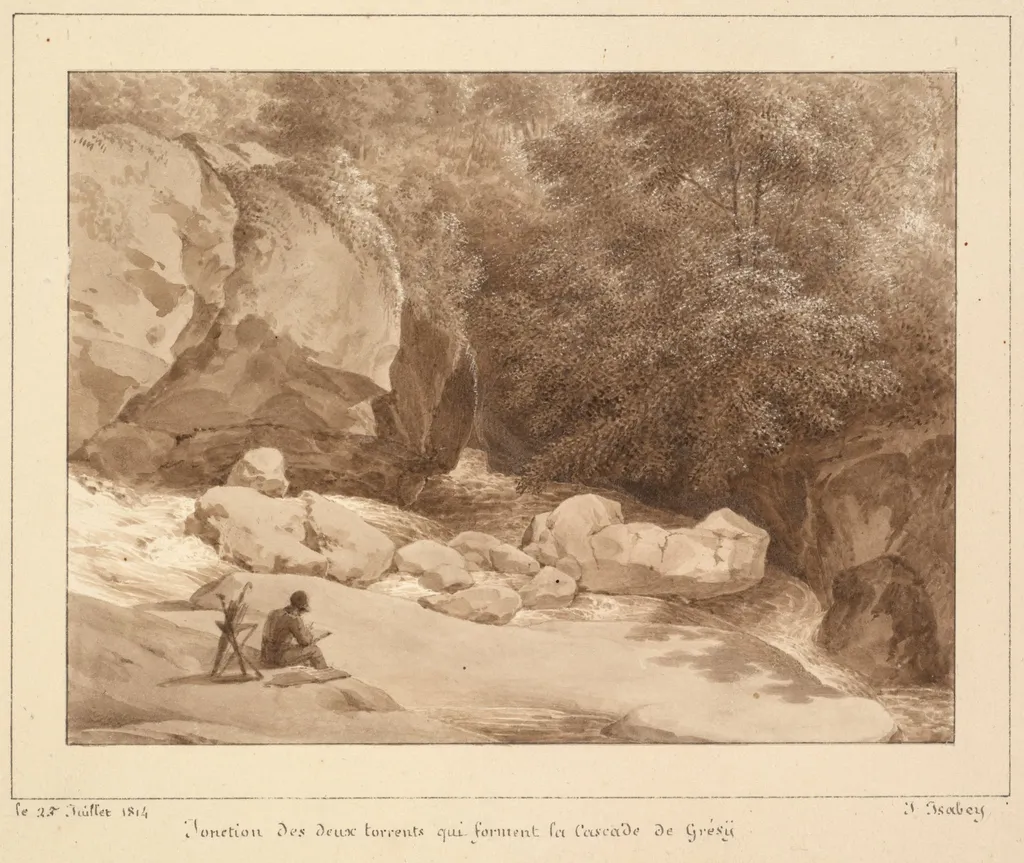
Jonction des deux torrents qui forment la Cascade de Grésy is a drawing by the Romanticist artist Jean-Baptiste Isabey. It dates from 1814 and is held in the collection of the Cleveland Museum of Art.
About this work
Overview
Created in 1814 by Jean-Baptiste Isabey, this drawing captures the meeting point of two mountain streams that form the Cascade de Grésy. Executed in pencil and ink, the work reflects Isabey’s interest in natural landscapes during the post-Napoleonic era. It is part of the collection at The Cleveland Museum of Art, where it is valued for its intimate observation of the Swiss Alps’ rugged terrain.
Subject & Meaning
The quiet solitude of the figure underscores a contemplative engagement with nature, aligning with emerging Romantic ideals of personal response to the wild.
The scene depicts the confluence of two torrents in a remote alpine setting, with a figure seated on a rock, sketching the landscape. This self-referential detail suggests the artist’s presence, framing the act of observation as central to the work. The quiet solitude of the figure underscores a contemplative engagement with nature, aligning with emerging Romantic ideals of personal response to the wild.
Technique & Style
Isabey employed rapid, precise linework to convey the texture of wet rock, cascading water, and dense vegetation. The drawing’s loose yet deliberate strokes capture the immediacy of direct observation. Shadows are suggested with minimal hatching, emphasizing the raw, unpolished character of the site. The composition avoids idealization, favoring topographical accuracy over embellishment.
History & Provenance
The drawing was made during Isabey’s travels in the Alps, likely as part of a series of field studies. It entered the Cleveland Museum of Art’s collection in the 20th century, though its earlier ownership history remains undocumented. Its survival as a standalone sketch, rather than a preparatory study for a larger work, highlights its value as a direct record of the artist’s encounter with the landscape.
Context
In the early 19th century, European artists increasingly turned to unspoiled natural sites as subjects, moving away from classical or mythological themes. Isabey’s work reflects this shift, aligning with a broader trend of topographical drawing practiced by travelers and naturalists. The Cascade de Grésy, though modest in scale, was chosen for its geological clarity and atmospheric presence.
Legacy
This drawing exemplifies a transitional moment in landscape art, where scientific observation and emotional resonance began to merge. While Isabey is better known for portraiture and historical scenes, this work reveals his sensitivity to nature’s subtleties. It stands as a quiet precursor to later Romantic landscapes, emphasizing presence over grandeur.
Own this work as a print
Artist & collection
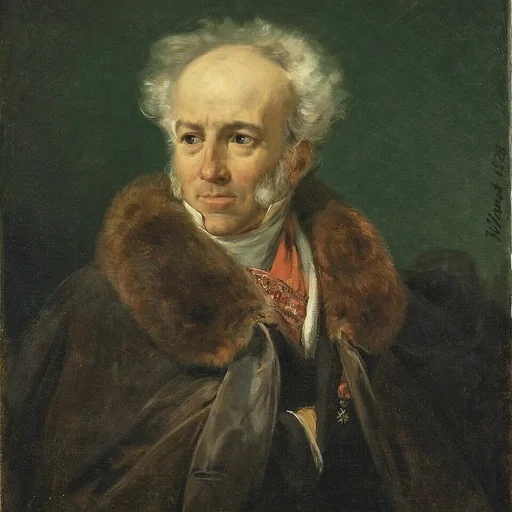
Artist
Jean-Baptiste Isabey (French pronunciation: ; 11 April 1767 – 18 April 1855) was a French artist during both the First Empire and the Restoration.

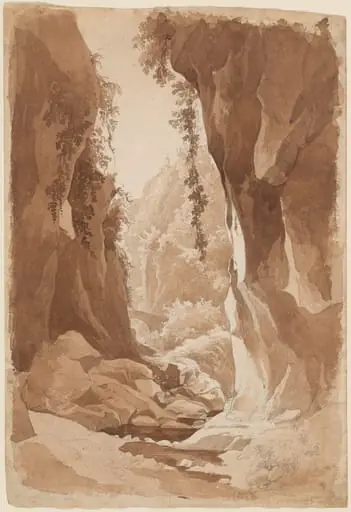 Cliffs Overhanging a River Gorge near Sorrento (recto)
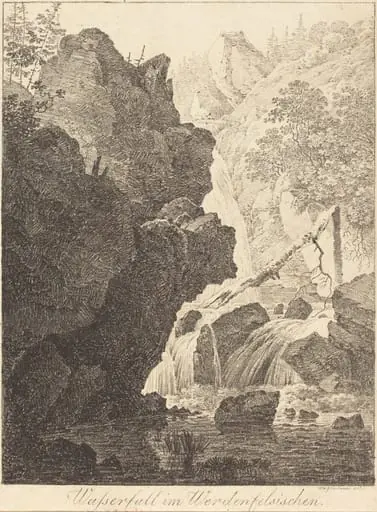 The Waterfall (Wasserfall im Werdenfelsischen)
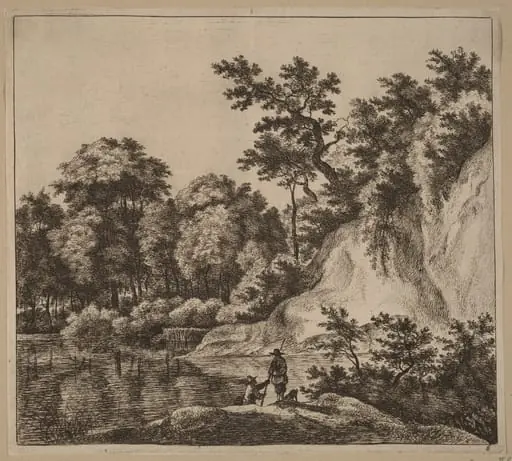 Landscape with River and Rock
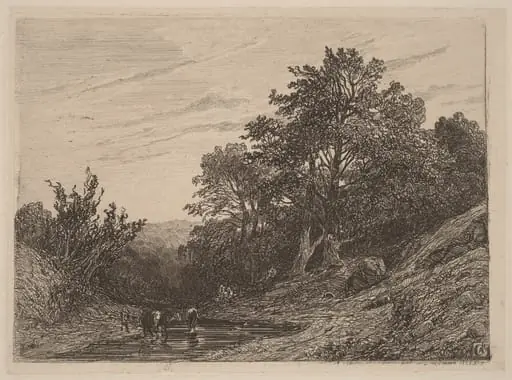 Herd in a Stream
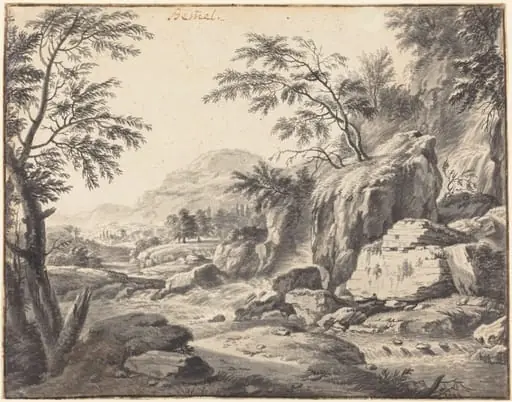 Classical Landscape with a Waterfall
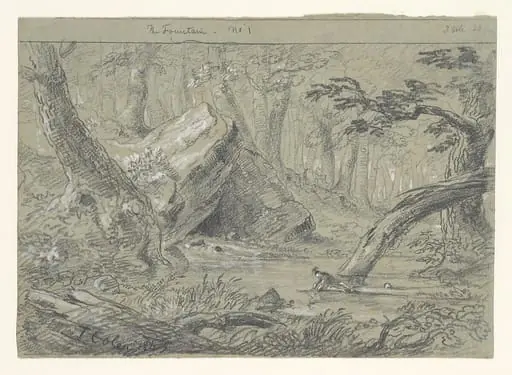 The Fountain, No. 1: The Wounded Indian Slaking His Death Thirst
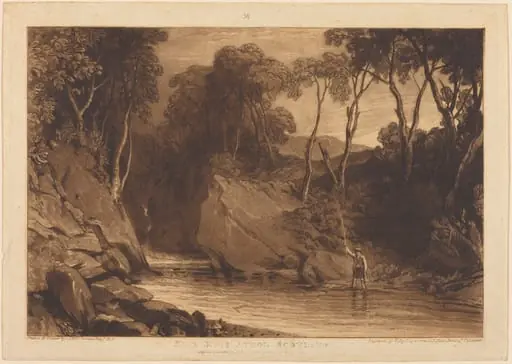 Near Blair Athol
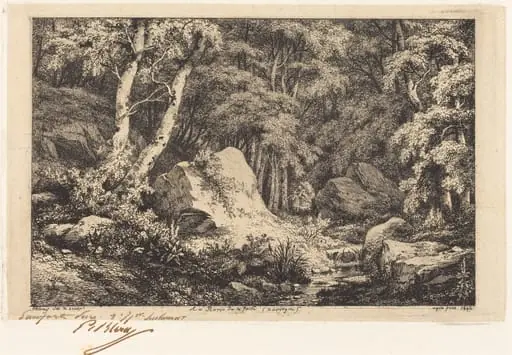 Au ravin de la faille, Auvergne (The Ravine at Auvergne)
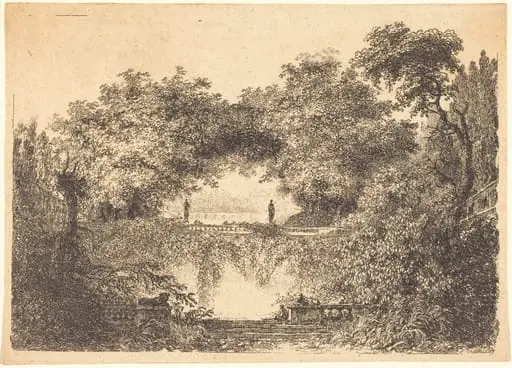 Le Petit Parc
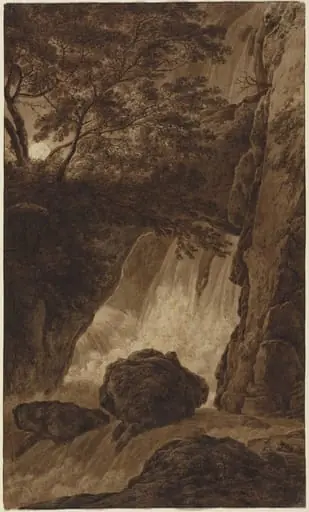 A Waterfall by Moonlight
 Mountainous Riverscape with Figures
 A Mountain Valley with a Waterfall