Artwork
Die Freuden des Landlebens
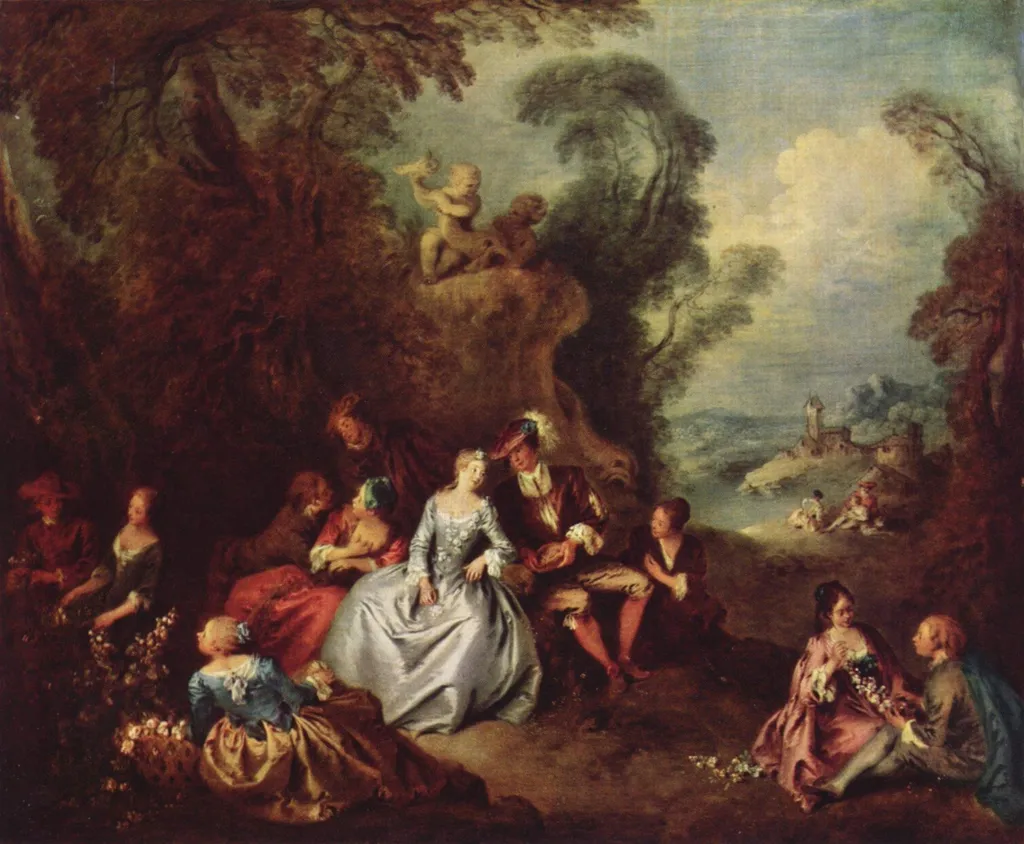
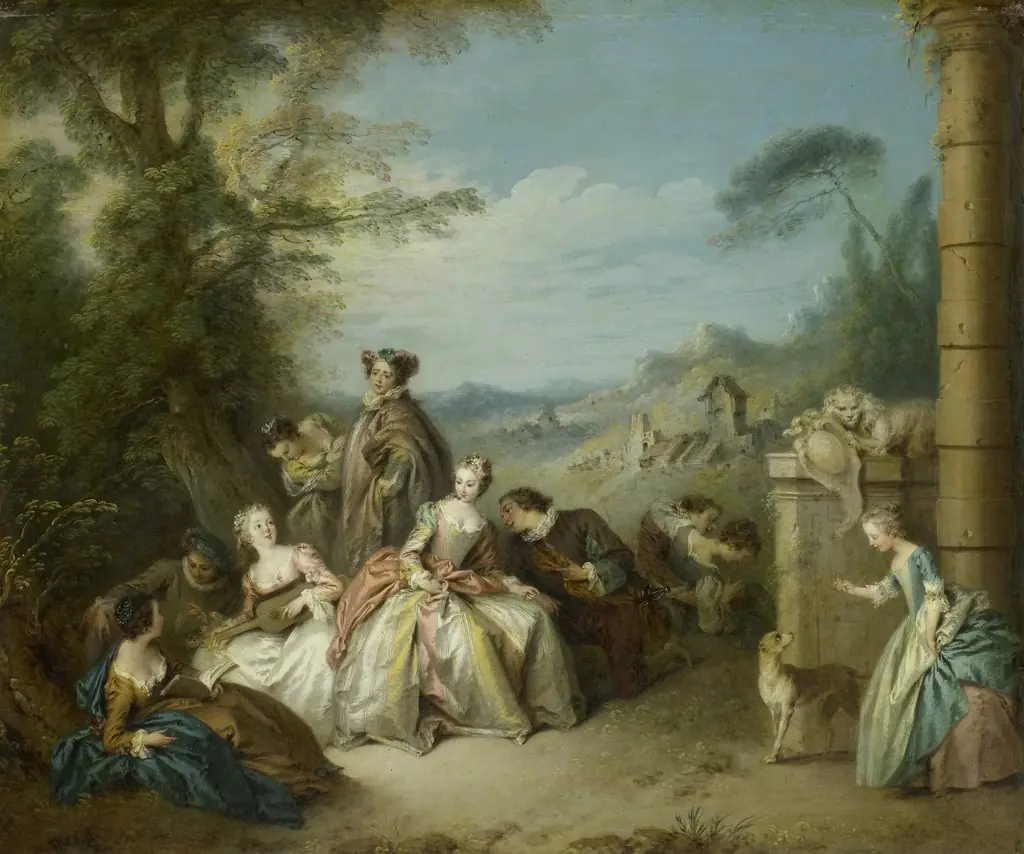
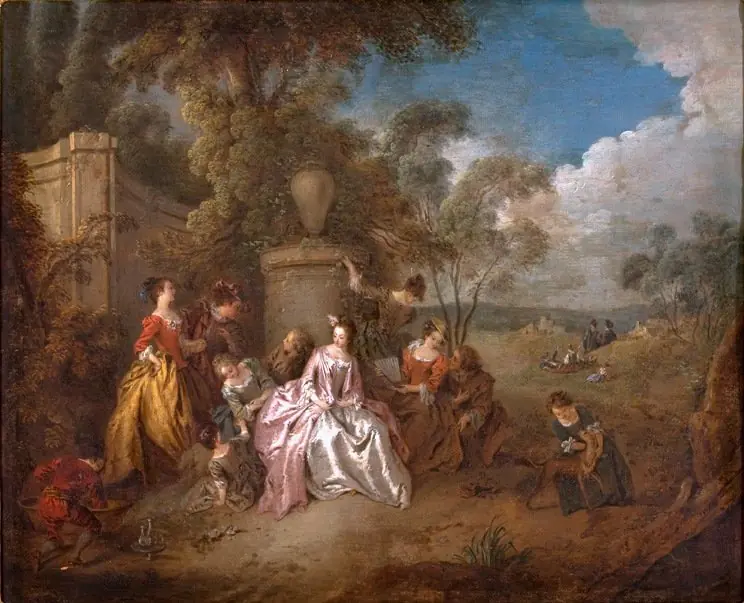
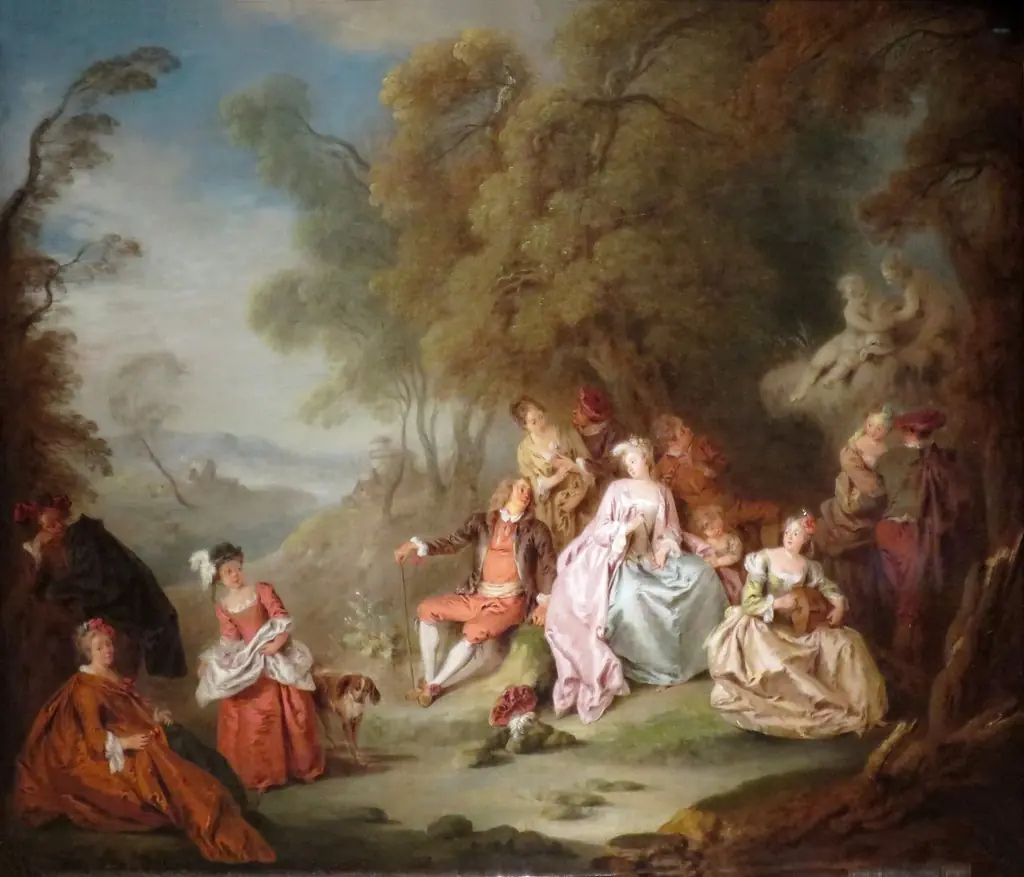
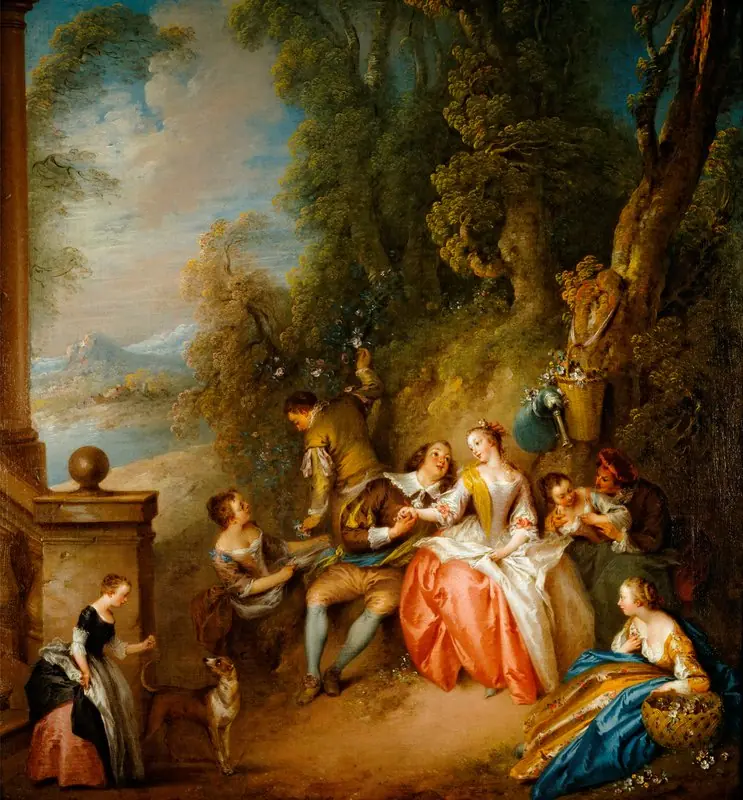
Die Freuden des Landlebens is an oil painting by the Rococo painting artist Jean-Baptiste Pater. It dates from 1730 and is held in the collection of the Bavarian State Painting Collections.
About this work
Overview
The work exemplifies the Rococo aesthetic through its intimate scale, soft tonalities, and emphasis on quiet recreation rather than grand narrative.
Jean-Baptiste Pater, born in Valenciennes in 1695, painted *Die Freuden des Landlebens* in 1730 using oil on canvas. A student of Antoine Watteau, he inherited his mentor’s focus on genteel outdoor leisure. The work exemplifies the Rococo aesthetic through its intimate scale, soft tonalities, and emphasis on quiet recreation rather than grand narrative. It resides today in the Alte Pinakothek in Munich.
Subject & Meaning
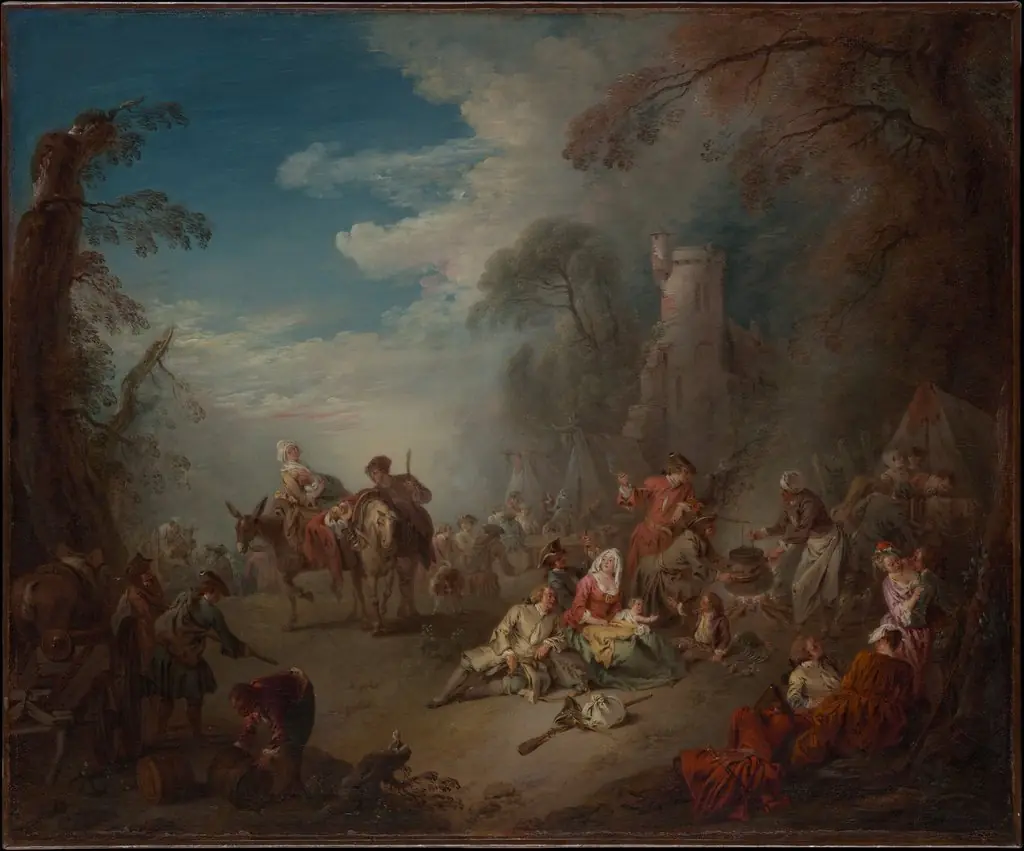
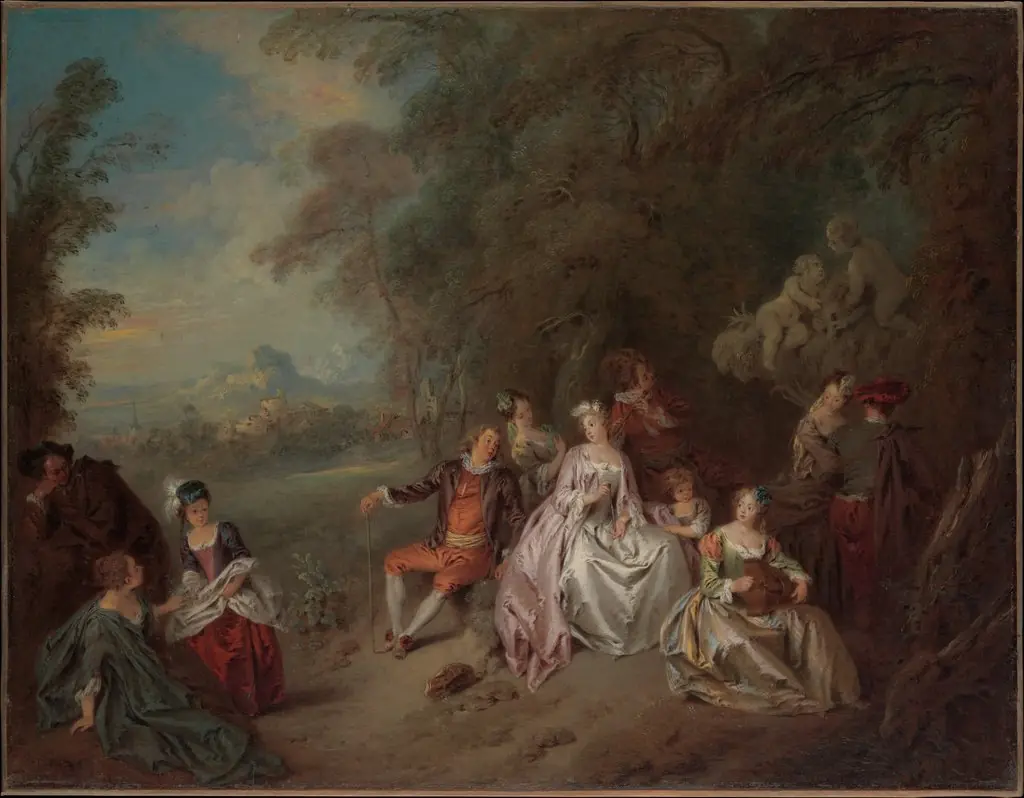
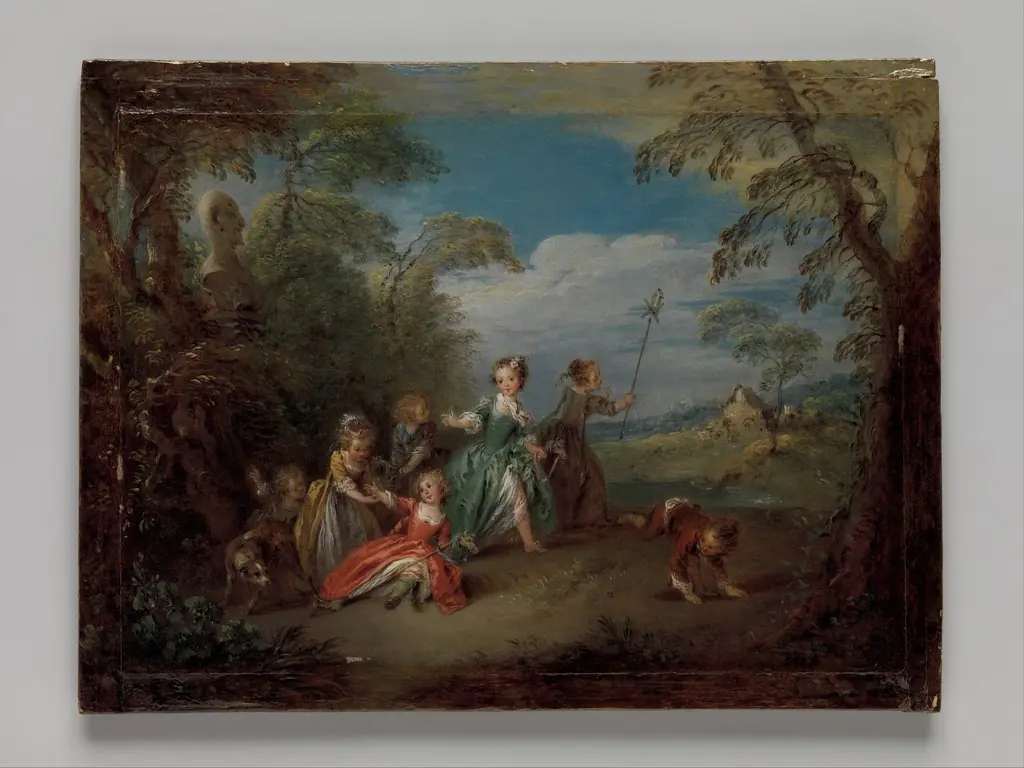
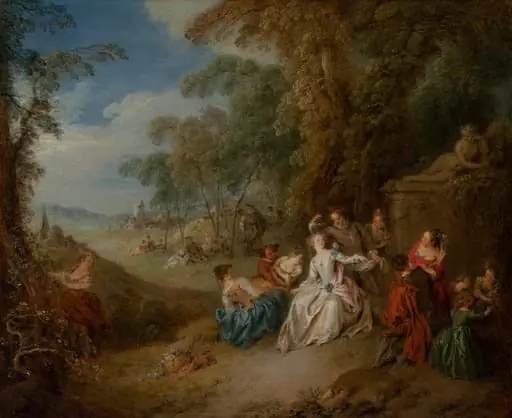
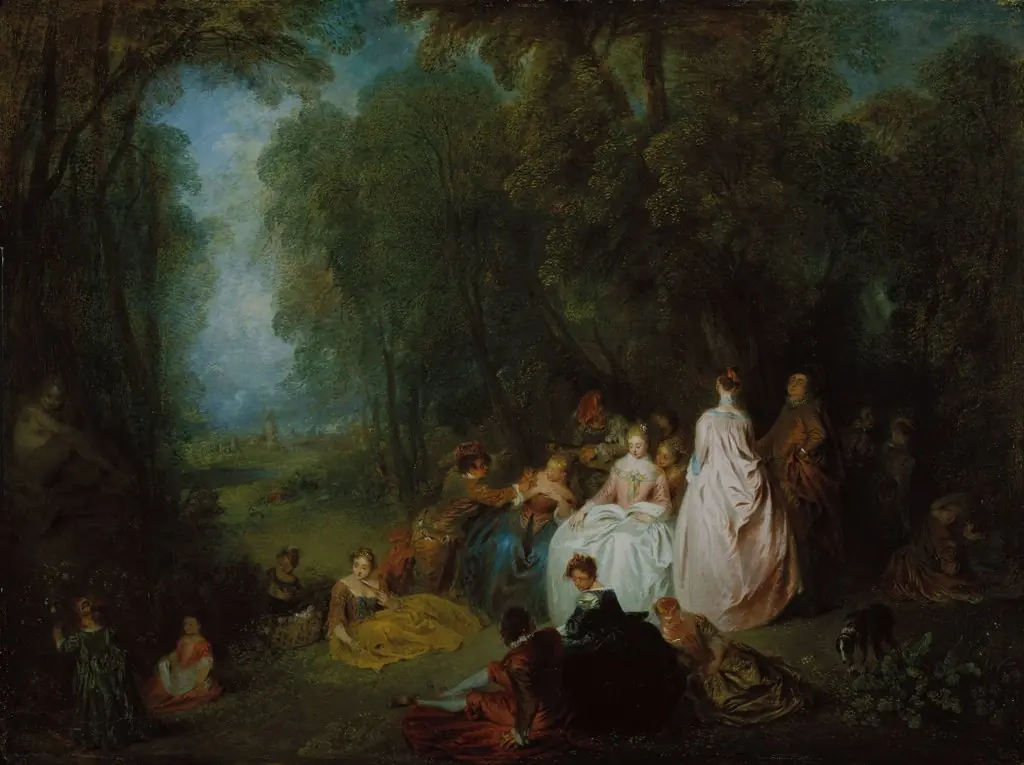
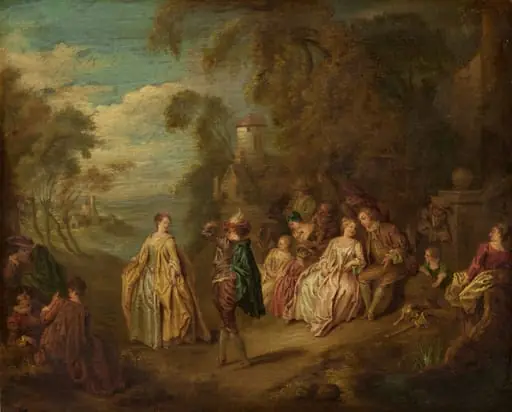
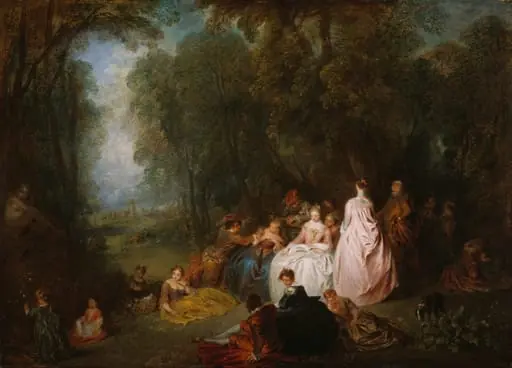
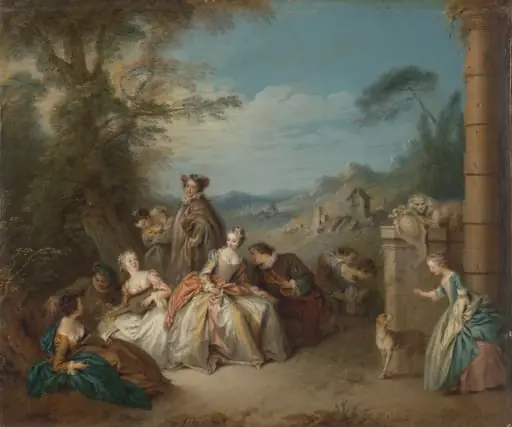
The painting depicts a group of elegantly dressed figures in a wooded glade, engaged in tranquil pastimes: music-making, reading, and conversation. Dressed in contemporary 18th-century attire, they embody an idealized rural escape from urban life. The scene avoids drama or moralizing, instead conveying a sense of cultivated ease, reflecting aristocratic fantasies of pastoral serenity common in Rococo art.
Technique & Style
Pater employed fine, visible brushwork to render foliage, fabric, and skin with a delicate touch. The palette is restrained, dominated by muted greens, browns, and soft blues, enhancing the painting’s subdued, atmospheric quality. Light filters through the trees in diffused tones, creating a hazy, intimate mood. The composition is loosely structured, guiding the eye through casual groupings rather than rigid symmetry.
History & Provenance
Pater trained initially under his sculptor father before studying with Jean-Baptiste Guide and later Watteau, whose influence defined his thematic and stylistic approach. The painting was completed in 1730 and entered the Alte Pinakothek’s collection in the 19th century, likely through royal or aristocratic acquisitions. Its presence there reflects its recognition as a representative work of French Rococo in German collections.
Context
Created during the height of the Rococo period, the painting aligns with a broader European fascination with idealized rural life as a refuge from courtly formality. While rooted in French tradition, its reception in German-speaking regions highlights the transnational appeal of Watteau’s legacy. Such scenes catered to elite tastes for refined, emotionally gentle imagery, distinct from the grandeur of Baroque or the moralism of later Neoclassicism.
Legacy
Pater’s work, though less widely known than Watteau’s, contributed to the dissemination of the fêtes galantes genre beyond France. *Die Freuden des Landlebens* remains a quiet testament to the Rococo’s preoccupation with fleeting moments of harmony. Its preservation in a major European museum underscores its role as a representative example of early 18th-century French painting’s nuanced, atmospheric sensibility.
Own this work as a print
Artist & collection
Artist
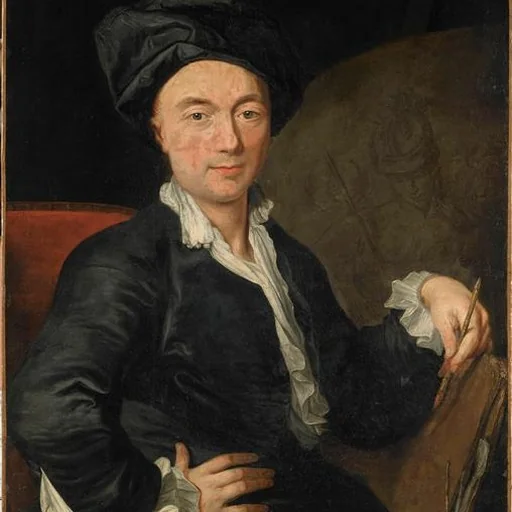
Jean-Baptiste Pater (December 29, 1695 – July 25, 1736) was a French rococo painter.