Artwork
Madame Antoine Arnault
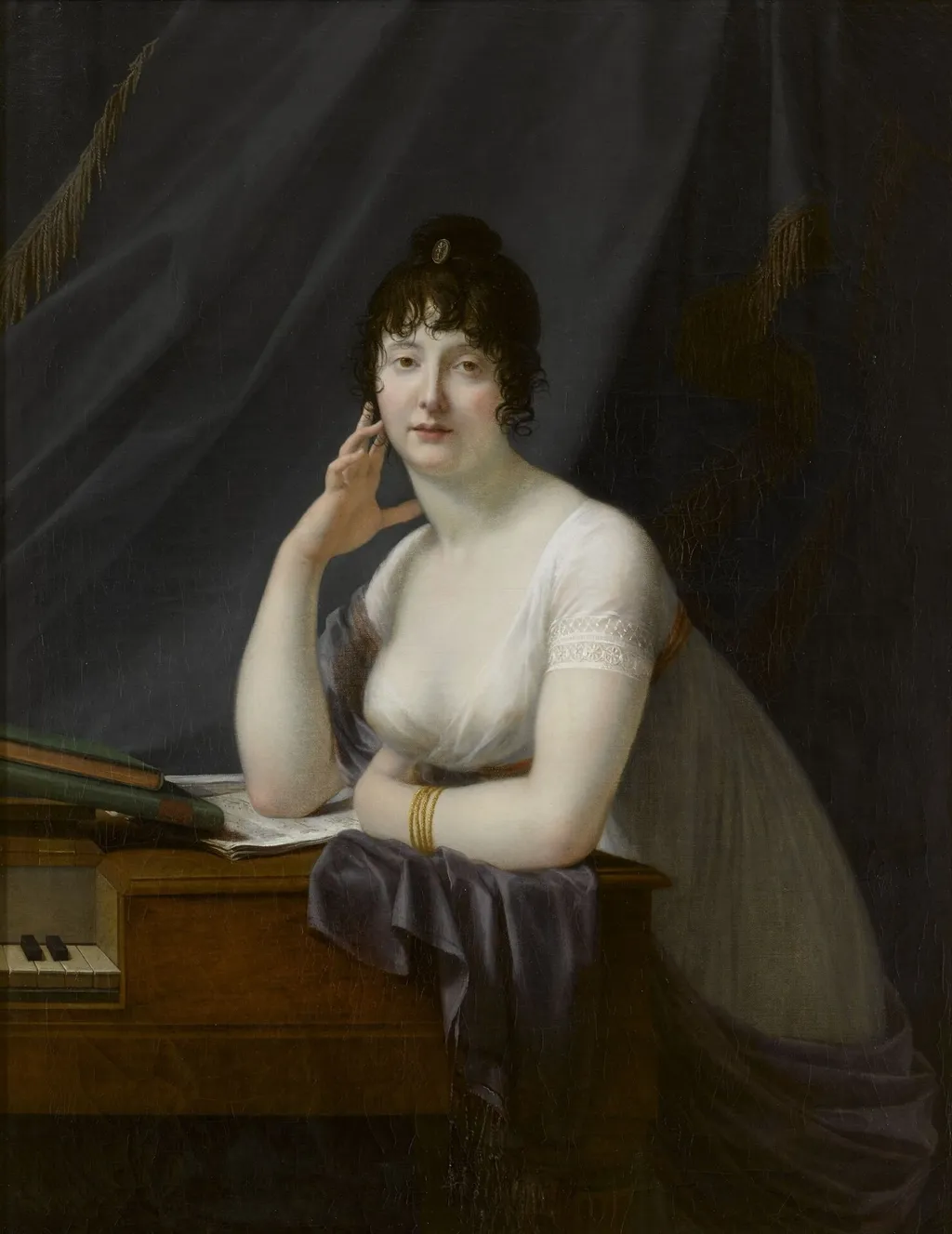
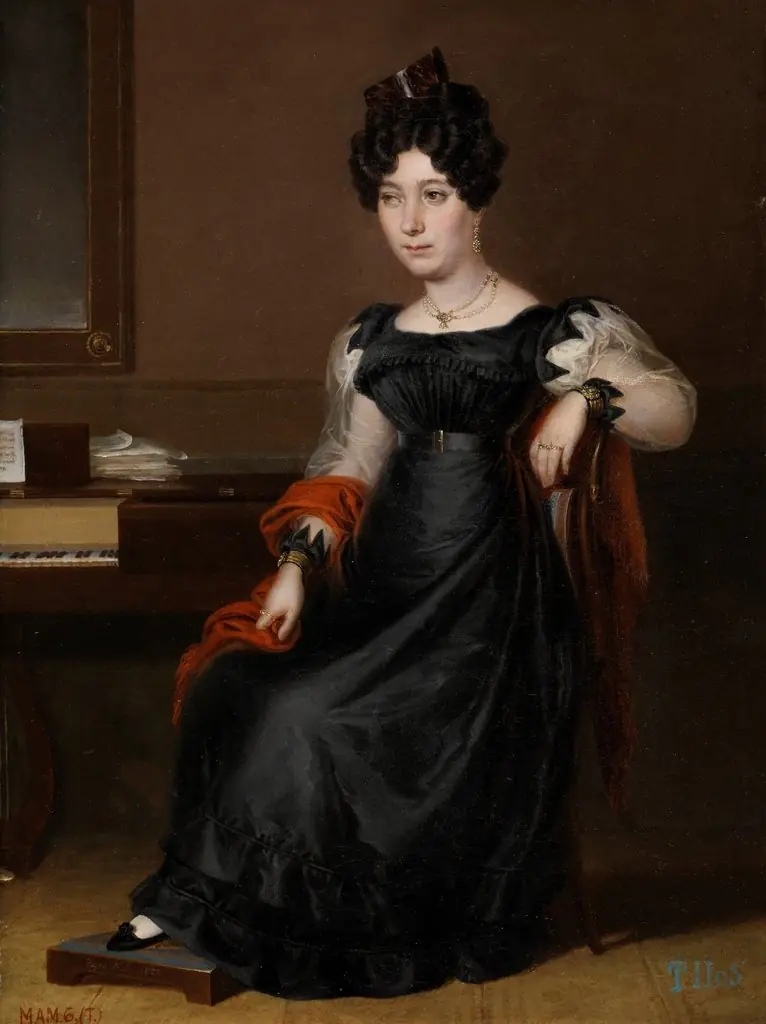
Madame Antoine Arnault is an oil painting by the Neoclassicist artist Jean Baptiste Regnault. It dates from 1806 and is held in the collection of the Museum of the History of France.
About this work
Overview
Jean‑Baptiste Regnault’s 1806 oil portrait, titled Madame Antoine Arnault, presents a seated woman beside a piano. Executed in oil on canvas, the work is part of the collection at the Palace of Versailles. The composition focuses on the sitter’s contemplative pose, set against a dimly lit interior that isolates her figure from the surrounding space.
Subject & Meaning
The painting portrays a woman in a plain white dress, a dark shawl draped over her shoulders, her hair neatly gathered. She rests her chin on her hand, gazing away from the viewer, suggesting introspection or a moment of private thought. The presence of the piano and a stack of books hints at cultural refinement and domestic leisure.
Technique & Style
Regnault employs a subtle chiaroscuro, allowing soft illumination to fall on the sitter’s face and arms while the background recedes into shadow. This contrast enhances the three‑dimensionality of the figure and draws attention to the delicate textures of fabric and skin. The brushwork remains smooth, typical of early‑19th‑century French academic portraiture.
History & Provenance
Created in the early Napoleonic era, the portrait entered the royal collection and is now displayed at the Palace of Versailles. Its attribution to Regnault has been consistently affirmed by museum records, and the work has remained in French public holdings since its acquisition in the 19th century.
Context
Regnault, a prominent academic painter, often depicted members of the French elite, aligning with the period’s emphasis on elegance and moral virtue. The inclusion of musical and literary objects reflects contemporary ideals of cultured femininity, while the restrained palette mirrors the neoclassical taste prevalent in post‑Revolutionary France.
Own this work as a print
Artist & collection


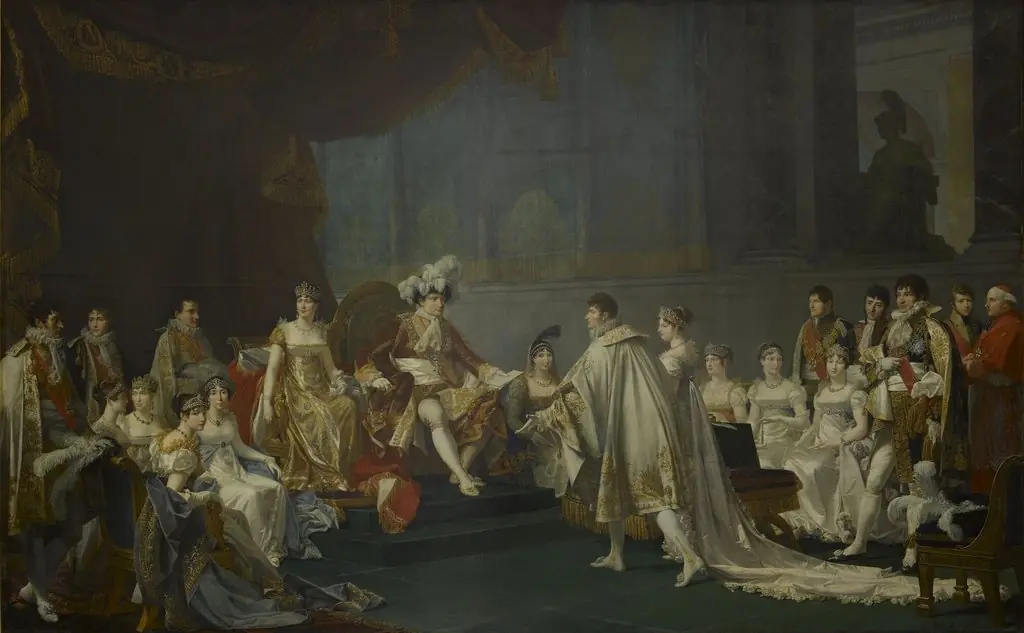 Wedding of Prince Jérôme Bonaparte and Princess Frédérique-Catherine of Wurtemberg, August 22, 1807
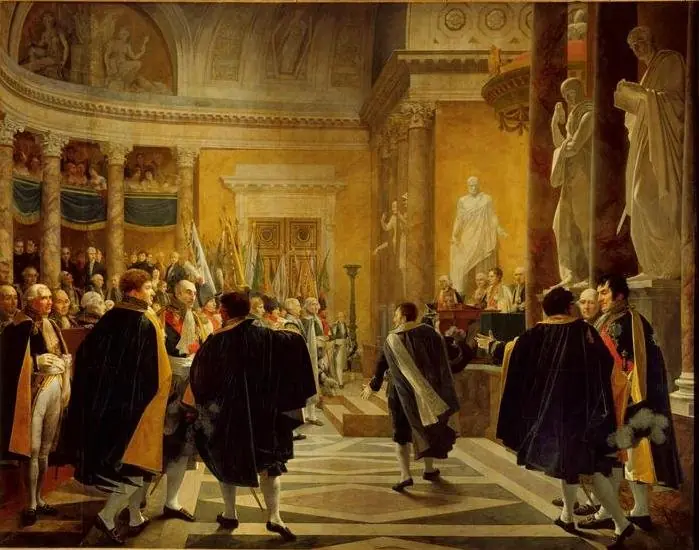 The Senate-Conservative receives the flags taken during the Austrian campaign, January 1, 1806
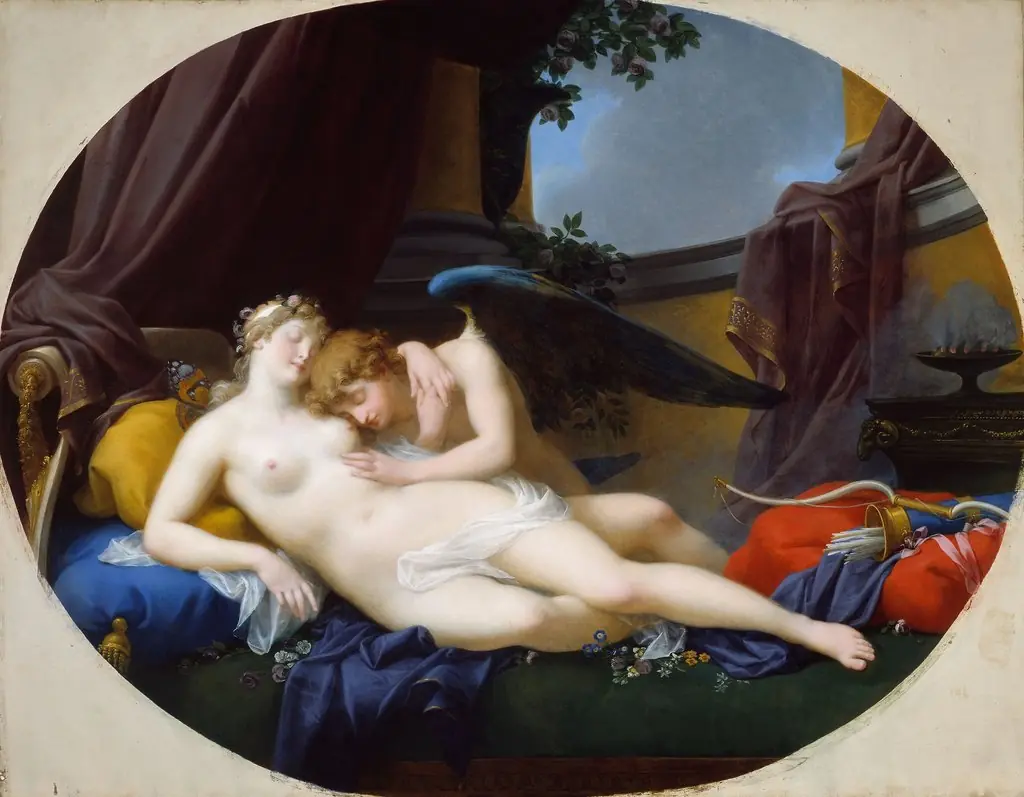 Cupid and Psyche
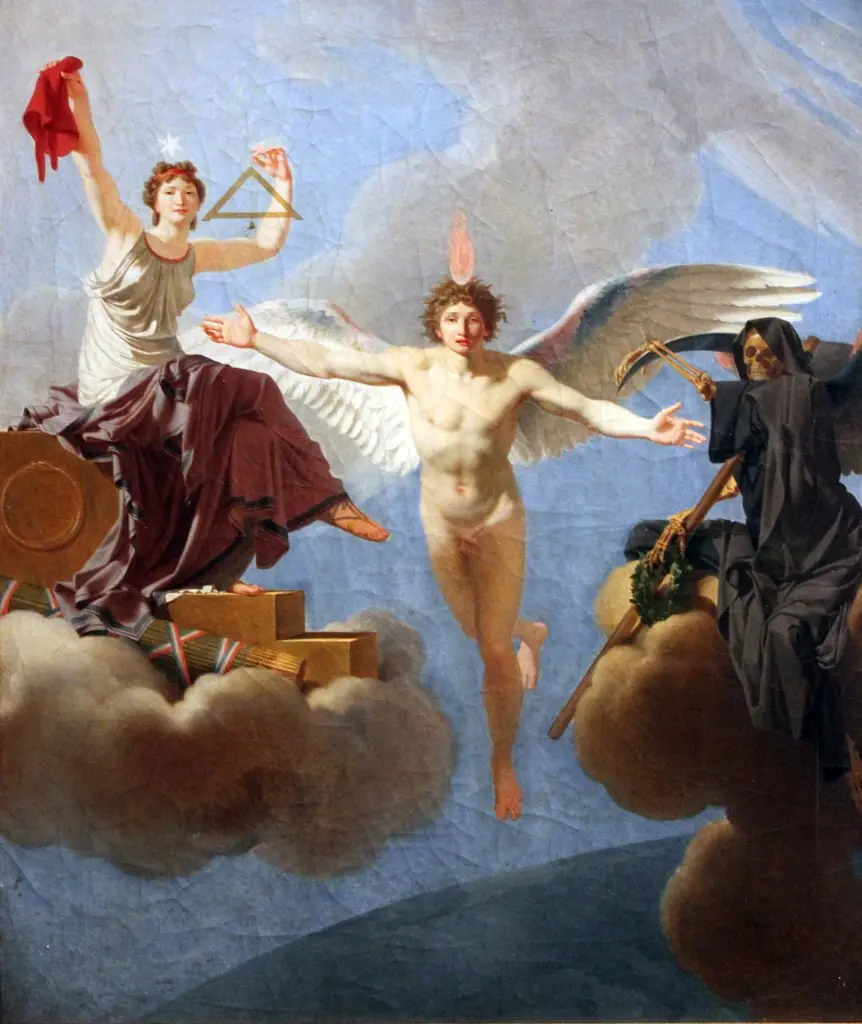 The Genius of France between Freedom and Death
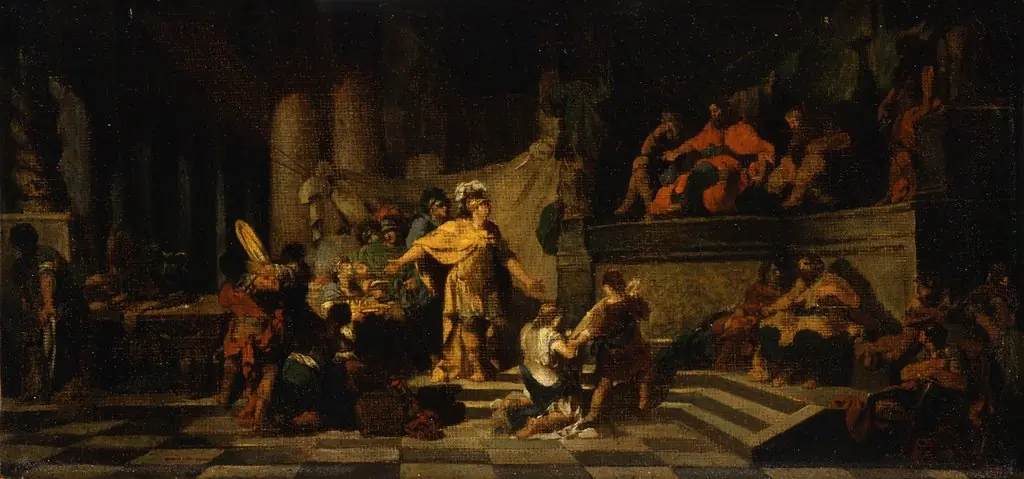 Aeneas Offering Presents to King Latinus and Asking Him for the Hand of His Daughter
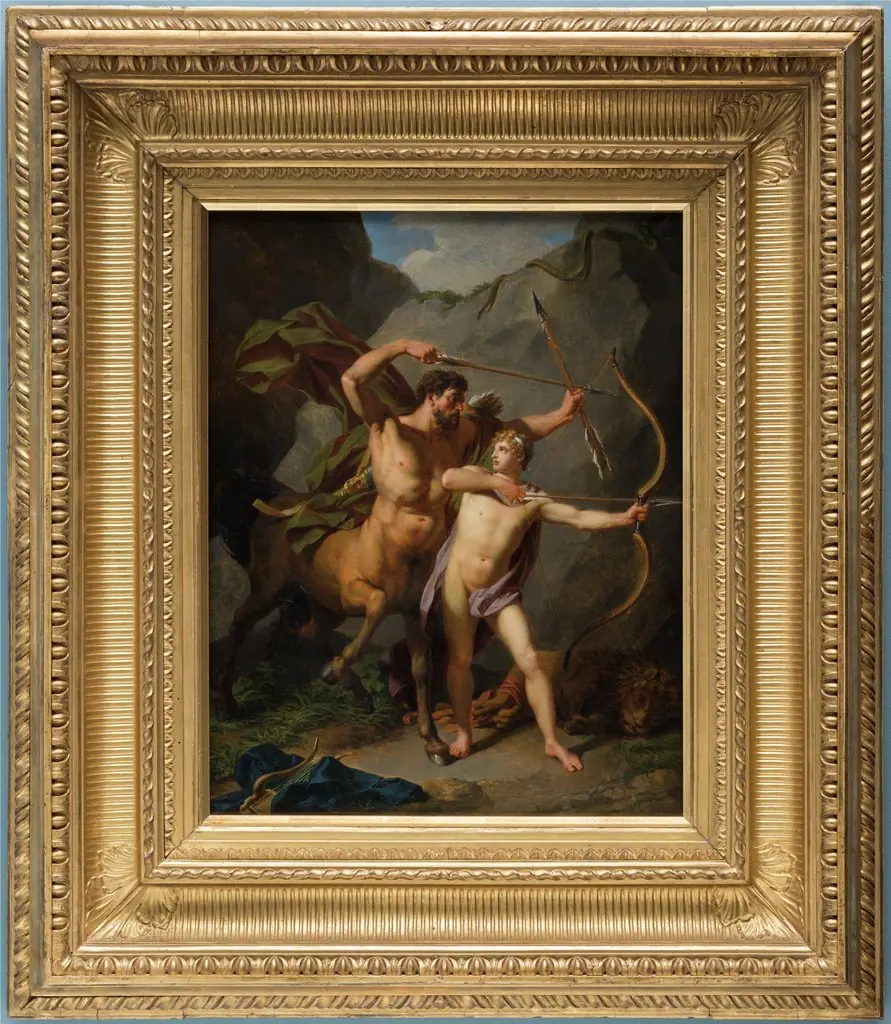 Education of Achilles
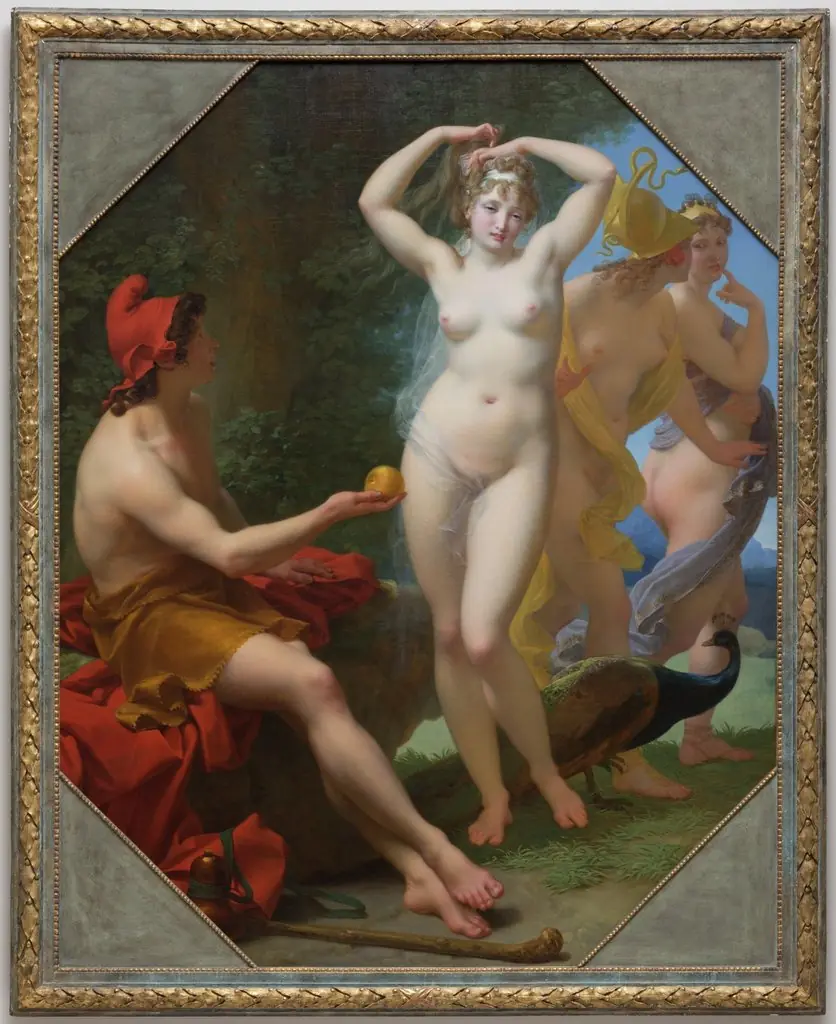 The Judgment of Paris
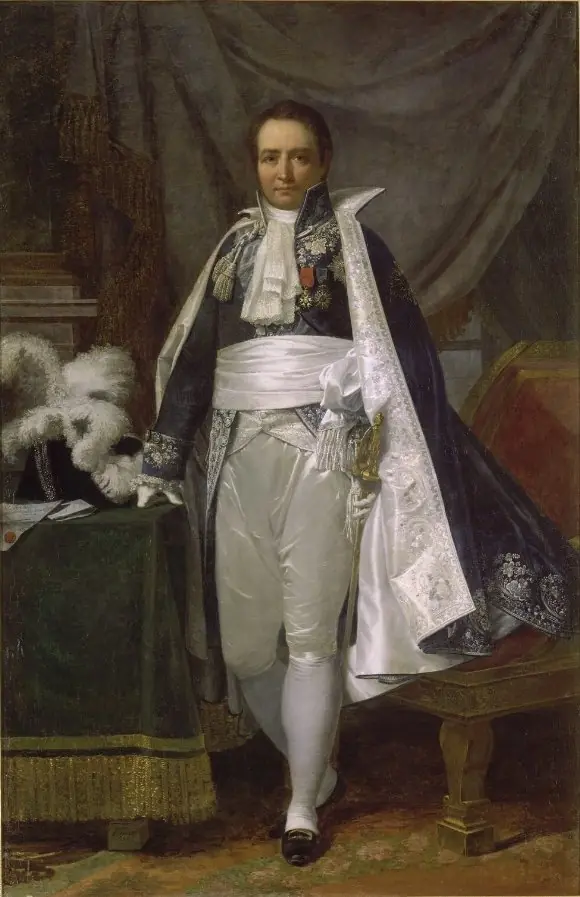 Jean-Pierre Bachasson, comte de Montalivet (1766-1823), ministre de l'Intérieur
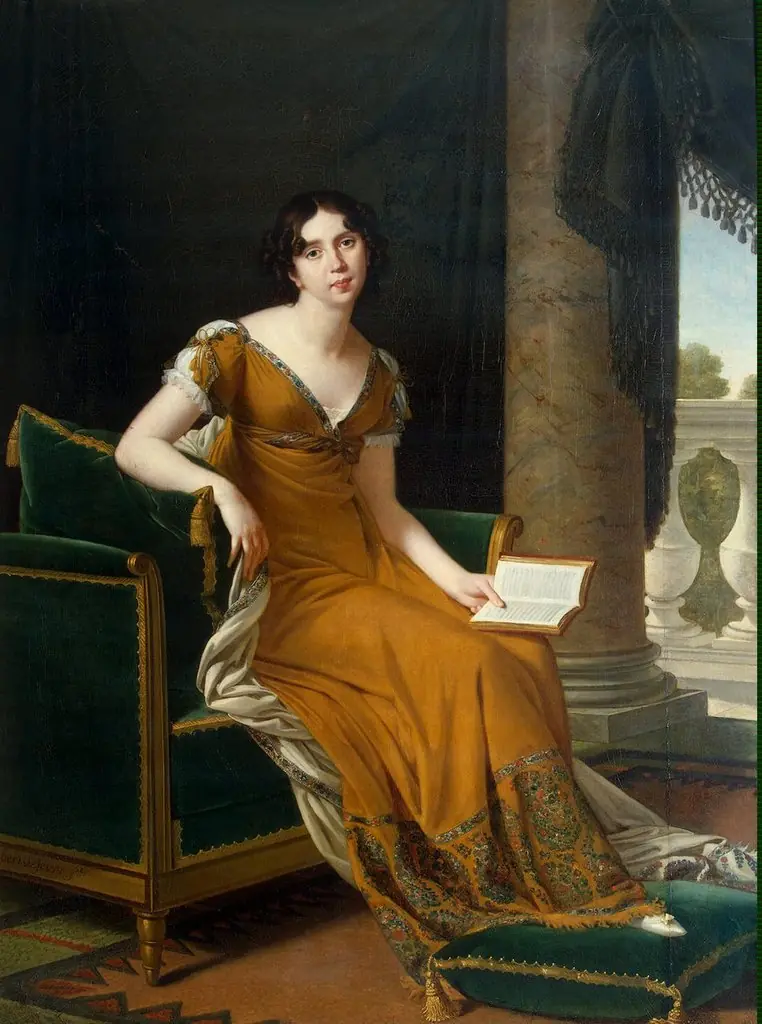 Portrait of Elisabeth Demidova
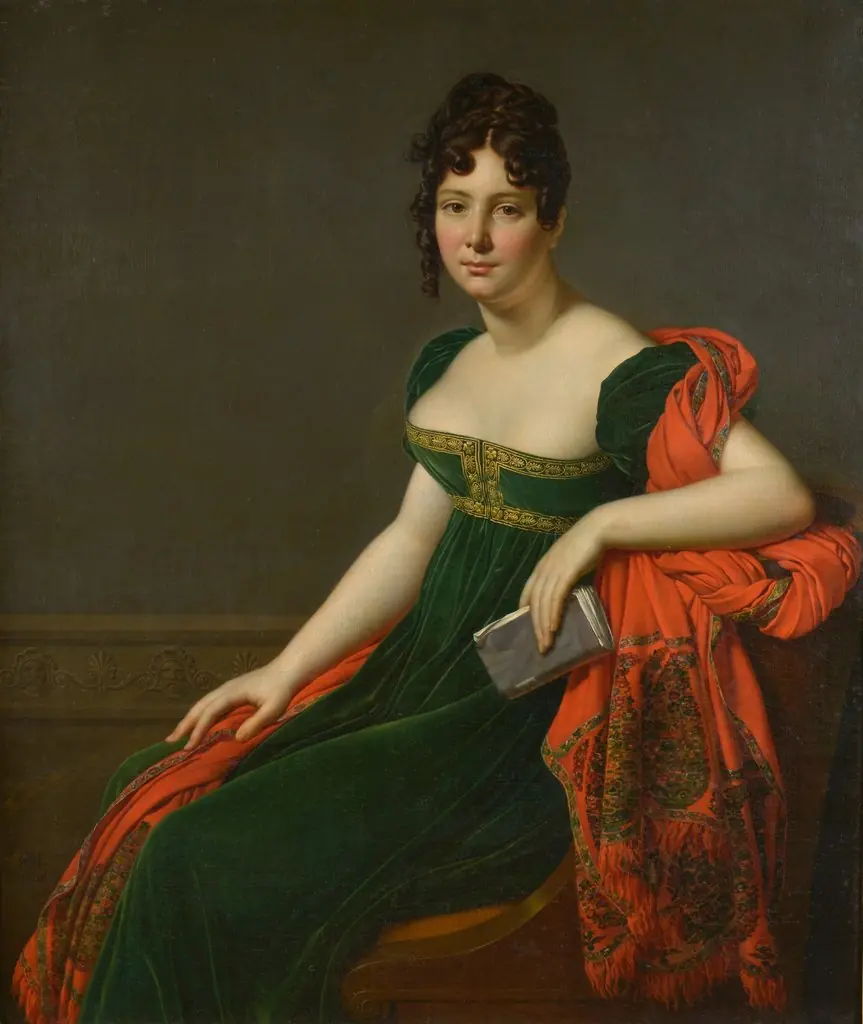 Portrait of Madame Augustine Bertin de Veaux
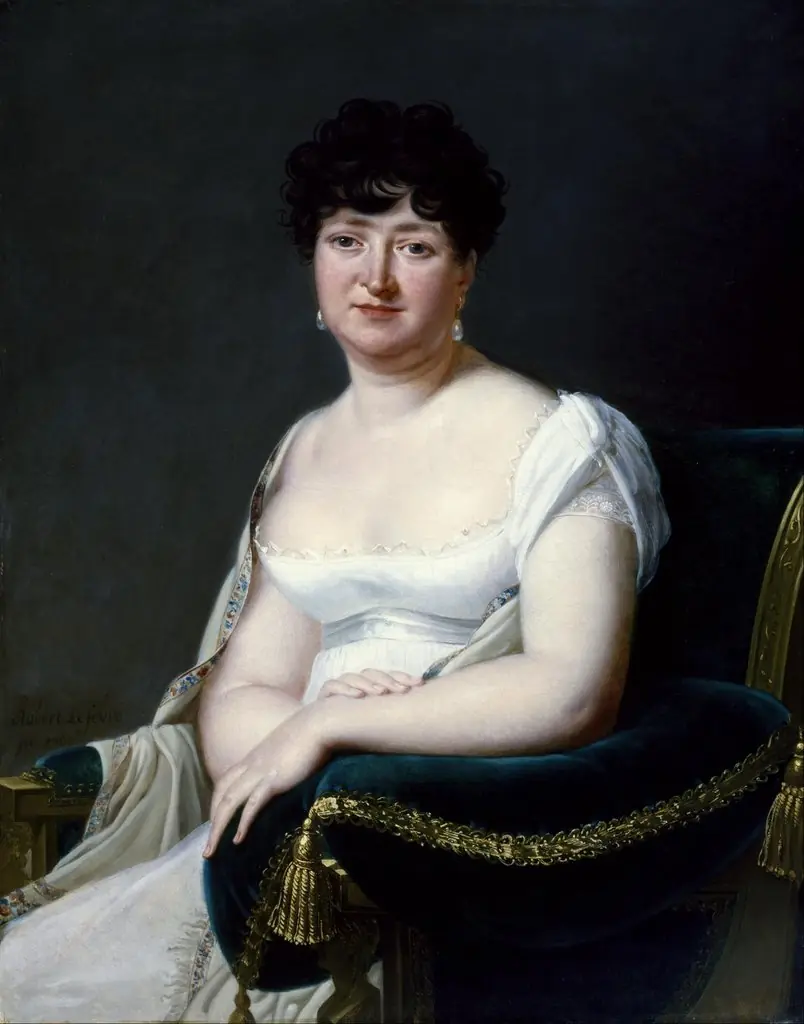 Portrait of a Woman
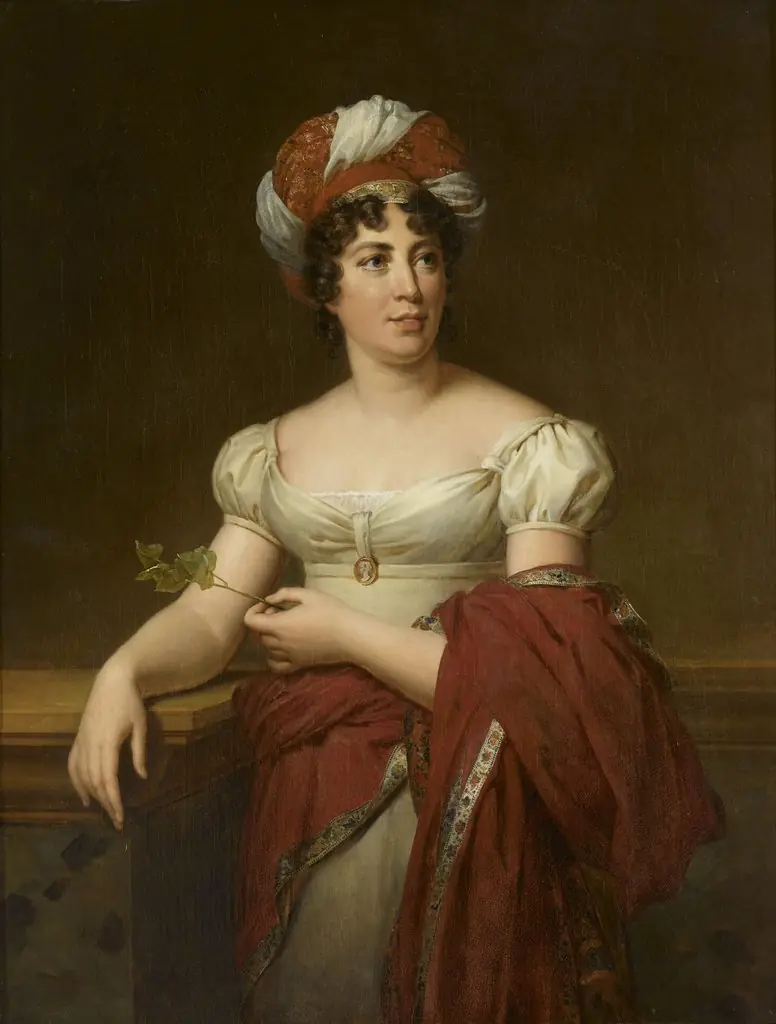 Portrait of Mme de Staël
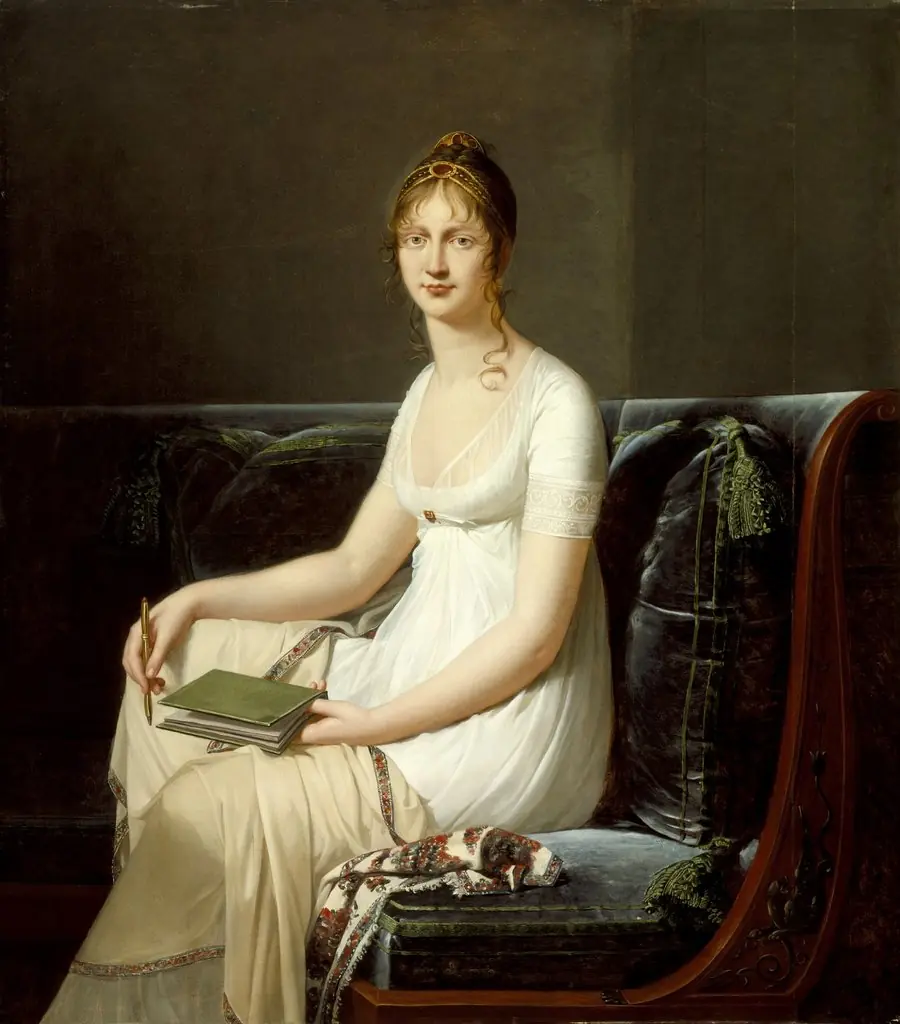 Portrait of a Woman Holding a Pencil and a Drawing Book
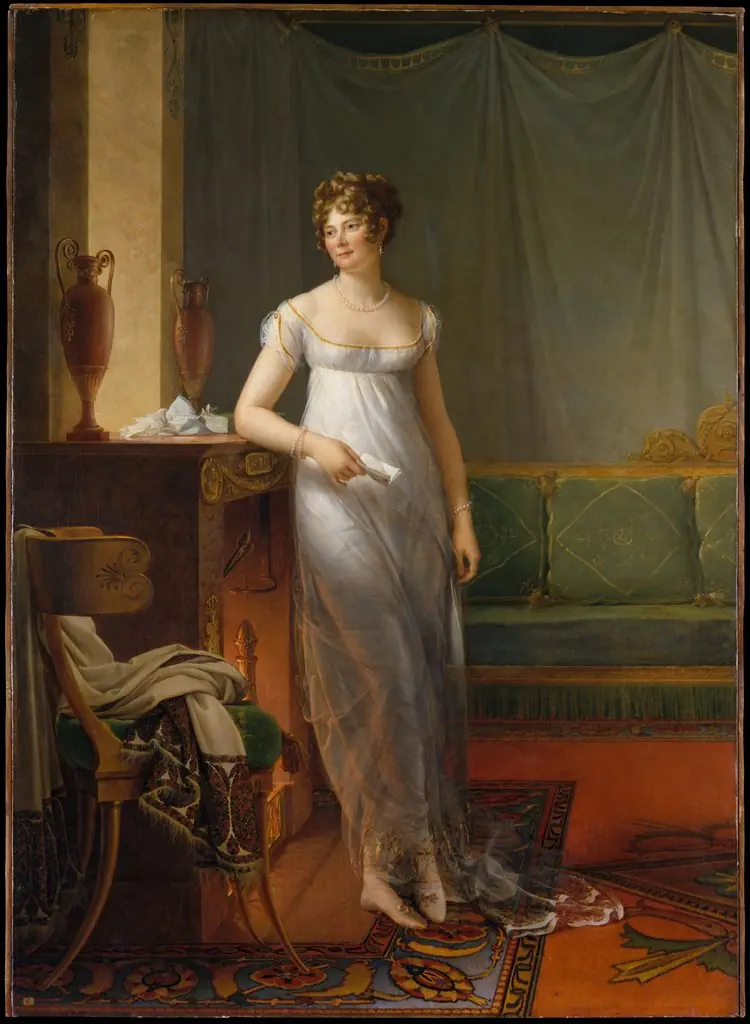 Madame Charles Maurice de Talleyrand Périgord (1761–1835)
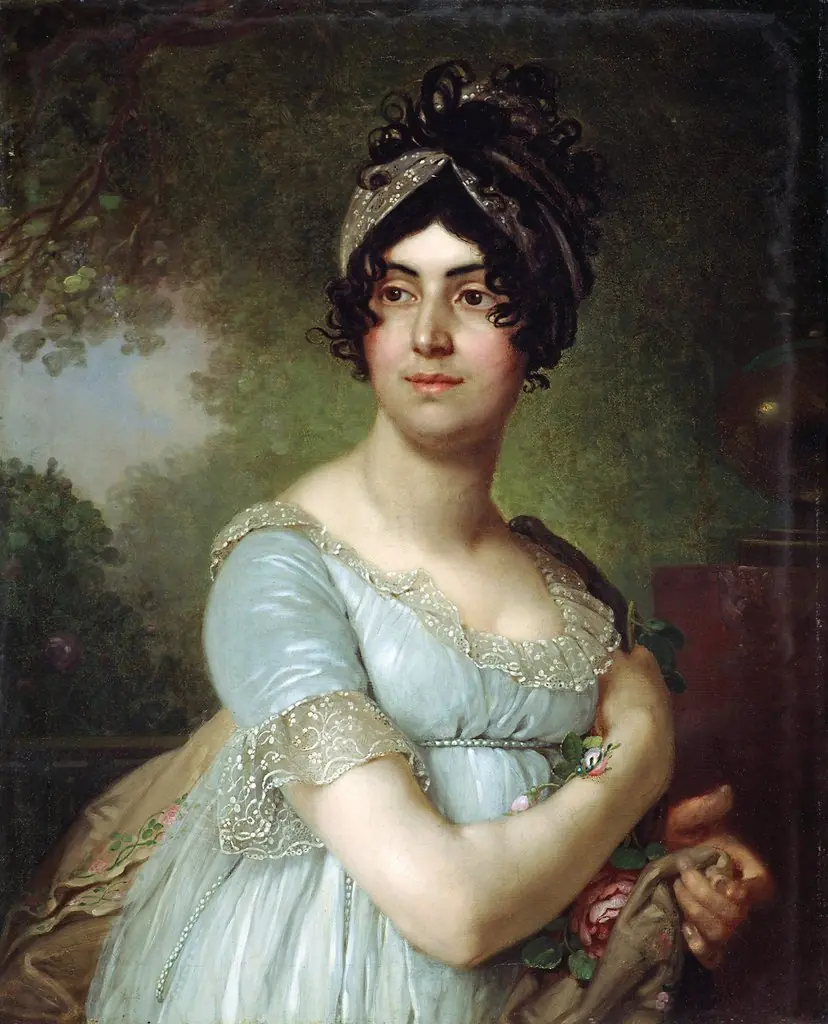 Портрет Д.С. Яковлевой
 Portrait of Hortense de Beauharnais
 Portrait of Hortense de Beauharnais, Queen of Holland
 Louise-Marie-Adélaïde de Bourbon-Penthièvre, Duchess of Orléans
 Portrait of Lady Morgan (Sydney Owenson) (1776-1859), Writer
 María de la Cruz Benítez