Artwork
Untitled
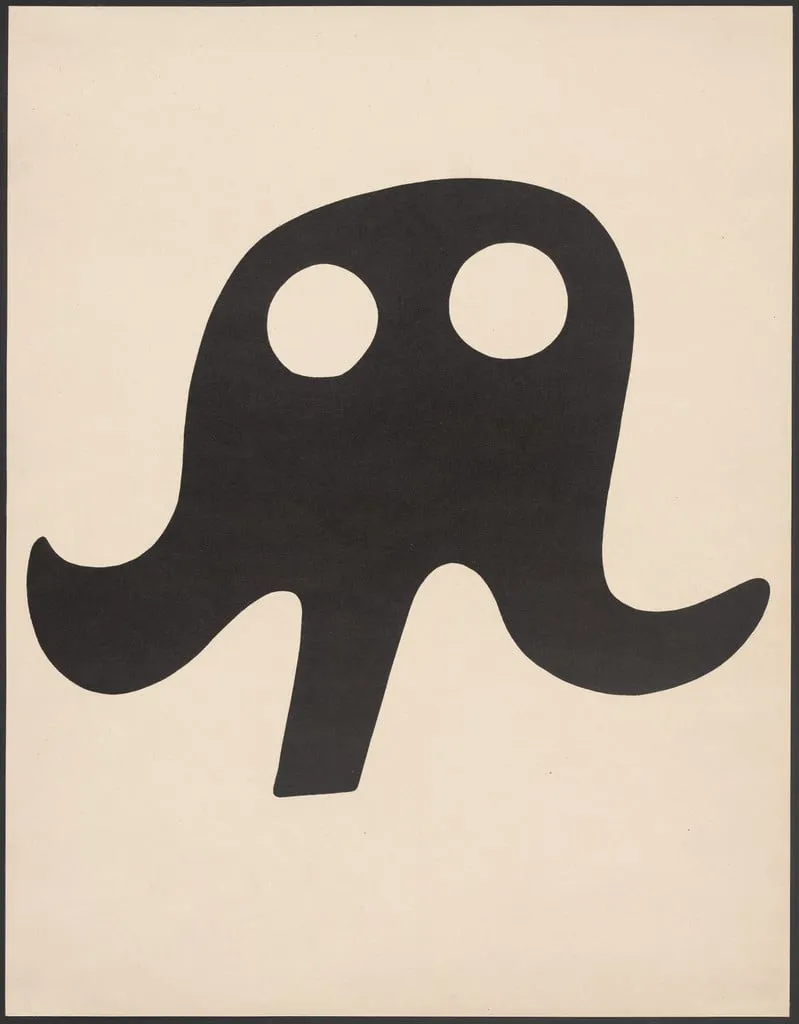
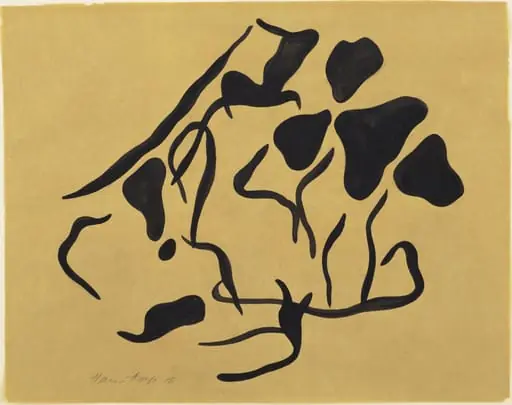
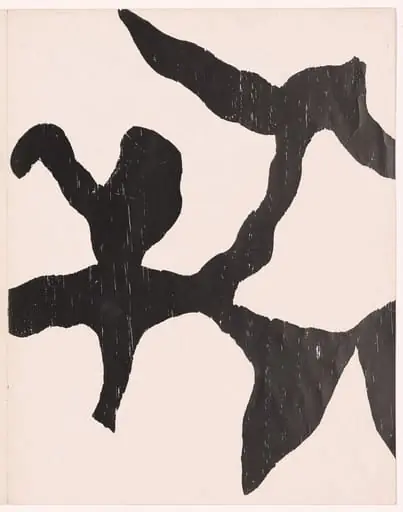
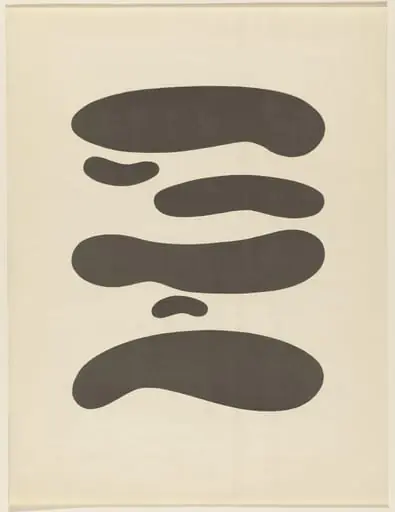
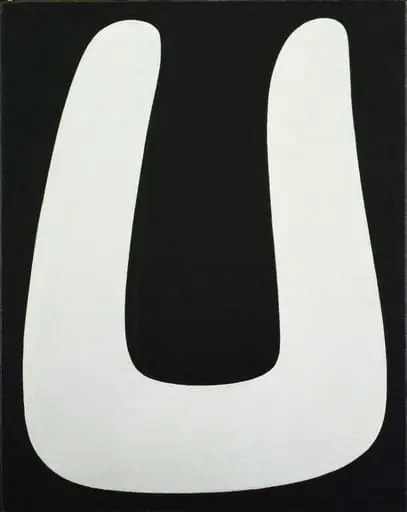
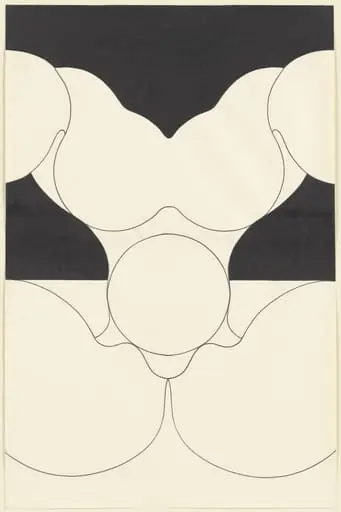
Untitled is an ink print by Jean (Hans) Arp. It dates from 1923 and is held in the collection of the Museum of Modern Art. Created in 1923, this lithograph is one of seven related works by Jean Arp in a single portfolio.
About this work
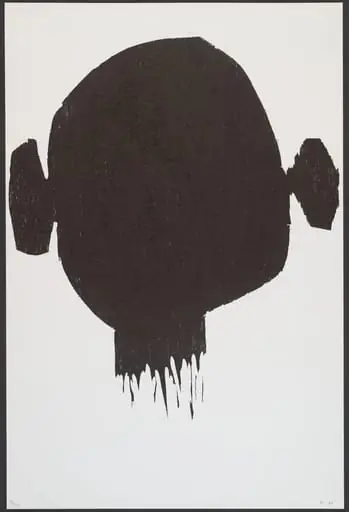
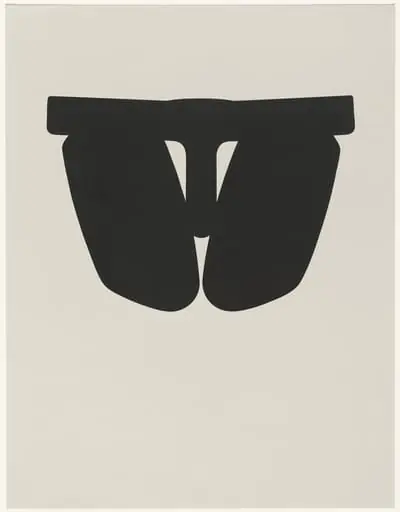
This is a simple black shape on a light background. It looks like a blob with two round holes where eyes might be. The shape has a wobbly bottom, like it’s floating or melting.
The artist made this in 1923 using a printing method called lithography. It’s one of seven similar images, all made the same way.
Look up lithography to see how artists print pictures this way.
Overview
The image avoids representational detail, instead presenting a fluid, organic silhouette that suggests life without literal depiction.
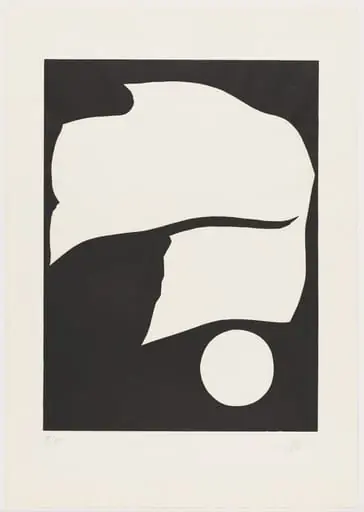
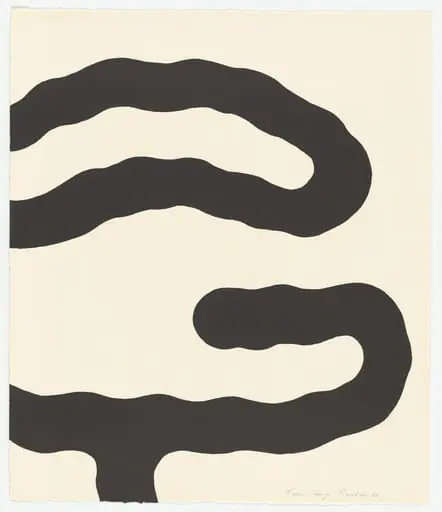
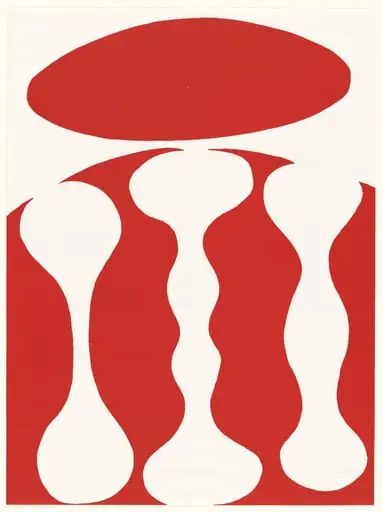
Created in 1923, this lithograph is one of seven related works by Jean Arp in a single portfolio. Executed using the lithographic process, it features a minimal, abstract form rendered in solid black against a pale ground. The image avoids representational detail, instead presenting a fluid, organic silhouette that suggests life without literal depiction. Its simplicity and repetition across the portfolio reflect Arp’s interest in elemental forms and serial exploration.
Subject & Meaning
The form resembles a biomorphic mass with two indented areas that hint at eyes, yet it resists clear identification as any specific object or creature. Arp’s intent was not to depict reality but to evoke organic growth and subconscious imagery. The irregular, softened edges imply movement or transformation, aligning with Dada and early Surrealist interests in the irrational and the natural world’s unseen rhythms.
Technique & Style
Lithography allowed Arp to achieve smooth, fluid contours by drawing directly onto a stone surface with greasy materials. The resulting print preserves the spontaneity of his hand, with no sharp lines or rigid geometry. The contrast between the dense black shape and the untouched paper emphasizes form through absence. The technique suited his desire for organic abstraction, balancing control with chance in the printing process.
History & Provenance
The work entered The Museum of Modern Art’s collection as part of a group of Arp’s prints from the early 1920s. It was produced during a period when Arp was deeply engaged with avant-garde circles in Zurich and Paris, collaborating with artists like Sophie Taeuber and Hans Richter. The portfolio’s limited circulation and uniform technique suggest it was made for artistic exchange rather than commercial sale.
Context
In 1923, Arp was transitioning from Dada’s disruptive energy toward a more contemplative abstraction that would influence Surrealism. His biomorphic forms responded to contemporary scientific and philosophical ideas about life’s invisible structures. This print, like others in the series, rejects traditional composition in favor of intuitive shapes that feel both ancient and newly born, reflecting a broader European search for non-rational aesthetics.
Legacy
Arp’s lithographs from this period helped establish biomorphic abstraction as a legitimate visual language in modern art. Their quiet presence contrasted with the aggression of earlier Dada works, offering a model for later artists exploring organic form in sculpture and print. The simplicity and ambiguity of this image continue to resonate in discussions of abstraction as a means to access subconscious or universal forms.
Artist & collection

Artist
Hans Peter Wilhelm Arp, better known as Jean Arp in English, was a German-French sculptor, painter and poet. He was known as a Dadaist and an abstract artist.